Performance Hardware and Stage Simulation
Stage equipment – devices and spotlight is designed as a technical solution for developers building virtual reality projects, simulators, and interactive environments. The package focuses on providing the necessary hardware to populate performance spaces such as nightclubs, show stages, and exhibition halls. It includes a variety of specialized machinery, ranging from audio-visual equipment to atmospheric effect generators.
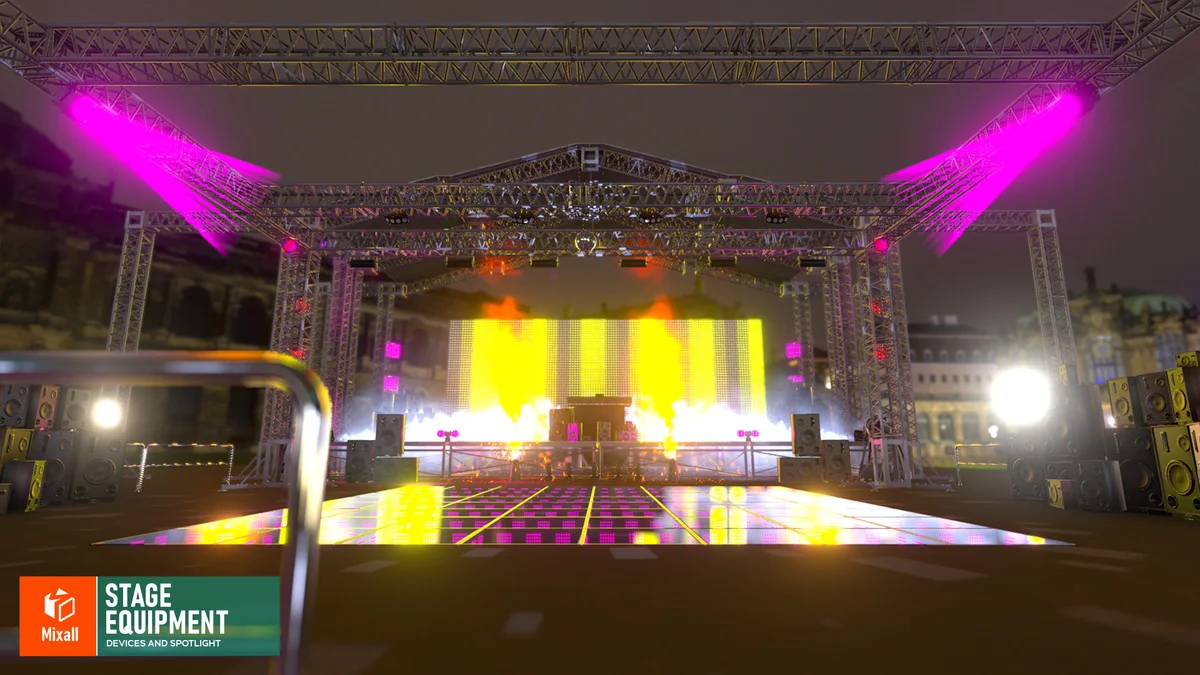
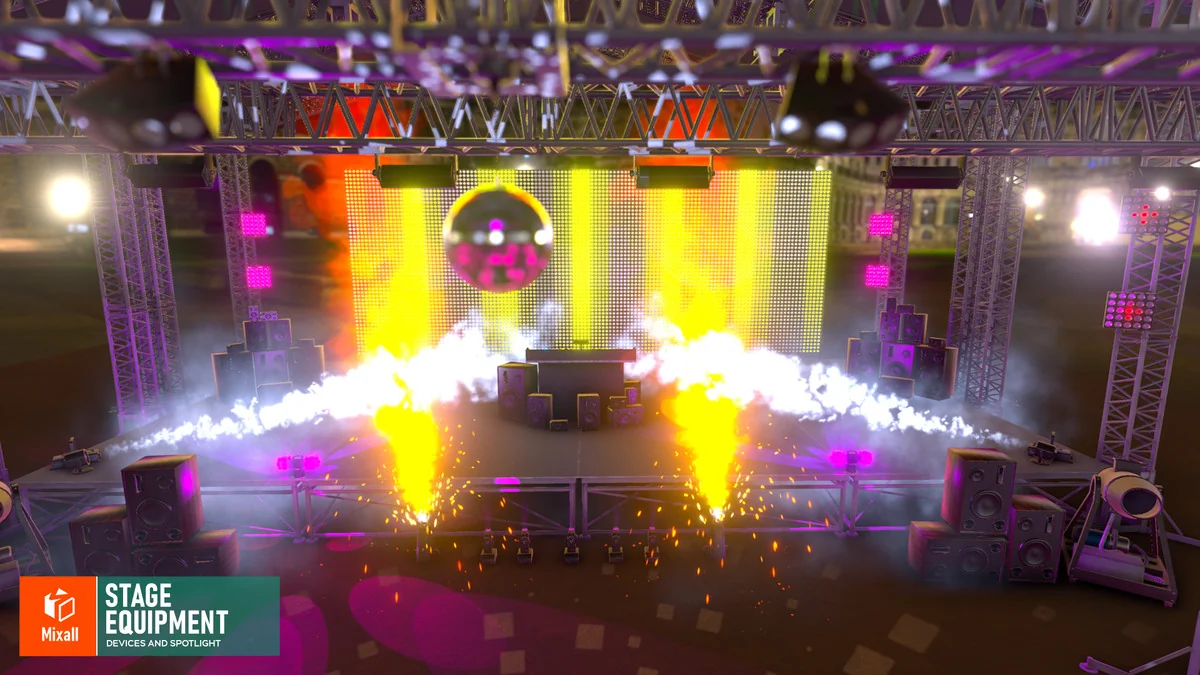
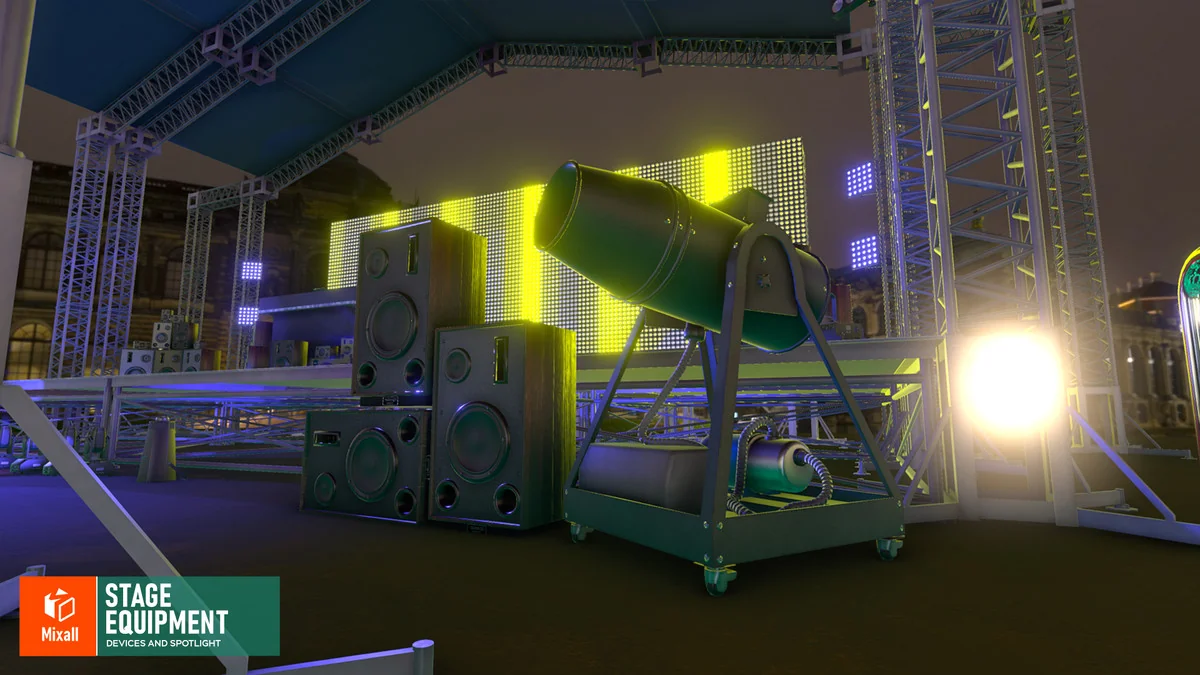
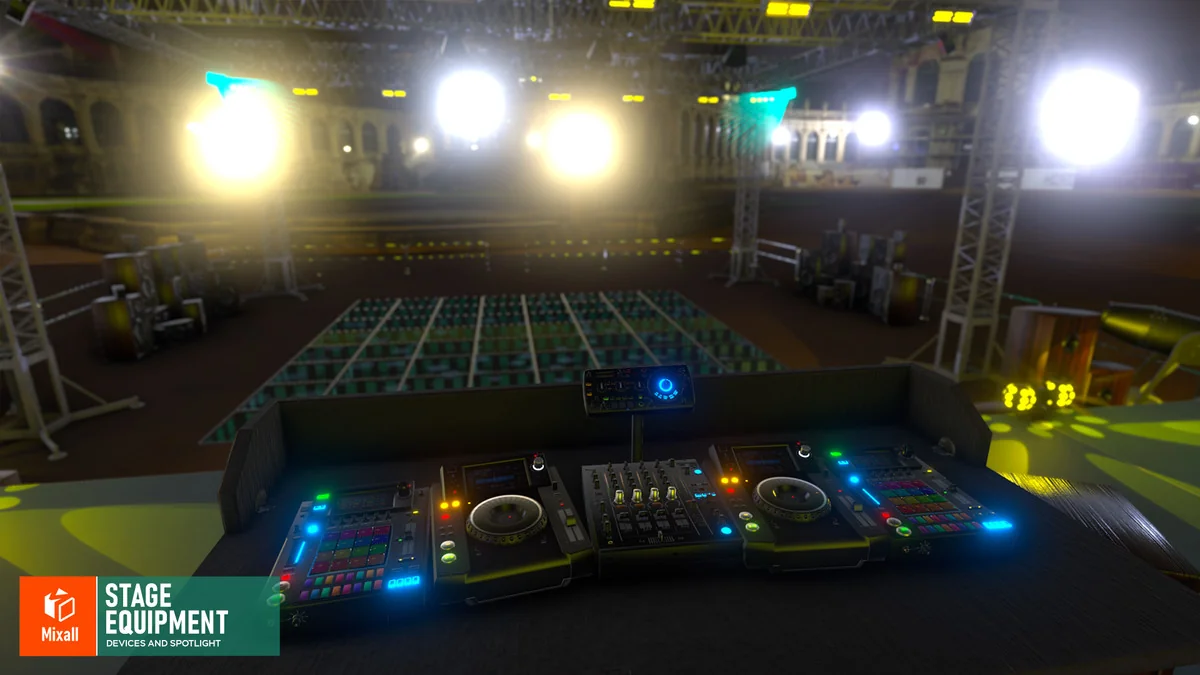
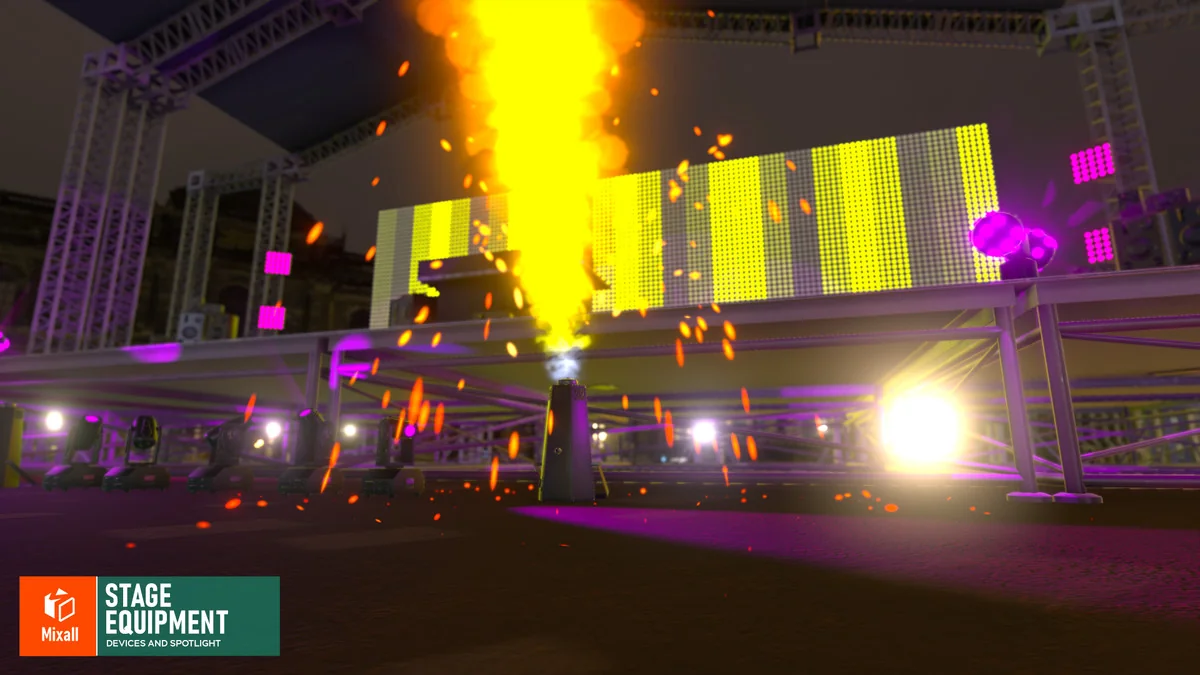
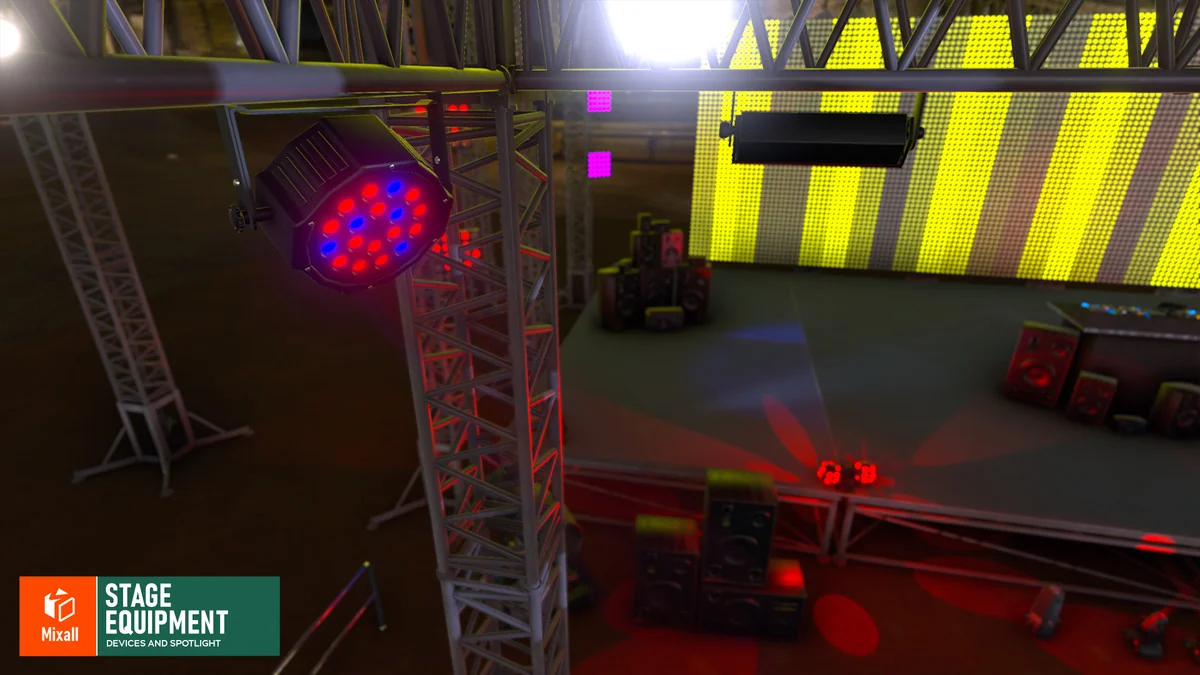
The collection features several core devices essential for stage production. This includes a DJ device, speakers, and a dedicated spotlight. For environmental atmosphere, the set provides a smoke machine, a foam machine, and a flamer. These tools allow for the creation of complex stage setups that go beyond simple static geometry, offering the components needed to simulate a live event or performance environment.
Dynamic Lighting and Atmospheric Effects
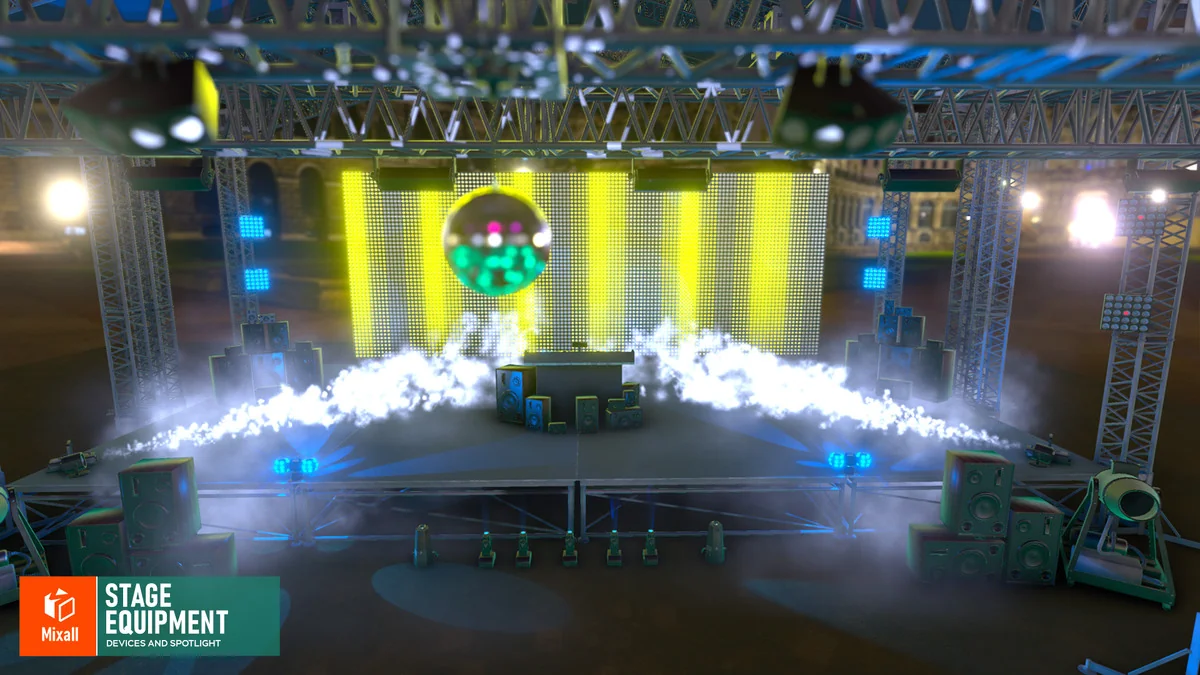
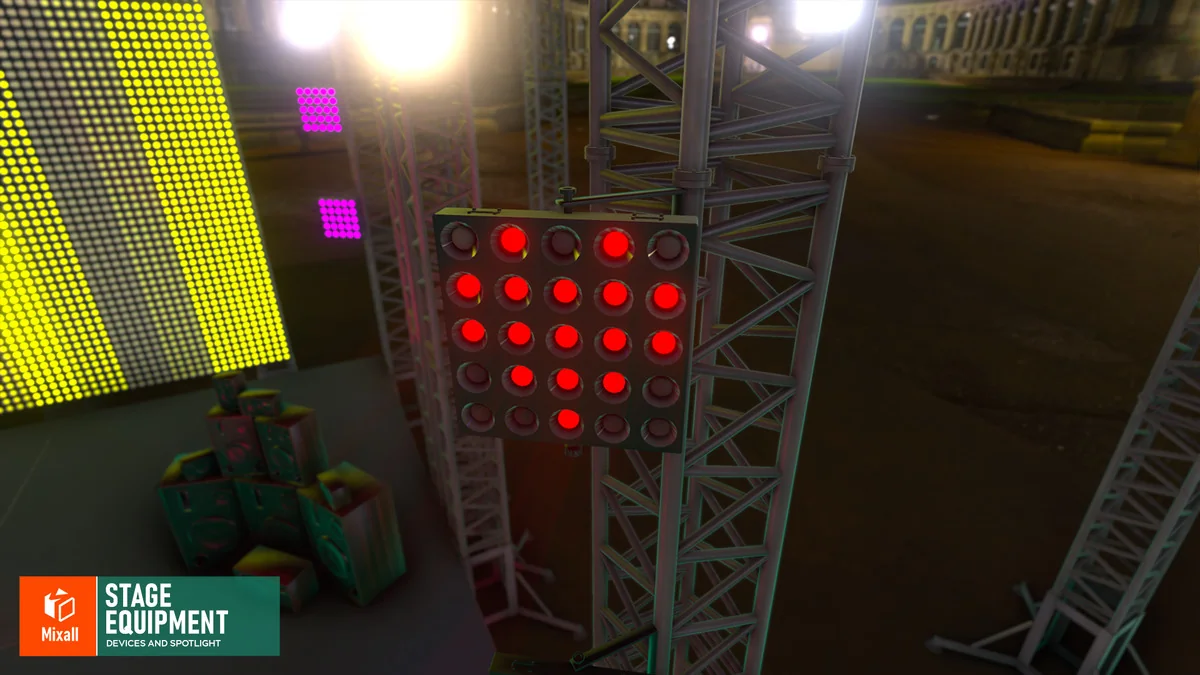
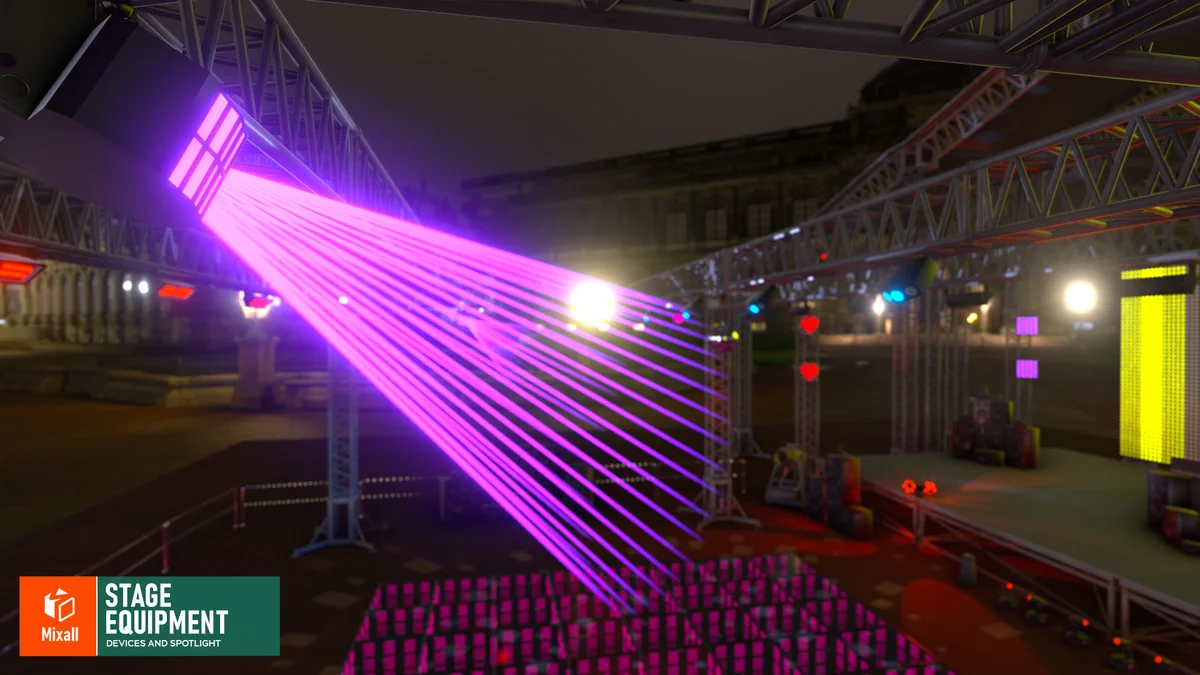
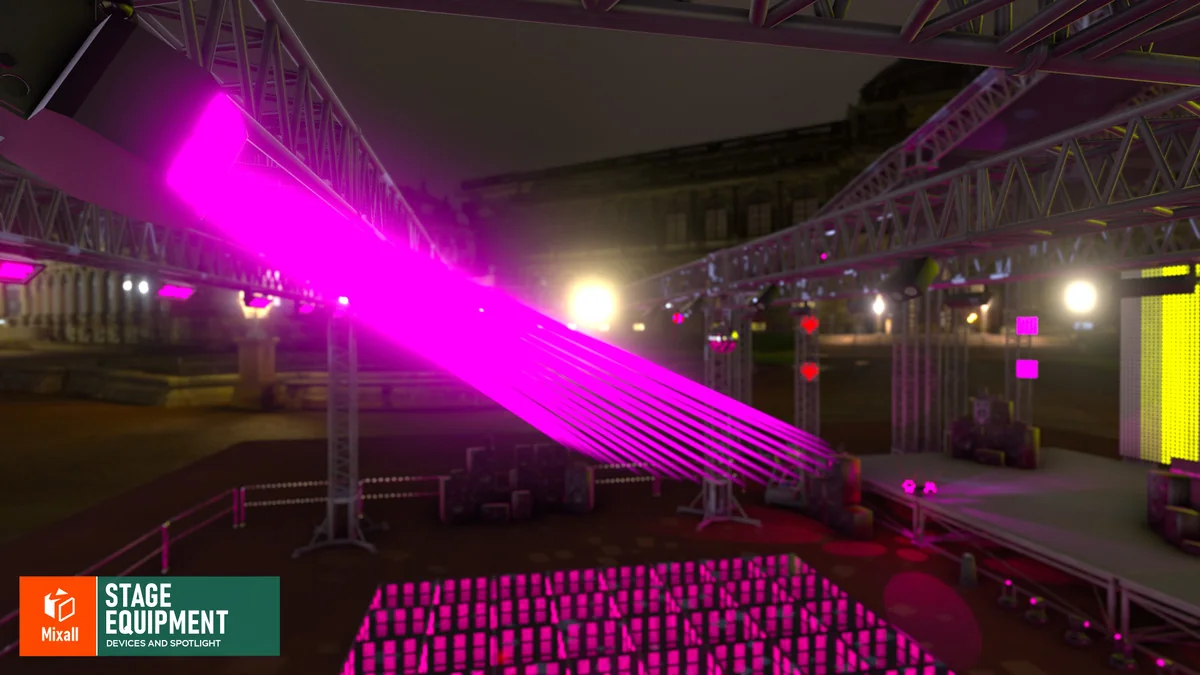
A primary focus of this asset set is the implementation of lighting and environmental effects. The package contains ten different disco lights, which are intended to provide dynamic visual interest to a scene. To enhance the realism of these light sources, the developer has included imitations of smoke and fire effects. These atmospheric elements are supported by scripts included within the project, which provide instructions for managing the lighting equipment and effects during runtime.
The inclusion of these effects makes the package suitable for projects requiring a high degree of visual activity, such as virtual concerts or nightclub simulations. The interplay between the hardware models—like the smoke machine and flamer—and the imitation effects helps in establishing a believable performance atmosphere.
Modular Environment Construction
Beyond the individual devices, the package includes components for building a full modular scene. Developers can utilize floor cubes and fences to define the layout of a stage or a street scene. This modularity allows for the creation of custom-sized performance areas that can be tailored to the specific needs of a game or VR application. A game-ready demo scene is provided to illustrate how these modular pieces can be combined with the technical equipment to form a cohesive interior.
Because the assets are designed to work together, they can be integrated into broader environmental workflows. This makes them compatible as additions to related settings like music stores, showrooms, or news studios, where professional lighting and audio equipment would naturally be found.
Technical Specifications and Geometry
The package contains 27 unique models and 34 prefabs, built with a range of polygon counts to balance detail with performance. The complexity of the models varies significantly depending on the object’s role in a scene. For example, the DJ device is a high-detail asset at 58.4k tris, while simpler elements like the fence are low-poly at 550 tris. Other notable counts include the foam machine at 10.2k tris, the speaker at 6k tris, and the spotlight at 3.8k tris. The entire modular scene totals approximately 14.4k tris.
Texturing is handled through 99 PBR maps, which include Albedo, Normal, Metallic, and Occlusion maps. These textures are provided in various resolutions to accommodate different hardware requirements, ranging from 64×64 up to 4096×4096. All models feature UV mapping to ensure proper texture application across the diverse range of equipment.
Practical Workflow Integration
For developers working in Unity 2019.4.0 or later, these assets serve as a specialized kit for populating empty interiors. In a standard production workflow, the modular floor and fence pieces are used to establish the play area or stage zone, followed by the placement of the disco lights and technical devices. The final step involves utilizing the provided scripts to activate the smoke, fire, and lighting effects, transforming a static interior into an active performance space. This resource is particularly aimed at those developing for VR, where the presence of detailed, functional-looking machinery contributes to the immersion of the virtual venue.
Project Screenshots