"95fdaf16012263fa"{"id":"1002350","slug":"small-monster-sfx-1","title":"Small Monster SFX 1","category":"Sound Effects","engine":"4.26+,5.0+","assetVersion":"","engineVersion":"Engine Version: 4.26+,5.0+","tag":"Sound Effects","accent":"blue","visual":"mech","summary":"Small Monster SFX 1 is an audio pack for fantasy and medieval games that need voice and effect sounds for a human-sized or smaller enemy creature.","platform":"Unreal Engine","indexPolicy":"index","publishedAt":"2026-11-06T06:56:51.474Z","updatedAt":"2026-11-06T06:56:51.474Z","sourceNotes":[],"fileContents":[],"compatibility":["Unreal Engine","Engine Version: 4.26+,5.0+"],"featuredImage":{"alt":"Small Monster SFX 1","src":"/wp-content/uploads/published/2026/11/191497025ab3-478c1778-2fb9-4df2-b4ca-b99ac6b94582-3d9f8fa399.webp"},"hasDownloadLink":true,"downloads":0,"terms":[{"taxonomy":"category","slug":"sound-effects","name":"Sound Effects"}],"galleryImages":[{"src":"/wp-content/uploads/published/2026/11/9b3cb427f83d-be18534a-8467-46ec-b55e-326332a45332-3908daf8cd.webp","alt":"Small Monster SFX 1"}],"accessPanel":{"kind":"resource","title":"Get this resource","eyebrow":"Free resource","message":"3DCGHUB is the service provider for this listing. Access is fulfilled through the official publisher channel.","fileName":"Content.7z","safetyNote":"Resources are manually reviewed before listing to improve quality and reduce obvious risks.","actionLabel":"Get this resource","resourceType":"Resource archive","versions":[]},"contentHtml":"\u003cp\u003eSmall enemy creatures are easy to undersell in a game scene. A monster at human scale or below still needs a vocal identity and supporting sound before it feels alive rather than placed. \u003cstrong\u003eSmall Monster SFX 1\u003c/strong\u003e Is an audio pack aimed at that role: sounds intended to bring a small enemy creature—human sized or less—to life in a game.\u003c/p\u003e\n\u003cp\u003eThe scale is the clearest boundary. The pack is not presented as a library for towering bosses or as a catch-all creature set; it is scoped to a compact enemy. Its tags reinforce that reading: Sound, Small, Effect, Fantasy, Voice, Medieval, Realistic, Creature, and Monster. Those words describe both the subject and the style, and they are the most useful guide to where the set belongs in a project.\u003c/p\u003e\n\u003ch2\u003eSmall Monster SFX 1 for Human-Sized and Smaller Enemies\u003c/h2\u003e\n\u003cp\u003e“Human sized or less” is the most concrete implementation detail in the pack. It sets the scale of the creature the audio is meant to support. In practice, that points to a small enemy role: a creature that stays within the same general size range as a human rather than becoming a large-scale set piece.\u003c/p\u003e\n\u003cp\u003eThe Small tag does more than describe stature. It separates this set from creature audio aimed at larger monsters. A project that needs a compact enemy has a clear match. A project that needs a giant creature, a non-creature sound source, or a broad monster library is outside the stated scope.\u003c/p\u003e\n\u003cp\u003eMonster and Creature keep the focus on an enemy creature rather than an ambient animal or a human voice. The pack is not positioned as general Foley. It is arranged through the sound identity of one kind of game subject, and that narrowness is useful when the design brief already names a small enemy.\u003c/p\u003e\n\u003ch2\u003eWhat Voice and Effect Contribute to a Small Creature\u003c/h2\u003e\n\u003cp\u003eAmong the tags, Voice and Effect are the two most useful for planning use. Voice points to the creature's own vocal layer. Effect points to the supporting sound layer that sits around the creature rather than coming from its throat. Keeping those roles separate is a practical way to use the pack without turning every cue into the same kind of sound.\u003c/p\u003e\n\u003cp\u003eA small enemy can use both layers. The voice gives the creature a presence; effects give the scene sound beyond the voice. The pack's actual cue list defines what is available, but the tags outline the division to listen for. When mapping sounds to a scene, start with the voice because it is the most direct identifier of the monster. Then place effect cues where the scene needs support. That order keeps the creature recognizable and stops the voice from being buried under incidental sound.\u003c/p\u003e\n\u003ch3\u003eVoice first, then supporting effect\u003c/h3\u003e\n\u003cp\u003eThe Small tag applies to the set as a whole, so scale is part of the selection rather than something added later. A voice and an effect chosen from a small-monster set already share a scale reference. That makes the two-layer approach easier to keep coherent: the creature sounds small because the set is scoped small, not because the sound is being forced into a role it was not tagged for.\u003c/p\u003e\n\u003cp\u003eFor implementation, treat Voice and Effect as assignable roles rather than interchangeable labels. A creature's vocal cue can carry identity across repeated appearances; effect cues can support specific moments without redefining the creature. The tags do not list those moments, so the scene and the available cues should decide them.\u003c/p\u003e\n\u003ch2\u003eFantasy, Medieval, and Realistic as Style Markers\u003c/h2\u003e\n\u003cp\u003eThe style tags are Fantasy, Medieval, and Realistic. They sit alongside the creature tags rather than replacing them. For a project, that means the pack is intended for a creature role within a fantasy or medieval sound world, with Realistic also present as a descriptor.\u003c/p\u003e\n\u003cp\u003eThese labels are useful for matching tone. A medieval fantasy game can use the pack where its world already supports that vocabulary. The Realistic tag adds a second reference point for projects that want a grounded descriptor in the mix. It is a style marker, not a specification of recording technique; treat it as a guide to the intended texture rather than a technical guarantee.\u003c/p\u003e\n\u003cp\u003eBecause Fantasy and Medieval are both present, the pack is not tied to a single narrow fantasy variant. It can sit in a world where those words describe the setting. The creature tags keep it from becoming a generic period sound set: this is still a monster pack, and the style labels describe the world around the monster.\u003c/p\u003e\n\u003ch2\u003eUsing the Audio Demo Without Losing the Creature Layer\u003c/h2\u003e\n\u003cp\u003eThe pack is accompanied by an audio demo with a background sound behind the effects. That detail matters when auditioning. The demo is not a dry, isolated playback; there is a background bed behind the creature sounds. Listen for the small monster layer against that background rather than treating the whole demo as a single creature cue.\u003c/p\u003e\n\u003cp\u003eA background bed can flatter a sound set. It can also mask it. When judging the pack for a project, focus on the voice and effect elements that belong to the creature, and judge whether they carry the human-sized-or-less scale. The demo is a listening aid, not a cue sheet. The tags remain the better guide to the pack's roles: Sound, Small, Effect, Fantasy, Voice, Medieval, Realistic, Creature, Monster. Use the demo to hear the intended character; use the tags to decide where the set fits.\u003c/p\u003e\n\u003ch2\u003ePlacing Voice and Effect Around a Compact Enemy\u003c/h2\u003e\n\u003cp\u003eIn a game, the pack's value comes from placement. A small monster with only a voice can feel like a floating speaker; a small monster with voice and effect layers can feel more grounded in the scene. The pack's combined Voice and Effect tags support that two-layer approach.\u003c/p\u003e\n\u003cp\u003eKeep the scale consistent. The human-sized-or-less range should guide which enemies receive the set. Applying it to a large monster would go beyond the pack's purpose. Using it for a small enemy creature keeps the sound identity aligned with the label. For a sound team sorting assets, the pack can be treated as a dedicated small-monster set rather than a general-purpose creature library. That makes assignment easier: the small enemy role gets the small monster audio, while larger creature roles need a different source.\u003c/p\u003e\n\u003cp\u003eThe fantasy, medieval, and realistic tags should also stay visible in the assignment. A small enemy in a matching world is the natural fit. A creature in a different genre may still be small, but the style tags point away from this set. The tags are doing the work of a brief: they narrow the pack to a scale, a subject, and a sound world.\u003c/p\u003e\n\u003ch2\u003eWhere Small Monster SFX 1 Fits in a Project\u003c/h2\u003e\n\u003cp\u003eThe clearest fit is a fantasy or medieval game that needs a small enemy creature to feel alive. The pack's role is exactly that: sounds for a small enemy creature, human sized or less. It is tagged for voice and effect, so it can support both the creature's presence and the sound around it.\u003c/p\u003e\n\u003cp\u003eChoose it when the creature scale is human-sized or less and when the sound world is fantasy, medieval, or realistically described. For a project with a different creature scale or a different genre, the labels make the mismatch clear. That is not a defect; it is a scope definition. The pack does not try to be every monster sound set, and that makes it easier to place.\u003c/p\u003e\n\u003cp\u003eThe set works best as part of a layered sound design, not as the only sound in the scene. Voice carries identity; effect carries support; the human-sized-or-less scope decides the enemy role. If that brief matches the creature in the project, the pack is aimed at it. If not, the tags show the gap before implementation begins.\u003c/p\u003e\n\n\u003ch2\u003eMore From The Same Workflow\u003c/h2\u003e\n\u003cul\u003e\n\u003cli\u003e\u003ca href=\"https://3dcghub.com/medium-monster-sfx-2/\" rel=\"noopener noreferrer\"\u003eMedium Monster SFX 2\u003c/a\u003e\u003c/li\u003e\n\u003cli\u003e\u003ca href=\"https://3dcghub.com/monster-within/\" rel=\"noopener noreferrer\"\u003eMonster Within\u003c/a\u003e\u003c/li\u003e\n\u003cli\u003e\u003ca href=\"https://3dcghub.com/female-zombie-voice-sound-effects/\" rel=\"noopener noreferrer\"\u003eFemale Zombie - Voice Sound Effects\u003c/a\u003e\u003c/li\u003e\n\u003cli\u003e\u003ca href=\"https://3dcghub.com/hand-guns-sound-effects-pack/\" rel=\"noopener noreferrer\"\u003eHand Guns Sound Effects Pack\u003c/a\u003e\u003c/li\u003e\n\u003cli\u003e\u003ca href=\"https://3dcghub.com/footsteps-sounds-with-blueprint-setup/\" rel=\"noopener noreferrer\"\u003eFootsteps Sounds with Blueprint Setup\u003c/a\u003e\u003c/li\u003e\n\u003c/ul\u003e","contentTextLength":7664,"navigation":{"current":18,"total":4291,"previous":{"id":"1002351","slug":"small-monster-sfx-2","title":"Small Monster SFX 2","category":"Sound Effects","platform":"Unreal Engine","updatedAt":"2026-11-06T06:57:48.038Z"},"next":{"id":"1002349","slug":"simple-airdrop","title":"Simple Airdrop","category":"Game Mechanics","platform":"Unreal Engine","updatedAt":"2026-11-06T06:56:13.939Z"}},"relatedResources":[{"id":"1002352","slug":"small-monster-sfx-3","title":"Small Monster SFX 3","category":"Sound Effects","engine":"4.13+,5.0+","assetVersion":"","engineVersion":"Engine Version: 4.13+,5.0+","tag":"Sound Effects","accent":"blue","visual":"mech","summary":"Small Monster SFX 3 is a sound pack for human-sized or smaller enemy creatures, with voice and effect audio aimed at RPG encounters and monster scenes.","platform":"Unreal Engine","indexPolicy":"index","publishedAt":"2026-11-06T06:59:24.195Z","updatedAt":"2026-11-06T06:59:24.195Z","sourceNotes":[],"fileContents":[],"compatibility":["Unreal Engine","Engine Version: 4.13+,5.0+"],"featuredImage":{"alt":"Small Monster SFX 3","src":"/wp-content/uploads/published/2026/11/b632973a08f1-a071e926-ff28-48ca-9ed2-55f750ab3a53-aa56800035.webp"},"hasDownloadLink":true,"downloads":0},{"id":"1002351","slug":"small-monster-sfx-2","title":"Small Monster SFX 2","category":"Sound Effects","engine":"4.26+,5.0+","assetVersion":"","engineVersion":"Engine Version: 4.26+,5.0+","tag":"Sound Effects","accent":"blue","visual":"mech","summary":"Small Monster SFX 2 is an audio pack of creature sounds for human-sized or smaller enemies, with voice, effect, and RPG monster tags for game scenes.","platform":"Unreal Engine","indexPolicy":"index","publishedAt":"2026-11-06T06:57:48.038Z","updatedAt":"2026-11-06T06:57:48.038Z","sourceNotes":[],"fileContents":[],"compatibility":["Unreal Engine","Engine Version: 4.26+,5.0+"],"featuredImage":{"alt":"Small Monster SFX 2","src":"/wp-content/uploads/published/2026/11/80ce26c7545e-e6df0c10-66fa-43a7-832e-f0535f3de588-c2aa373f2f.webp"},"hasDownloadLink":true,"downloads":0},{"id":"1001894","slug":"medium-monster-sfx-2","title":"Medium Monster SFX 2","category":"Sound Effects","engine":"4.26+,5.0+","assetVersion":"","engineVersion":"Engine Version: 4.26+,5.0+","tag":"Sound Effects","accent":"blue","visual":"mech","summary":"Medium Monster SFX 2 provides realistic creature voice and sound effects designed for medieval fantasy enemies, trolls, and ogres up to four meters tall.","platform":"Unreal Engine","indexPolicy":"index","publishedAt":"2026-10-22T11:33:36.643Z","updatedAt":"2026-10-22T11:33:36.643Z","sourceNotes":[],"fileContents":[],"compatibility":["Unreal Engine","Engine Version: 4.26+,5.0+"],"featuredImage":{"alt":"Medium Monster SFX 2","src":"/wp-content/uploads/published/2026/10/d4acb5dffe80-7ca4663f-99cc-4791-891e-186907d63302-d34f55ae63.webp"},"hasDownloadLink":true,"downloads":0}]}
Sound Effects
Small Monster SFX 1
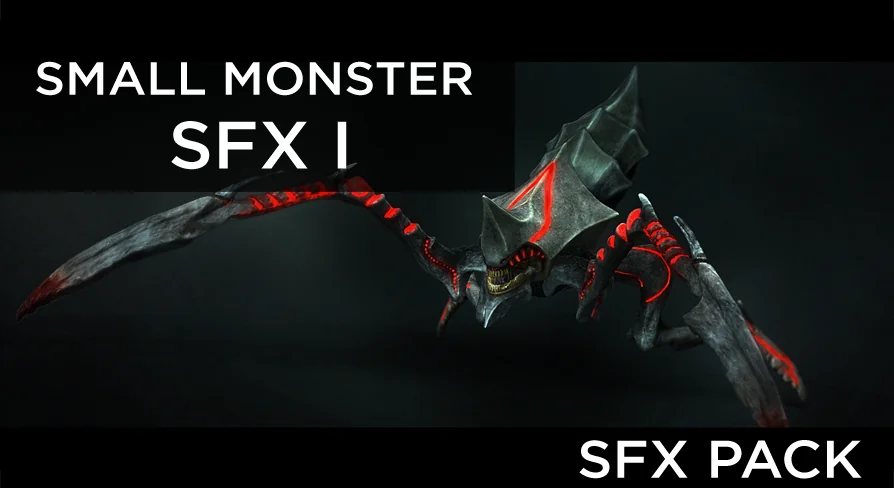
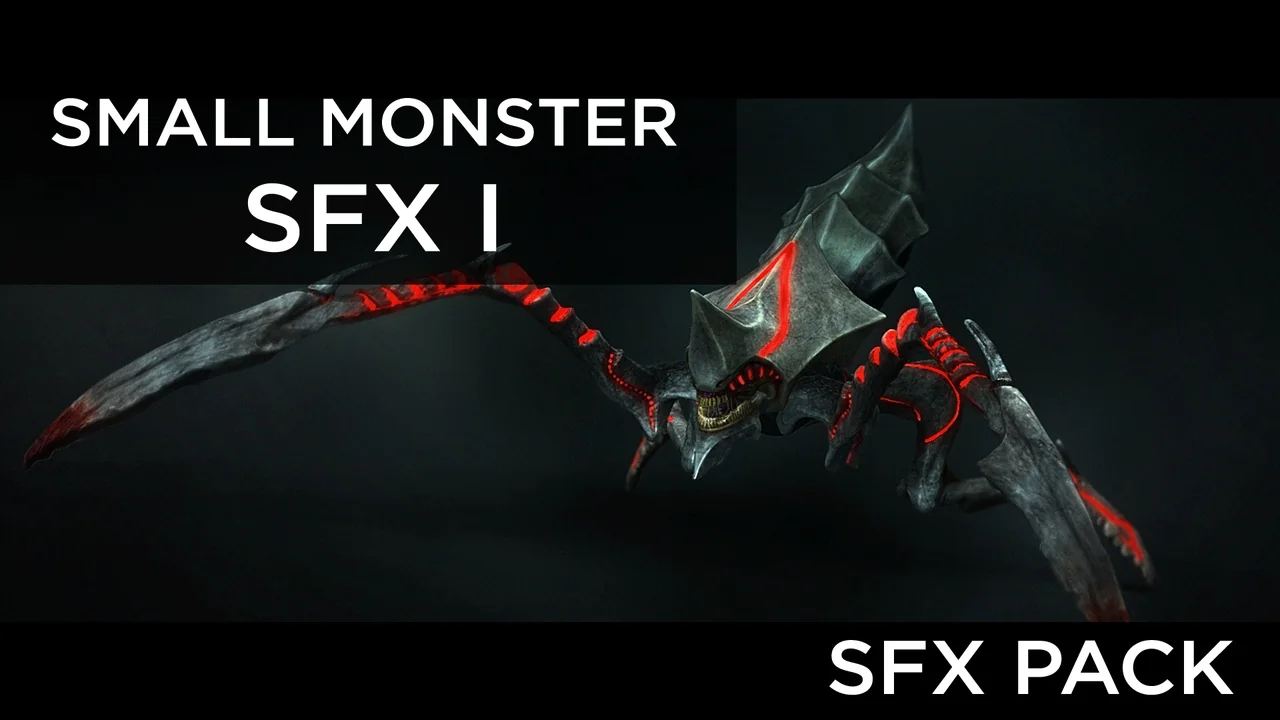
Small Monster SFX 1 is an audio pack for fantasy and medieval games that need voice and effect sounds for a human-sized or smaller enemy creature.
Category:Unreal Engine,Sound EffectsPlatform: Unreal EngineEngine Version: 4.26+,5.0+Published: Nov 6, 2026
Sound Effects
Resource overview
Small enemy creatures are easy to undersell in a game scene. A monster at human scale or below still needs a vocal identity and supporting sound before it feels alive rather than placed. Small Monster SFX 1 Is an audio pack aimed at that role: sounds intended to bring a small enemy creature—human sized or less—to life in a game.
The scale is the clearest boundary. The pack is not presented as a library for towering bosses or as a catch-all creature set; it is scoped to a compact enemy. Its tags reinforce that reading: Sound, Small, Effect, Fantasy, Voice, Medieval, Realistic, Creature, and Monster. Those words describe both the subject and the style, and they are the most useful guide to where the set belongs in a project.
Small Monster SFX 1 for Human-Sized and Smaller Enemies
“Human sized or less” is the most concrete implementation detail in the pack. It sets the scale of the creature the audio is meant to support. In practice, that points to a small enemy role: a creature that stays within the same general size range as a human rather than becoming a large-scale set piece.
The Small tag does more than describe stature. It separates this set from creature audio aimed at larger monsters. A project that needs a compact enemy has a clear match. A project that needs a giant creature, a non-creature sound source, or a broad monster library is outside the stated scope.
Monster and Creature keep the focus on an enemy creature rather than an ambient animal or a human voice. The pack is not positioned as general Foley. It is arranged through the sound identity of one kind of game subject, and that narrowness is useful when the design brief already names a small enemy.
What Voice and Effect Contribute to a Small Creature
Among the tags, Voice and Effect are the two most useful for planning use. Voice points to the creature's own vocal layer. Effect points to the supporting sound layer that sits around the creature rather than coming from its throat. Keeping those roles separate is a practical way to use the pack without turning every cue into the same kind of sound.
A small enemy can use both layers. The voice gives the creature a presence; effects give the scene sound beyond the voice. The pack's actual cue list defines what is available, but the tags outline the division to listen for. When mapping sounds to a scene, start with the voice because it is the most direct identifier of the monster. Then place effect cues where the scene needs support. That order keeps the creature recognizable and stops the voice from being buried under incidental sound.
Voice first, then supporting effect
The Small tag applies to the set as a whole, so scale is part of the selection rather than something added later. A voice and an effect chosen from a small-monster set already share a scale reference. That makes the two-layer approach easier to keep coherent: the creature sounds small because the set is scoped small, not because the sound is being forced into a role it was not tagged for.
For implementation, treat Voice and Effect as assignable roles rather than interchangeable labels. A creature's vocal cue can carry identity across repeated appearances; effect cues can support specific moments without redefining the creature. The tags do not list those moments, so the scene and the available cues should decide them.
Fantasy, Medieval, and Realistic as Style Markers
The style tags are Fantasy, Medieval, and Realistic. They sit alongside the creature tags rather than replacing them. For a project, that means the pack is intended for a creature role within a fantasy or medieval sound world, with Realistic also present as a descriptor.
These labels are useful for matching tone. A medieval fantasy game can use the pack where its world already supports that vocabulary. The Realistic tag adds a second reference point for projects that want a grounded descriptor in the mix. It is a style marker, not a specification of recording technique; treat it as a guide to the intended texture rather than a technical guarantee.
Because Fantasy and Medieval are both present, the pack is not tied to a single narrow fantasy variant. It can sit in a world where those words describe the setting. The creature tags keep it from becoming a generic period sound set: this is still a monster pack, and the style labels describe the world around the monster.
Using the Audio Demo Without Losing the Creature Layer
The pack is accompanied by an audio demo with a background sound behind the effects. That detail matters when auditioning. The demo is not a dry, isolated playback; there is a background bed behind the creature sounds. Listen for the small monster layer against that background rather than treating the whole demo as a single creature cue.
A background bed can flatter a sound set. It can also mask it. When judging the pack for a project, focus on the voice and effect elements that belong to the creature, and judge whether they carry the human-sized-or-less scale. The demo is a listening aid, not a cue sheet. The tags remain the better guide to the pack's roles: Sound, Small, Effect, Fantasy, Voice, Medieval, Realistic, Creature, Monster. Use the demo to hear the intended character; use the tags to decide where the set fits.
Placing Voice and Effect Around a Compact Enemy
In a game, the pack's value comes from placement. A small monster with only a voice can feel like a floating speaker; a small monster with voice and effect layers can feel more grounded in the scene. The pack's combined Voice and Effect tags support that two-layer approach.
Keep the scale consistent. The human-sized-or-less range should guide which enemies receive the set. Applying it to a large monster would go beyond the pack's purpose. Using it for a small enemy creature keeps the sound identity aligned with the label. For a sound team sorting assets, the pack can be treated as a dedicated small-monster set rather than a general-purpose creature library. That makes assignment easier: the small enemy role gets the small monster audio, while larger creature roles need a different source.
The fantasy, medieval, and realistic tags should also stay visible in the assignment. A small enemy in a matching world is the natural fit. A creature in a different genre may still be small, but the style tags point away from this set. The tags are doing the work of a brief: they narrow the pack to a scale, a subject, and a sound world.
Where Small Monster SFX 1 Fits in a Project
The clearest fit is a fantasy or medieval game that needs a small enemy creature to feel alive. The pack's role is exactly that: sounds for a small enemy creature, human sized or less. It is tagged for voice and effect, so it can support both the creature's presence and the sound around it.
Choose it when the creature scale is human-sized or less and when the sound world is fantasy, medieval, or realistically described. For a project with a different creature scale or a different genre, the labels make the mismatch clear. That is not a defect; it is a scope definition. The pack does not try to be every monster sound set, and that makes it easier to place.
The set works best as part of a layered sound design, not as the only sound in the scene. Voice carries identity; effect carries support; the human-sized-or-less scope decides the enemy role. If that brief matches the creature in the project, the pack is aimed at it. If not, the tags show the gap before implementation begins.
 Sound Effects
 Sound Effects
 Sound Effects
 Sound Effects