"95fdaf16012263fa"{"id":"1002341","slug":"realistic-grass-1","title":"Realistic Grass 1","category":"Nature \u0026 Plants","engine":"4.27,5.0+","assetVersion":"","engineVersion":"Engine Version: 4.27,5.0+","tag":"Nature \u0026 Plants","accent":"blue","visual":"mech","summary":"Realistic Grass 1 packs 36 grass meshes — 30 small patches and 6 large ones — with adjustable wind, color variation, snow, and character and vehicle interaction","platform":"Unreal Engine","indexPolicy":"index","publishedAt":"2026-11-06T06:47:40.370Z","updatedAt":"2026-11-06T06:47:40.370Z","sourceNotes":[],"fileContents":[],"compatibility":["Unreal Engine","Engine Version: 4.27,5.0+"],"featuredImage":{"alt":"Realistic Grass 1","src":"/wp-content/uploads/published/2026/11/5be92ec5fc2b-43b266f1-14c2-4cff-9cca-78adbe275f92-c785fe0906.webp"},"hasDownloadLink":true,"downloads":0,"terms":[{"taxonomy":"category","slug":"nature-and-plants","name":"Nature \u0026 Plants"}],"galleryImages":[{"src":"/wp-content/uploads/published/2026/11/20f54be5d563-b3a6c877-46d8-41df-a2bf-3a2057541d59-bb13ee6ea4.webp","alt":"Realistic Grass 1"},{"src":"/wp-content/uploads/published/2026/11/fd8c5874006f-288c10f0-dfad-4015-ba07-9c3d95d65445-3e0899bd59.webp","alt":"Realistic Grass 1"},{"src":"/wp-content/uploads/published/2026/11/00f0067149d2-dc73b27f-8033-4622-803b-1ce90ab8d2f6-ac386d0ebf.webp","alt":"Realistic Grass 1"},{"src":"/wp-content/uploads/published/2026/11/1a2ec2c22f12-aacbd09c-7e44-448a-a7c2-2632dfc6f8b7-e0f86315b9.webp","alt":"Realistic Grass 1"}],"accessPanel":{"kind":"resource","title":"Get this resource","eyebrow":"Free resource","message":"3DCGHUB is the service provider for this listing. Access is fulfilled through the official publisher channel.","fileName":"Realistic Grass 1.7z","safetyNote":"Resources are manually reviewed before listing to improve quality and reduce obvious risks.","actionLabel":"Get this resource","resourceType":"Resource archive","versions":[]},"contentHtml":"\u003cp\u003eOpen fields, overgrown lots, roadside verges, the ground between buildings — outdoor scenes depend on ground cover that holds up when the camera gets close. Realistic Grass 1 supplies 36 grass meshes aimed at exactly that job: making an environment read as alive and natural instead of a flat surface with a green texture stretched over it.\u003c/p\u003e \u003cp\u003eThe package is split unevenly on purpose. Most of it is small, scatterable detail. A small remainder is heavy coverage. Everything else — wind, color, snow, interaction — is adjustable rather than baked in.\u003c/p\u003e \u003ch2\u003eThirty small patches and six large ones\u003c/h2\u003e \u003cp\u003eOf the 36 meshes, 30 are small grass patches. Their job is randomization. When you paint with the foliage tool, a deep library of small variations keeps the ground from showing the same clump on a loop, and that repetition is usually what makes scattered grass look artificial at a glance.\u003c/p\u003e \u003cp\u003eThe remaining six are large grass patches. These exist to block out areas faster and with more density — high-density large patches that fill a space in fewer strokes than a field of small clumps would require.\u003c/p\u003e \u003cp\u003eThe ratio tells you how the set expects to be used. Large patches establish the mass of a meadow or a neglected yard; small patches break up the surface of that mass so it doesn't read as six repeated objects.\u003c/p\u003e \u003ch2\u003eFoliage-friendly patches and randomized placement\u003c/h2\u003e \u003cp\u003eThe meshes are built to sit inside a foliage-painting workflow. Grass patches that behave well in that context are the difference between a scattering pass that takes minutes and one that fights you with scale and density corrections at every stroke.\u003c/p\u003e \u003cp\u003eA practical order of operations follows from the two patch sizes. Lay the large patches first to claim the area and set the density floor, then work the 30 small patches over and around them to introduce irregularity along edges, paths, and the seams where terrain materials change. Randomized placement is one of the stated features, so the small set is doing double duty: filling gaps and preventing visible tiling.\u003c/p\u003e \u003ch2\u003eAdjustable wind strength and color variation\u003c/h2\u003e \u003cp\u003eWind strength is adjustable rather than fixed. A calm interior courtyard and an exposed hillside don't want the same motion, and the setting lets you match the grass response to the scene instead of accepting one baked sway.\u003c/p\u003e \u003cp\u003eColor variation runs through the grass as well, so a painted field doesn't come out as a single uniform green. That variation is what carries a meadow through different lighting conditions without the whole surface shifting as one flat tone.\u003c/p\u003e \u003ch3\u003eSnow effect for colder setups\u003c/h3\u003e \u003cp\u003eA snow effect is included to fit the grass to winter or cold-weather environments. It sits alongside the color variation and wind settings as another way to re-point the same 36 meshes at a different season rather than sourcing a second grass set.\u003c/p\u003e \u003ch2\u003eCharacter and vehicle interaction\u003c/h2\u003e \u003cp\u003ePlayers and vehicles can be given the appearance of moving through the grass rather than gliding over it. Both character interaction and vehicle interaction are supported, and the interaction effects are fully adjustable — strength and behaviour are yours to tune rather than locked to a single preset.\u003c/p\u003e \u003cp\u003eThis is the detail that separates a grass set from a static prop library. Footsteps that push grass aside and vehicles that leave a visible path of disturbed blades do a lot of work for immersion in first-person and third-person projects, especially where the camera stays low to the ground.\u003c/p\u003e \u003ch2\u003eWhere the set fits, including Survival Game Kit V2\u003c/h2\u003e \u003cp\u003eCompatibility with Survival Game Kit V2 is worth noting for projects already building on that framework — the grass can be dropped into that pipeline rather than treated as a separate, parallel system.\u003c/p\u003e \u003cp\u003eBeyond that, the tag profile is honest about the intent: grass, foliage, realistic. Nothing here is stylized or abstract. The meshes target environments where the ground is meant to look like ground, whether that's a forest floor, a field, a roadside, or the perimeter of a built-up area.\u003c/p\u003e \u003ch2\u003eWho gets the most out of it\u003c/h2\u003e \u003cp\u003eEnvironment artists working on outdoor scenes with real ground coverage will find the split between 30 small and 6 large patches does most of the heavy lifting. The large patches cut down blockout time; the small ones carry the randomization that keeps a painted field from looking stamped. For anyone building survival, exploration, or open-air projects where the player spends time at ground level, the character and vehicle interaction settings and the adjustable wind and snow options make the same 36 meshes usable across several scenes and seasons without rebuilding the ground cover each time.\u003c/p\u003e\n\n\u003ch2\u003eExplore Similar Assets\u003c/h2\u003e\n\u003cul\u003e\n\u003cli\u003e\u003ca href=\"https://3dcghub.com/realistic-grass-2/\" rel=\"noopener noreferrer\"\u003eRealistic Grass 2\u003c/a\u003e\u003c/li\u003e\n\u003cli\u003e\u003ca href=\"https://3dcghub.com/realistic-grass-sv-02-master-grass/\" rel=\"noopener noreferrer\"\u003eRealistic Grass SV 02 Master Grass\u003c/a\u003e\u003c/li\u003e\n\u003cli\u003e\u003ca href=\"https://3dcghub.com/nature-set/\" rel=\"noopener noreferrer\"\u003eNature Set\u003c/a\u003e\u003c/li\u003e\n\u003cli\u003e\u003ca href=\"https://3dcghub.com/nanite-foliage-v2/\" rel=\"noopener noreferrer\"\u003eNanite Foliage V2\u003c/a\u003e\u003c/li\u003e\n\u003cli\u003e\u003ca href=\"https://3dcghub.com/xbh-tree-vol-1/\" rel=\"noopener noreferrer\"\u003eXBH TREE Vol. 1\u003c/a\u003e\u003c/li\u003e\n\u003c/ul\u003e","contentTextLength":4728,"navigation":{"current":27,"total":4291,"previous":{"id":"1002342","slug":"regular-male-civilian-character","title":"Regular Male Civilian Character","category":"Humans","platform":"Unreal Engine","updatedAt":"2026-11-06T06:48:46.543Z"},"next":{"id":"1002340","slug":"racing-ui-elements","title":"Racing UI Elements","category":"Vehicles \u0026 Transportation","platform":"Unreal Engine","updatedAt":"2026-11-06T06:46:55.688Z"}},"relatedResources":[{"id":"4182","slug":"realistic-grass-2","title":"Realistic Grass 2","category":"Nature \u0026 Plants","engine":"4.26+,5.0+","assetVersion":"Engine version: 4.26+,5.0+","engineVersion":"4.10","tag":"Nature \u0026 Plants","accent":"blue","visual":"mech","summary":"Enhance your digital worlds with 40 realistic grass meshes. Features include dynamic wind, snow effects, and full character interaction for better immersion.","platform":"Unreal Engine","indexPolicy":"index","publishedAt":"2026-02-10T11:30:45.000Z","updatedAt":"2026-04-19T15:57:29.000Z","sourceNotes":[],"fileContents":[],"compatibility":["Unreal Engine","Engine version: 4.26+,5.0+"],"featuredImage":{"alt":"Realistic Grass 2","src":"https://3dcghub.com/wp-content/uploads/2026/02/209a1735-15a3-49bc-9f21-745d0a28c24f.webp"},"hasDownloadLink":true,"downloads":0},{"id":"1002166","slug":"realistic-grass-sv-02-master-grass","title":"Realistic Grass SV 02 Master Grass","category":"Nature \u0026 Plants","engine":"4.27+,5.0+","assetVersion":"","engineVersion":"Engine Version: 4.27+,5.0+","tag":"Nature \u0026 Plants","accent":"blue","visual":"mech","summary":"Realistic Grass SV 02 Master Grass provides optimized lowpoly ground cover, improved parallax textures, environmental props, and optional collision blueprints.","platform":"Unreal Engine","indexPolicy":"index","publishedAt":"2026-10-29T10:09:04.991Z","updatedAt":"2026-10-29T10:09:04.991Z","sourceNotes":[],"fileContents":[],"compatibility":["Unreal Engine","Engine Version: 4.27+,5.0+"],"featuredImage":{"alt":"Realistic Grass SV 02 Master Grass","src":"/wp-content/uploads/published/2026/10/37a3520511c1-ae532710-737c-4d8b-a9d7-d91779004a83-562df9e929.webp"},"hasDownloadLink":true,"downloads":0},{"id":"28163","slug":"nature-set","title":"Nature Set","category":"Nature \u0026 Plants","engine":"4.26+,5.0+","assetVersion":"Engine version: 4.26+,5.0+","engineVersion":"","tag":"Nature \u0026 Plants","accent":"blue","visual":"luts","summary":"Nature Set targets outdoor environments with rocks, trees, grass-related textures, and a range of landscape ground materials. Its focus stays practical: prepared LODs, optimized assets, and texture resolutions suited to assembling realistic terrain scenes.","platform":"Unreal Engine","indexPolicy":"index","publishedAt":"2026-05-04T15:50:51.000Z","updatedAt":"2026-05-04T15:50:52.000Z","sourceNotes":[],"fileContents":[],"compatibility":["Unreal Engine","Engine version: 4.26+,5.0+"],"featuredImage":{"alt":"Nature Set","src":"https://3dcghub.com/wp-content/uploads/2026/05/4db63e9ac45d_87baa7be-9d99-4292-a5dc-903912f95d86.webp"},"hasDownloadLink":true,"downloads":2}]}
Nature & Plants
Realistic Grass 1
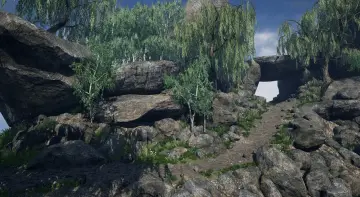
Realistic Grass 1 packs 36 grass meshes — 30 small patches and 6 large ones — with adjustable wind, color variation, snow, and character and vehicle interaction
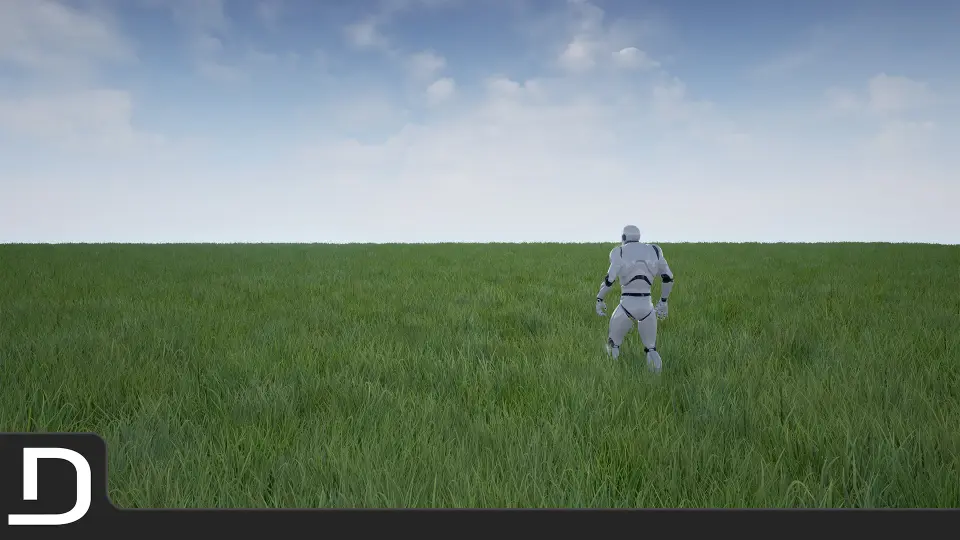
Open fields, overgrown lots, roadside verges, the ground between buildings — outdoor scenes depend on ground cover that holds up when the camera gets close. Realistic Grass 1 supplies 36 grass meshes aimed at exactly that job: making an environment read as alive and natural instead of a flat surface with a green texture stretched over it.
The package is split unevenly on purpose. Most of it is small, scatterable detail. A small remainder is heavy coverage. Everything else — wind, color, snow, interaction — is adjustable rather than baked in.
Thirty small patches and six large ones
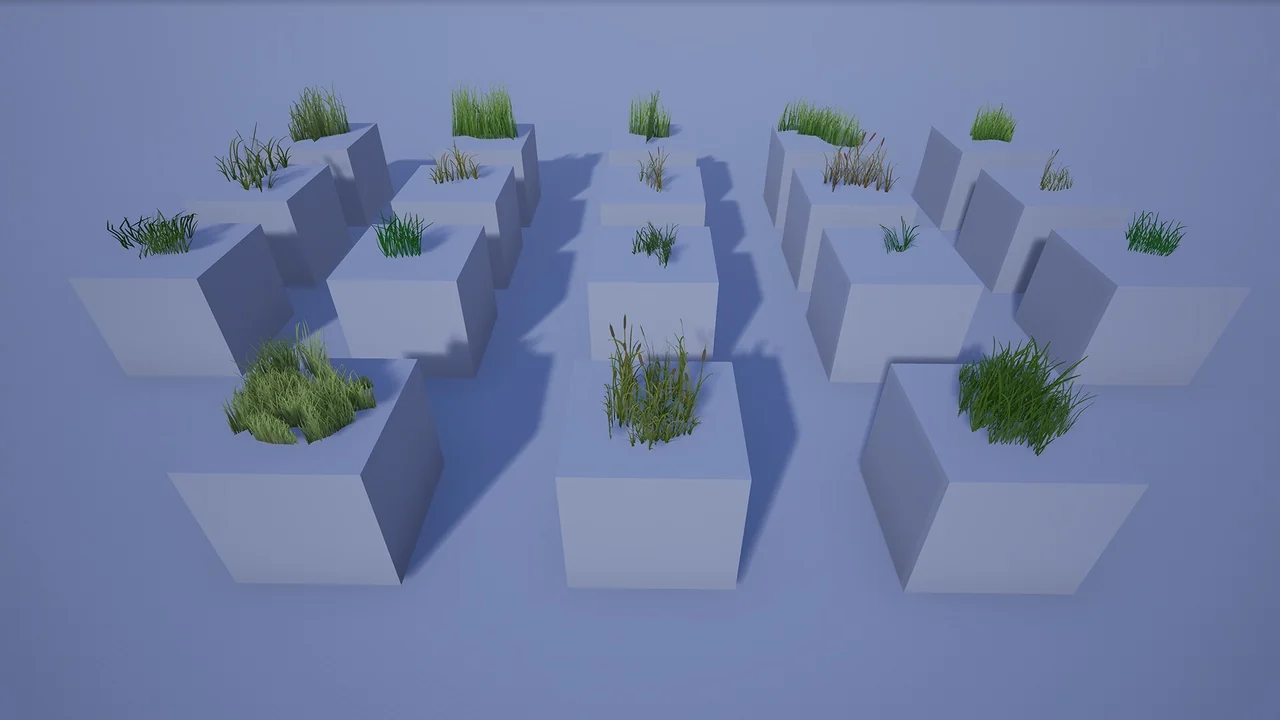
Of the 36 meshes, 30 are small grass patches. Their job is randomization. When you paint with the foliage tool, a deep library of small variations keeps the ground from showing the same clump on a loop, and that repetition is usually what makes scattered grass look artificial at a glance.
The remaining six are large grass patches. These exist to block out areas faster and with more density — high-density large patches that fill a space in fewer strokes than a field of small clumps would require.
The ratio tells you how the set expects to be used. Large patches establish the mass of a meadow or a neglected yard; small patches break up the surface of that mass so it doesn't read as six repeated objects.
Foliage-friendly patches and randomized placement
The meshes are built to sit inside a foliage-painting workflow. Grass patches that behave well in that context are the difference between a scattering pass that takes minutes and one that fights you with scale and density corrections at every stroke.
A practical order of operations follows from the two patch sizes. Lay the large patches first to claim the area and set the density floor, then work the 30 small patches over and around them to introduce irregularity along edges, paths, and the seams where terrain materials change. Randomized placement is one of the stated features, so the small set is doing double duty: filling gaps and preventing visible tiling.
Adjustable wind strength and color variation
Wind strength is adjustable rather than fixed. A calm interior courtyard and an exposed hillside don't want the same motion, and the setting lets you match the grass response to the scene instead of accepting one baked sway.
Color variation runs through the grass as well, so a painted field doesn't come out as a single uniform green. That variation is what carries a meadow through different lighting conditions without the whole surface shifting as one flat tone.
Snow effect for colder setups
A snow effect is included to fit the grass to winter or cold-weather environments. It sits alongside the color variation and wind settings as another way to re-point the same 36 meshes at a different season rather than sourcing a second grass set.
Character and vehicle interaction
Players and vehicles can be given the appearance of moving through the grass rather than gliding over it. Both character interaction and vehicle interaction are supported, and the interaction effects are fully adjustable — strength and behaviour are yours to tune rather than locked to a single preset.
This is the detail that separates a grass set from a static prop library. Footsteps that push grass aside and vehicles that leave a visible path of disturbed blades do a lot of work for immersion in first-person and third-person projects, especially where the camera stays low to the ground.
Where the set fits, including Survival Game Kit V2
Compatibility with Survival Game Kit V2 is worth noting for projects already building on that framework — the grass can be dropped into that pipeline rather than treated as a separate, parallel system.
Beyond that, the tag profile is honest about the intent: grass, foliage, realistic. Nothing here is stylized or abstract. The meshes target environments where the ground is meant to look like ground, whether that's a forest floor, a field, a roadside, or the perimeter of a built-up area.
Who gets the most out of it
Environment artists working on outdoor scenes with real ground coverage will find the split between 30 small and 6 large patches does most of the heavy lifting. The large patches cut down blockout time; the small ones carry the randomization that keeps a painted field from looking stamped. For anyone building survival, exploration, or open-air projects where the player spends time at ground level, the character and vehicle interaction settings and the adjustable wind and snow options make the same 36 meshes usable across several scenes and seasons without rebuilding the ground cover each time.
 Nature & Plants
 Nature & Plants
 Nature & Plants
 Nature & Plants