Framework for City Simulation and Market Logic
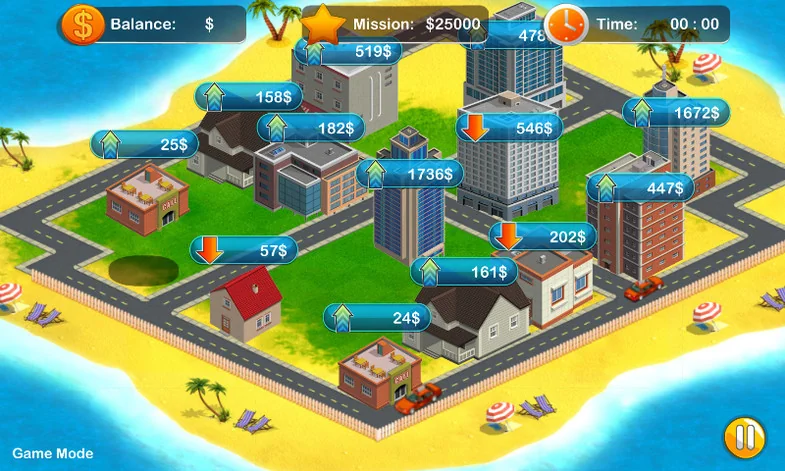
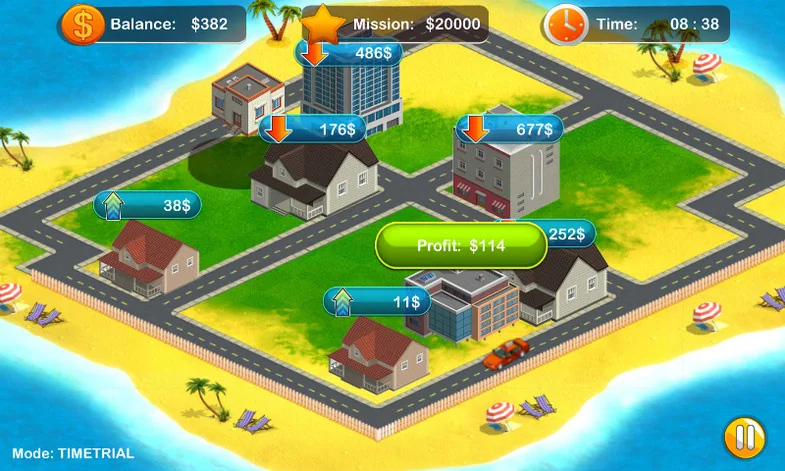
The Real Estate Tycoon kit is designed as a foundational template for developers creating city simulators or time-management games. The core gameplay loop centers on a buy-low, sell-high mechanic where players must navigate market fluctuations to maximize profits and grow a real estate portfolio. This system relies on timing and decision-making to avoid losses during shifts in the virtual economy.
The kit is structured to allow for rapid project setup, offering a flexible design that supports both 2D and 3D visual styles. Because it uses Unity’s built-in features, the template functions without the requirement for third-party tools, making it a self-contained starting point for tycoon-style projects.
Core Game Modes and Scene Structure
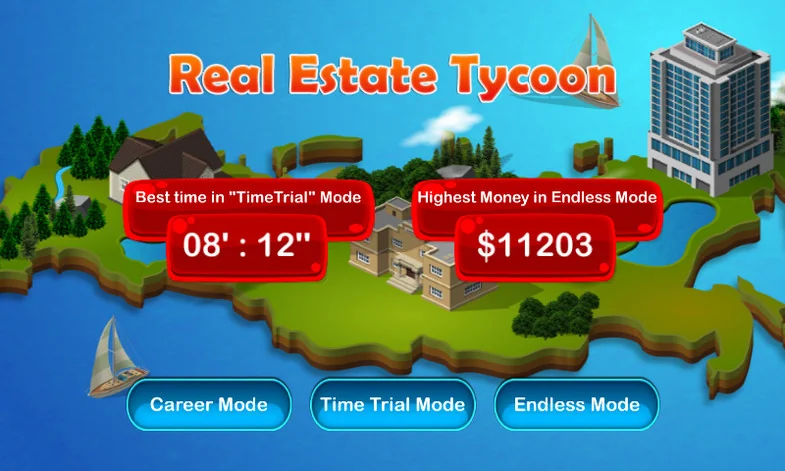
To provide varied player engagement, the kit includes three specific game modes that can be implemented out of the box. The Career mode utilizes a dedicated Career Map scene where players progress through missions. For different gameplay paces, the kit offers a Time-Trial mode for time-sensitive challenges and an Endless mode for long-term growth without immediate time constraints.
The asset package provides a complete scene hierarchy to manage the user experience. This includes a main menu, the career map, pause menus, and the primary gameplay scenes. These components are designed to be easily extendable, allowing developers to use them as a base for more complex time-management mechanics or unique tycoon variations.
Technical Architecture and C# Implementation
The underlying logic of the kit is built on clean, commented C# code, which is intended to serve as a learning resource for creating time-management systems from scratch. Recent updates have refined the code architecture, such as version 1.4.1 which introduced the “RealEstateTycoon” namespace to all classes to improve project organization and prevent naming conflicts.
The package has evolved to ensure compatibility across multiple versions of the Unity engine. It currently supports Unity 2020.3.30, 2022.3.4, and the latest Unity 6 (6000.0.27). In terms of rendering, the kit is compatible with the Built-in Render Pipeline and the Universal Render Pipeline (URP), specifically starting from version 2022.3.4f1.
Mobile Optimization and Platform Support
The developer has optimized the performance of the kit for a wide range of platforms, including Android, iOS, Windows Phone, WebGL, and Windows desktop. The 31.9 MB package size and efficient asset management ensure smooth performance on mobile hardware. To support monetization and player engagement, the kit includes an AdMob plugin capable of handling banner ads, interstitial ads, and rewarded video ads.
The asset count totals 222 items within the unitypackage, providing the necessary scripts and UI elements to build a functional prototype or a finished game. The template is designed for re-skinning, allowing for visual customization while maintaining the core simulation logic.
Evolution and Version History
The kit has undergone several iterations to maintain compatibility and modernize its codebase. Notable changes in previous versions include the complete removal of UnityScript (js) files in version 1.2.1, ensuring the project is fully C#-based. It also includes fixes for specific UI issues, such as font displacement bugs identified in earlier releases. The kit’s long-term support spans from early Unity 5.x versions through to the modern Unity 6 environment, ensuring that the legacy systems remain functional within updated development workflows.
Preview Images