"7aa4acc705f0d80b"{"id":"1001145","slug":"nuclear-winter","title":"Nuclear winter","category":"Food \u0026 Drink","engine":"5.2+","assetVersion":"","engineVersion":"Engine Version: 5.2+","tag":"Food \u0026 Drink","accent":"blue","visual":"mech","summary":"Build frozen, ruined cityscapes with Nuclear winter, featuring over 700 static meshes, modular destruction, blueprint props, and custom cold particle effects.","platform":"Unreal Engine","publishedAt":"2026-09-09T06:06:53.373Z","updatedAt":"2026-09-09T06:06:53.373Z","sourceNotes":[],"fileContents":[],"compatibility":["Unreal Engine","Engine Version: 5.2+"],"featuredImage":{"alt":"Nuclear winter","src":"/wp-content/uploads/published/2026/09/ad6257637b06-93924810-1256-4a6a-a5b7-a4b90368fd2e-6a1d54e400.webp"},"hasDownloadLink":true,"downloads":2,"terms":[{"taxonomy":"category","slug":"food-and-drink","name":"Food \u0026 Drink"}],"galleryImages":[{"src":"/wp-content/uploads/published/2026/09/6951c369f947-b321c893-8370-455c-9516-8b0a37a930d1-3edf28e180.webp","alt":"Nuclear winter"},{"src":"/wp-content/uploads/published/2026/09/71b8f524aee5-629606b0-d74f-4661-bd7a-ac4d03ece11c-c660c08550.webp","alt":"Nuclear winter"},{"src":"/wp-content/uploads/published/2026/09/9f75d43b1068-c04e574b-d5bd-4618-b710-15533ce0ba9c-34672529ab.webp","alt":"Nuclear winter"},{"src":"/wp-content/uploads/published/2026/09/c04f7ddcb68d-36cc7149-29b8-45c5-9e34-048de0510beb-ce3fd17064.webp","alt":"Nuclear winter"},{"src":"/wp-content/uploads/published/2026/09/51f5b496581c-b6e2ad45-537a-4b7d-8b88-2cb15db1ee1f-1e50d12110.webp","alt":"Nuclear winter"},{"src":"/wp-content/uploads/published/2026/09/060062004acb-cdfd012a-93f6-4988-a8aa-d67153301348-b486521c34.webp","alt":"Nuclear winter"},{"src":"/wp-content/uploads/published/2026/09/bc279434ac2f-e055be20-7795-4f43-8ce2-f849518f67fc-733f616635.webp","alt":"Nuclear winter"},{"src":"/wp-content/uploads/published/2026/09/88188b9880db-226573fa-9e74-473c-a4bd-bf20b2ab39d6-5a1b1b4b50.webp","alt":"Nuclear winter"},{"src":"/wp-content/uploads/published/2026/09/6034a094903d-5586bbf0-43e5-495a-bad7-3819bb4963bd-b75050edb1.webp","alt":"Nuclear winter"},{"src":"/wp-content/uploads/published/2026/09/78338ce9d73d-2d653432-56e0-4509-90f1-ee140a5faf20-a04885f4f9.webp","alt":"Nuclear winter"}],"accessPanel":{"kind":"resource","title":"Download this resource","eyebrow":"Free Download","message":"Log in or create a free account to start your download.","fileName":"Content.7z","safetyNote":"Resources are manually reviewed before listing to improve quality and reduce obvious risks.","actionLabel":"Download Free","resourceType":"Resource archive"},"contentHtml":"\u003cp\u003eSetting a project in the aftermath of a catastrophic freeze requires a balance between architectural scale and small, narrative-rich clutter. Nuclear winter delivers an environmental library built specifically for bleak, frostbitten urban scenes, abandoned towns, and devastated metropolitan streets. Spanning 3 GB of assets and more than 700 static meshes, the package supplies creators with the physical elements needed to stage expansive post-collapse environments where extreme weather and civil collapse collide.\u003c/p\u003e \u003ch2\u003eConstructing Frozen Ruins Across First and Second Plan Views\u003c/h2\u003e\n\u003cp\u003eEnvironmental depth relies heavily on how structures are staged relative to the viewer. When laying out a ruined street or square, background elements must feel as voluminous and structurally credible as the immediate playable zone. This package supplies architecture specifically grouped to establish convincing presence across both the first and second plan of a scene. Foreground areas can be framed with heavy structural detritus, while secondary layers fill out the horizon with massive municipal forms and crumbling silhouettes.\u003c/p\u003e \u003cp\u003eTo avoid the visual monotony that often plagues large urban environments, several buildings incorporate modular engineering. Creators can assemble wall segments, entryways, and upper levels to reflect distinct stages of destruction. A single city block can transition from partially intact storefront facades to shattered concrete cores simply by swapping or combining modular structural components. This modularity ensures that streets do not look like repetitive clones, allowing individual city sectors to communicate unique collapse histories.\u003c/p\u003e \u003ch2\u003eModular Destruction and Architectural Remains in Nuclear Winter\u003c/h2\u003e\n\u003cp\u003eVisual storytelling in devastated spaces depends directly on the aftermath of physical impact. The asset collection emphasizes broken building remains, cracked shells, and heavy structural debris that scatter naturally around compromised foundations. Rather than presenting pristine geometric shapes, the modular destruction pieces help environment artists break up straight rooflines and shatter standard wall profiles.\u003c/p\u003e \u003cp\u003ePiles of rubble and fractured masonry serve functional roles in level design as well as aesthetic ones. These debris pieces can be deployed to block off player pathways, establish natural cover points in an action title, or guide navigation through a damaged neighborhood. Because the structural wreckage matches the architectural styles of the main buildings, designers can create seamless transitions between upright standing structures, leaning slabs, and completely pulverized heaps of stone and mortar.\u003c/p\u003e \u003ch2\u003ePopulating City Streets with Period Equipment, Cultural Objects, and Store Props\u003c/h2\u003e\n\u003cp\u003eA believable ruined city requires more than empty concrete shells. The feeling of sudden abandonment comes through the everyday items left behind when the cold set in. This collection provides an extensive assortment of props of that time, cultural monuments, store inventory, food supplies, and discarded clothes to ground the scene in human history.\u003c/p\u003e \u003cp\u003eCivil monuments and recognizable cultural objects give town squares and public plazas an identifiable regional and historical character. In commercial corridors, ruined store elements and scattered food items allow artists to dress interior retail spaces or spilled outdoor stalls. The addition of discarded clothes and personal gear lets developers communicate human presence and sudden flight without relying on narrative exposition. When placed around vehicles, street corners, or half-buried under modular building fragments, these smaller props turn generic ruined corridors into believable living spaces arrested in time.\u003c/p\u003e \u003ch2\u003eBlueprint Assemblies and Object Adjustments for Scene Variation\u003c/h2\u003e\n\u003cp\u003eAssembling an urban layout containing hundreds of individual static pieces can quickly become time-consuming. To streamline worldbuilding workflows, the project groups static meshes into functional blueprints. These blueprint configurations combine structural components, debris layers, and scene props into coordinated clusters, making it possible to drop complex ruined compositions into a level with minimal manual arrangement.\u003c/p\u003e \u003cp\u003eBeyond premade blueprint groupings, the package includes a variety of fine adjustments built into the assets. Artists can tweak the visual presentation of certain objects directly, modifying their surfaces to fit the specific micro-climate or destruction level of a particular district. Whether an object needs to appear heavily weathered or adjusted to blend into surrounding structures, these fine controls give developers the latitude to customize repeating props and maintain distinct visual identity across massive level layouts.\u003c/p\u003e \u003ch2\u003eAtmospheric Cold Through Finished Particle Systems\u003c/h2\u003e\n\u003cp\u003eA post-apocalyptic cold setting is incomplete without a sense of biting, hostile air. The package includes a finished particle system tailored to project an atmosphere of terrible cold throughout the environment. Instead of existing as a dry, static architectural set, the scene can be bathed in drifting frost, freezing air currents, and suspended winter precipitation.\u003c/p\u003e \u003cp\u003eThis atmospheric system integrates directly with the heavy architectural silhouettes and prop-strewn streets. Drifting particles catch lighting across rubble fields, highlight the cracked contours of modular buildings, and diminish visibility into the second plan. The visual friction between frozen airborne particles and dilapidated concrete reinforces the feeling of physical peril, establishing a cohesive aesthetic tone across both open town squares and tight alleyways.\u003c/p\u003e \u003ch2\u003eProduction Boundaries and Practical Implementation\u003c/h2\u003e\n\u003cp\u003eWhen planning level architecture and asset integration, technical boundaries must be factored in. The full project download footprint stands at 3 GB, housing the entire library of more than 700 static meshes, blueprints, and atmospheric effects. Note that while character models may appear within promotional demo videos demonstrating scale and layout potential, the character is not an asset included in the collection.\u003c/p\u003e \u003cp\u003eArtists looking to build extensive post-disaster simulations, fantasy winter catastrophes, or ruined realistic towns have the freedom to build maps according to their own architectural vision or work directly from the provided environment setup. The breadth of store fixtures, street monuments, period equipment, and flexible building meshes ensures that designers can construct custom urban layouts tailored precisely to the survival conditions of their world.\u003c/p\u003e\n\n\u003ch2\u003eMore From The Same Workflow\u003c/h2\u003e\n\u003cul\u003e\n\u003cli\u003e\u003ca href=\"https://3dcghub.com/restaurant-vol-3-dining-decor-nanite-and-low-poly/\" title=\"Restaurant VOL.3 - Dining Decor (Nanite and Low Poly)\"\u003eRestaurant VOL.3 - Dining Decor (Nanite and Low Poly)\u003c/a\u003e\u003c/li\u003e\n\u003cli\u003e\u003ca href=\"https://3dcghub.com/restaurant-vol-1-food-prep-nanite-and-low-poly/\" title=\"Restaurant VOL.1 - Food Prep (Nanite and Low Poly)\"\u003eRestaurant VOL.1 - Food Prep (Nanite and Low Poly)\u003c/a\u003e\u003c/li\u003e\n\u003cli\u003e\u003ca href=\"https://3dcghub.com/chinese-wineset-snack/\" title=\"Chinese Wineset \u0026amp; Snack\"\u003eChinese Wineset \u0026amp; Snack\u003c/a\u003e\u003c/li\u003e\n\u003cli\u003e\u003ca href=\"https://3dcghub.com/food-scans/\" title=\"Food Scans\"\u003eFood Scans\u003c/a\u003e\u003c/li\u003e\n\u003cli\u003e\u003ca href=\"https://3dcghub.com/norwegian-winter-island-village-megapack/\" title=\"Norwegian Winter Island Village Megapack\"\u003eNorwegian Winter Island Village Megapack\u003c/a\u003e\u003c/li\u003e\n\u003c/ul\u003e","contentTextLength":6790,"navigation":{"current":897,"total":3925,"previous":{"id":"1001146","slug":"opera-hall","title":"Opera Hall","category":"Victorian","platform":"Unreal Engine","updatedAt":"2026-09-10T11:39:06.098Z"},"next":{"id":"1001144","slug":"nova-space-burgers-cyberpunk-abandoned-restaurant-space-bar-cyberpunk-art","title":"Nova Space Burgers / Cyberpunk Abandoned Restaurant / Space Bar Cyberpunk Art","category":"Cyberpunk","platform":"Unreal Engine","updatedAt":"2026-09-09T05:51:55.337Z"}},"relatedResources":[{"id":"1000665","slug":"restaurant-vol-3-dining-decor-nanite-and-low-poly","title":"Restaurant VOL.3 - Dining Decor (Nanite and Low Poly)","category":"Food \u0026 Drink","engine":"5.1+","assetVersion":"","engineVersion":"Engine Version: 5.1+","tag":"Food \u0026 Drink","accent":"blue","visual":"mech","summary":"Dekogon's restaurant dining decor pack delivers 84 unique meshes with Nanite and low-poly variants, 4K textures, master materials, and modular kitchen counters","platform":"Unreal Engine","publishedAt":"2026-07-22T06:58:56.056Z","updatedAt":"2026-07-22T06:58:56.056Z","sourceNotes":[],"fileContents":[],"compatibility":["Unreal Engine","Engine Version: 5.1+"],"featuredImage":{"alt":"Restaurant VOL.3 - Dining Decor (Nanite and Low Poly)","src":"/wp-content/uploads/published/2026/07/e265c8e860ac-c8e7e4f7-03dc-4e5a-ab92-08af6e43d331-6718232a29.webp"},"hasDownloadLink":true,"downloads":0},{"id":"1000088","slug":"restaurant-vol-1-food-prep-nanite-and-low-poly","title":"Restaurant VOL.1 - Food Prep (Nanite and Low Poly)","category":"Food \u0026 Drink","engine":"Engine Version: 5.1+","assetVersion":"Engine Version: 5.1+","engineVersion":"","tag":"Food \u0026 Drink","accent":"blue","visual":"mech","summary":"A realistic Unreal Engine restaurant food prep set with 180 meshes, Nanite and low poly versions, 4K textures, Lumen support, and modular counters.","platform":"Unreal Engine","publishedAt":"2026-06-06T17:49:02.444Z","updatedAt":"2026-06-06T17:49:02.444Z","sourceNotes":[],"fileContents":[],"compatibility":["Unreal Engine","Engine Version: 5.1+"],"featuredImage":{"alt":"Restaurant VOL.1 - Food Prep (Nanite and Low Poly)","src":"/wp-content/uploads/published/2026/06/3f8082a2808a-36a5da3b-8432-4840-b6d8-73a93fc71ef1-051d0587e9.webp"},"hasDownloadLink":true,"downloads":0},{"id":"3961","slug":"chinese-wineset-snack","title":"Chinese Wineset \u0026 Snack","category":"Food \u0026 Drink","engine":"5.1+","assetVersion":"Engine version: 5.1+","engineVersion":"5.1","tag":"Food \u0026 Drink","accent":"blue","visual":"mech","summary":"Enhance your 3D scenes with this high-quality Chinese wine and snack set. Featuring realistic dumplings and spring rolls, it is perfect for cultural projects.","platform":"Unreal Engine","publishedAt":"2026-02-09T12:49:57.000Z","updatedAt":"2026-04-30T13:10:36.000Z","sourceNotes":[],"fileContents":[],"compatibility":["Unreal Engine","Engine version: 5.1+"],"featuredImage":{"alt":"Chinese Wineset \u0026 Snack","src":"https://3dcghub.com/wp-content/uploads/2026/02/c31eed27-f796-4e8a-8d1b-16b8a3cf43a3.webp"},"hasDownloadLink":true,"downloads":0}]}
Food & Drink
Nuclear winter
Build frozen, ruined cityscapes with Nuclear winter, featuring over 700 static meshes, modular destruction, blueprint props, and custom cold particle effects.
Setting a project in the aftermath of a catastrophic freeze requires a balance between architectural scale and small, narrative-rich clutter. Nuclear winter delivers an environmental library built specifically for bleak, frostbitten urban scenes, abandoned towns, and devastated metropolitan streets. Spanning 3 GB of assets and more than 700 static meshes, the package supplies creators with the physical elements needed to stage expansive post-collapse environments where extreme weather and civil collapse collide.
Constructing Frozen Ruins Across First and Second Plan Views
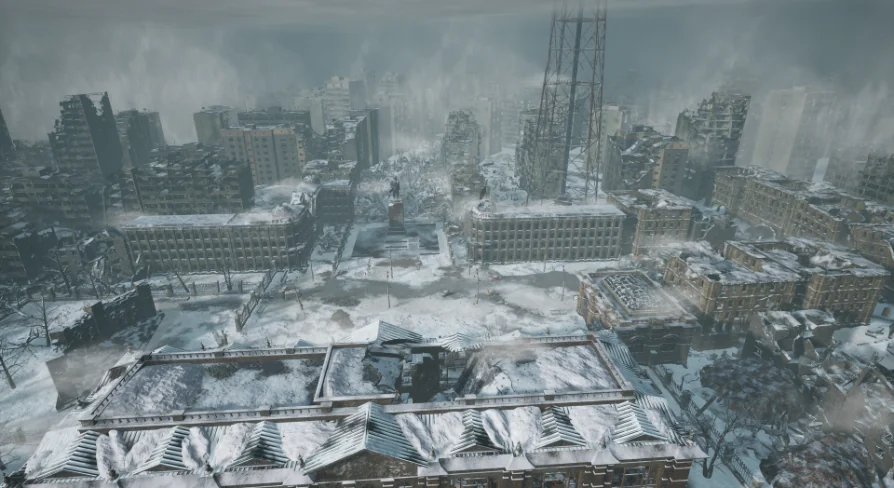
Environmental depth relies heavily on how structures are staged relative to the viewer. When laying out a ruined street or square, background elements must feel as voluminous and structurally credible as the immediate playable zone. This package supplies architecture specifically grouped to establish convincing presence across both the first and second plan of a scene. Foreground areas can be framed with heavy structural detritus, while secondary layers fill out the horizon with massive municipal forms and crumbling silhouettes.
To avoid the visual monotony that often plagues large urban environments, several buildings incorporate modular engineering. Creators can assemble wall segments, entryways, and upper levels to reflect distinct stages of destruction. A single city block can transition from partially intact storefront facades to shattered concrete cores simply by swapping or combining modular structural components. This modularity ensures that streets do not look like repetitive clones, allowing individual city sectors to communicate unique collapse histories.
Modular Destruction and Architectural Remains in Nuclear Winter
Visual storytelling in devastated spaces depends directly on the aftermath of physical impact. The asset collection emphasizes broken building remains, cracked shells, and heavy structural debris that scatter naturally around compromised foundations. Rather than presenting pristine geometric shapes, the modular destruction pieces help environment artists break up straight rooflines and shatter standard wall profiles.
Piles of rubble and fractured masonry serve functional roles in level design as well as aesthetic ones. These debris pieces can be deployed to block off player pathways, establish natural cover points in an action title, or guide navigation through a damaged neighborhood. Because the structural wreckage matches the architectural styles of the main buildings, designers can create seamless transitions between upright standing structures, leaning slabs, and completely pulverized heaps of stone and mortar.
Populating City Streets with Period Equipment, Cultural Objects, and Store Props
A believable ruined city requires more than empty concrete shells. The feeling of sudden abandonment comes through the everyday items left behind when the cold set in. This collection provides an extensive assortment of props of that time, cultural monuments, store inventory, food supplies, and discarded clothes to ground the scene in human history.
Civil monuments and recognizable cultural objects give town squares and public plazas an identifiable regional and historical character. In commercial corridors, ruined store elements and scattered food items allow artists to dress interior retail spaces or spilled outdoor stalls. The addition of discarded clothes and personal gear lets developers communicate human presence and sudden flight without relying on narrative exposition. When placed around vehicles, street corners, or half-buried under modular building fragments, these smaller props turn generic ruined corridors into believable living spaces arrested in time.
Blueprint Assemblies and Object Adjustments for Scene Variation
Assembling an urban layout containing hundreds of individual static pieces can quickly become time-consuming. To streamline worldbuilding workflows, the project groups static meshes into functional blueprints. These blueprint configurations combine structural components, debris layers, and scene props into coordinated clusters, making it possible to drop complex ruined compositions into a level with minimal manual arrangement.
Beyond premade blueprint groupings, the package includes a variety of fine adjustments built into the assets. Artists can tweak the visual presentation of certain objects directly, modifying their surfaces to fit the specific micro-climate or destruction level of a particular district. Whether an object needs to appear heavily weathered or adjusted to blend into surrounding structures, these fine controls give developers the latitude to customize repeating props and maintain distinct visual identity across massive level layouts.
Atmospheric Cold Through Finished Particle Systems
A post-apocalyptic cold setting is incomplete without a sense of biting, hostile air. The package includes a finished particle system tailored to project an atmosphere of terrible cold throughout the environment. Instead of existing as a dry, static architectural set, the scene can be bathed in drifting frost, freezing air currents, and suspended winter precipitation.
This atmospheric system integrates directly with the heavy architectural silhouettes and prop-strewn streets. Drifting particles catch lighting across rubble fields, highlight the cracked contours of modular buildings, and diminish visibility into the second plan. The visual friction between frozen airborne particles and dilapidated concrete reinforces the feeling of physical peril, establishing a cohesive aesthetic tone across both open town squares and tight alleyways.
Production Boundaries and Practical Implementation
When planning level architecture and asset integration, technical boundaries must be factored in. The full project download footprint stands at 3 GB, housing the entire library of more than 700 static meshes, blueprints, and atmospheric effects. Note that while character models may appear within promotional demo videos demonstrating scale and layout potential, the character is not an asset included in the collection.
Artists looking to build extensive post-disaster simulations, fantasy winter catastrophes, or ruined realistic towns have the freedom to build maps according to their own architectural vision or work directly from the provided environment setup. The breadth of store fixtures, street monuments, period equipment, and flexible building meshes ensures that designers can construct custom urban layouts tailored precisely to the survival conditions of their world.
 Food & Drink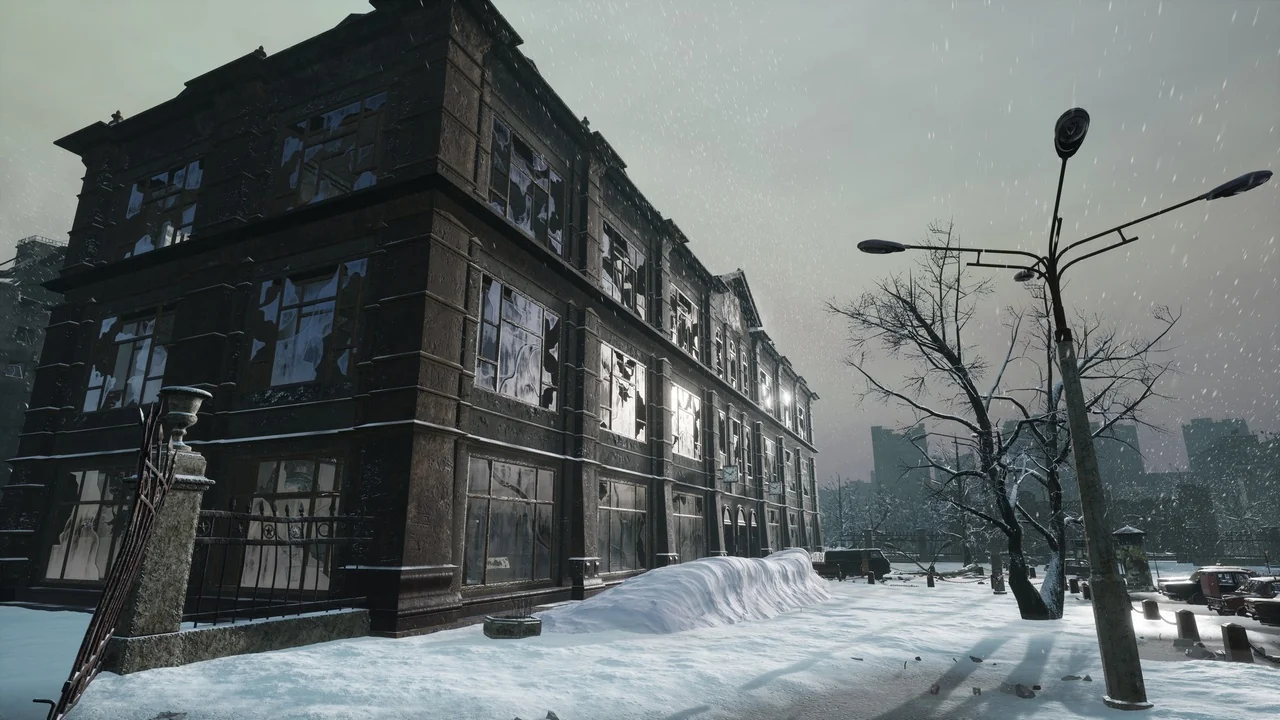
 Food & Drink
 Food & Drink
 Food & Drink