"a338a1d501976271"{"id":"1000313","slug":"modular-orcs-and-troll-metahuman","title":"Modular Orcs \u0026 Troll - Metahuman","category":"Characters \u0026 Creatures","engine":"5.6+","assetVersion":"","engineVersion":"Engine Version: 5.6+","tag":"Characters","accent":"blue","visual":"character","summary":"Explore the technical setup of this modular creature package, featuring MetaHuman topology integration, parametric clothing, and UE4 skeleton compatibility.","platform":"Unreal Engine","publishedAt":"2026-07-04T16:12:06.006Z","updatedAt":"2026-07-04T16:12:06.006Z","sourceNotes":[],"fileContents":[],"compatibility":["Unreal Engine","Engine Version: 5.6+"],"featuredImage":{"alt":"Modular Orcs \u0026 Troll - Metahuman","src":"/wp-content/uploads/published/2026/07/1435db0a56bc-b76a920a-21e4-48df-bb84-5f8421721c86-fcb39d7bc0.webp"},"hasDownloadLink":true,"downloads":2,"terms":[{"taxonomy":"category","slug":"characters-and-creatures","name":"Characters \u0026 Creatures"}],"galleryImages":[{"src":"/wp-content/uploads/published/2026/07/27ac488060bd-dc0d38f0-55ad-4737-b633-a38ef5c56c50-981167bfe7.webp","alt":"Modular Orcs \u0026 Troll - Metahuman"},{"src":"/wp-content/uploads/published/2026/07/3c925f9536b7-50538f5c-283a-4a2b-91a7-51c3344fc4dc-6121f52f13.webp","alt":"Modular Orcs \u0026 Troll - Metahuman"},{"src":"/wp-content/uploads/published/2026/07/0b54f3a67208-127a74da-faea-483a-9777-0d7311b94e70-d24958feb4.webp","alt":"Modular Orcs \u0026 Troll - Metahuman"},{"src":"/wp-content/uploads/published/2026/07/afb5ee24c7e8-6f3fbaa8-94a1-4d36-b1e5-cc7f4f188216-8d8144cbfc.webp","alt":"Modular Orcs \u0026 Troll - Metahuman"},{"src":"/wp-content/uploads/published/2026/07/22053e42d2dd-3dbccf93-94d0-4a92-a442-e703a84e1f69-5be19fdc79.webp","alt":"Modular Orcs \u0026 Troll - Metahuman"},{"src":"/wp-content/uploads/published/2026/07/8d7c540b02b5-aa4808f1-38b1-4c9a-8b8d-4c28da204a18-8fa4f1dc14.webp","alt":"Modular Orcs \u0026 Troll - Metahuman"},{"src":"/wp-content/uploads/published/2026/07/ea8e15cf009a-210a6f9d-b83d-4217-a23d-954936075f89-01d2b2526e.webp","alt":"Modular Orcs \u0026 Troll - Metahuman"},{"src":"/wp-content/uploads/published/2026/07/f7b4e580855e-5ef58459-7a9f-4183-91da-9f4b4b7cd26a-14bf4f6376.webp","alt":"Modular Orcs \u0026 Troll - Metahuman"},{"src":"/wp-content/uploads/published/2026/07/0e1aa466a2e8-ee26ccab-86ed-4f2a-a8b4-c63ce52db5c4-072318bb7e.webp","alt":"Modular Orcs \u0026 Troll - Metahuman"},{"src":"/wp-content/uploads/published/2026/07/2a92860348b8-2b05627f-df2b-4b64-af0e-3c4899132f2e-c5d9d0b959.webp","alt":"Modular Orcs \u0026 Troll - Metahuman"}],"accessPanel":{"kind":"resource","title":"Download this resource","eyebrow":"Free Download","message":"Log in or create a free account to start your download.","fileName":"Modular Orcs \u0026 Troll - Metahuman.7z","safetyNote":"Resources are manually reviewed before listing to improve quality and reduce obvious risks.","actionLabel":"Download Free","resourceType":"Resource archive"},"contentHtml":"\u003ch2\u003eModular Character Assembly and SK Itemgroups\u003c/h2\u003e\n\u003cp\u003eThe Modular Orcs \u0026 Troll - Metahuman package provides a comprehensive framework for constructing realistic fantasy creatures, including tribal orcs, ogres, and trolls. At the core of the system is a highly modular skeletal mesh structure designed to give developers the flexibility to assemble unique characters for their RPG or dark fantasy projects. Instead of relying on static, single-piece models, the system breaks down the character anatomy and equipment into multiple interchangeable SK (Skeletal) Itemgroups.\u003c/p\u003e\n\u003cp\u003eThese SK Itemgroups are categorized into specific anatomical and equipment slots, including hats, hairs, heads, and chests. By mixing and matching these individual components, developers can assemble a wide variety of specific orc fighters, hunters, or shamans to populate their environments. This modular approach allows for rapid iteration when building a diverse horde of monsters, ensuring that no two creatures need to look exactly alike in a crowded scene.\u003c/p\u003e\n\u003cp\u003eTo support different combat roles within a game, the asset includes distinct class costumes. These costumes are categorized into light melee, heavy melee, and caster archetypes, providing the foundational gear necessary for barbarian warriors or tribal cult members. Additionally, an alternative muscular body type is included in the package. This muscular variant was specifically added to accommodate certain armor dresses that require a broader, more imposing silhouette, giving heavy fighters a distinct physical presence compared to their lighter counterparts.\u003c/p\u003e \u003ch2\u003eMetaHuman Topology and Parametric Clothing Components\u003c/h2\u003e\n\u003cp\u003eAs of the August 2025 update, the package features deep integration with modern character frameworks, specifically targeting MetaHuman architecture. The character meshes are mapped directly onto the MetaHuman topology, ensuring that the structural foundation of these creatures aligns with industry-standard character pipelines. A Mesh to MetaHuman sample is included alongside the UE5 port to demonstrate this integration.\u003c/p\u003e\n\u003cp\u003eA significant addition to this workflow is the inclusion of an example parametric clothing component. This component is specifically suited to experimental MetaHuman Creator outfits, allowing developers to test how modular clothing pieces interact with the underlying MetaHuman rigs. Because the underlying MetaHuman clothing system undergoes ongoing changes and updates, the parametric components within this package are built with flexibility in mind. The developer notes that the components will adapt to new standards as the MetaHuman Creator evolves over time, ensuring continued compatibility with future engine updates.\u003c/p\u003e \u003ch2\u003eThe Goblin Template and Master Pose Implementation\u003c/h2\u003e\n\u003cp\u003eBeyond standard and muscular orcs, the package introduces a specialized \"goblin\" template intended for small orcs. Implementing this smaller creature requires a specific setup within the character Blueprint to function correctly alongside the modular SK Itemgroups.\u003c/p\u003e\n\u003cp\u003eBecause the goblin utilizes drastically different proportions compared to the larger ogre and troll variants, developers must use the goblin template within the primary mesh slot to successfully drive the Master pose. By assigning the goblin mesh to this foundational slot, all subsequently attached modular pieces—such as custom chests, hats, or facial features—will correctly inherit the skeletal transforms and scale appropriately to the smaller frame. Failing to drive the Master pose with the correct template could result in misaligned armor or distorted animations, making this a critical step for anyone utilizing the smaller creature variations.\u003c/p\u003e \u003ch2\u003eMask Textures and Master Material Tweaking\u003c/h2\u003e\n\u003cp\u003eVisual customization is handled through a versatile material architecture that applies to both the creatures' bodies and their equipped gear. Rather than relying on static textures, each piece of equipment utilizes a dedicated master material paired with a specific mask texture. \u003c/p\u003e\n\u003cp\u003eThe mask textures isolate different zones on the armor sets and clothing, allowing developers to manually tweak the visual appearance of the gear in fine detail. This means the colors, wear patterns, or specific material properties of a heavy melee breastplate or a shaman's robes can be adjusted directly within the material instance without needing to author entirely new textures externally. This same master material logic extends to the character anatomy. Each individual body part can be tweaked manually, allowing for varied skin tones, realistic tribal markings, or distinct monster characteristics across the different SK Itemgroups.\u003c/p\u003e \u003ch2\u003eUE4 Skeleton Compatibility and Blueprint Weapon Slots\u003c/h2\u003e\n\u003cp\u003eWhile the characters have been updated to utilize UE5 Mannequin and MetaHuman proportions, the delivered skeletal meshes remain skinned to the UE4 skeleton. This specific rigging strategy was chosen to maximize backward compatibility with a vast ecosystem of existing third-party asset packs.\u003c/p\u003e\n\u003cp\u003eFor developers utilizing pre-existing combat animations or weapon packs, skinning to the UE4 skeleton ensures that the orcs can seamlessly equip external items like swords and shields. To further streamline this integration, the main-hand and off-hand pivots on the creature meshes have been meticulously aligned to the standard UE4 handgrip. Furthermore, the included character Blueprints are already prepared with designated main-hand and off-hand slots. These prepared slots are designed to receive external weapon data immediately, allowing developers to attach gear to the characters without having to manually calculate offset values or rebuild socket hierarchies.\u003c/p\u003e \u003ch2\u003eARKit Blendshapes and Animation Configuration\u003c/h2\u003e\n\u003cp\u003eTo govern locomotion and state transitions, the package includes an Animationblueprint tailored to the modular mesh setup. This provides the necessary logic to get the assembled fighters and casters moving within a project environment.\u003c/p\u003e\n\u003cp\u003eRegarding facial articulation, the current iteration of the package does not include out-of-the-box facial animation sequences. However, it does provide a foundational Basic ARKit Blendshape set. This blendshape set was constructed using the Character Editor and provides the necessary morph targets for developers who wish to implement their own facial capture workflows or scripted expressions. By including these standard ARKit shapes, the characters are prepared for advanced facial rigging, even if the specific animation data must be supplied by the user.\u003c/p\u003e\n\n\u003ch2\u003eRelated Resources Worth Checking\u003c/h2\u003e\n\u003cul\u003e\n\u003cli\u003e\u003ca href=\"https://3dcghub.com/asian-armour-metahuman/\" title=\"Asian Armour - Metahuman\"\u003eAsian Armour - Metahuman\u003c/a\u003e\u003c/li\u003e\n\u003cli\u003e\u003ca href=\"https://3dcghub.com/medieval-armour-metahuman-male-female/\" title=\"Medieval Armour - Metahuman - Male/Female\"\u003eMedieval Armour - Metahuman - Male/Female\u003c/a\u003e\u003c/li\u003e\n\u003cli\u003e\u003ca href=\"https://3dcghub.com/astronova-bundle/\" title=\"Astronova - Bundle\"\u003eAstronova - Bundle\u003c/a\u003e\u003c/li\u003e\n\u003cli\u003e\u003ca href=\"https://3dcghub.com/man-military-outfit-5-modular-rigged-animated/\" title=\"Man - Military Outfit 5 - Modular - Rigged - Animated\"\u003eMan - Military Outfit 5 - Modular - Rigged - Animated\u003c/a\u003e\u003c/li\u003e\n\u003cli\u003e\u003ca href=\"https://3dcghub.com/citizen-npc/\" title=\"Citizen NPC\"\u003eCitizen NPC\u003c/a\u003e\u003c/li\u003e\n\u003c/ul\u003e","contentTextLength":6681,"navigation":{"current":1163,"total":3338,"previous":{"id":"1000314","slug":"modular-synth-presets-1-edm-pop-drums","title":"Modular Synth Presets 1 EDM POP Drums","category":"Procedural Systems","platform":"Unreal Engine","updatedAt":"2026-07-04T16:14:58.414Z"},"next":{"id":"1000312","slug":"military-drones","title":"Military Drones","category":"Weapons \u0026 Combat","platform":"Unreal Engine","updatedAt":"2026-07-04T15:57:49.053Z"}},"relatedResources":[{"id":"1000715","slug":"western-npc-metahuman","title":"Western NPC - Metahuman","category":"Characters \u0026 Creatures","engine":"5.0+","assetVersion":"","engineVersion":"Engine Version: 5.0+","tag":"Characters","accent":"blue","visual":"character","summary":"Parametric MetaHuman clothing component for UE5 Mannequin. Modular Western NPC assembly with costume, legs, arms, head, hair, beard. Includes Victorian and cowb","platform":"Unreal Engine","publishedAt":"2026-07-24T11:47:34.725Z","updatedAt":"2026-07-24T11:47:34.725Z","sourceNotes":[],"fileContents":[],"compatibility":["Unreal Engine","Engine Version: 5.0+"],"featuredImage":{"alt":"Western NPC - Metahuman","src":"/wp-content/uploads/published/2026/07/568e5b20a5df-d4918928-d57d-4af1-aeaa-ed2675af2f1d-c0e2cbc7d9.webp"},"hasDownloadLink":true,"downloads":6},{"id":"1000651","slug":"modular-medieval-npc-metahuman-male-female","title":"Modular Medieval NPC - Metahuman - Male/Female","category":"Characters \u0026 Creatures","engine":"5.0+","assetVersion":"","engineVersion":"Engine Version: 5.0+","tag":"Characters","accent":"blue","visual":"character","summary":"Modular medieval NPC system with MetaHuman support, parametric clothing, UE5 Mannequin rig conversion, and Blueprints for NPCs, player characters, and an in-gam","platform":"Unreal Engine","publishedAt":"2026-07-21T19:10:45.900Z","updatedAt":"2026-07-21T19:10:45.900Z","sourceNotes":[],"fileContents":[],"compatibility":["Unreal Engine","Engine Version: 5.0+"],"featuredImage":{"alt":"Modular Medieval NPC - Metahuman - Male/Female","src":"/wp-content/uploads/published/2026/07/b9a07620d89f-a159ceef-b6c6-4ed0-b507-e0154e526184-0f8e05b036.webp"},"hasDownloadLink":true,"downloads":4},{"id":"1000583","slug":"cultist-warlock-metahuman","title":"Cultist - Warlock - Metahuman","category":"Characters \u0026 Creatures","engine":"5.0+","assetVersion":"","engineVersion":"Engine Version: 5.0+","tag":"Characters","accent":"blue","visual":"character","summary":"Build dark fantasy cultist crews with customizable MetaHuman-ready armor, ~60 clothing meshes, UE4 skeleton skinning, and Master Material tuning for Unreal Engi","platform":"Unreal Engine","publishedAt":"2026-07-16T23:50:57.809Z","updatedAt":"2026-07-16T23:50:57.809Z","sourceNotes":[],"fileContents":[],"compatibility":["Unreal Engine","Engine Version: 5.0+"],"featuredImage":{"alt":"Cultist - Warlock - Metahuman","src":"/wp-content/uploads/published/2026/07/82e4f26a38ba-9f7623dc-e916-4d3b-a628-b86b73c42e0b-1913e5bf09.webp"},"hasDownloadLink":true,"downloads":3}]}
Characters
Modular Orcs & Troll - Metahuman
Explore the technical setup of this modular creature package, featuring MetaHuman topology integration, parametric clothing, and UE4 skeleton compatibility.
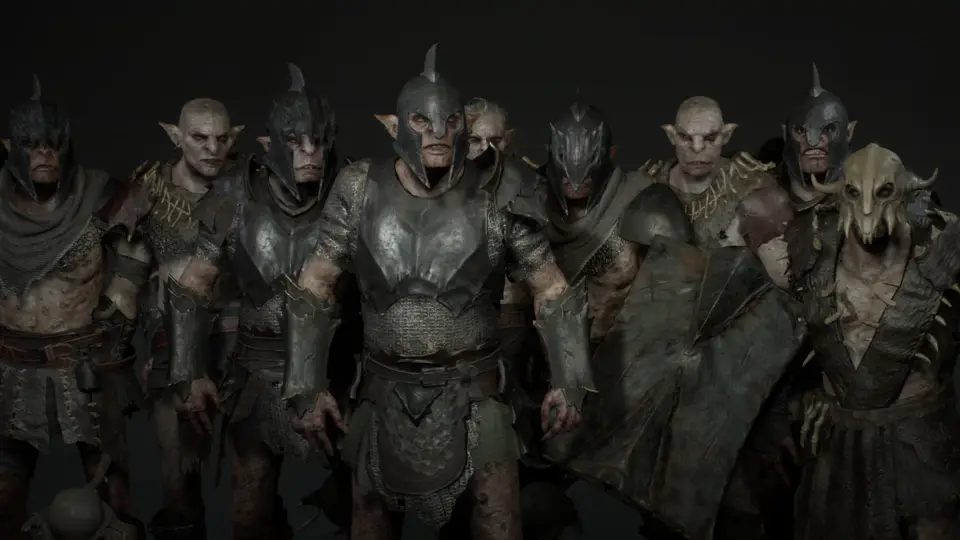
The Modular Orcs & Troll - Metahuman package provides a comprehensive framework for constructing realistic fantasy creatures, including tribal orcs, ogres, and trolls. At the core of the system is a highly modular skeletal mesh structure designed to give developers the flexibility to assemble unique characters for their RPG or dark fantasy projects. Instead of relying on static, single-piece models, the system breaks down the character anatomy and equipment into multiple interchangeable SK (Skeletal) Itemgroups.
These SK Itemgroups are categorized into specific anatomical and equipment slots, including hats, hairs, heads, and chests. By mixing and matching these individual components, developers can assemble a wide variety of specific orc fighters, hunters, or shamans to populate their environments. This modular approach allows for rapid iteration when building a diverse horde of monsters, ensuring that no two creatures need to look exactly alike in a crowded scene.
To support different combat roles within a game, the asset includes distinct class costumes. These costumes are categorized into light melee, heavy melee, and caster archetypes, providing the foundational gear necessary for barbarian warriors or tribal cult members. Additionally, an alternative muscular body type is included in the package. This muscular variant was specifically added to accommodate certain armor dresses that require a broader, more imposing silhouette, giving heavy fighters a distinct physical presence compared to their lighter counterparts.
MetaHuman Topology and Parametric Clothing Components
As of the August 2025 update, the package features deep integration with modern character frameworks, specifically targeting MetaHuman architecture. The character meshes are mapped directly onto the MetaHuman topology, ensuring that the structural foundation of these creatures aligns with industry-standard character pipelines. A Mesh to MetaHuman sample is included alongside the UE5 port to demonstrate this integration.
A significant addition to this workflow is the inclusion of an example parametric clothing component. This component is specifically suited to experimental MetaHuman Creator outfits, allowing developers to test how modular clothing pieces interact with the underlying MetaHuman rigs. Because the underlying MetaHuman clothing system undergoes ongoing changes and updates, the parametric components within this package are built with flexibility in mind. The developer notes that the components will adapt to new standards as the MetaHuman Creator evolves over time, ensuring continued compatibility with future engine updates.
The Goblin Template and Master Pose Implementation
Beyond standard and muscular orcs, the package introduces a specialized "goblin" template intended for small orcs. Implementing this smaller creature requires a specific setup within the character Blueprint to function correctly alongside the modular SK Itemgroups.
Because the goblin utilizes drastically different proportions compared to the larger ogre and troll variants, developers must use the goblin template within the primary mesh slot to successfully drive the Master pose. By assigning the goblin mesh to this foundational slot, all subsequently attached modular pieces—such as custom chests, hats, or facial features—will correctly inherit the skeletal transforms and scale appropriately to the smaller frame. Failing to drive the Master pose with the correct template could result in misaligned armor or distorted animations, making this a critical step for anyone utilizing the smaller creature variations.
Mask Textures and Master Material Tweaking
Visual customization is handled through a versatile material architecture that applies to both the creatures' bodies and their equipped gear. Rather than relying on static textures, each piece of equipment utilizes a dedicated master material paired with a specific mask texture.
The mask textures isolate different zones on the armor sets and clothing, allowing developers to manually tweak the visual appearance of the gear in fine detail. This means the colors, wear patterns, or specific material properties of a heavy melee breastplate or a shaman's robes can be adjusted directly within the material instance without needing to author entirely new textures externally. This same master material logic extends to the character anatomy. Each individual body part can be tweaked manually, allowing for varied skin tones, realistic tribal markings, or distinct monster characteristics across the different SK Itemgroups.
UE4 Skeleton Compatibility and Blueprint Weapon Slots
While the characters have been updated to utilize UE5 Mannequin and MetaHuman proportions, the delivered skeletal meshes remain skinned to the UE4 skeleton. This specific rigging strategy was chosen to maximize backward compatibility with a vast ecosystem of existing third-party asset packs.
For developers utilizing pre-existing combat animations or weapon packs, skinning to the UE4 skeleton ensures that the orcs can seamlessly equip external items like swords and shields. To further streamline this integration, the main-hand and off-hand pivots on the creature meshes have been meticulously aligned to the standard UE4 handgrip. Furthermore, the included character Blueprints are already prepared with designated main-hand and off-hand slots. These prepared slots are designed to receive external weapon data immediately, allowing developers to attach gear to the characters without having to manually calculate offset values or rebuild socket hierarchies.
ARKit Blendshapes and Animation Configuration
To govern locomotion and state transitions, the package includes an Animationblueprint tailored to the modular mesh setup. This provides the necessary logic to get the assembled fighters and casters moving within a project environment.
Regarding facial articulation, the current iteration of the package does not include out-of-the-box facial animation sequences. However, it does provide a foundational Basic ARKit Blendshape set. This blendshape set was constructed using the Character Editor and provides the necessary morph targets for developers who wish to implement their own facial capture workflows or scripted expressions. By including these standard ARKit shapes, the characters are prepared for advanced facial rigging, even if the specific animation data must be supplied by the user.
 Characters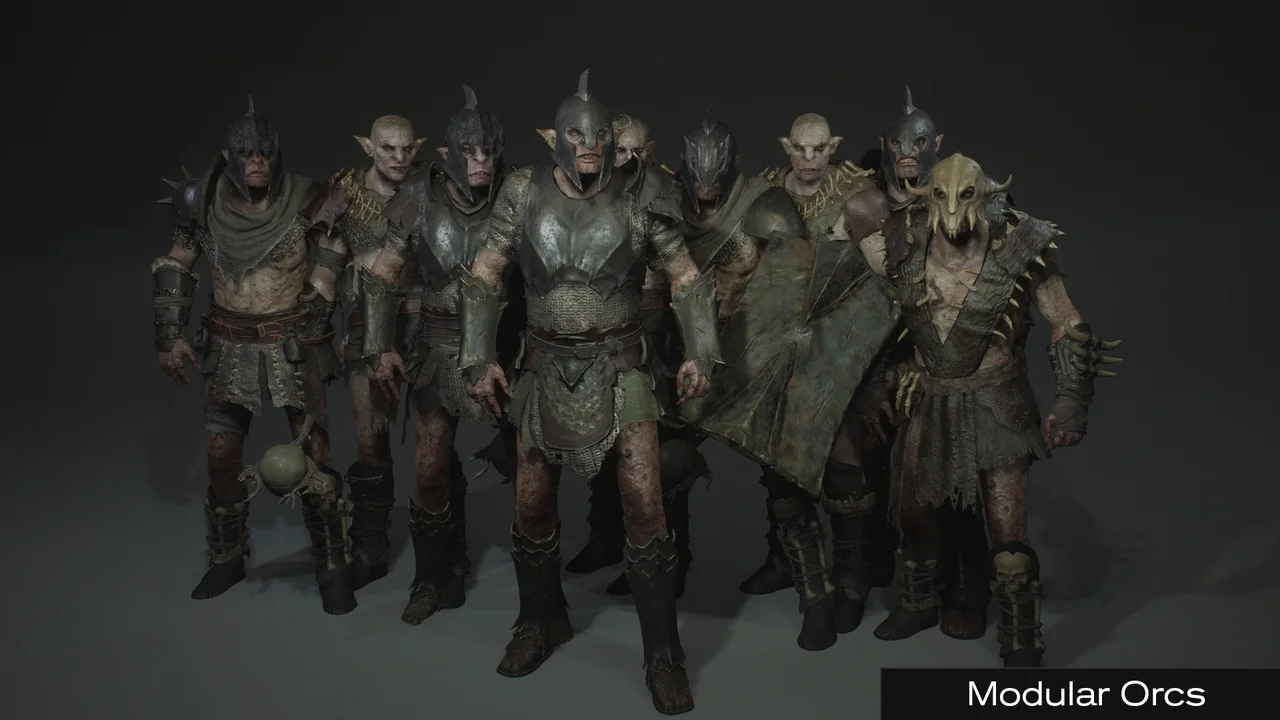
 Characters
 Characters
 Characters