"e919456b0935edbb"{"id":"1002106","slug":"metal-materials-vol-2","title":"Metal Materials Vol 2","category":"Building \u0026 Human-made","engine":"4.17+,5.0+","assetVersion":"","engineVersion":"Engine Version: 4.17+,5.0+","tag":"Building","accent":"blue","visual":"luts","summary":"Metal Materials Vol 2 provides 90 realistic PBR material instances derived from a single base material covering clear, scratched, and eroded metal surfaces.","platform":"Unreal Engine","publishedAt":"2026-10-29T08:50:10.339Z","updatedAt":"2026-10-29T08:50:10.339Z","sourceNotes":[],"fileContents":[],"compatibility":["Unreal Engine","Engine Version: 4.17+,5.0+"],"featuredImage":{"alt":"Metal Materials Vol 2","src":"/wp-content/uploads/published/2026/10/c032058a345c-5902543d-111c-4b1e-a1cd-23c60ffeccc6-a7be47f0f7.webp"},"hasDownloadLink":true,"downloads":0,"terms":[{"taxonomy":"category","slug":"building-and-human-made","name":"Building \u0026 Human-made"}],"galleryImages":[{"src":"/wp-content/uploads/published/2026/10/31e8856548cc-9fc8f51f-a345-42f4-805a-dc1706f0d7ea-6fccb4d2a0.webp","alt":"Metal Materials Vol 2"},{"src":"/wp-content/uploads/published/2026/10/d15b9a95975c-c68e53ad-44f8-4019-bfac-8eef30f0bbc2-ede28dc950.webp","alt":"Metal Materials Vol 2"},{"src":"/wp-content/uploads/published/2026/10/52c0c0506acf-93e1fa7a-cc7e-442d-818a-0dd3ba4e1507-1a05043d7f.webp","alt":"Metal Materials Vol 2"},{"src":"/wp-content/uploads/published/2026/10/8634332187a2-f4c2780d-0ffe-4da2-8a58-2cacf3a28ae5-07d09f3e83.webp","alt":"Metal Materials Vol 2"}],"accessPanel":{"kind":"resource","title":"Download this resource","eyebrow":"Free Download","message":"Log in or create a free account to start your download.","fileName":"Content.7z","safetyNote":"Resources are manually reviewed before listing to improve quality and reduce obvious risks.","actionLabel":"Download Free","resourceType":"Resource archive"},"contentHtml":"\u003ch2\u003eEstablishing Surface Authenticity Across Realistic Environments\u003c/h2\u003e\n\u003cp\u003eMetal surfaces establish the physical history of a scene faster than almost any other material type. A clean polished railing implies active maintenance and fresh construction, while a scuffed support beam or pitted pipe reveals age, friction, and environmental wear. Metal Materials Vol 2 targets this balance between material authenticity and immediate utility, providing 90 metal materials configured to drop straight into visual scenes. Designed with realistic rendering in mind, the collection offers immediate access to clean, working, and weathered surfaces across industrial setups, architectural visualization, prop decoration, and detailed mechanical assemblies.\u003c/p\u003e\n\u003cp\u003eBy defining surfaces through physically based rendering (PBR) values, the collection maintains proper reflectance, specular response, and light absorption characteristics under varying lighting conditions. Whether an object rests under direct sunlight, muted overcast skies, or artificial interior spotlights, the surface response adheres to physical expectations. This eliminates the guesswork of balancing albedo tones and metallic factors manually across multiple distinct metallic compounds.\u003c/p\u003e \u003ch2\u003eThe Architecture of One Base Material and 90 Material Instances\u003c/h2\u003e\n\u003cp\u003eManaging extensive shader setups across a complex project can rapidly introduce workflow bottlenecks if every surface variation functions as an isolated master graph. Metal Materials Vol 2 resolves this by utilizing a centralized setup: one base material drives 90 material instances. This single master foundation serves as the underlying logic for the entire pack, managing how texture inputs, wear patterns, and surface values interact.\u003c/p\u003e\n\u003cp\u003eRelying on a single master base material brings distinct advantages to scene assembly and look development:\u003c/p\u003e\n\u003cul\u003e \u003cli\u003eGlobal consistency across lighting scenarios, ensuring that all 90 variations follow the same shader logic.\u003c/li\u003e \u003cli\u003eRapid iteration across assets, as material instances expose the necessary parameters without requiring navigation through complex node networks.\u003c/li\u003e \u003cli\u003eEfficient memory management and rendering organization through instanced structures rather than dozens of separate, disconnected shaders.\u003c/li\u003e \u003cli\u003eUnified handling of surface damage, allowing smooth stylistic alignment between pristine and distressed items sharing the same space.\u003c/li\u003e\n\u003c/ul\u003e\n\u003cp\u003eThe 90 material instances branch outward from this single root, translating foundational material logic into specific alloy simulations and distinct stages of surface age.\u003c/p\u003e \u003ch2\u003eClear, Scratched, and Eroded Metals\u003c/h2\u003e\n\u003cp\u003eSurface degradation in the real world rarely presents itself as a simple on-and-off state. A metal fitting might retain its factory finish inside a sheltered enclosure while an exposed exterior counterpart shows heavy surface decay. To support this progression, the base material within Metal Materials Vol 2 is engineered to generate three primary surface conditions: clear, scratched, and eroded.\u003c/p\u003e\n\u003cp\u003eClear variations capture uncompromised surfaces. These clean finishes suit pristine architectural features, luxury elements, freshly machined tools, and factory-new machinery where reflections remain sharp, uninterrupted, and uniform across the surface geometry.\u003c/p\u003e\n\u003cp\u003eScratched variations introduce surface friction and physical handling. Everyday contact, tool strikes, movement against abrasive surfaces, and operational wear create breaks in the smooth exterior. By breaking up the specular highlights and scattering reflected light across micro-grooves, the scratched states supply the grounded wear needed for tools, weapons, handrails, industrial fixtures, and functional props.\u003c/p\u003e\n\u003cp\u003eEroded variations push the breakdown further into active decomposition. Long-term atmospheric exposure, moisture, chemical reactions, and neglect break down the smooth metallic skin. Surface pitting, textured crusting, and irregular sheen variations define these instances. Placing eroded metals on abandoned infrastructure, weathered machinery, or foundation supports conveys passage of time without requiring custom hand-painted breakdown passes for every single object.\u003c/p\u003e \u003ch2\u003ePBR Values for Realistic Metal Instances\u003c/h2\u003e\n\u003cp\u003eThe 90 material instances provided in the pack cover an extensive spectrum of raw elements, manufactured alloys, treated finishes, and advanced degradation states. Rather than relying on generic grayscale values or simplified color tints, the instances use calibrated PBR values tuned for specific real-world metals.\u003c/p\u003e\n\u003cp\u003eClassic warm metals form an essential part of the collection:\u003c/p\u003e\n\u003cul\u003e \u003cli\u003e\u003cstrong\u003eGold:\u003c/strong\u003e Displays the deep, highly reflective yellow sheen characteristic of pure precious metal, suited for ornate decoration, jewelry, and ceremonial items.\u003c/li\u003e \u003cli\u003e\u003cstrong\u003eGold Paint:\u003c/strong\u003e Contrasts with solid gold by reflecting the specific optical behavior of a surface-applied pigment layer rather than raw elemental metal.\u003c/li\u003e \u003cli\u003e\u003cstrong\u003eCopper:\u003c/strong\u003e Delivers the distinct reddish-brown tone essential for electrical conduits, vintage cookware, heat exchangers, and architectural roofing.\u003c/li\u003e \u003cli\u003e\u003cstrong\u003eBrass:\u003c/strong\u003e Provides the brighter, yellowish alloy response standard for marine hardware, musical instruments, fittings, and vintage machinery.\u003c/li\u003e \u003cli\u003e\u003cstrong\u003eBronze:\u003c/strong\u003e Captures the deeper, red-brown alloy quality associated with statuary, heavy bearings, marine components, and historical artifacts.\u003c/li\u003e\n\u003c/ul\u003e\n\u003cp\u003eModern industrial and technological metals receive equal focus:\u003c/p\u003e\n\u003cul\u003e \u003cli\u003e\u003cstrong\u003eAluminium:\u003c/strong\u003e Delivers the neutral, lightweight metallic sheen familiar across modern framing, aerospace components, and automotive paneling.\u003c/li\u003e \u003cli\u003e\u003cstrong\u003eColored Aluminum:\u003c/strong\u003e Broadens modern design options with treated finishes that retain metallic properties beneath decorative color applications.\u003c/li\u003e \u003cli\u003e\u003cstrong\u003eOxidized Aluminium:\u003c/strong\u003e Reflects the dull, chalky passivation layer that forms when aluminium is exposed to weather, shifting the reflection profile from bright to diffuse.\u003c/li\u003e \u003cli\u003e\u003cstrong\u003eChrome:\u003c/strong\u003e Produces mirror-grade, high-contrast reflections suited for vehicle trim, sanitary fixtures, and modern furniture.\u003c/li\u003e \u003cli\u003e\u003cstrong\u003eSteel Blue:\u003c/strong\u003e Carries the distinctive deep, cool blued finish resulting from industrial heat treatment and anti-corrosion chemical processes, ideal for firearms, heavy tools, and precision machine parts.\u003c/li\u003e\n\u003c/ul\u003e \u003ch2\u003ePractical Asset Allocation and Look Development\u003c/h2\u003e\n\u003cp\u003eBecause the collection spans 90 ready configurations, look development transitions from building node connections to selecting the right surface identity for the prop. A single prop set—such as an industrial generator—can use clear chrome on gauge rings, steel blue on structural fasteners, scratched aluminium on side panels, and eroded copper on drainage tubing. Combining varied material instances derived from the same base material maintains visual cohesion across the entire prop cluster.\u003c/p\u003e\n\u003cp\u003eDeploying Metal Materials Vol 2 provides visual artists and technical developers with an immediate library of physically grounded surfaces. The balance of three distinct surface treatments across ten core metal varieties ensures that props and environments reflect their intended age, function, and setting without additional shader construction.\u003c/p\u003e\n\n\u003ch2\u003eContinue Browsing Similar Packs\u003c/h2\u003e\n\u003cul\u003e\n\u003cli\u003e\u003ca href=\"https://3dcghub.com/roof-tiles-material-pack-vol-1/\" title=\"Roof Tiles Material Pack Vol.1\"\u003eRoof Tiles Material Pack Vol.1\u003c/a\u003e\u003c/li\u003e\n\u003cli\u003e\u003ca href=\"https://3dcghub.com/roof-vol-51-hand-painted-textures/\" title=\"Roof Vol.51 - Hand Painted Textures\"\u003eRoof Vol.51 - Hand Painted Textures\u003c/a\u003e\u003c/li\u003e\n\u003cli\u003e\u003ca href=\"https://3dcghub.com/cellar-materials/\" title=\"Cellar Materials\"\u003eCellar Materials\u003c/a\u003e\u003c/li\u003e\n\u003cli\u003e\u003ca href=\"https://3dcghub.com/horror-and-decay-vol-2-urban-debris/\" title=\"Horror and Decay VOL.2 - Urban Debris\"\u003eHorror and Decay VOL.2 - Urban Debris\u003c/a\u003e\u003c/li\u003e\n\u003cli\u003e\u003ca href=\"https://3dcghub.com/4k-materials-wood-flooring-vol-02/\" title=\"4K Materials: Wood Flooring Vol.02\"\u003e4K Materials: Wood Flooring Vol.02\u003c/a\u003e\u003c/li\u003e\n\u003c/ul\u003e","contentTextLength":7198,"navigation":{"current":68,"total":4099,"previous":{"id":"1002107","slug":"metro-station-modular-pack","title":"Metro Station Modular Pack","category":"Buildings \u0026 Architecture","platform":"Unreal Engine","updatedAt":"2026-10-29T08:50:50.608Z"},"next":{"id":"1002105","slug":"mega-weapons","title":"Mega Weapons","category":"Weapons \u0026 Combat","platform":"Unreal Engine","updatedAt":"2026-10-29T08:49:27.319Z"}},"relatedResources":[{"id":"1001654","slug":"roof-tiles-material-pack-vol-1","title":"Roof Tiles Material Pack Vol.1","category":"Building \u0026 Human-made","engine":"4.26+,5.0+","assetVersion":"","engineVersion":"Engine Version: 4.26+,5.0+","tag":"Building","accent":"blue","visual":"luts","summary":"Roof Tiles Material Pack Vol.1 delivers 8 realistic, perfectly tileable 4K roof tile materials engineered for desktop game environments.","platform":"Unreal Engine","publishedAt":"2026-10-13T08:29:48.500Z","updatedAt":"2026-10-13T08:29:48.500Z","sourceNotes":[],"fileContents":[],"compatibility":["Unreal Engine","Engine Version: 4.26+,5.0+"],"featuredImage":{"alt":"Roof Tiles Material Pack Vol.1","src":"/wp-content/uploads/published/2026/10/c55fa0510ab7-6f27d1d8-5f6e-4985-9a1f-d7be9fdc895d-1930d7acf3.webp"},"hasDownloadLink":true,"downloads":0},{"id":"12364","slug":"roof-vol-51-hand-painted-textures","title":"Roof Vol.51 - Hand Painted Textures","category":"Building \u0026 Human-made","engine":"4.26+,5.0+","assetVersion":"Engine version: 4.26+,5.0+","engineVersion":"4.24","tag":"Building","accent":"blue","visual":"luts","summary":"Roof Vol.51 - Hand Painted Textures is a high-quality set of five unique, tileable textures. Designed for stylized and fantasy projects, these assets are mobile-ready and support PBR workflows.","platform":"Unreal Engine","publishedAt":"2026-03-07T12:20:05.000Z","updatedAt":"2026-04-19T15:47:58.000Z","sourceNotes":[],"fileContents":[],"compatibility":["Unreal Engine","Engine version: 4.26+,5.0+"],"featuredImage":{"alt":"Roof Vol.51 - Hand Painted Textures","src":"https://3dcghub.com/wp-content/uploads/2026/03/bcba476a-5b7d-4ba0-9b26-c5b561b3ed3f.webp"},"hasDownloadLink":true,"downloads":2},{"id":"12301","slug":"cellar-materials","title":"Cellar Materials","category":"Building \u0026 Human-made","engine":"4.26+,5.0+","assetVersion":"Engine version: 4.26+,5.0+","engineVersion":"4.19","tag":"Building","accent":"blue","visual":"luts","summary":"Enhance your underground environments with this collection of 24 Cellar Materials. Featuring a mix of concrete, metal, and brick, these assets provide a gritty, realistic aesthetic for any digital scene.","platform":"Unreal Engine","publishedAt":"2026-03-07T12:13:43.000Z","updatedAt":"2026-04-19T15:48:00.000Z","sourceNotes":[],"fileContents":[],"compatibility":["Unreal Engine","Engine version: 4.26+,5.0+"],"featuredImage":{"alt":"Cellar Materials","src":"https://3dcghub.com/wp-content/uploads/2026/03/e2a191d0-6413-4508-9e2f-b4e2d911c38c.webp"},"hasDownloadLink":true,"downloads":0}]}
Building
Metal Materials Vol 2
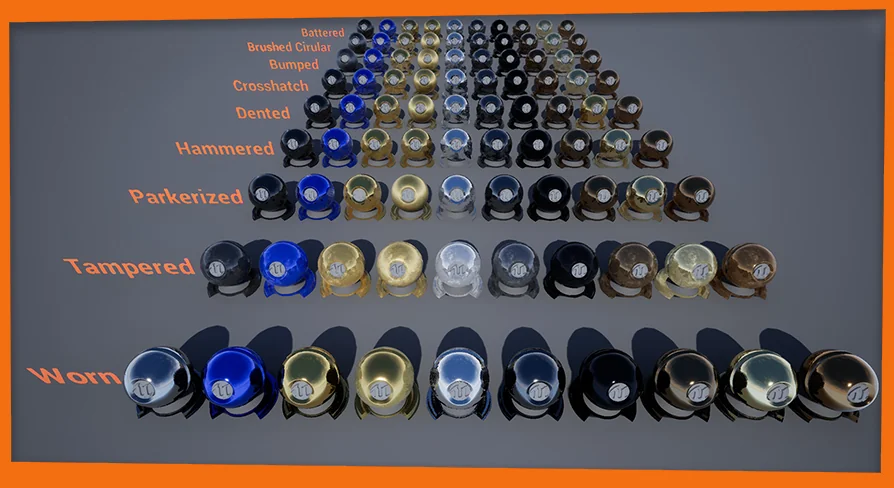
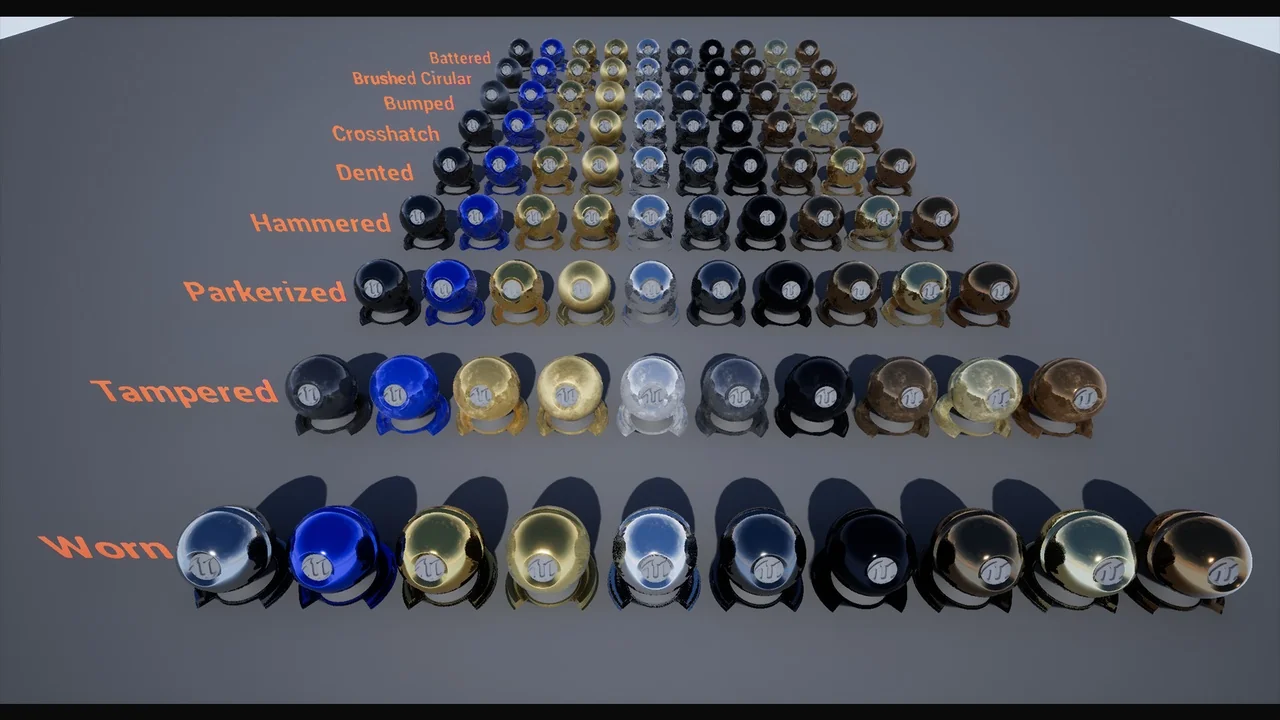
Metal Materials Vol 2 provides 90 realistic PBR material instances derived from a single base material covering clear, scratched, and eroded metal surfaces.
Establishing Surface Authenticity Across Realistic Environments
Metal surfaces establish the physical history of a scene faster than almost any other material type. A clean polished railing implies active maintenance and fresh construction, while a scuffed support beam or pitted pipe reveals age, friction, and environmental wear. Metal Materials Vol 2 targets this balance between material authenticity and immediate utility, providing 90 metal materials configured to drop straight into visual scenes. Designed with realistic rendering in mind, the collection offers immediate access to clean, working, and weathered surfaces across industrial setups, architectural visualization, prop decoration, and detailed mechanical assemblies.
By defining surfaces through physically based rendering (PBR) values, the collection maintains proper reflectance, specular response, and light absorption characteristics under varying lighting conditions. Whether an object rests under direct sunlight, muted overcast skies, or artificial interior spotlights, the surface response adheres to physical expectations. This eliminates the guesswork of balancing albedo tones and metallic factors manually across multiple distinct metallic compounds.
The Architecture of One Base Material and 90 Material Instances
Managing extensive shader setups across a complex project can rapidly introduce workflow bottlenecks if every surface variation functions as an isolated master graph. Metal Materials Vol 2 resolves this by utilizing a centralized setup: one base material drives 90 material instances. This single master foundation serves as the underlying logic for the entire pack, managing how texture inputs, wear patterns, and surface values interact.
Relying on a single master base material brings distinct advantages to scene assembly and look development:
Global consistency across lighting scenarios, ensuring that all 90 variations follow the same shader logic.
Rapid iteration across assets, as material instances expose the necessary parameters without requiring navigation through complex node networks.
Efficient memory management and rendering organization through instanced structures rather than dozens of separate, disconnected shaders.
Unified handling of surface damage, allowing smooth stylistic alignment between pristine and distressed items sharing the same space.
The 90 material instances branch outward from this single root, translating foundational material logic into specific alloy simulations and distinct stages of surface age.
Clear, Scratched, and Eroded Metals
Surface degradation in the real world rarely presents itself as a simple on-and-off state. A metal fitting might retain its factory finish inside a sheltered enclosure while an exposed exterior counterpart shows heavy surface decay. To support this progression, the base material within Metal Materials Vol 2 is engineered to generate three primary surface conditions: clear, scratched, and eroded.
Clear variations capture uncompromised surfaces. These clean finishes suit pristine architectural features, luxury elements, freshly machined tools, and factory-new machinery where reflections remain sharp, uninterrupted, and uniform across the surface geometry.
Scratched variations introduce surface friction and physical handling. Everyday contact, tool strikes, movement against abrasive surfaces, and operational wear create breaks in the smooth exterior. By breaking up the specular highlights and scattering reflected light across micro-grooves, the scratched states supply the grounded wear needed for tools, weapons, handrails, industrial fixtures, and functional props.
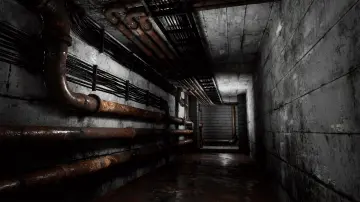
Eroded variations push the breakdown further into active decomposition. Long-term atmospheric exposure, moisture, chemical reactions, and neglect break down the smooth metallic skin. Surface pitting, textured crusting, and irregular sheen variations define these instances. Placing eroded metals on abandoned infrastructure, weathered machinery, or foundation supports conveys passage of time without requiring custom hand-painted breakdown passes for every single object.
PBR Values for Realistic Metal Instances
The 90 material instances provided in the pack cover an extensive spectrum of raw elements, manufactured alloys, treated finishes, and advanced degradation states. Rather than relying on generic grayscale values or simplified color tints, the instances use calibrated PBR values tuned for specific real-world metals.
Classic warm metals form an essential part of the collection:
Gold: Displays the deep, highly reflective yellow sheen characteristic of pure precious metal, suited for ornate decoration, jewelry, and ceremonial items.
Gold Paint: Contrasts with solid gold by reflecting the specific optical behavior of a surface-applied pigment layer rather than raw elemental metal.
Copper: Delivers the distinct reddish-brown tone essential for electrical conduits, vintage cookware, heat exchangers, and architectural roofing.
Brass: Provides the brighter, yellowish alloy response standard for marine hardware, musical instruments, fittings, and vintage machinery.
Bronze: Captures the deeper, red-brown alloy quality associated with statuary, heavy bearings, marine components, and historical artifacts.
Modern industrial and technological metals receive equal focus:
Aluminium: Delivers the neutral, lightweight metallic sheen familiar across modern framing, aerospace components, and automotive paneling.
Colored Aluminum: Broadens modern design options with treated finishes that retain metallic properties beneath decorative color applications.
Oxidized Aluminium: Reflects the dull, chalky passivation layer that forms when aluminium is exposed to weather, shifting the reflection profile from bright to diffuse.
Chrome: Produces mirror-grade, high-contrast reflections suited for vehicle trim, sanitary fixtures, and modern furniture.
Steel Blue: Carries the distinctive deep, cool blued finish resulting from industrial heat treatment and anti-corrosion chemical processes, ideal for firearms, heavy tools, and precision machine parts.
Practical Asset Allocation and Look Development
Because the collection spans 90 ready configurations, look development transitions from building node connections to selecting the right surface identity for the prop. A single prop set—such as an industrial generator—can use clear chrome on gauge rings, steel blue on structural fasteners, scratched aluminium on side panels, and eroded copper on drainage tubing. Combining varied material instances derived from the same base material maintains visual cohesion across the entire prop cluster.
Deploying Metal Materials Vol 2 provides visual artists and technical developers with an immediate library of physically grounded surfaces. The balance of three distinct surface treatments across ten core metal varieties ensures that props and environments reflect their intended age, function, and setting without additional shader construction.
 Building
 Building
 Building
 Building