"c68a05d5e51405b3"{"id":"1001895","slug":"metal-debris","title":"Metal Debris","category":"Debris","engine":"4.26+,5.0+","assetVersion":"","engineVersion":"Engine Version: 4.26+,5.0+","tag":"Debris","accent":"blue","visual":"mech","summary":"Explore the Metal Debris collection featuring lowpoly rusted bolts, nails, screws, and deformed metal objects for industrial and garbage scene dressing.","platform":"Unreal Engine","publishedAt":"2026-10-22T11:34:25.285Z","updatedAt":"2026-10-22T11:34:25.285Z","sourceNotes":[],"fileContents":[],"compatibility":["Unreal Engine","Engine Version: 4.26+,5.0+"],"featuredImage":{"alt":"Metal Debris","src":"/wp-content/uploads/published/2026/10/b4792bab3531-74f3267e-a024-4d2c-bd4d-8ccaa37a2f14-a17fb2aa02.webp"},"hasDownloadLink":true,"downloads":0,"terms":[{"taxonomy":"category","slug":"debris","name":"Debris"}],"galleryImages":[{"src":"/wp-content/uploads/published/2026/10/a526b154f2a2-65fc6845-d1f9-42f4-8d4d-d85f01bb5a28-53083c8200.webp","alt":"Metal Debris"},{"src":"/wp-content/uploads/published/2026/10/5b1e203a6a9e-57a14556-86cb-43ca-8bd2-32f4b00e0edb-e365e7f538.webp","alt":"Metal Debris"},{"src":"/wp-content/uploads/published/2026/10/71bfd3cfcea4-793fea9b-d3e2-4521-a757-2e60fe037860-9d3e695574.webp","alt":"Metal Debris"},{"src":"/wp-content/uploads/published/2026/10/7a66a4112549-8e7ca26c-0ff6-40ed-9a24-373c04cc43f4-0df014bffa.webp","alt":"Metal Debris"},{"src":"/wp-content/uploads/published/2026/10/d7c315c90724-1fa6902c-4034-4770-bace-bff79891a18c-a3d99fa7e4.webp","alt":"Metal Debris"},{"src":"/wp-content/uploads/published/2026/10/bddfe3946185-2a248595-48ee-4882-97a6-b1651041a9fb-c01a1ede1d.webp","alt":"Metal Debris"},{"src":"/wp-content/uploads/published/2026/10/0932d1919025-8e148bb1-78f1-4799-a99e-080b7df9a7d7-e0da853162.webp","alt":"Metal Debris"}],"accessPanel":{"kind":"resource","title":"Download this resource","eyebrow":"Free Download","message":"Log in or create a free account to start your download.","fileName":"Content.7z","safetyNote":"Resources are manually reviewed before listing to improve quality and reduce obvious risks.","actionLabel":"Download Free","resourceType":"Resource archive"},"contentHtml":"\u003ch2\u003eScattering Screws, Bolts, Nails, and Deformed Metal Props\u003c/h2\u003e\n\u003cp\u003eSmall hardware components define the fine-grained texture of an environment undergoing decay. The Metal Debris collection gathers together loose mechanical fasteners and twisted remnants, providing level designers with individual items such as bolts, nails, screws, and visibly deformed metal segments. Rather than relying solely on large structural junk piles, dressing a floor with discrete fasteners establishes a convincing sense of mechanical breakdown. Loose screws dropped near a dismantled console or bent nails sticking out from rotten floorboards convey physical history through identifiable shapes.\u003c/p\u003e\n\u003cp\u003eDeformed metal pieces add irregularity to flat geometry. When factory floors or salvage yards are constructed out of repeating structural tiles, the introduction of warped metal strips, twisted offcuts, and bent fittings breaks up continuous floor planes. Because the collection supplies multiple distinct types of small metallic waste, artists can cluster specific hardware near logical workstations or spread them randomly across wider paths to simulate long-term neglect.\u003c/p\u003e \u003ch2\u003eSurface Wear Across Rusty and Scratched Metal Elements\u003c/h2\u003e\n\u003cp\u003eWeathering is central to the visual character of the items in this set. The surfaces feature extensive rust and scratches, conveying age and prolonged exposure to harsh environmental conditions. The realistic texturing emphasizes the deterioration of industrial fasteners, highlighting oxidized orange patina along the threads of screws, chipped edges on bolt heads, and pitted textures across the deformed metal fragments. This level of wear prevents the props from looking freshly stamped or artificially clean when placed on broken concrete or damp earth.\u003c/p\u003e\n\u003cp\u003eScratched finishes suggest friction, mechanical torque, and physical impacts that occurred prior to abandonment. A bolt with stripped ridges or a nail showing abrasive scrape marks tells a visual story of structural failure or hurried demolition. In scenes set in humid abandoned warehouses, leaking drainage tunnels, or open-air junkyards, the contrast between rusty oxidation and faint underlying metallic sheen helps individual pieces stand out against soil, dust, or pavement without breaking the overall realistic aesthetic.\u003c/p\u003e \u003ch2\u003eDressing Floors in Industrial and Garbage Scenes\u003c/h2\u003e\n\u003cp\u003eIndustrial settings and garbage zones depend on dense object distribution to feel authentic. In functional workshops, maintenance corridors, and manufacturing bays, small hardware inevitably escapes toolkits and collects in drainage troughs, corners, and along the bases of heavy machinery. Dropping clusters of bolts and screws directly beneath decommissioned equipment or near workbenches mirrors the natural accumulation seen in operational and abandoned facilities alike.\u003c/p\u003e\n\u003cp\u003eIn dedicated garbage scenes and municipal dumps, these metallic props serve as the secondary and tertiary clutter that binds larger trash assets together. While large dumpsters, discarded barrels, and ruined appliances establish the broad composition of a refuse heap, small nails and distorted metal shards fill the negative spaces between larger objects. Scattering rusty fasteners along curbs, down alleyways, or across landfill slopes gives players and camera angles intricate micro-details to catch as they move through the lower planes of a level.\u003c/p\u003e \u003ch2\u003eLowpoly Optimization for Individual Level Design\u003c/h2\u003e\n\u003cp\u003ePopulating game levels with dense collections of individual debris items requires careful asset construction. The items in the Metal Debris collection are built as lowpoly meshes, allowing environment artists to distribute dozens of nails, bolts, and jagged metal scraps across a playable area without placing excessive strain on scene budgets. Maintaining a realistic visual standard at a low polygon count ensures that small props integrate smoothly with high-fidelity surroundings while conserving resources for characters, dynamic lighting, and larger structures.\u003c/p\u003e\n\u003cp\u003eThe lowpoly profile gives creators complete freedom over individual level layout. Instead of forcing artists to rely on static, pre-merged clutter piles that repeat noticeably when reused, individual screws, nails, and deformed pieces can be hand-placed, rotated, and scaled to suit custom floor layouts. Designers can form natural concentration gradients, establishing sparse trails of lost hardware that lead toward dense pockets of metallic waste trapped behind crates or under stairwells.\u003c/p\u003e \u003ch2\u003ePairing with Dragon Eggs Collection vol.1\u003c/h2\u003e\n\u003cp\u003eFor projects integrating unconventional narrative settings or cross-genre environmental storytelling, the Metal Debris set is listed with compatibility alongside the Dragon Eggs Collection vol.1. Placing realistic, rusted industrial junk in close proximity to organic or mythical props creates striking visual juxtaposition. A nest site dressed with rough, deformed metal scraps, old screws, and oxidized nails suggests an unnatural habitat formed inside the ruins of an industrial installation or salvage facility.\u003c/p\u003e\n\u003cp\u003eThe collection functions as a versatile utility toolkit for any space requiring granular metallic clutter. By combining lowpoly efficiency, realistic surface wear, and a dedicated roster of rusted hardware, the set provides the concrete building blocks necessary to turn barren level floors into detailed industrial or garbage-strewn environments.\u003c/p\u003e\n\n\u003ch2\u003eMore From The Same Workflow\u003c/h2\u003e\n\u003cul\u003e\n\u003cli\u003e\u003ca href=\"https://3dcghub.com/scatter-paper-and-keys-pack/\" title=\"Scatter Paper and Keys Pack\"\u003eScatter Paper and Keys Pack\u003c/a\u003e\u003c/li\u003e\n\u003cli\u003e\u003ca href=\"https://3dcghub.com/military-props-pack-high-quality-3d-assets-for-game-dev/\" title=\"Military Props Pack\"\u003eMilitary Props Pack\u003c/a\u003e\u003c/li\u003e\n\u003cli\u003e\u003ca href=\"https://3dcghub.com/rubble-and-debris-modular-set/\" title=\"Rubble and Debris - Modular Set\"\u003eRubble and Debris - Modular Set\u003c/a\u003e\u003c/li\u003e\n\u003cli\u003e\u003ca href=\"https://3dcghub.com/jobsite-vol-13-farm-hay-nanite-and-low-poly/\" title=\"Jobsite VOL.13 - Farm Hay (Nanite \u0026amp; Low Poly)\"\u003eJobsite VOL.13 - Farm Hay (Nanite \u0026amp; Low Poly)\u003c/a\u003e\u003c/li\u003e\n\u003cli\u003e\u003ca href=\"https://3dcghub.com/garbage-and-debris-vol-1-by-unimodels/\" title=\"Garbage and Debris Vol. 1 by Unimodels\"\u003eGarbage and Debris Vol. 1 by Unimodels\u003c/a\u003e\u003c/li\u003e\n\u003c/ul\u003e","contentTextLength":5578,"navigation":{"current":30,"total":3860,"previous":{"id":"1001896","slug":"modern-crossbow-animation-kit","title":"Modern Crossbow Animation Kit","category":"Combat","platform":"Unreal Engine","updatedAt":"2026-10-22T11:35:12.133Z"},"next":{"id":"1001894","slug":"medium-monster-sfx-2","title":"Medium Monster SFX 2","category":"Sound Effects","platform":"Unreal Engine","updatedAt":"2026-10-22T11:33:36.643Z"}},"relatedResources":[{"id":"1000331","slug":"scatter-paper-and-keys-pack","title":"Scatter Paper and Keys Pack","category":"Debris","engine":"4.26+,5.0+","assetVersion":"","engineVersion":"Engine Version: 4.26+,5.0+","tag":"Debris","accent":"blue","visual":"mech","summary":"A high-quality set of 26 scatter meshes, including tintable paper debris, retro newspapers, and keys, designed for realistic office and floor environments.","platform":"Unreal Engine","publishedAt":"2026-07-05T07:07:33.537Z","updatedAt":"2026-07-05T07:07:33.537Z","sourceNotes":[],"fileContents":[],"compatibility":["Unreal Engine","Engine Version: 4.26+,5.0+"],"featuredImage":{"alt":"Scatter Paper and Keys Pack","src":"/wp-content/uploads/published/2026/07/592990a565a5-ea96549d-1b73-48ae-bc0a-cf954188cc9c-f6ff86de77.webp"},"hasDownloadLink":true,"downloads":1},{"id":"1064","slug":"military-props-pack-high-quality-3d-assets-for-game-dev","title":"Military Props Pack","category":"Debris","engine":"4.26+,5.0+","assetVersion":"Engine version:4.26+,5.0+","engineVersion":"","tag":"Debris","accent":"blue","visual":"character","summary":"Enhance your game with the Military Props Pack. Featuring high-quality 3D models of sandbags, ammo boxes, and debris. Perfect for realistic military simulations","platform":"Unreal Engine","publishedAt":"2026-02-06T16:00:40.000Z","updatedAt":"2026-04-19T15:58:14.000Z","sourceNotes":[],"fileContents":[],"compatibility":["Unreal Engine","Engine version: 4.26+,5.0+"],"featuredImage":{"alt":"Military Props Pack","src":"https://3dcghub.com/wp-content/uploads/2026/02/6323dec7-029e-4961-ad9c-61ba06bde0ee.png"},"hasDownloadLink":true,"downloads":1},{"id":"1082","slug":"rubble-and-debris-modular-set","title":"Rubble and Debris - Modular Set","category":"Debris","engine":"4.26+,5.0+","assetVersion":"Engine version:4.26+,5.0+","engineVersion":"4.16","tag":"Debris","accent":"blue","visual":"character","summary":"Enhance your game environments with the Rubble and Debris Modular Set. Featuring 58 high-quality assets, 4K textures, and optimized LODs for realistic destructi","platform":"Unreal Engine","publishedAt":"2026-02-06T16:17:04.000Z","updatedAt":"2026-04-19T15:58:13.000Z","sourceNotes":[],"fileContents":[],"compatibility":["Unreal Engine","Engine version: 4.26+,5.0+"],"featuredImage":{"alt":"Rubble and Debris - Modular Set","src":"https://3dcghub.com/wp-content/uploads/2026/02/757c1d18-779d-41e0-8f02-2a671ebf229f.png"},"hasDownloadLink":true,"downloads":0}]}
Debris
Metal Debris
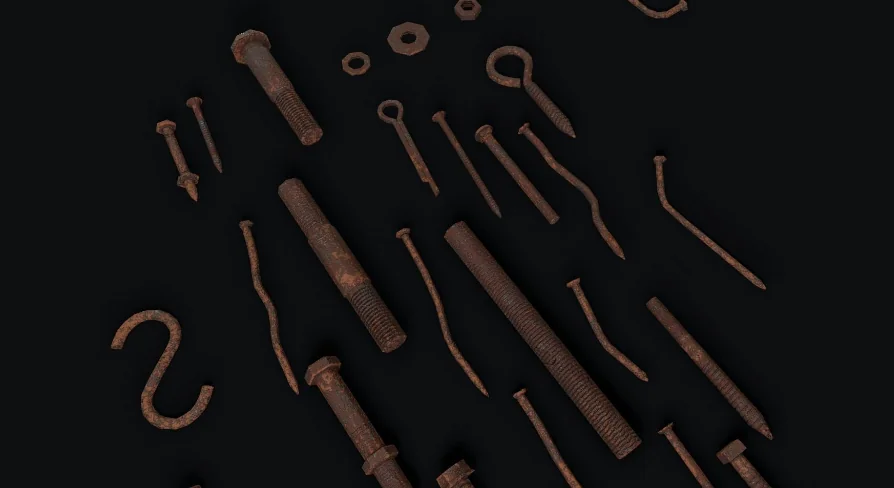
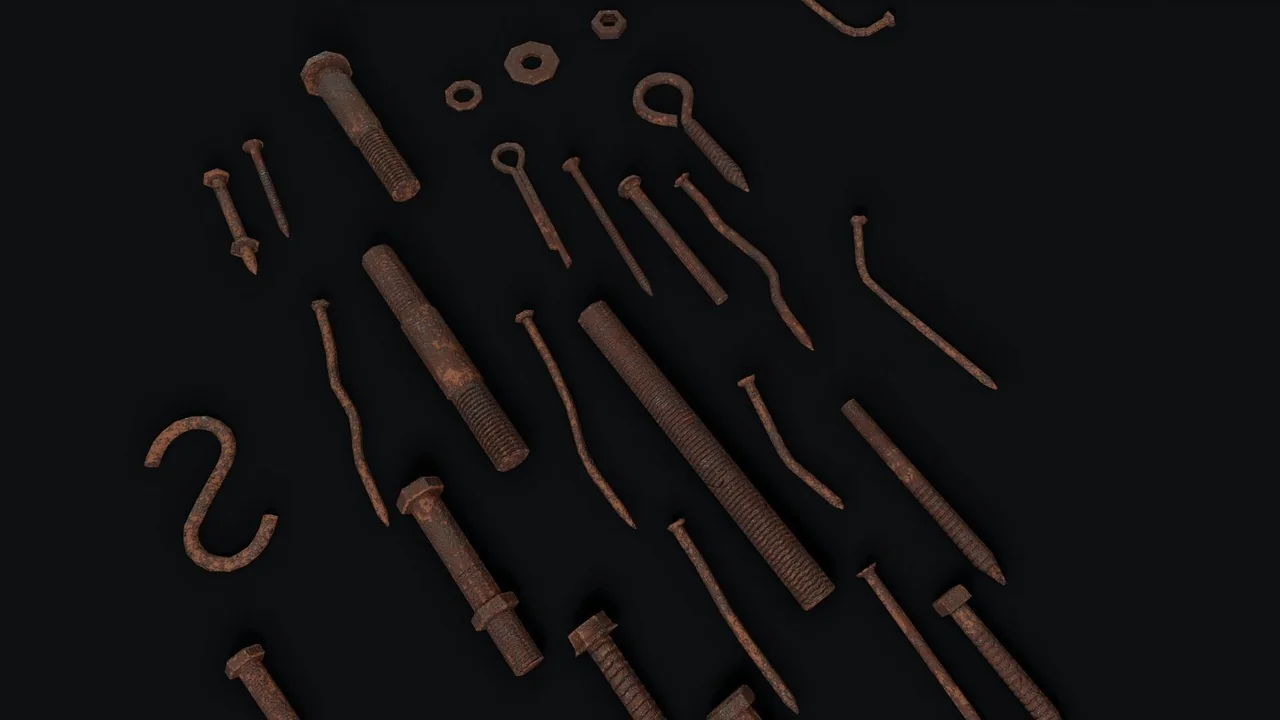
Explore the Metal Debris collection featuring lowpoly rusted bolts, nails, screws, and deformed metal objects for industrial and garbage scene dressing.
Category:Unreal Engine,DebrisPlatform: Unreal EngineEngine Version: 4.26+,5.0+Published: Oct 22, 2026
Debris
Resource overview
Scattering Screws, Bolts, Nails, and Deformed Metal Props
Small hardware components define the fine-grained texture of an environment undergoing decay. The Metal Debris collection gathers together loose mechanical fasteners and twisted remnants, providing level designers with individual items such as bolts, nails, screws, and visibly deformed metal segments. Rather than relying solely on large structural junk piles, dressing a floor with discrete fasteners establishes a convincing sense of mechanical breakdown. Loose screws dropped near a dismantled console or bent nails sticking out from rotten floorboards convey physical history through identifiable shapes.
Deformed metal pieces add irregularity to flat geometry. When factory floors or salvage yards are constructed out of repeating structural tiles, the introduction of warped metal strips, twisted offcuts, and bent fittings breaks up continuous floor planes. Because the collection supplies multiple distinct types of small metallic waste, artists can cluster specific hardware near logical workstations or spread them randomly across wider paths to simulate long-term neglect.
Surface Wear Across Rusty and Scratched Metal Elements
Weathering is central to the visual character of the items in this set. The surfaces feature extensive rust and scratches, conveying age and prolonged exposure to harsh environmental conditions. The realistic texturing emphasizes the deterioration of industrial fasteners, highlighting oxidized orange patina along the threads of screws, chipped edges on bolt heads, and pitted textures across the deformed metal fragments. This level of wear prevents the props from looking freshly stamped or artificially clean when placed on broken concrete or damp earth.
Scratched finishes suggest friction, mechanical torque, and physical impacts that occurred prior to abandonment. A bolt with stripped ridges or a nail showing abrasive scrape marks tells a visual story of structural failure or hurried demolition. In scenes set in humid abandoned warehouses, leaking drainage tunnels, or open-air junkyards, the contrast between rusty oxidation and faint underlying metallic sheen helps individual pieces stand out against soil, dust, or pavement without breaking the overall realistic aesthetic.
Dressing Floors in Industrial and Garbage Scenes
Industrial settings and garbage zones depend on dense object distribution to feel authentic. In functional workshops, maintenance corridors, and manufacturing bays, small hardware inevitably escapes toolkits and collects in drainage troughs, corners, and along the bases of heavy machinery. Dropping clusters of bolts and screws directly beneath decommissioned equipment or near workbenches mirrors the natural accumulation seen in operational and abandoned facilities alike.
In dedicated garbage scenes and municipal dumps, these metallic props serve as the secondary and tertiary clutter that binds larger trash assets together. While large dumpsters, discarded barrels, and ruined appliances establish the broad composition of a refuse heap, small nails and distorted metal shards fill the negative spaces between larger objects. Scattering rusty fasteners along curbs, down alleyways, or across landfill slopes gives players and camera angles intricate micro-details to catch as they move through the lower planes of a level.
Lowpoly Optimization for Individual Level Design
Populating game levels with dense collections of individual debris items requires careful asset construction. The items in the Metal Debris collection are built as lowpoly meshes, allowing environment artists to distribute dozens of nails, bolts, and jagged metal scraps across a playable area without placing excessive strain on scene budgets. Maintaining a realistic visual standard at a low polygon count ensures that small props integrate smoothly with high-fidelity surroundings while conserving resources for characters, dynamic lighting, and larger structures.
The lowpoly profile gives creators complete freedom over individual level layout. Instead of forcing artists to rely on static, pre-merged clutter piles that repeat noticeably when reused, individual screws, nails, and deformed pieces can be hand-placed, rotated, and scaled to suit custom floor layouts. Designers can form natural concentration gradients, establishing sparse trails of lost hardware that lead toward dense pockets of metallic waste trapped behind crates or under stairwells.
Pairing with Dragon Eggs Collection vol.1
For projects integrating unconventional narrative settings or cross-genre environmental storytelling, the Metal Debris set is listed with compatibility alongside the Dragon Eggs Collection vol.1. Placing realistic, rusted industrial junk in close proximity to organic or mythical props creates striking visual juxtaposition. A nest site dressed with rough, deformed metal scraps, old screws, and oxidized nails suggests an unnatural habitat formed inside the ruins of an industrial installation or salvage facility.
The collection functions as a versatile utility toolkit for any space requiring granular metallic clutter. By combining lowpoly efficiency, realistic surface wear, and a dedicated roster of rusted hardware, the set provides the concrete building blocks necessary to turn barren level floors into detailed industrial or garbage-strewn environments.
 Debris
 Debris
 Debris
 Debris