"031373f479d9561a"{"id":"1000232","slug":"martian-surface","title":"Martian Surface","category":"Nature \u0026 Terrain","engine":"4.27,5.0+","assetVersion":"","engineVersion":"Engine Version: 4.27,5.0+","tag":"Nature \u0026 Terrain","accent":"blue","visual":"mech","summary":"A detailed breakdown of the Martian Surface package, focusing on its tessellated landscape material, terrain alpha brushes, and scattered stone meshes.","platform":"Unreal Engine","publishedAt":"2026-06-28T09:00:52.193Z","updatedAt":"2026-06-28T09:00:52.193Z","sourceNotes":[],"fileContents":[],"compatibility":["Unreal Engine","Engine Version: 4.27,5.0+"],"featuredImage":{"alt":"Martian Surface","src":"/wp-content/uploads/published/2026/06/be912a4e5e82-ced5bc2b-1153-4b98-af5e-02e574332a6f-bf3e3e6ee1.webp"},"hasDownloadLink":true,"downloads":1,"terms":[{"taxonomy":"category","slug":"nature-and-terrain","name":"Nature \u0026 Terrain"}],"galleryImages":[{"src":"/wp-content/uploads/published/2026/06/b25ebfcb6267-b2dbdcab-9337-40d9-9d8a-d2446fd7fc68-882953068a.webp","alt":"Martian Surface"},{"src":"/wp-content/uploads/published/2026/06/19cc4992f01f-7a6c4ea3-9de3-4a39-98db-8847df83a7b7-6ad024921a.webp","alt":"Martian Surface"},{"src":"/wp-content/uploads/published/2026/06/3d87005264f6-a9a9de57-0bde-4ca0-bdd0-df772f0f430e-692277afa0.webp","alt":"Martian Surface"},{"src":"/wp-content/uploads/published/2026/06/ad379d97d2f0-38e300b2-f7fd-400f-971b-59dc51b236af-0bebc3c18b.webp","alt":"Martian Surface"},{"src":"/wp-content/uploads/published/2026/06/24c64844363b-1d8dbbde-7127-4acf-804a-12931d71ab6e-2d01c55868.webp","alt":"Martian Surface"},{"src":"/wp-content/uploads/published/2026/06/62d2002fe6f0-1533141f-1342-4fb7-af78-e75d0741ada0-f308aeafb6.webp","alt":"Martian Surface"},{"src":"/wp-content/uploads/published/2026/06/5e744776944b-03abd397-b8b8-469e-bb83-8d2359192c8f-8cb25e5bd6.webp","alt":"Martian Surface"},{"src":"/wp-content/uploads/published/2026/06/06a2aaee86e1-6c9ce578-5f24-42a0-a452-577e7099b7f1-f9a813a9f6.webp","alt":"Martian Surface"},{"src":"/wp-content/uploads/published/2026/06/b968128313b0-bb1afed3-54ee-4d94-9c43-bf70d22abb3d-fa84613e50.webp","alt":"Martian Surface"},{"src":"/wp-content/uploads/published/2026/06/10682eba9482-b6c1a393-3676-48a3-9086-a99d6007ec6f-11406961d2.webp","alt":"Martian Surface"}],"accessPanel":{"kind":"resource","title":"Download this resource","eyebrow":"Free Download","message":"Log in or create a free account to start your download.","fileName":"Content.7z","safetyNote":"Resources are manually reviewed before listing to improve quality and reduce obvious risks.","actionLabel":"Download Free","resourceType":"Resource archive"},"contentHtml":"\u003ch2\u003eCore Elements of the Martian Surface Package\u003c/h2\u003e\n\u003cp\u003eThe Martian Surface package provides environment artists with three primary components designed to construct barren, rocky terrains. The toolset is based on a dedicated landscape material, a collection of landscape alpha brushes, and a set of standalone stones. Together, these three elements address the different scales of environment design required to build a convincing red planet biome. The package handles the broad structural shapes of the ground, the intricate surface texturing, and the loose debris scattered across the environment.\u003c/p\u003e\n\u003cp\u003eBy dividing the assets into these distinct categories, the package allows developers to approach terrain creation in a layered manner. The alpha brushes define the macro-level topography, the material dictates the tactile surface qualities of the dirt and rock, and the stones provide the final layer of physical obstruction and visual variety.\u003c/p\u003e\n\u003ch2\u003eTessellation in the Landscape Material\u003c/h2\u003e\n\u003cp\u003eThe foundation of the environment's visual fidelity relies on the included landscape material, which is specifically engineered to utilize tessellation. In 3D environment workflows, tessellation dynamically subdivides the geometry of the landscape mesh, utilizing height data to push and pull vertices outward. For a Martian environment, this technical approach ensures that the ground does not simply rely on flat normal maps to simulate depth. Instead, the surface physically protrudes, allowing ridges, rocky patches, and uneven dirt to catch light and cast accurate self-shadows.\u003c/p\u003e\n\u003cp\u003eThis geometric displacement is particularly crucial for alien or desert environments, which are often defined by harsh, directional sunlight that highlights every surface imperfection. When the camera moves close to the ground, the tessellated material maintains its volumetric appearance, preventing the terrain from looking like a flat polygon plane. The physical depth generated by the tessellation allows the ground to interact realistically with dynamic lighting setups, emphasizing the rugged, untouched nature of the Martian landscape. Shadows pool in the displaced crevices, while the raised edges of the rocky material catch the highlights, creating a highly textured surface that holds up under close inspection.\u003c/p\u003e\n\u003ch2\u003eShaping the Terrain with Alpha Brushes\u003c/h2\u003e\n\u003cp\u003eTo shape the underlying geometry before the material is applied, the package supplies a set of landscape alpha brushes. In environment production, alpha brushes act as grayscale stamps or drag-tools that displace the terrain mesh based on their specific height values. White areas of the brush raise the terrain geometry, while darker areas lower it or leave it undisturbed. Having dedicated alpha brushes allows an artist to quickly block out the defining geographical features of Mars without having to sculpt every detail by hand.\u003c/p\u003e\n\u003cp\u003eRather than manually pulling individual craters, impact sites, or wind-swept valleys using basic smooth or flatten tools, the alpha brushes provide complex, natural-looking geological shapes immediately. This accelerates the level design workflow, ensuring that the macro-scale structure of the environment aligns with the barren, cratered aesthetic associated with Martian landscapes. Artists can stamp these brushes at varying scales and rotations to create a chaotic, organic topography. The brushes can be layered over one another to form complex ridge lines or deep impact basins, establishing the structural foundation that the tessellated material will eventually cover.\u003c/p\u003e\n\u003ch2\u003eAdding Macro Detail with Included Stones\u003c/h2\u003e\n\u003cp\u003eComplementing the ground material and the sculpted terrain are the included 3D stones. While a tessellated landscape material excels at handling micro to medium surface details across a continuous plane, it cannot replicate fully detached, standalone geometry. The stones provide this necessary macro-detail. By scattering or hand-placing these separate meshes across the scene, environment artists can effectively break up the continuous surface of the terrain.\u003c/p\u003e\n\u003cp\u003eThe presence of stones scattered across the landscape adds a critical sense of scale and physical obstruction, transforming a smooth, sculpted hill into a rugged, debris-filled environment. They serve as visual anchors that catch the light differently than the ground plane, enhancing the overall depth of the scene. In a production scenario, these stones can be clustered tightly together to form rocky outcrops, scattered loosely to simulate ancient riverbeds, or placed strategically to guide the player's eye and frame specific shots. Because they are independent meshes, they cast distinct shadows onto the tessellated ground, further reinforcing the harsh lighting conditions of the Martian setting.\u003c/p\u003e\n\u003ch2\u003eWorkflow Integration for Red Planet Environments\u003c/h2\u003e\n\u003cp\u003eIntegrating these three components into a production pipeline follows a logical progression from macro-level shaping to micro-level detailing. The workflow begins with the landscape alpha brushes. Environment artists use these tools to deform the flat terrain plane, stamping in the large craters and undulating plains that will define the navigable space of the level. This initial sculpting phase dictates the horizon line and the overall flow of the environment.\u003c/p\u003e\n\u003cp\u003eOnce the broad topography is established, the tessellated landscape material is applied to the newly deformed mesh. This step introduces localized surface roughness, allowing the material's displacement data to generate physical bumps and rocky textures across the sculpted hills and valleys. The tessellation reacts to the underlying shapes created by the alpha brushes, ensuring that steep inclines and deep craters possess the correct material depth.\u003c/p\u003e\n\u003cp\u003eFinally, the stones are introduced to the environment. Distributed across the tessellated surface, these independent meshes complete the scene by adding loose debris that sits on top of the displaced ground. This three-step process—sculpting with alphas, displacing with tessellation, and scattering stones—provides a cohesive and efficient method for generating complex Martian surfaces ready for lighting and final dressing.\u003c/p\u003e\n\n\u003ch2\u003eContinue Browsing Similar Packs\u003c/h2\u003e\n\u003cul\u003e\n\u003cli\u003e\u003ca href=\"https://3dcghub.com/advanced-water-material/\" title=\"Advanced Water Material\"\u003eAdvanced Water Material\u003c/a\u003e\u003c/li\u003e\n\u003cli\u003e\u003ca href=\"https://3dcghub.com/muddy-materials/\" title=\"Muddy Materials\"\u003eMuddy Materials\u003c/a\u003e\u003c/li\u003e\n\u003cli\u003e\u003ca href=\"https://3dcghub.com/anime-skybox-v3/\" title=\"ANIME SKYBOX V3\"\u003eANIME SKYBOX V3\u003c/a\u003e\u003c/li\u003e\n\u003cli\u003e\u003ca href=\"https://3dcghub.com/terrain-materials-vol-2/\" title=\"Terrain Materials VOL.2\"\u003eTerrain Materials VOL.2\u003c/a\u003e\u003c/li\u003e\n\u003cli\u003e\u003ca href=\"https://3dcghub.com/dirt-terrain-pack-2/\" title=\"Dirt Terrain Pack 2\"\u003eDirt Terrain Pack 2\u003c/a\u003e\u003c/li\u003e\n\u003c/ul\u003e","contentTextLength":6268,"navigation":{"current":1117,"total":3223,"previous":{"id":"1000233","slug":"matte-painting-skybox-pack-viii-doom-skies","title":"Matte Painting Skybox Pack VIII: Doom Skies","category":"Sky \u0026 Space","platform":"Unreal Engine","updatedAt":"2026-06-28T09:14:20.596Z"},"next":{"id":"1000231","slug":"landscape-procedural-desert-sandstorm","title":"Landscape Procedural Desert - Sandstorm","category":"Desert","platform":"Unreal Engine","updatedAt":"2026-06-28T07:21:47.532Z"}},"relatedResources":[{"id":"1000688","slug":"stylized-egypt-textures-rpg-environment","title":"Stylized Egypt Textures - RPG Environment","category":"Nature \u0026 Terrain","engine":"4.27,5.0+","assetVersion":"","engineVersion":"Engine Version: 4.27,5.0+","tag":"Nature \u0026 Terrain","accent":"blue","visual":"luts","summary":"Stylized Egypt Textures - RPG Environment delivers PBR-ready terrain and surface materials including cliffs, sand, Egyptian symbols, pyramid, and mummy textures","platform":"Unreal Engine","publishedAt":"2026-07-23T07:51:12.332Z","updatedAt":"2026-07-23T07:51:12.332Z","sourceNotes":[],"fileContents":[],"compatibility":["Unreal Engine","Engine Version: 4.27,5.0+"],"featuredImage":{"alt":"Stylized Egypt Textures - RPG Environment","src":"/wp-content/uploads/published/2026/07/345e8a17f34f-f06a17a8-b043-43a1-9842-5ddf97352272-6e7a3b5bd1.webp"},"hasDownloadLink":true,"downloads":1},{"id":"12622","slug":"advanced-water-material","title":"Advanced Water Material","category":"Nature \u0026 Terrain","engine":"4.26+,5.0+","assetVersion":"Engine version: 4.26+,5.0+","engineVersion":"4.22","tag":"Nature \u0026 Terrain","accent":"blue","visual":"luts","summary":"The Advanced Water Material is a versatile shader designed for creating dynamic liquid surfaces. It features 3D Gerstner Waves and a camera-independent depth opacity function for consistent visual quality.","platform":"Unreal Engine","publishedAt":"2026-03-07T12:58:03.000Z","updatedAt":"2026-04-19T15:46:38.000Z","sourceNotes":[],"fileContents":[],"compatibility":["Unreal Engine","Engine version: 4.26+,5.0+"],"featuredImage":{"alt":"Advanced Water Material","src":"https://3dcghub.com/wp-content/uploads/2026/03/84442f89-43f9-4380-b945-4eb7cc54f363.webp"},"hasDownloadLink":true,"downloads":2},{"id":"12839","slug":"muddy-materials","title":"Muddy Materials","category":"Nature \u0026 Terrain","engine":"4.26+,5.0+","assetVersion":"Engine version: 4.26+,5.0+","engineVersion":"4.19","tag":"Nature \u0026 Terrain","accent":"blue","visual":"luts","summary":"Enhance your game environments with this set of Muddy Materials designed for flexibility across multiple platforms. These adjustable textures include comprehensive maps for color, roughness, and tessellation.","platform":"Unreal Engine","publishedAt":"2026-03-09T17:59:48.000Z","updatedAt":"2026-04-19T15:46:35.000Z","sourceNotes":[],"fileContents":[],"compatibility":["Unreal Engine","Engine version: 4.26+,5.0+"],"featuredImage":{"alt":"Muddy Materials","src":"https://3dcghub.com/wp-content/uploads/2026/03/4e7456ec-fc57-4025-bc40-456556b38a08.webp"},"hasDownloadLink":true,"downloads":0}]}
Nature & Terrain
Martian Surface
A detailed breakdown of the Martian Surface package, focusing on its tessellated landscape material, terrain alpha brushes, and scattered stone meshes.
The Martian Surface package provides environment artists with three primary components designed to construct barren, rocky terrains. The toolset is based on a dedicated landscape material, a collection of landscape alpha brushes, and a set of standalone stones. Together, these three elements address the different scales of environment design required to build a convincing red planet biome. The package handles the broad structural shapes of the ground, the intricate surface texturing, and the loose debris scattered across the environment.
By dividing the assets into these distinct categories, the package allows developers to approach terrain creation in a layered manner. The alpha brushes define the macro-level topography, the material dictates the tactile surface qualities of the dirt and rock, and the stones provide the final layer of physical obstruction and visual variety.
Tessellation in the Landscape Material
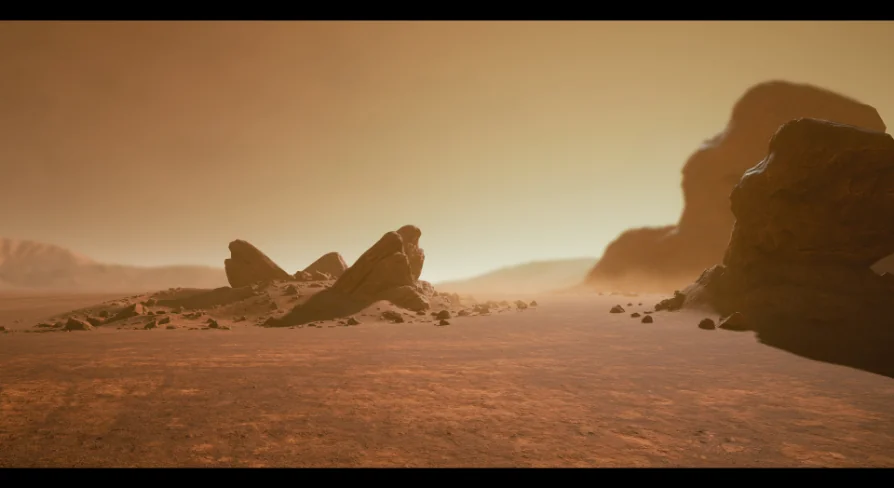
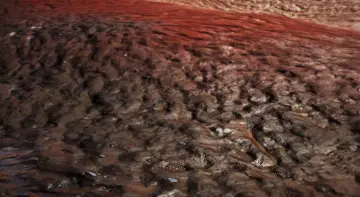
The foundation of the environment's visual fidelity relies on the included landscape material, which is specifically engineered to utilize tessellation. In 3D environment workflows, tessellation dynamically subdivides the geometry of the landscape mesh, utilizing height data to push and pull vertices outward. For a Martian environment, this technical approach ensures that the ground does not simply rely on flat normal maps to simulate depth. Instead, the surface physically protrudes, allowing ridges, rocky patches, and uneven dirt to catch light and cast accurate self-shadows.
This geometric displacement is particularly crucial for alien or desert environments, which are often defined by harsh, directional sunlight that highlights every surface imperfection. When the camera moves close to the ground, the tessellated material maintains its volumetric appearance, preventing the terrain from looking like a flat polygon plane. The physical depth generated by the tessellation allows the ground to interact realistically with dynamic lighting setups, emphasizing the rugged, untouched nature of the Martian landscape. Shadows pool in the displaced crevices, while the raised edges of the rocky material catch the highlights, creating a highly textured surface that holds up under close inspection.
Shaping the Terrain with Alpha Brushes
To shape the underlying geometry before the material is applied, the package supplies a set of landscape alpha brushes. In environment production, alpha brushes act as grayscale stamps or drag-tools that displace the terrain mesh based on their specific height values. White areas of the brush raise the terrain geometry, while darker areas lower it or leave it undisturbed. Having dedicated alpha brushes allows an artist to quickly block out the defining geographical features of Mars without having to sculpt every detail by hand.
Rather than manually pulling individual craters, impact sites, or wind-swept valleys using basic smooth or flatten tools, the alpha brushes provide complex, natural-looking geological shapes immediately. This accelerates the level design workflow, ensuring that the macro-scale structure of the environment aligns with the barren, cratered aesthetic associated with Martian landscapes. Artists can stamp these brushes at varying scales and rotations to create a chaotic, organic topography. The brushes can be layered over one another to form complex ridge lines or deep impact basins, establishing the structural foundation that the tessellated material will eventually cover.
Adding Macro Detail with Included Stones
Complementing the ground material and the sculpted terrain are the included 3D stones. While a tessellated landscape material excels at handling micro to medium surface details across a continuous plane, it cannot replicate fully detached, standalone geometry. The stones provide this necessary macro-detail. By scattering or hand-placing these separate meshes across the scene, environment artists can effectively break up the continuous surface of the terrain.
The presence of stones scattered across the landscape adds a critical sense of scale and physical obstruction, transforming a smooth, sculpted hill into a rugged, debris-filled environment. They serve as visual anchors that catch the light differently than the ground plane, enhancing the overall depth of the scene. In a production scenario, these stones can be clustered tightly together to form rocky outcrops, scattered loosely to simulate ancient riverbeds, or placed strategically to guide the player's eye and frame specific shots. Because they are independent meshes, they cast distinct shadows onto the tessellated ground, further reinforcing the harsh lighting conditions of the Martian setting.
Workflow Integration for Red Planet Environments
Integrating these three components into a production pipeline follows a logical progression from macro-level shaping to micro-level detailing. The workflow begins with the landscape alpha brushes. Environment artists use these tools to deform the flat terrain plane, stamping in the large craters and undulating plains that will define the navigable space of the level. This initial sculpting phase dictates the horizon line and the overall flow of the environment.
Once the broad topography is established, the tessellated landscape material is applied to the newly deformed mesh. This step introduces localized surface roughness, allowing the material's displacement data to generate physical bumps and rocky textures across the sculpted hills and valleys. The tessellation reacts to the underlying shapes created by the alpha brushes, ensuring that steep inclines and deep craters possess the correct material depth.
Finally, the stones are introduced to the environment. Distributed across the tessellated surface, these independent meshes complete the scene by adding loose debris that sits on top of the displaced ground. This three-step process—sculpting with alphas, displacing with tessellation, and scattering stones—provides a cohesive and efficient method for generating complex Martian surfaces ready for lighting and final dressing.
 Nature & Terrain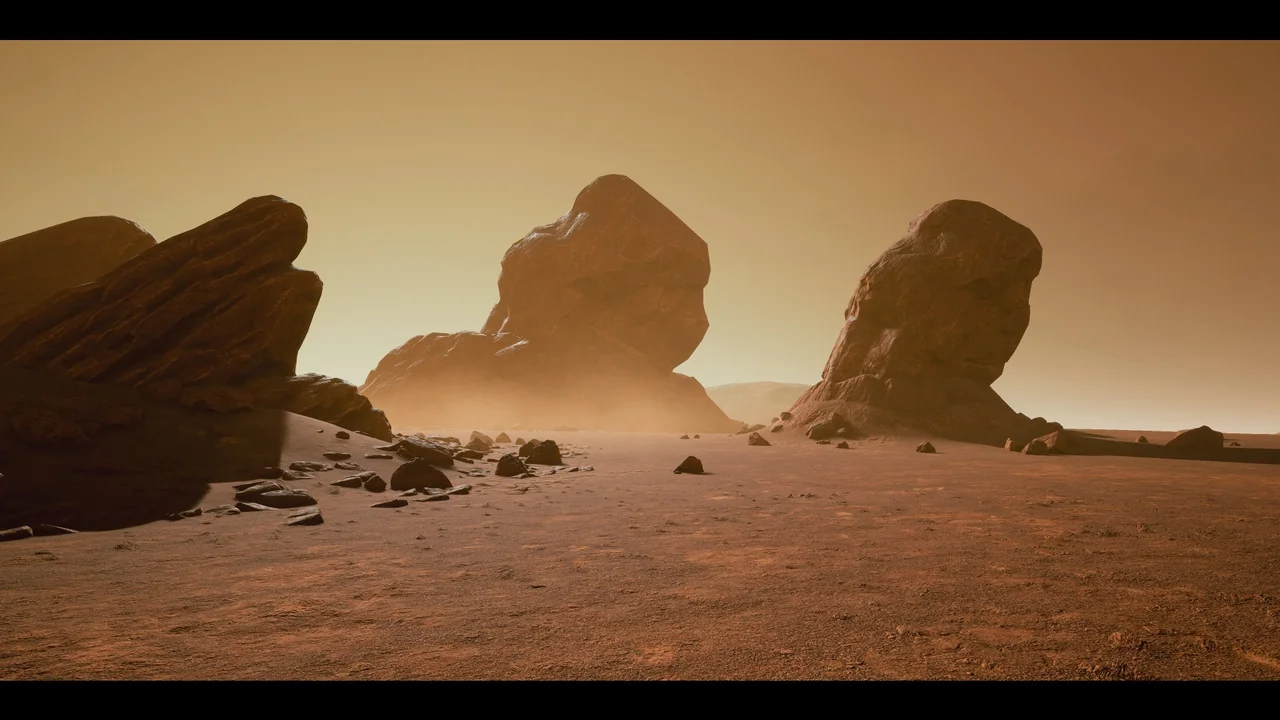
 Nature & Terrain
 Nature & Terrain
 Nature & Terrain