Dynamic Personality and Emotional Modeling
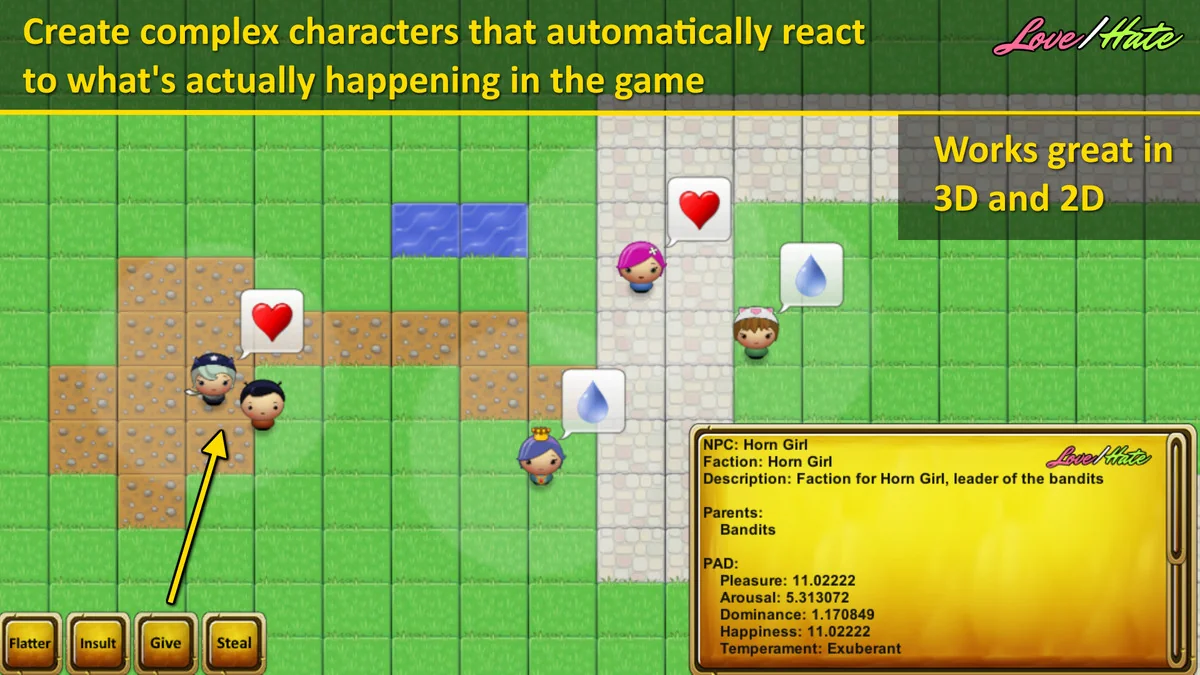
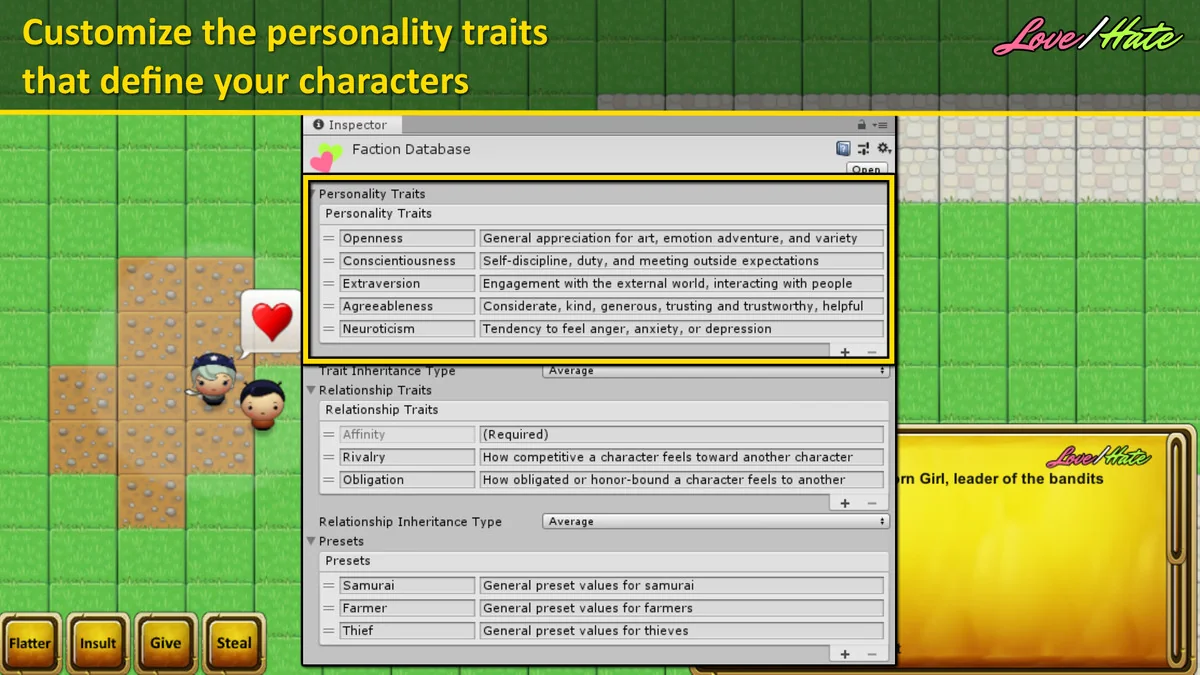
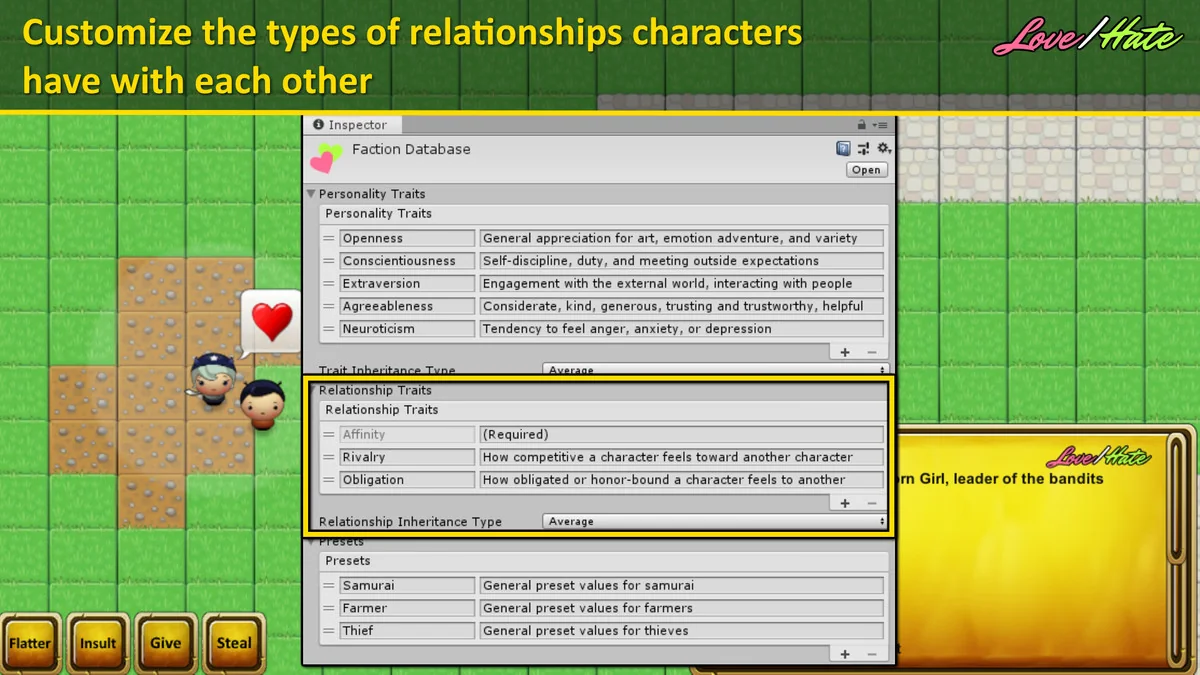
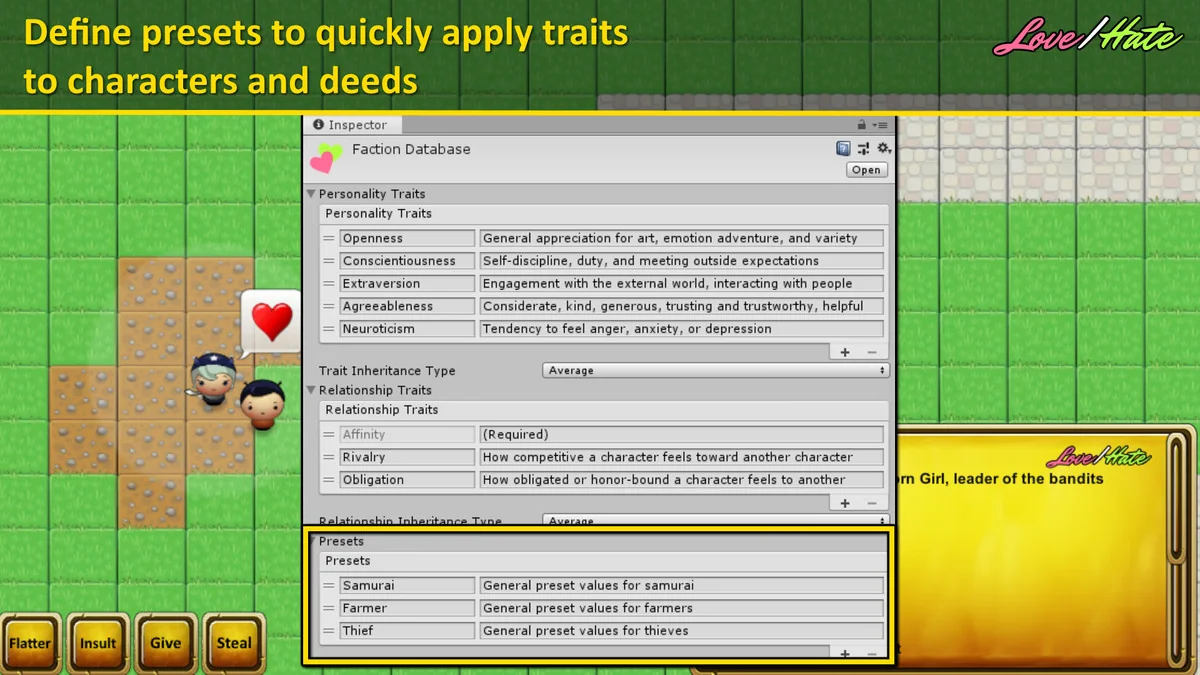
Love/Hate serves as a relationship and personality simulator designed for the Unity engine, enabling developers to move beyond static NPC interactions. The system models how characters feel about one another using a combination of internal emotional states and value-based judgments. These models are highly customizable, allowing for the creation of distinct personalities that react uniquely to the same stimuli. Because the system is built on research into real-time emotion simulation and value-based appraisal, it incorporates academic and industry strategies to ensure characters respond realistically to gameplay events.
The Mechanics of Deeds and Social Judgment
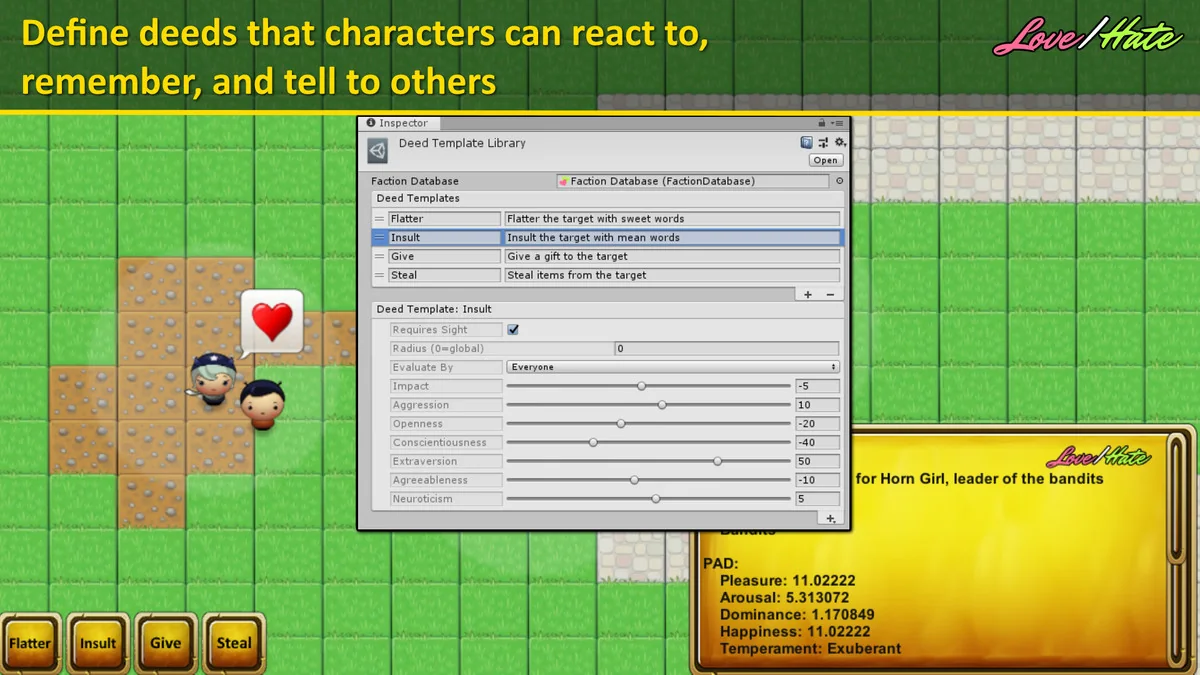
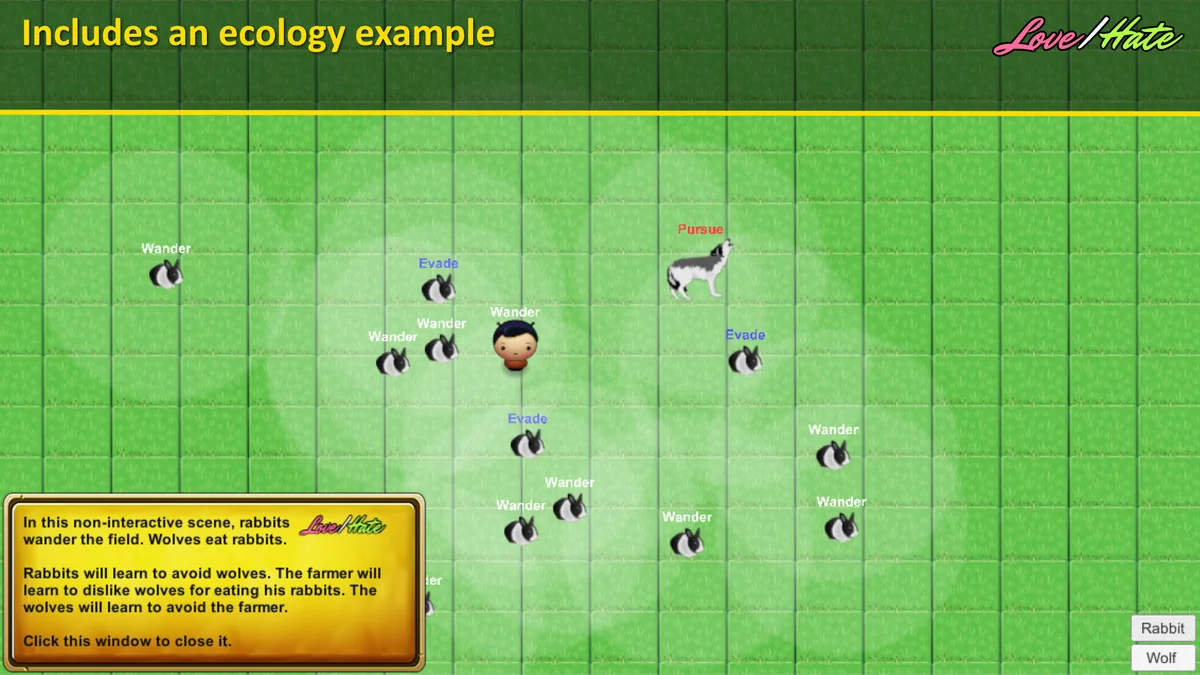
A core component of the workflow involves the ‘deed’ system. Rather than scripting specific reactions for every possible player interaction, the developer can define gameplay actions as deeds. Characters within the game world witness these deeds and evaluate them based on their own personality traits and existing relationships. This appraisal process results in an automated update to the character’s emotional state and their affinity toward the individual who performed the action.
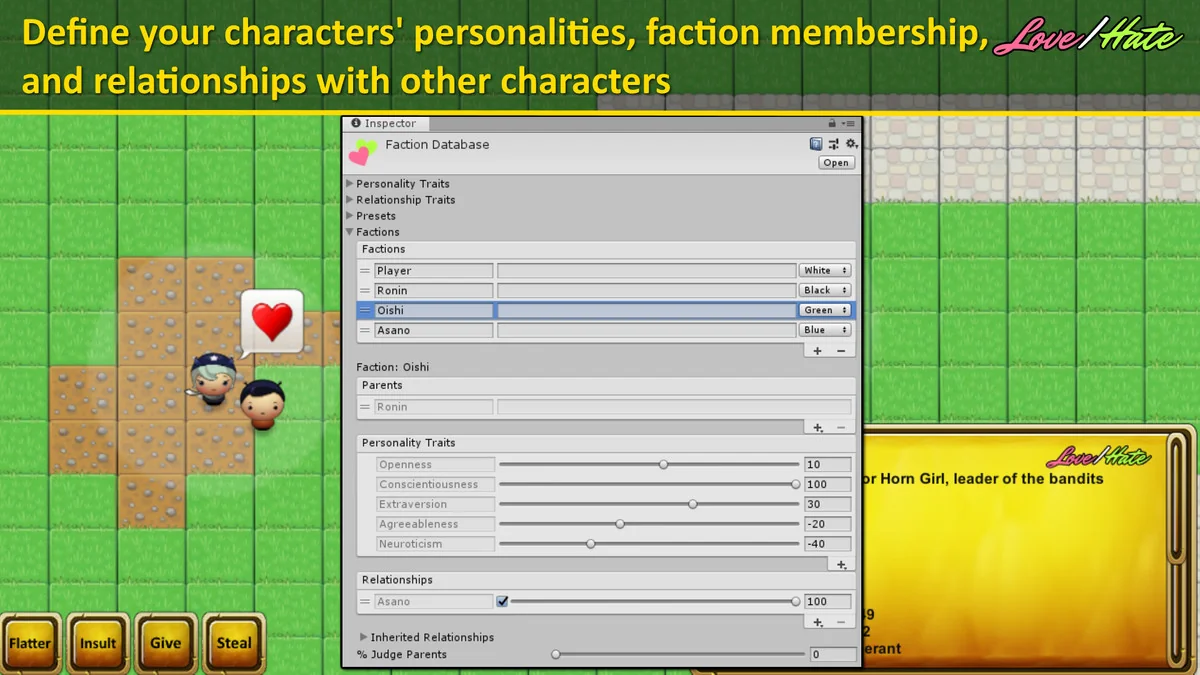
This system extends beyond individual actors to include factions. Love/Hate tracks social ties across different groups, creating a dynamic web of relationships. If a character belongs to a specific faction, their judgment of a deed may be influenced by how that action affects their group, allowing for complex social consequences that ripple through the game world.
Memory Management and Organic Information Spread
Characters in Love/Hate do not simply react in the moment; they maintain a memory of witnessed deeds. This memory system is the foundation for the gossip mechanic, which allows NPCs to share information with one another. When characters interact, they can exchange memories of actions they have witnessed or heard about, allowing news of the player’s behavior to spread organically through the environment. This simulation of social communication ensures that a character’s reputation can precede them, even when meeting an NPC who was not present during a specific event.
Integration and Workflow Compatibility
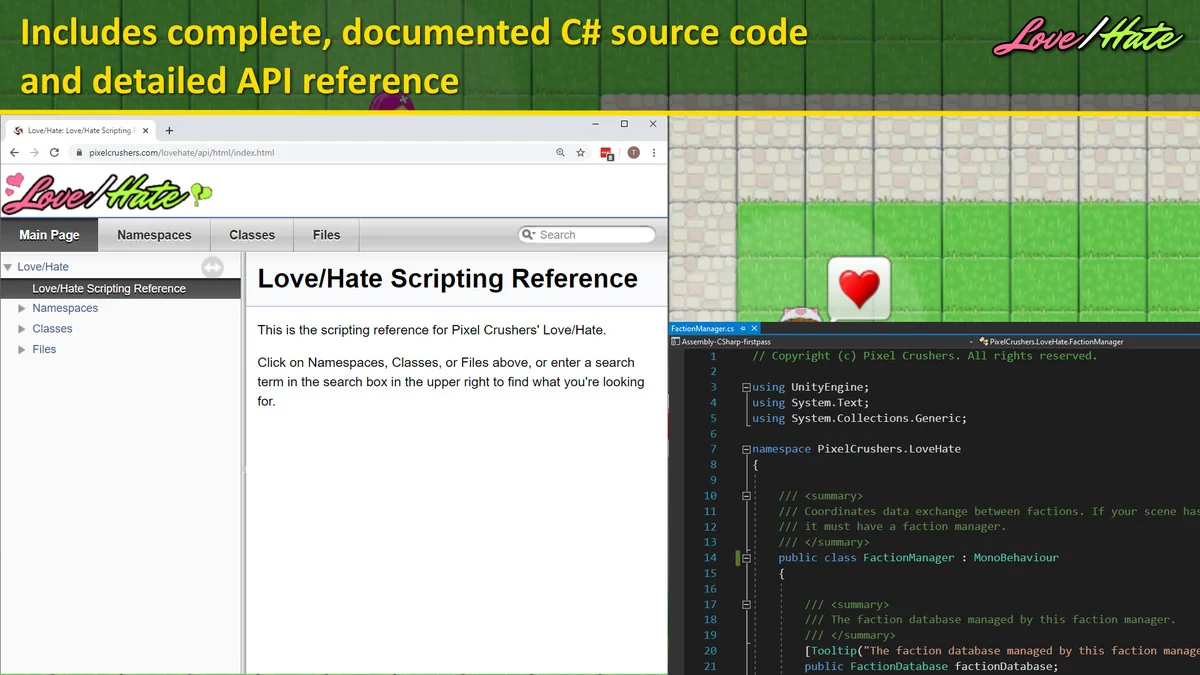
The system is designed to function without the requirement for custom scripting, making it accessible for rapid implementation across various project types, including 3D, 2D, AR, and VR. It is compatible with a wide range of Unity versions, specifically supporting Unity 6 and all versions from 2019 through 2022. The package includes 438 assets and provides fully documented source code for those who need to look deeper into the underlying logic.
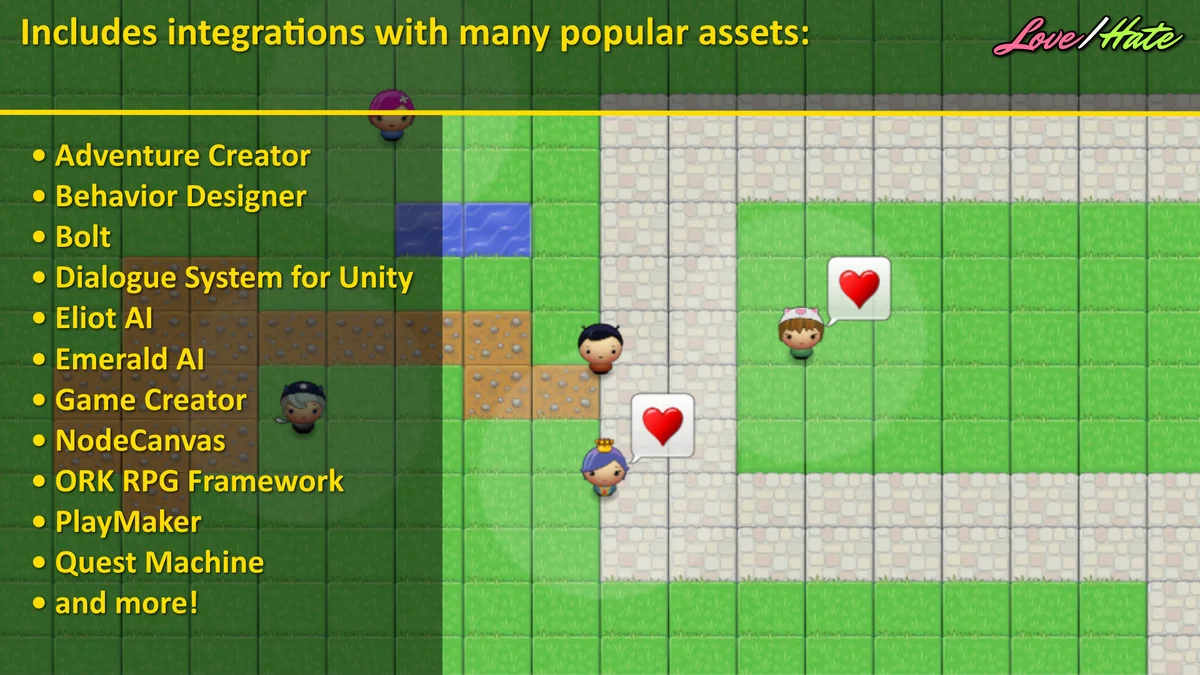
For developers utilizing third-party tools, the asset includes built-in support for a variety of popular Unity frameworks, including:
- Visual scripting tools like PlayMaker, Bolt, and Node Canvas.
- AI and behavior systems such as Behavior Designer, Emerald AI, and Eliot AI.
- Narrative and RPG frameworks including the Dialogue System for Unity, Quest Machine, RPG Builder, and ORK Framework.
- Character and adventure controllers like Opsive Character Controllers and Adventure Creator.
By leveraging these integrations, the developer can connect emotional states and relationship changes directly to dialogue branches, quest triggers, and combat behaviors, ensuring that the social simulation has a tangible impact on the gameplay experience.
Project Screenshots
Protected download
Access this resource
All resources are 100% manually reviewed to eliminate all risks.