"a19e0535960bd083"{"id":"1002079","slug":"lizards","title":"Lizards","category":"Creatures \u0026 Monsters","engine":"5.0+","assetVersion":"","engineVersion":"Engine Version: 5.0+","tag":"Creatures","accent":"blue","visual":"character","summary":"Integrate two animated primitive lizard predator models featuring distinct material setups, complete locomotion, and directional hit animations.","platform":"Unreal Engine","publishedAt":"2026-10-26T15:48:41.755Z","updatedAt":"2026-10-26T15:48:41.755Z","sourceNotes":[],"fileContents":[],"compatibility":["Unreal Engine","Engine Version: 5.0+"],"featuredImage":{"alt":"Lizards","src":"/wp-content/uploads/published/2026/10/707eb6061717-e45335f8-8696-4c3a-b7ff-d8f993b91322-5dc8f93617.webp"},"hasDownloadLink":true,"downloads":0,"terms":[{"taxonomy":"category","slug":"creatures-and-monsters","name":"Creatures \u0026 Monsters"}],"galleryImages":[{"src":"/wp-content/uploads/published/2026/10/7ddb8de5d9df-71f07378-40c0-4cab-8fca-383083804848-f7328881c0.webp","alt":"Lizards"},{"src":"/wp-content/uploads/published/2026/10/b198ed49314a-42308090-a204-4848-acbc-40a018cf4ffd-bc08ba6716.webp","alt":"Lizards"},{"src":"/wp-content/uploads/published/2026/10/ee4bb6dbbfa4-3fece588-30c1-4b5c-8437-0c9ad575a019-c99b8fb2fd.webp","alt":"Lizards"},{"src":"/wp-content/uploads/published/2026/10/c9830b90dc9f-25924e88-2437-483e-8a27-8a008a02940b-0f09ad0b82.webp","alt":"Lizards"},{"src":"/wp-content/uploads/published/2026/10/c97ee3b1e7fb-29977f02-4f6f-4859-b3ae-f60e97f590f5-0f48f7047a.webp","alt":"Lizards"},{"src":"/wp-content/uploads/published/2026/10/8e0db80844ac-43663c7d-3e14-4bd7-9a14-fd634ffb78d0-34f484877a.webp","alt":"Lizards"}],"accessPanel":{"kind":"resource","title":"Download this resource","eyebrow":"Free Download","message":"Log in or create a free account to start your download.","fileName":"Content.7z","safetyNote":"Resources are manually reviewed before listing to improve quality and reduce obvious risks.","actionLabel":"Download Free","resourceType":"Resource archive"},"contentHtml":"\u003ch2\u003eImplementing Primitive Predators in Creature AI State Machines\u003c/h2\u003e\u003cp\u003eIntegrating hostile wildlife into game environments requires meshes and motion sets that communicate predatory instincts immediately. The Lizards package provides two distinct lizard models built to function as ruthless primitive hunters. Designed around biological survival traits—heavy armor shells, thick hide, and prominent defensive spikes—these creatures fulfill combat roles ranging from dungeon dwellers to outdoor apex predators across dense jungles, rocky deserts, and swamp settings.\u003c/p\u003e\u003cp\u003eImplementation begins with routing the included animation library into your navigation and combat state machines. Because these creatures rely on physical brute force, such as knocking down targets with heavy tail sweeps or latching on with powerful jaws, their mechanical setup should balance relentless forward momentum with clear telegraphs. Building an AI controller around their natural habitat behavior involves treating them as tracking mobs that chase down prey without breaking stride.\u003c/p\u003e\u003ch2\u003eLocomotion Cycles and Stationary Motion Logic\u003c/h2\u003e\u003cp\u003eNavigation controllers require seamless transitions between baseline patrolling, aggressive target pursuit, and positional adjustments. The locomotion set provided with these lizard models accounts for ground traversal through dedicated movement clips suited to blending:\u003c/p\u003e\u003cul\u003e\u003cli\u003e\u003cstrong\u003eWalk:\u003c/strong\u003e A steady pacing cycle suited for standard patrolling, stalking prey in swamp beds, or wandering across rocky terrain.\u003c/li\u003e\u003cli\u003e\u003cstrong\u003eRun:\u003c/strong\u003e A high-speed pursuit cycle supporting sprint phases when the predator engages a target across open desert or jungle floor.\u003c/li\u003e\u003cli\u003e\u003cstrong\u003eTurns Right and Left:\u003c/strong\u003e Angular turn animations that eliminate foot sliding when the creature rotates toward a player during pathfinding updates.\u003c/li\u003e\u003cli\u003e\u003cstrong\u003eJump and Jump on Place:\u003c/strong\u003e Vertical navigation clips that allow the mesh to negotiate elevation breaks, leap off ledges, or clear obstacles without falling out of character animation states.\u003c/li\u003e\u003cli\u003e\u003cstrong\u003eTwo Idles:\u003c/strong\u003e Dual idle loops that break up repetition when multiple lizard mobs spawn in packs or guard stationary nests.\u003c/li\u003e\u003c/ul\u003e\u003cp\u003eBy blending between the walk and run states using a standard speed float parameter, the creature shifts smoothly from stealthy approach to rapid charge. Incorporating the dedicated turning cycles into your blend tree ensures that heading changes look grounded, matching the weight of their armored frames.\u003c/p\u003e\u003ch2\u003eCombat Animations and Directional Hit Reactions\u003c/h2\u003e\u003cp\u003eCombat encounters with heavy reptilian predators demand varied offensive actions alongside responsive hit detection. The motion library supplies two discrete attack animations, enabling developers to alternate between different offensive patterns. One action can be assigned to close-quarters jaw biting, while the second drives wide-angle tail sweeps capable of crowd control or knockdown effects against approaching players.\u003c/p\u003e\u003cp\u003eFor defensive handling, the animation data includes hit reactions from three distinct sides. Rather than playing a single generic flinch, the AI state machine can evaluate the incoming hit vector relative to the lizard's forward transform:\u003c/p\u003e\u003cul\u003e\u003cli\u003e\u003cstrong\u003eLeft-Side Hit:\u003c/strong\u003e Triggered when damage impacts the creature's left flank, recoiling the armored body naturally away from the blow.\u003c/li\u003e\u003cli\u003e\u003cstrong\u003eRight-Side Hit:\u003c/strong\u003e Driven by incoming strikes on the right flank to maintain physical momentum.\u003c/li\u003e\u003cli\u003e\u003cstrong\u003eFrontal Hit:\u003c/strong\u003e A head-on flinch cycle that preserves the aggressive posture while registering heavy impacts against its thick skin and shell.\u003c/li\u003e\u003c/ul\u003e\u003cp\u003eProviding three-way impact feedback allows players to read positional damage clearly during fast-paced dungeon encounters. When health reaches zero, two separate death animations prevent mass combat encounters from ending with identical ragdoll-like collapses, ensuring visual variation across groups of defeated mobs.\u003c/p\u003e\u003ch2\u003eMesh Density, Shell Details, and Material Sets\u003c/h2\u003e\u003cp\u003eBalancing visual detail against real-time performance is crucial when deploying multi-creature encounters. Both models within the Lizards asset maintain tight triangle budgets appropriate for mid-tier mobs, background wildlife, or dungeon encounters:\u003c/p\u003e\u003cul\u003e\u003cli\u003e\u003cstrong\u003eLizard 1:\u003c/strong\u003e Configured at 13,876 triangles, optimizing performance for scenarios where several predators swarm simultaneously.\u003c/li\u003e\u003cli\u003e\u003cstrong\u003eLizard 2:\u003c/strong\u003e Configured at 16,900 triangles, offering extra geometric definition through its heavier hard shell and pronounced spikes.\u003c/li\u003e\u003c/ul\u003e\u003cp\u003eEach animated lizard model comes with two materials. This dual-material setup makes it possible to isolate specific physical zones across the creature, such as separating the dense outer carapace and spikes from the softer, thick skin underneath. Separating surfaces across two material slots also gives technical artists direct control over shader parameters, whether tuning roughness values for damp swamp hides or increasing specularity for sun-baked desert armor plates.\u003c/p\u003e\u003ch2\u003ePackage Integration Context and Scene Availability\u003c/h2\u003e\u003cp\u003eWhen migrating these models into your project structure, keep in mind that the showcase scene is not included in the UE4 version of the package. The delivery focuses directly on the functional assets—the rigged meshes, materials, and individual animation sequences—rather than pre-lit environment stages. Level designers can drop the rigged lizard characters straight into existing maps, configuring their collision capsules and AI perception components without needing to strip out extraneous demonstration levels or lighting rigs.\u003c/p\u003e\u003cp\u003eThe technical specifications align with White castle compatibility, offering stable rigging and mesh data that drop smoothly into established creature pipelines. Whether used as aggressive fantasy mob encounters, prehistoric raptor-style threats, or ambient jungle carnivores, the Lizards package provides the visual weight, structural durability, and animation foundation required for responsive, combat-ready creature encounters.\u003c/p\u003e\n\n\u003ch2\u003eRelated Resources Worth Checking\u003c/h2\u003e\n\u003cul\u003e\n\u003cli\u003e\u003ca href=\"https://3dcghub.com/ocean-monster-fish-pack-part-2-underwater-creatures-fish-low-poly-11/\" title=\"Ocean Monster Fish Pack - Part 2 - Underwater Creatures - Fish low poly - #11\"\u003eOcean Monster Fish Pack - Part 2 - Underwater Creatures - Fish low poly - #11\u003c/a\u003e\u003c/li\u003e\n\u003cli\u003e\u003ca href=\"https://3dcghub.com/dragon/\" title=\"Dragon\"\u003eDragon\u003c/a\u003e\u003c/li\u003e\n\u003cli\u003e\u003ca href=\"https://3dcghub.com/lizard-men/\" title=\"Lizard Men\"\u003eLizard Men\u003c/a\u003e\u003c/li\u003e\n\u003cli\u003e\u003ca href=\"https://3dcghub.com/monsters-skeleton/\" title=\"Monsters - Skeleton\"\u003eMonsters - Skeleton\u003c/a\u003e\u003c/li\u003e\n\u003cli\u003e\u003ca href=\"https://3dcghub.com/ocean-monster-fish-pack-part-1-fish-low-poly-model-0/\" title=\"Ocean Monster Fish Pack - Part 1 - Fish low poly model - #0\"\u003eOcean Monster Fish Pack - Part 1 - Fish low poly model - #0\u003c/a\u003e\u003c/li\u003e\n\u003c/ul\u003e","contentTextLength":6031,"navigation":{"current":12,"total":4026,"previous":{"id":"1002080","slug":"museum-and-gallery-archinteriors-vol-10-scene-2","title":"Museum and Gallery - Archinteriors Vol 10 Scene 2","category":"Buildings \u0026 Architecture","platform":"Unreal Engine","updatedAt":"2026-10-26T15:49:41.447Z"},"next":{"id":"1002078","slug":"lizard-men","title":"Lizard Men","category":"Creatures \u0026 Monsters","platform":"Unreal Engine","updatedAt":"2026-10-26T15:47:52.118Z"}},"relatedResources":[{"id":"1000084","slug":"ocean-monster-fish-pack-part-2-underwater-creatures-fish-low-poly-11","title":"Ocean Monster Fish Pack - Part 2 - Underwater Creatures - Fish low poly - #11","category":"Creatures \u0026 Monsters","engine":"5.5+","assetVersion":"","engineVersion":"Engine Version: 5.5+","tag":"Creatures","accent":"blue","visual":"character","summary":"Five low poly underwater predators with 4K PBR textures and creature-specific animation sets for Unreal Engine 4.18+ and Unity 2019+.","platform":"Unreal Engine","publishedAt":"2026-06-05T16:10:19.047Z","updatedAt":"2026-10-21T09:00:49.338Z","sourceNotes":[],"fileContents":[],"compatibility":["Unreal Engine","Engine Version: 5.5+"],"featuredImage":{"alt":"Ocean Monster Fish Pack - Part 2 - Underwater Creatures - Fish low poly - #11","src":"/wp-content/uploads/published/2026/06/b6571f02d880-f5259706-5176-48e5-9a7a-2b0dce6d60c0-f35957ada4.webp"},"hasDownloadLink":true,"downloads":1},{"id":"1000053","slug":"dragon","title":"Dragon","category":"Creatures \u0026 Monsters","engine":"5.1+","assetVersion":"","engineVersion":"5.1+","tag":"Creatures","accent":"blue","visual":"character","summary":"A cinematic wyvern with walking, flight, landing, takeoff, fire breath, Control Rig, Live Link facial mocap support, and Fire and Ice textures.","platform":"Unreal Engine","publishedAt":"2026-05-22T13:33:18.918Z","updatedAt":"2026-05-22T13:33:18.918Z","sourceNotes":[],"fileContents":[],"compatibility":["Unreal Engine","Engine version: 5.1+"],"featuredImage":{"alt":"Dragon","src":"/wp-content/uploads/published/2026/05/e28671acc617-e0b72e17-c394-4668-a933-1fd9e18939e3-c4991e3716.webp"},"hasDownloadLink":true,"downloads":4},{"id":"1002078","slug":"lizard-men","title":"Lizard Men","category":"Creatures \u0026 Monsters","engine":"4.17+,5.0+","assetVersion":"","engineVersion":"Engine Version: 4.17+,5.0+","tag":"Creatures","accent":"blue","visual":"character","summary":"Explore Lizard Men, an optimized PBR character package featuring 7 weapons, 20 animations, handmade LODs, and blendshapes for VR, PC, and mobile projects.","platform":"Unreal Engine","publishedAt":"2026-10-26T15:47:52.118Z","updatedAt":"2026-10-26T15:47:52.118Z","sourceNotes":[],"fileContents":[],"compatibility":["Unreal Engine","Engine Version: 4.17+,5.0+"],"featuredImage":{"alt":"Lizard Men","src":"/wp-content/uploads/published/2026/10/98e1421032ad-e190581c-aafd-4312-a234-b6c42e0cd990-b8351461b9.webp"},"hasDownloadLink":true,"downloads":0}]}
Creatures
Lizards
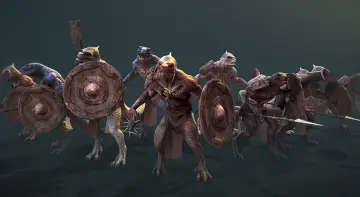
Integrate two animated primitive lizard predator models featuring distinct material setups, complete locomotion, and directional hit animations.
Implementing Primitive Predators in Creature AI State Machines
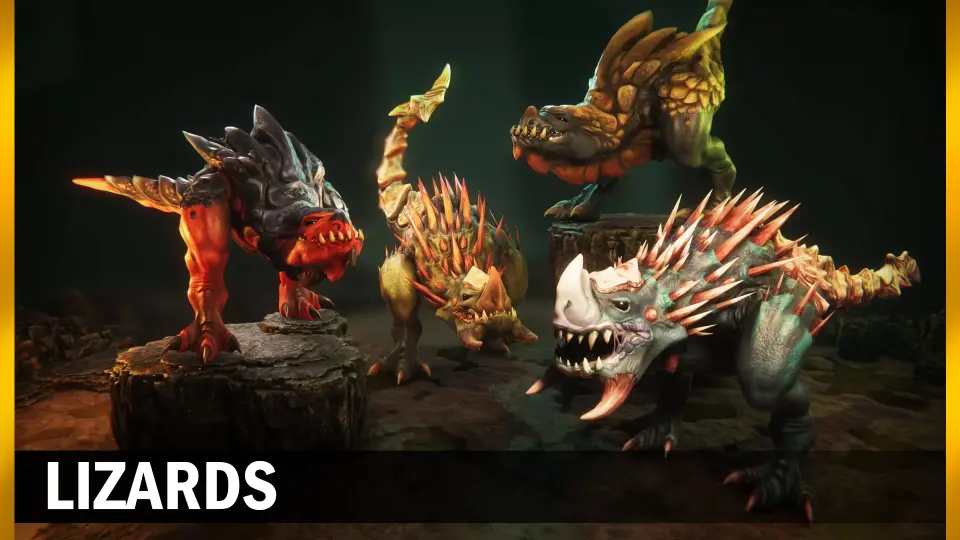
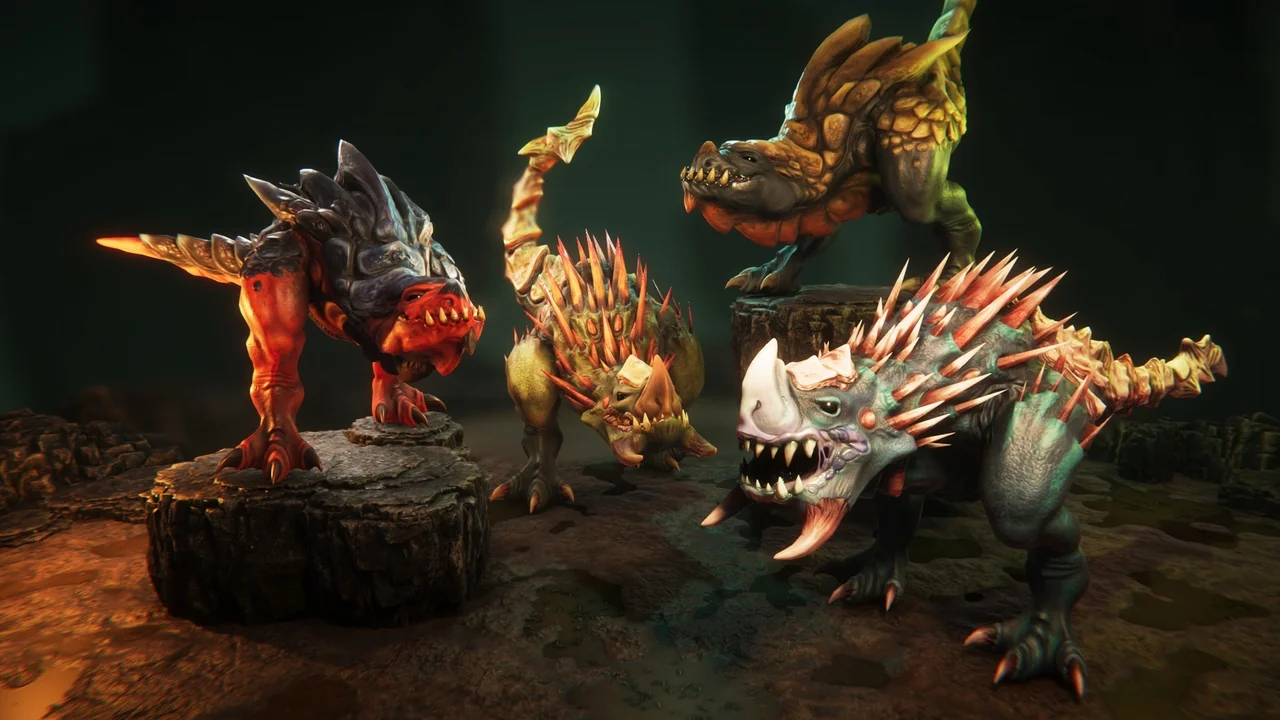
Integrating hostile wildlife into game environments requires meshes and motion sets that communicate predatory instincts immediately. The Lizards package provides two distinct lizard models built to function as ruthless primitive hunters. Designed around biological survival traits—heavy armor shells, thick hide, and prominent defensive spikes—these creatures fulfill combat roles ranging from dungeon dwellers to outdoor apex predators across dense jungles, rocky deserts, and swamp settings.
Implementation begins with routing the included animation library into your navigation and combat state machines. Because these creatures rely on physical brute force, such as knocking down targets with heavy tail sweeps or latching on with powerful jaws, their mechanical setup should balance relentless forward momentum with clear telegraphs. Building an AI controller around their natural habitat behavior involves treating them as tracking mobs that chase down prey without breaking stride.
Locomotion Cycles and Stationary Motion Logic
Navigation controllers require seamless transitions between baseline patrolling, aggressive target pursuit, and positional adjustments. The locomotion set provided with these lizard models accounts for ground traversal through dedicated movement clips suited to blending:
Walk: A steady pacing cycle suited for standard patrolling, stalking prey in swamp beds, or wandering across rocky terrain.
Run: A high-speed pursuit cycle supporting sprint phases when the predator engages a target across open desert or jungle floor.
Turns Right and Left: Angular turn animations that eliminate foot sliding when the creature rotates toward a player during pathfinding updates.
Jump and Jump on Place: Vertical navigation clips that allow the mesh to negotiate elevation breaks, leap off ledges, or clear obstacles without falling out of character animation states.
Two Idles: Dual idle loops that break up repetition when multiple lizard mobs spawn in packs or guard stationary nests.
By blending between the walk and run states using a standard speed float parameter, the creature shifts smoothly from stealthy approach to rapid charge. Incorporating the dedicated turning cycles into your blend tree ensures that heading changes look grounded, matching the weight of their armored frames.
Combat Animations and Directional Hit Reactions
Combat encounters with heavy reptilian predators demand varied offensive actions alongside responsive hit detection. The motion library supplies two discrete attack animations, enabling developers to alternate between different offensive patterns. One action can be assigned to close-quarters jaw biting, while the second drives wide-angle tail sweeps capable of crowd control or knockdown effects against approaching players.
For defensive handling, the animation data includes hit reactions from three distinct sides. Rather than playing a single generic flinch, the AI state machine can evaluate the incoming hit vector relative to the lizard's forward transform:
Left-Side Hit: Triggered when damage impacts the creature's left flank, recoiling the armored body naturally away from the blow.
Right-Side Hit: Driven by incoming strikes on the right flank to maintain physical momentum.
Frontal Hit: A head-on flinch cycle that preserves the aggressive posture while registering heavy impacts against its thick skin and shell.
Providing three-way impact feedback allows players to read positional damage clearly during fast-paced dungeon encounters. When health reaches zero, two separate death animations prevent mass combat encounters from ending with identical ragdoll-like collapses, ensuring visual variation across groups of defeated mobs.
Mesh Density, Shell Details, and Material Sets
Balancing visual detail against real-time performance is crucial when deploying multi-creature encounters. Both models within the Lizards asset maintain tight triangle budgets appropriate for mid-tier mobs, background wildlife, or dungeon encounters:
Lizard 1: Configured at 13,876 triangles, optimizing performance for scenarios where several predators swarm simultaneously.
Lizard 2: Configured at 16,900 triangles, offering extra geometric definition through its heavier hard shell and pronounced spikes.
Each animated lizard model comes with two materials. This dual-material setup makes it possible to isolate specific physical zones across the creature, such as separating the dense outer carapace and spikes from the softer, thick skin underneath. Separating surfaces across two material slots also gives technical artists direct control over shader parameters, whether tuning roughness values for damp swamp hides or increasing specularity for sun-baked desert armor plates.
Package Integration Context and Scene Availability
When migrating these models into your project structure, keep in mind that the showcase scene is not included in the UE4 version of the package. The delivery focuses directly on the functional assets—the rigged meshes, materials, and individual animation sequences—rather than pre-lit environment stages. Level designers can drop the rigged lizard characters straight into existing maps, configuring their collision capsules and AI perception components without needing to strip out extraneous demonstration levels or lighting rigs.
The technical specifications align with White castle compatibility, offering stable rigging and mesh data that drop smoothly into established creature pipelines. Whether used as aggressive fantasy mob encounters, prehistoric raptor-style threats, or ambient jungle carnivores, the Lizards package provides the visual weight, structural durability, and animation foundation required for responsive, combat-ready creature encounters.
 Creatures
 Creatures
 Creatures
 Creatures