"c68a05d5e51405b3"{"id":"1000120","slug":"herbalist-s-hut","title":"Herbalist's Hut","category":"Cities","engine":"4.26+,5.0+","assetVersion":"","engineVersion":"Engine Version: 4.26+,5.0+","tag":"Cities","accent":"blue","visual":"mech","summary":"Equip your forest levels with a game-ready wooden hut environment, featuring a flexible collection of interior set dressing props like bookshelves and clay vess","platform":"Unreal Engine","publishedAt":"2026-06-09T15:12:36.559Z","updatedAt":"2026-06-09T15:12:36.559Z","sourceNotes":[],"fileContents":[],"compatibility":["Unreal Engine","Engine Version: 4.26+,5.0+"],"featuredImage":{"alt":"Herbalist's Hut","src":"/wp-content/uploads/published/2026/06/a150013a81fb-dcc5caba-c0a2-42a4-b201-1a29075b3a3a-98ce0a650e.webp"},"hasDownloadLink":true,"downloads":0,"terms":[{"taxonomy":"category","slug":"cities","name":"Cities"}],"galleryImages":[{"src":"/wp-content/uploads/published/2026/06/3dd82d04f06d-a4e5f2ac-5962-435f-b4ed-a8866fba321b-027c152dae.webp","alt":"Herbalist's Hut"},{"src":"/wp-content/uploads/published/2026/06/fe987f8d473c-29dccceb-510c-4dde-ab37-e35f4763adb3-3e3aabac85.webp","alt":"Herbalist's Hut"},{"src":"/wp-content/uploads/published/2026/06/9f78ee8ff435-facc92a6-42a3-47b0-99cf-c48be0b0a275-ce2899e640.webp","alt":"Herbalist's Hut"},{"src":"/wp-content/uploads/published/2026/06/47339c4f58d0-7c92c5fb-da85-4cc7-9823-225a85b01e3c-2e3273f712.webp","alt":"Herbalist's Hut"},{"src":"/wp-content/uploads/published/2026/06/36ea99e39991-78e4b2ca-90f1-40d1-8b2e-cc24633169f7-b53d23d284.webp","alt":"Herbalist's Hut"},{"src":"/wp-content/uploads/published/2026/06/4557ec2362b5-28c96031-9341-47e5-8c50-12a3bdb068ae-803e9d2447.webp","alt":"Herbalist's Hut"},{"src":"/wp-content/uploads/published/2026/06/28509ee23373-66c99475-f3e1-4214-9602-b0750aee5b23-3bfd32ef7a.webp","alt":"Herbalist's Hut"},{"src":"/wp-content/uploads/published/2026/06/90fe01cc22ec-033ebfc2-098f-4d0c-b207-ff38210a85f2-ab5c8eafd9.webp","alt":"Herbalist's Hut"},{"src":"/wp-content/uploads/published/2026/06/eb869bb220e7-d314b239-12fa-4065-802e-7d9511dfc7bb-fc8f92d1b8.webp","alt":"Herbalist's Hut"},{"src":"/wp-content/uploads/published/2026/06/4b0232c4aabc-d3433b48-9db2-4deb-affd-a3607feb0889-e7e30d3385.webp","alt":"Herbalist's Hut"}],"accessPanel":{"kind":"resource","title":"Access this resource","eyebrow":"Free Download","message":"Log in or create a free account to start your download.","fileName":"Content.7z","safetyNote":"Resources are manually reviewed before listing to improve quality and reduce obvious risks.","actionLabel":"Download Free","resourceType":"Resource archive"},"contentHtml":"\u003ch2\u003eAnchoring the Forest Level\u003c/h2\u003e\n\u003cp\u003eBuilding convincing wilderness environments often requires specialized focal points where players can rest, explore, or interact with key characters. The Herbalist's Hut provides a dedicated architectural anchor for these natural settings. Designed to fit seamlessly into a dense forest biome, this rustic cabin serves as an ideal habitation for a druid, an apothecary, or a secluded woodland dweller. As a game-ready asset, the foundational structure is prepared for immediate integration into active levels, providing a sturdy building that establishes a distinct thematic identity right out of the box. Rather than simply dropping a static, unchangeable house into a scene, environment artists are given the raw materials to construct a highly specific narrative space tailored to their project's exact needs.\u003c/p\u003e\n\u003ch2\u003eThe Core Architecture of the Wooden Cabin\u003c/h2\u003e\n\u003cp\u003eThe core of the environment relies heavily on its rustic architectural elements. Operating as a self-contained wooden building, the structure projects a handcrafted, natural aesthetic that aligns perfectly with traditional druidic or herbalist themes. The interior layout is firmly anchored by a fireplace, a crucial and logical element for this specific type of habitation. In a game level, a fireplace serves multiple essential functions: it acts as a primary source of interior illumination, it provides a believable point of warmth for the inhabitant, and it offers a natural workstation for an herbalist to brew, boil, and process natural ingredients. The spatial presence of the fireplace fundamentally shapes how an artist will approach the interior layout, naturally dictating where the primary workspace is located and how the rest of the room is arranged through that central stone hearth.\u003c/p\u003e\n\u003ch2\u003eSet Dressing the Herbalist's Hut\u003c/h2\u003e\n\u003cp\u003eWhat truly elevates this simple wooden building into a specialized, lived-in workspace is the comprehensive collection of individual interior props. The asset is explicitly designed around the concept of flexible set dressing, providing a vast array of props that developers can arrange exactly as their scene demands. This modular approach to interior design means that the house does not have to look identical in every iteration or every level. A level designer can utilize the empty wooden shell and populate it densely to create a hoarder’s chaotic apothecary, or they can furnish it sparsely for an ascetic druid’s quiet, minimalist retreat. By carefully separating the interactive props from the main architectural structure, the environment remains highly adaptable to the specific gameplay flow or storytelling requirements of the current area.\u003c/p\u003e\n\u003ch2\u003eStructuring the Interior with Bookshelves and Cabinets\u003c/h2\u003e\n\u003cp\u003eTo establish the functional layout of the interior space, the collection includes essential heavy furniture pieces, most notably bookshelves and cabinets. These items form the backbone of any credible workspace focused on study and crafting. Bookshelves provide the necessary storage for ancient tomes, botanical research, and druidic lore, adding crucial verticality to the room's overall design. Cabinets offer enclosed, protective storage, suggesting specific spaces where rare herbs, sensitive organic ingredients, or specialized tools are kept safe from the elements. By strategically placing these large wooden props against the walls or using them to organically divide the interior space, developers can quickly block out the flow of the room. This allows level designers to create distinct, readable zones for studying, resting, and crafting within a single open structure.\u003c/p\u003e\n\u003ch2\u003eDetailing with Clay Vessels and Herbal Elements\u003c/h2\u003e\n\u003cp\u003eOnce the larger furniture pieces are locked into place, the scene is brought to life through the meticulous application of smaller scatter props. The inclusion of clay vessels is particularly vital for selling the overarching herbal theme. These individual vessels can be clustered together on shelves, stacked neatly inside cabinets, or arranged haphazardly around the fireplace to suggest active potion brewing or long-term ingredient storage. The specific use of clay as a material reinforces the rustic, grounded, and historical nature of the location, actively avoiding anything too refined or industrial. When combined with other herbal-themed items, these vessels allow artists to clutter workspaces in a highly realistic manner. The density, rotation, and placement of these individual props ultimately tell the environmental story of the inhabitant—revealing whether they are meticulously organized or frantically experimenting with new concoctions.\u003c/p\u003e\n\u003ch2\u003eAdapting Props for Druidic Environments\u003c/h2\u003e\n\u003cp\u003eBecause the asset functions fundamentally as a flexible set dressing kit, its utility extends far beyond a single, fixed configuration. The individual elements—spanning from the heavy wooden cabinets down to the smallest clay vessels—can be easily repurposed and scattered independently across entirely different areas of a game level. The wooden hut itself could be stripped of its specialized trappings to serve as a generic, abandoned forest cabin. Conversely, the bookshelves, cabinets, and botanical props could be utilized to furnish a completely different interior space, such as a wizard’s tower, a bustling village apothecary shop, or an underground druidic enclave. This inherent versatility ensures that the components can support varied environmental designs while maintaining a cohesive, rustic art style throughout the entire level building process.\u003c/p\u003e\n\n\u003ch2\u003eMore From The Same Workflow\u003c/h2\u003e\n\u003cul\u003e\n\u003cli\u003e\u003ca href=\"https://3dcghub.com/stylized-viking-hut-stylized-stylized-stylized-viking-viking-hut-hut-forest/\" title=\"Stylized Viking Hut ( Stylized Stylized Stylized Viking Viking Hut Hut Forest )\"\u003eStylized Viking Hut ( Stylized Stylized Stylized Viking Viking Hut Hut Forest )\u003c/a\u003e\u003c/li\u003e\n\u003cli\u003e\u003ca href=\"https://3dcghub.com/abandoned-hut-in-tropical-island-survival-abandoned-tropicall-island-jungle/\" title=\"Abandoned Hut in Tropical Island ( Survival Abandoned Tropicall Island Jungle )\"\u003eAbandoned Hut in Tropical Island ( Survival Abandoned Tropicall Island Jungle )\u003c/a\u003e\u003c/li\u003e\n\u003cli\u003e\u003ca href=\"https://3dcghub.com/country-side/\" title=\"Country Side\"\u003eCountry Side\u003c/a\u003e\u003c/li\u003e\n\u003cli\u003e\u003ca href=\"https://3dcghub.com/visus-city-vol-1/\" title=\"Visus City Vol 1\"\u003eVisus City Vol 1\u003c/a\u003e\u003c/li\u003e\n\u003cli\u003e\u003ca href=\"https://3dcghub.com/low-poly-rainforest-pack/\" title=\"Low Poly Rainforest Pack\"\u003eLow Poly Rainforest Pack\u003c/a\u003e\u003c/li\u003e\n\u003c/ul\u003e","contentTextLength":5760,"navigation":{"current":1885,"total":3860,"previous":{"id":"1000121","slug":"interior-props","title":"Interior Props","category":"Tools, Objects \u0026 Decor","platform":"Unreal Engine","updatedAt":"2026-06-09T15:24:05.523Z"},"next":{"id":"1000119","slug":"gltfruntime","title":"glTFRuntime","category":"Engine Tools","platform":"Unreal Engine","updatedAt":"2026-06-09T14:53:46.900Z"}},"relatedResources":[{"id":"8092","slug":"abandoned-hut-in-tropical-island-survival-abandoned-tropicall-island-jungle","title":"Abandoned Hut in Tropical Island ( Survival Abandoned Tropicall Island Jungle )","category":"Forest \u0026 Jungle","engine":"4.27,5.0+","assetVersion":"Engine version: 4.27,5.0+","engineVersion":"5.0","tag":"Forest \u0026 Jungle","accent":"blue","visual":"city","summary":"Create immersive survival environments with this detailed abandoned hut pack. Featuring a unique backstory and modular tools, it is perfect for post-apocalyptic tropical settings.","platform":"Unreal Engine","publishedAt":"2026-02-22T16:52:15.000Z","updatedAt":"2026-04-19T15:55:34.000Z","sourceNotes":[],"fileContents":[],"compatibility":["Unreal Engine","Engine version: 4.27,5.0+"],"featuredImage":{"alt":"Abandoned Hut in Tropical Island ( Survival Abandoned Tropicall Island Jungle )","src":"https://3dcghub.com/wp-content/uploads/2026/02/dc585e7a-f072-4a9e-b2c8-267f737f5299.webp"},"hasDownloadLink":true,"downloads":0},{"id":"10086","slug":"stylized-viking-hut-stylized-stylized-stylized-viking-viking-hut-hut-forest","title":"Stylized Viking Hut ( Stylized Stylized Stylized Viking Viking Hut Hut Forest )","category":"Towns \u0026 Villages","engine":"4.26+,5.0+","assetVersion":"Engine version: 4.26+,5.0+","engineVersion":"","tag":"Towns \u0026 Villages","accent":"blue","visual":"city","summary":"Enhance your game environments with the Stylized Viking Hut pack, featuring 102 unique meshes and compatibility with the Ultimate Level Art Tool. This optimized collection is designed for high-quality fantasy and forest scenes.","platform":"Unreal Engine","publishedAt":"2026-03-02T17:16:41.000Z","updatedAt":"2026-04-19T15:50:06.000Z","sourceNotes":[],"fileContents":[],"compatibility":["Unreal Engine","Engine version: 4.26+,5.0+"],"featuredImage":{"alt":"Stylized Viking Hut ( Stylized Stylized Stylized Viking Viking Hut Hut Forest )","src":"https://3dcghub.com/wp-content/uploads/2026/03/9f88cc68-888d-4d9a-8264-4b486f5cf499.webp"},"hasDownloadLink":true,"downloads":0},{"id":"1001355","slug":"nature-materials-ice","title":"Nature Materials Ice","category":"Cities","engine":"4.15+,5.0+","assetVersion":"","engineVersion":"Engine Version: 4.15+,5.0+","tag":"Cities","accent":"blue","visual":"luts","summary":"Examine the technical parameters, depth clouds, bump offset, and distance blending features available in the Nature Materials Ice shader system.","platform":"Unreal Engine","publishedAt":"2026-10-04T10:24:11.372Z","updatedAt":"2026-10-04T10:24:11.372Z","sourceNotes":[],"fileContents":[],"compatibility":["Unreal Engine","Engine Version: 4.15+,5.0+"],"featuredImage":{"alt":"Nature Materials Ice","src":"/wp-content/uploads/published/2026/10/180cc8364e7b-d9c98a66-c1d3-4d80-9a44-5ae55aa4ac0d-a2f5b5eb7d.webp"},"hasDownloadLink":true,"downloads":0}]}
Cities
Herbalist's Hut
Equip your forest levels with a game-ready wooden hut environment, featuring a flexible collection of interior set dressing props like bookshelves and clay vess
Category:Unreal Engine,CitiesPlatform: Unreal EngineEngine Version: 4.26+,5.0+Published: Jun 9, 2026
Cities
Resource overview
Anchoring the Forest Level
Building convincing wilderness environments often requires specialized focal points where players can rest, explore, or interact with key characters. The Herbalist's Hut provides a dedicated architectural anchor for these natural settings. Designed to fit seamlessly into a dense forest biome, this rustic cabin serves as an ideal habitation for a druid, an apothecary, or a secluded woodland dweller. As a game-ready asset, the foundational structure is prepared for immediate integration into active levels, providing a sturdy building that establishes a distinct thematic identity right out of the box. Rather than simply dropping a static, unchangeable house into a scene, environment artists are given the raw materials to construct a highly specific narrative space tailored to their project's exact needs.
The Core Architecture of the Wooden Cabin
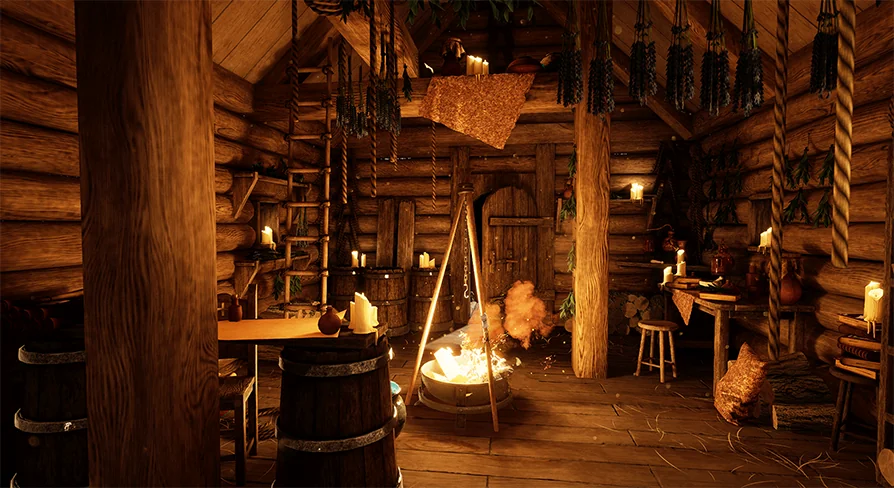
The core of the environment relies heavily on its rustic architectural elements. Operating as a self-contained wooden building, the structure projects a handcrafted, natural aesthetic that aligns perfectly with traditional druidic or herbalist themes. The interior layout is firmly anchored by a fireplace, a crucial and logical element for this specific type of habitation. In a game level, a fireplace serves multiple essential functions: it acts as a primary source of interior illumination, it provides a believable point of warmth for the inhabitant, and it offers a natural workstation for an herbalist to brew, boil, and process natural ingredients. The spatial presence of the fireplace fundamentally shapes how an artist will approach the interior layout, naturally dictating where the primary workspace is located and how the rest of the room is arranged through that central stone hearth.
Set Dressing the Herbalist's Hut
What truly elevates this simple wooden building into a specialized, lived-in workspace is the comprehensive collection of individual interior props. The asset is explicitly designed around the concept of flexible set dressing, providing a vast array of props that developers can arrange exactly as their scene demands. This modular approach to interior design means that the house does not have to look identical in every iteration or every level. A level designer can utilize the empty wooden shell and populate it densely to create a hoarder’s chaotic apothecary, or they can furnish it sparsely for an ascetic druid’s quiet, minimalist retreat. By carefully separating the interactive props from the main architectural structure, the environment remains highly adaptable to the specific gameplay flow or storytelling requirements of the current area.
Structuring the Interior with Bookshelves and Cabinets
To establish the functional layout of the interior space, the collection includes essential heavy furniture pieces, most notably bookshelves and cabinets. These items form the backbone of any credible workspace focused on study and crafting. Bookshelves provide the necessary storage for ancient tomes, botanical research, and druidic lore, adding crucial verticality to the room's overall design. Cabinets offer enclosed, protective storage, suggesting specific spaces where rare herbs, sensitive organic ingredients, or specialized tools are kept safe from the elements. By strategically placing these large wooden props against the walls or using them to organically divide the interior space, developers can quickly block out the flow of the room. This allows level designers to create distinct, readable zones for studying, resting, and crafting within a single open structure.
Detailing with Clay Vessels and Herbal Elements
Once the larger furniture pieces are locked into place, the scene is brought to life through the meticulous application of smaller scatter props. The inclusion of clay vessels is particularly vital for selling the overarching herbal theme. These individual vessels can be clustered together on shelves, stacked neatly inside cabinets, or arranged haphazardly around the fireplace to suggest active potion brewing or long-term ingredient storage. The specific use of clay as a material reinforces the rustic, grounded, and historical nature of the location, actively avoiding anything too refined or industrial. When combined with other herbal-themed items, these vessels allow artists to clutter workspaces in a highly realistic manner. The density, rotation, and placement of these individual props ultimately tell the environmental story of the inhabitant—revealing whether they are meticulously organized or frantically experimenting with new concoctions.
Adapting Props for Druidic Environments
Because the asset functions fundamentally as a flexible set dressing kit, its utility extends far beyond a single, fixed configuration. The individual elements—spanning from the heavy wooden cabinets down to the smallest clay vessels—can be easily repurposed and scattered independently across entirely different areas of a game level. The wooden hut itself could be stripped of its specialized trappings to serve as a generic, abandoned forest cabin. Conversely, the bookshelves, cabinets, and botanical props could be utilized to furnish a completely different interior space, such as a wizard’s tower, a bustling village apothecary shop, or an underground druidic enclave. This inherent versatility ensures that the components can support varied environmental designs while maintaining a cohesive, rustic art style throughout the entire level building process.
 Cities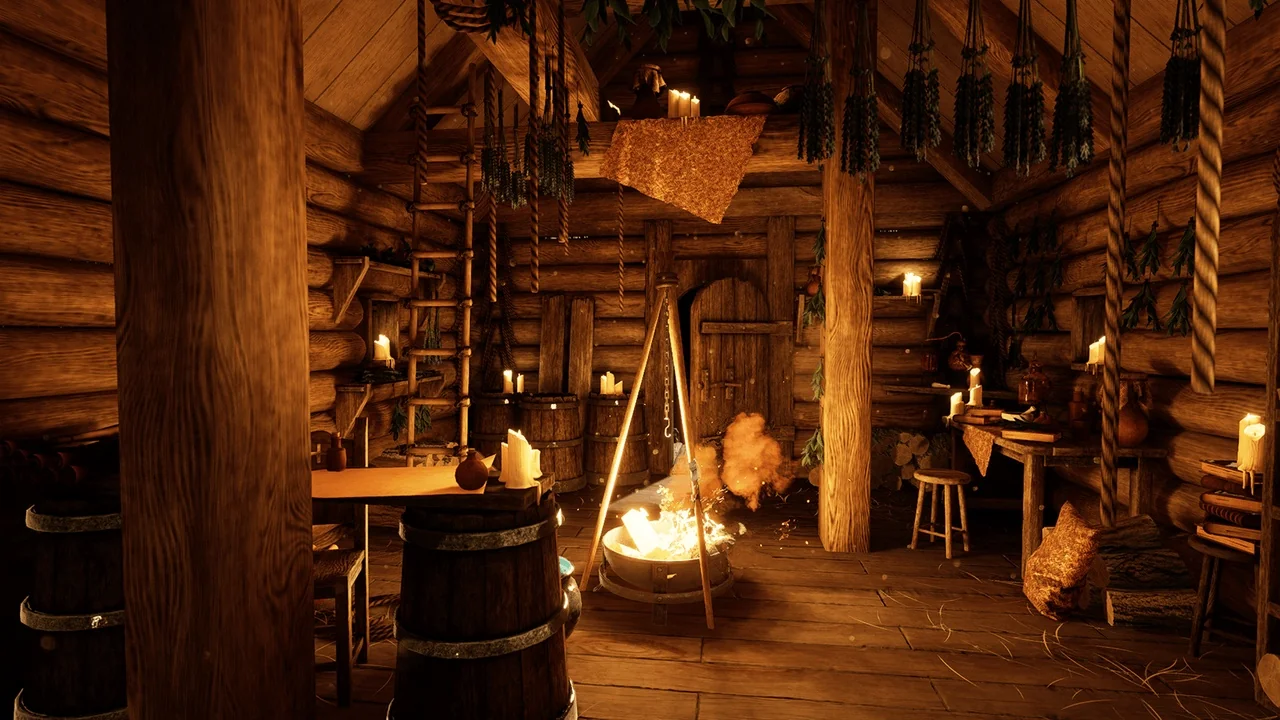
 Forest & Jungle
 Towns & Villages
 Cities