Configuring Advanced Movement and Locomotion
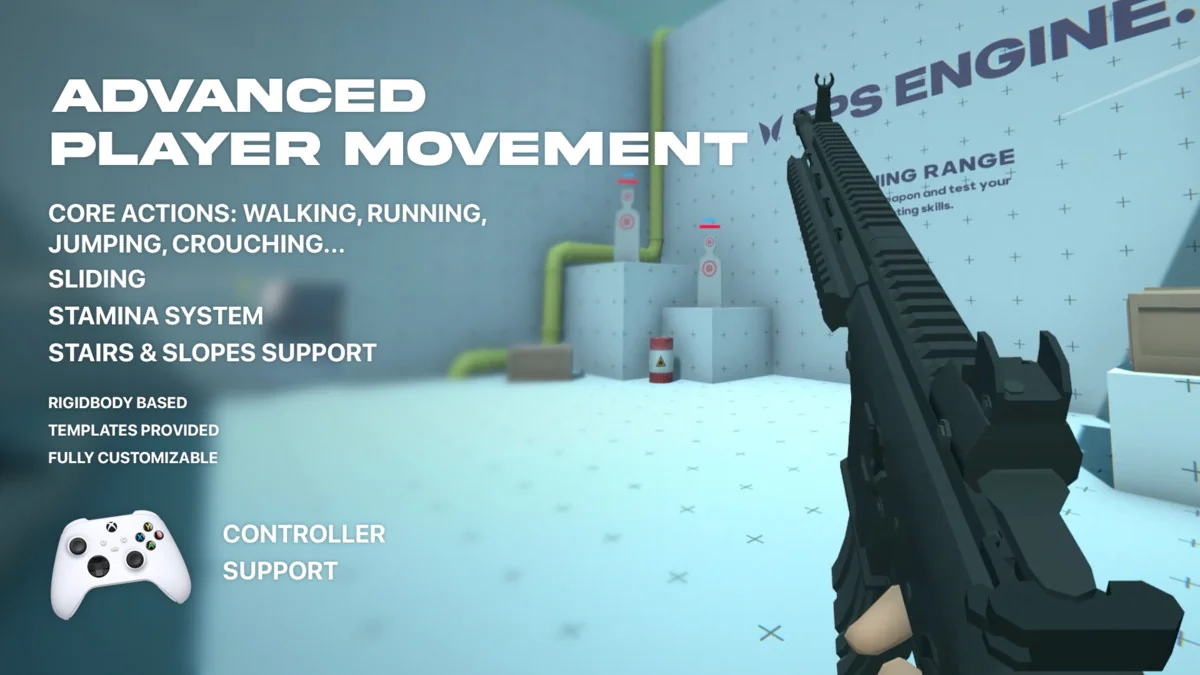
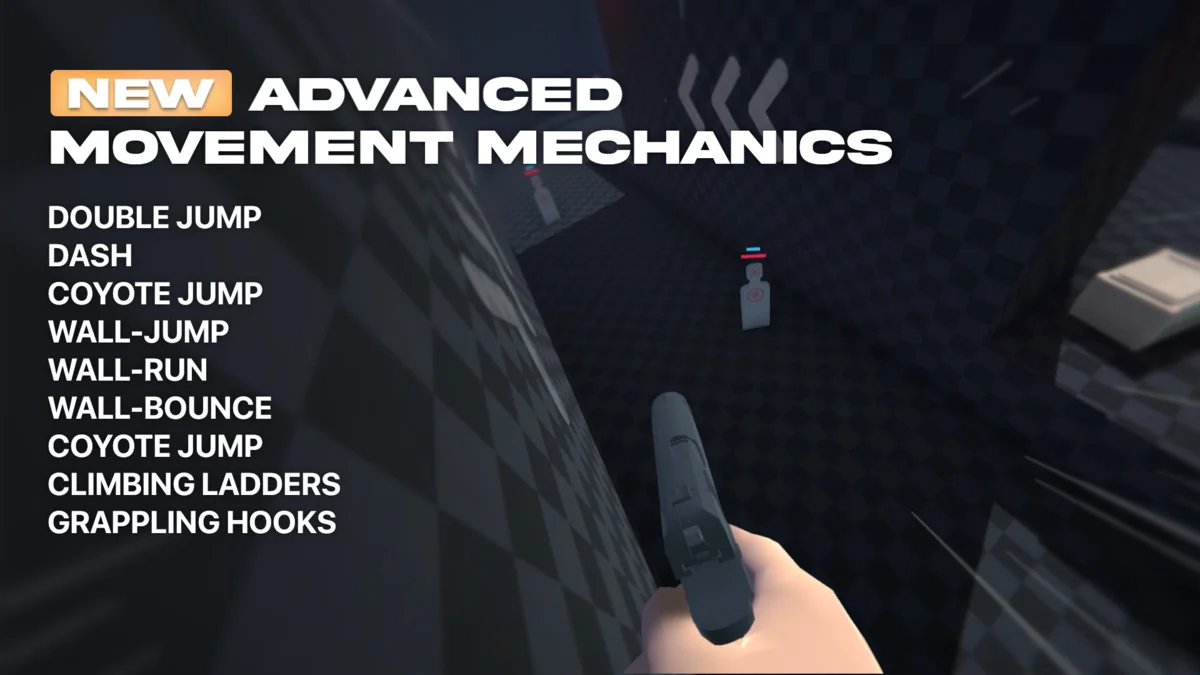
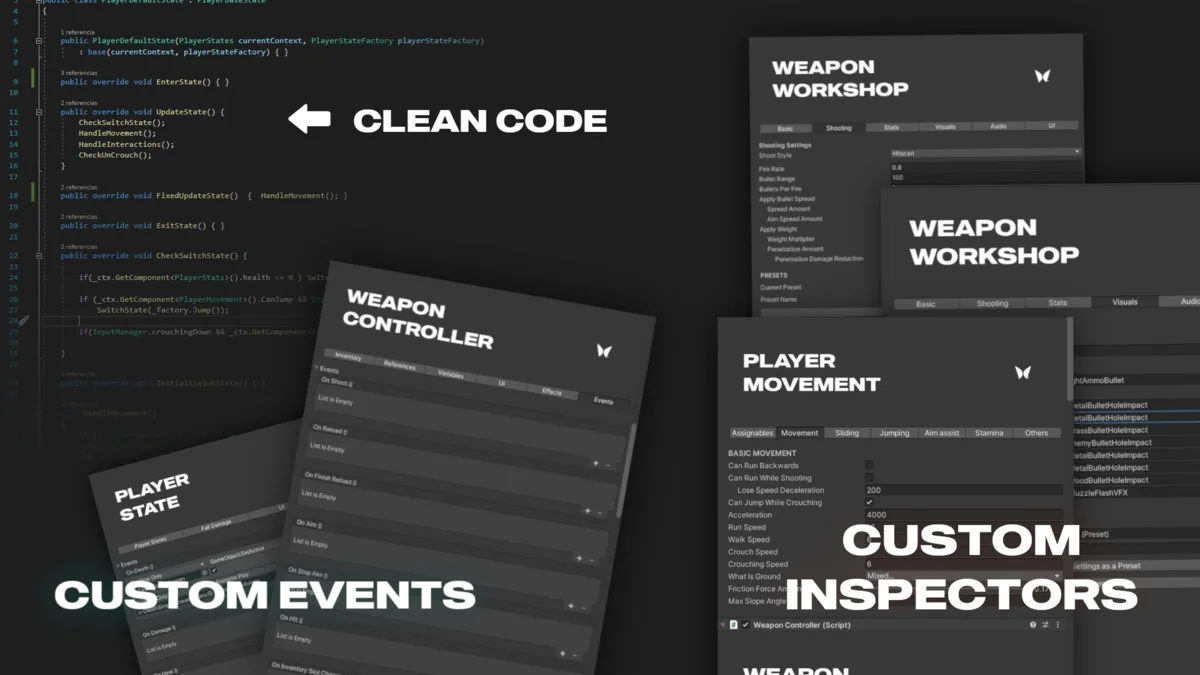
The FPS Engine provides a foundation for character control built on a Rigidbody-based system. Rather than offering a static character controller, it utilizes ready-made templates that support a wide range of core actions including moving, running, jumping, and crouching. Developers can implement complex movement mechanics such as sliding and dashing, which are governed by an integrated stamina system. This system ensures that high-intensity actions are balanced within the gameplay loop.
For projects requiring verticality and parkour-style navigation, the framework includes native support for wall-running, wall-bouncing, and climbing ladders. These features work alongside stairs and slopes support to ensure the player character interacts predictably with varied terrain. More specialized movement tools, such as grappling hooks, are also included as part of the locomotion suite, allowing for rapid traversal across different environment types.
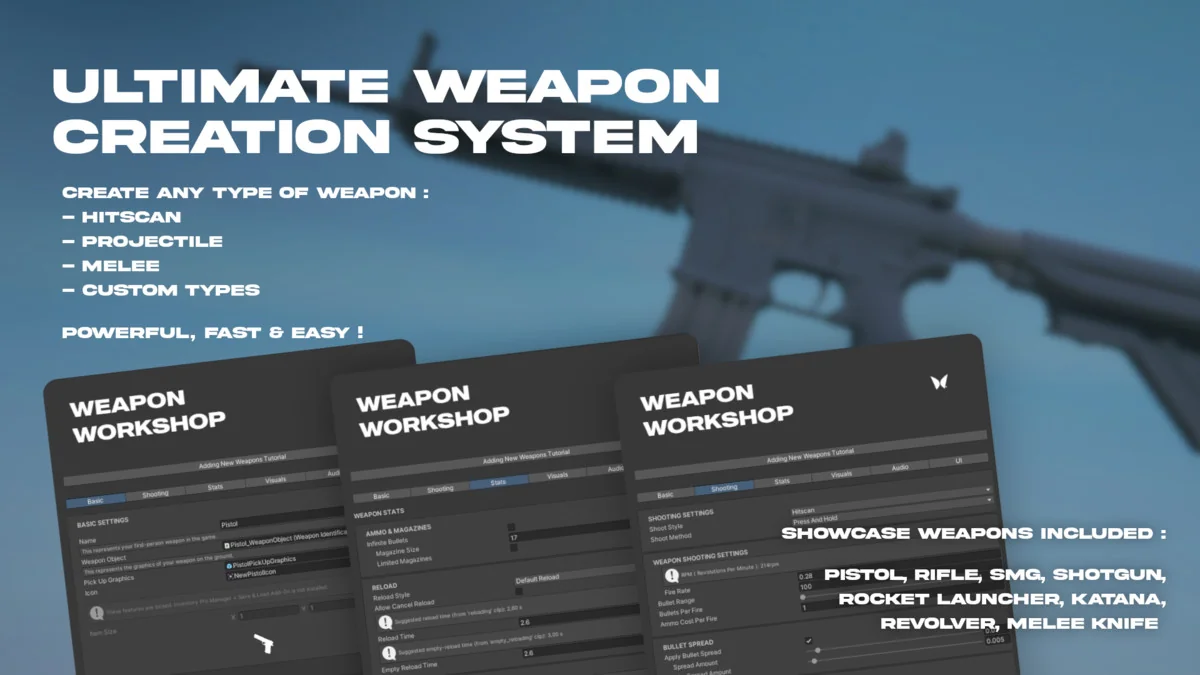
The Modular Weapon Creation System
A primary component of the engine is its weapon creation workflow, designed to allow the setup of new armaments within minutes. This system is divided into three primary categories: Hitscan, Projectile, and Melee. By using hitscan for immediate impact and projectiles for physicalized ballistics, creators can simulate a diverse arsenal. The melee system provides a dedicated path for close-quarters combat implementation.
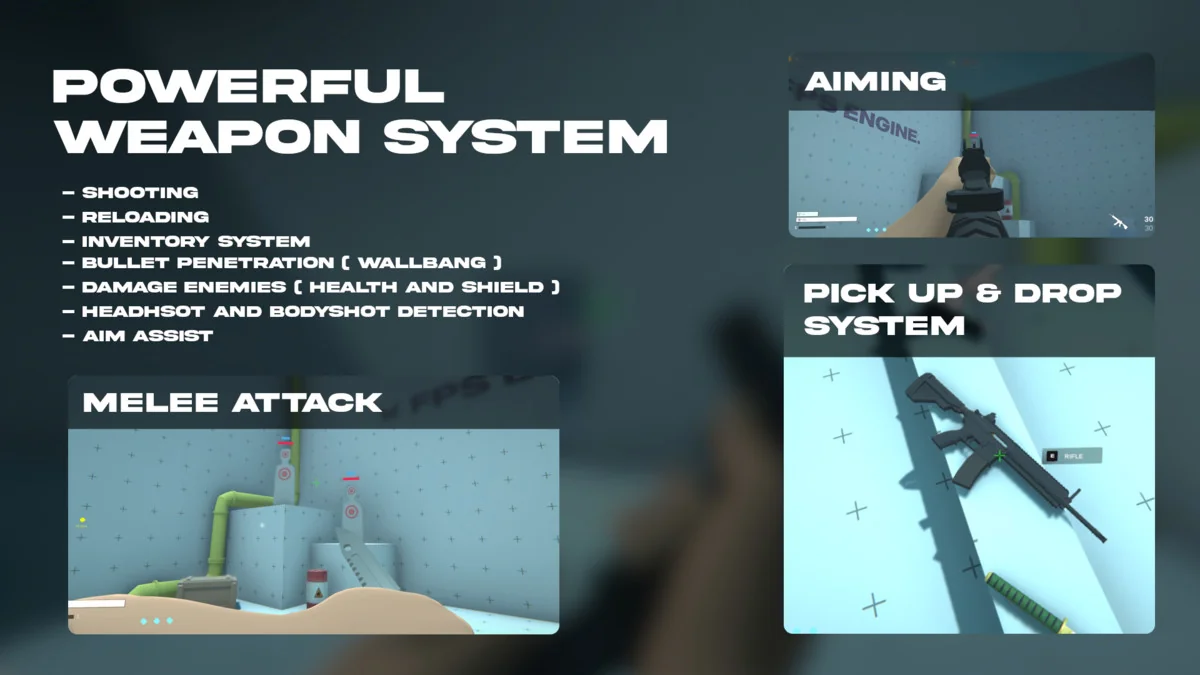
Customization within this system extends to the technical behavior of each weapon. Developers can define specific recoil patterns based on curves, ensuring that weapon handling feels distinct. The system also supports bullet penetration, commonly referred to as wallbanging, which allows projectiles or hitscan traces to pass through geometry based on defined parameters. Shooting mechanics are further refined through four distinct methods: standard press, press and hold for automatic fire, hold and release for charged shots, and a ‘hold until ready’ mode. Damage reduction is calculated based on distance, providing a built-in solution for weapon balancing and effective ranges.
Environmental Interaction and Surface Detection
The engine utilizes a dynamic surface detection system to enhance the relationship between the player and the game world. This system identifies different surfaces to trigger unique visual effects and audio clips. This is applied to both footstep detection during movement and hit detection when projectiles or melee attacks strike an object. By differentiating between materials like metal, wood, or stone, the system automates the deployment of appropriate impact particles and sound triggers.
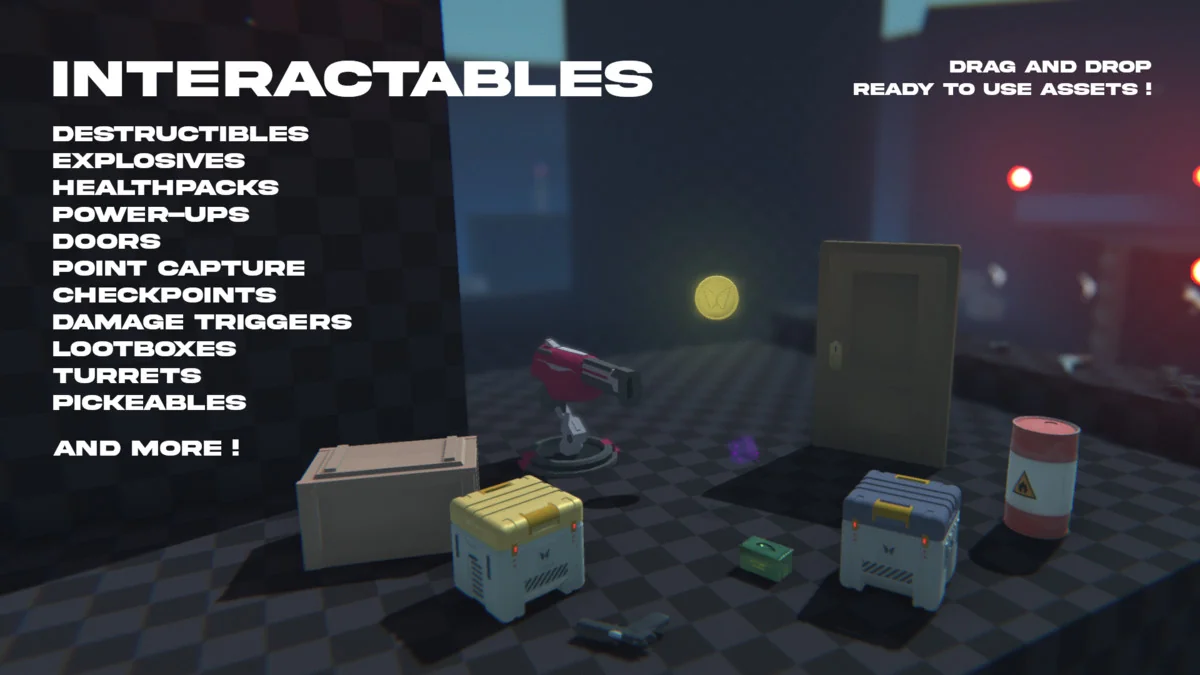
Beyond surface detection, the framework includes a suite of interactable objects that populate the game world. This includes destructibles and explosives that react to weapon fire, as well as functional elements like doors and point capture zones. For player progression and survival mechanics, the engine provides pre-configured health packs and power-ups. Checkpoints are also accessible within the system to manage player respawning and level flow.
Player Systems and Interface Management
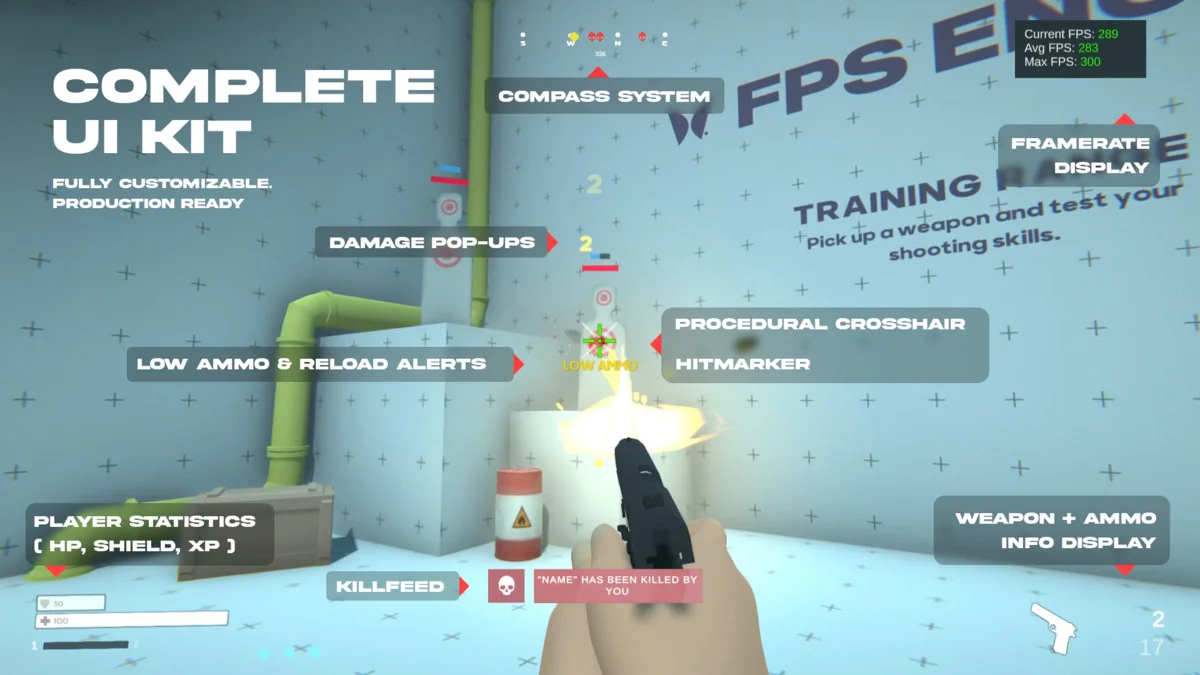
The integrated UI Kit provides a comprehensive set of tools for displaying vital game data. This includes a procedural crosshair that reacts to player movement or fire, alongside hitmarkers, damage pop-ups, and a killfeed for combat feedback. Information regarding the player’s status is handled through health and shield bars, stamina displays, and specialized UI events for low ammo or reload prompts. A compass system with customizable icons assists in navigation, while a framerate display provides real-time performance monitoring.
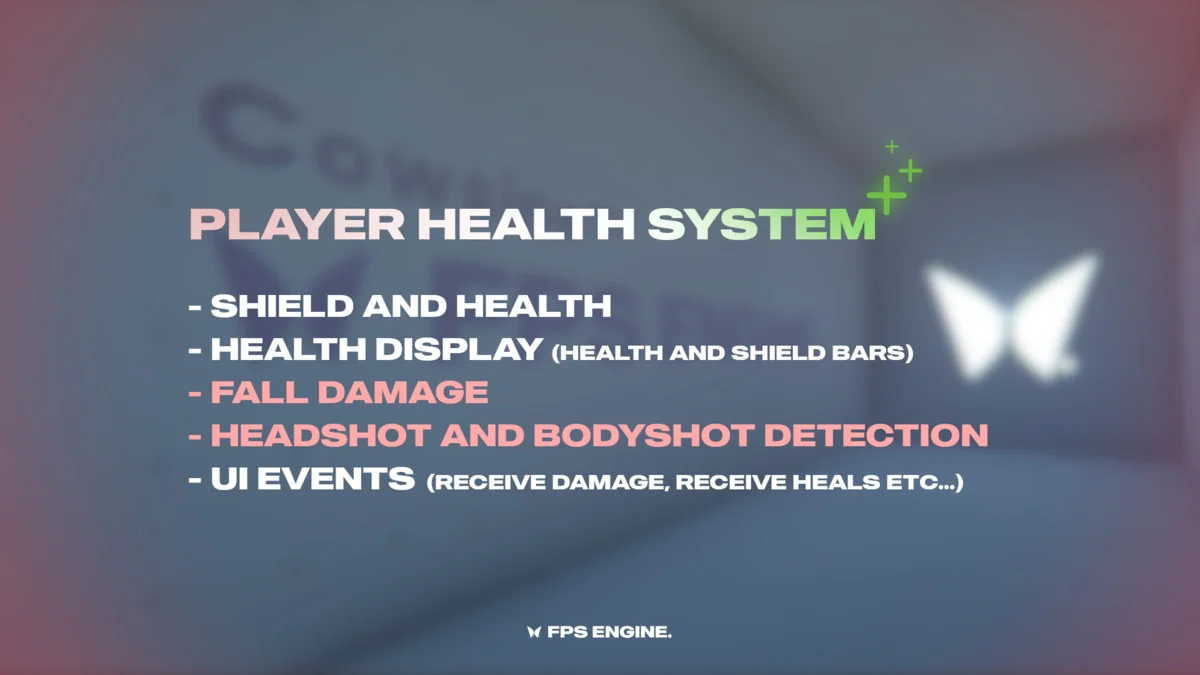
The health system itself is built to handle both shield and health layers. It includes logic for fall damage and customizable auto-healing parameters. To add a layer of progression, the engine incorporates an experience and currency system, allowing developers to track player growth or economy-based mechanics. On the front-end, the asset includes ready-to-use menu structures, including a main menu, pause menu, and a settings menu that supports key rebinding.
Visual and Audio Feedback Loops
To increase the tactile feel of the gameplay, the engine includes several camera and weapon effects. Camera-based feedback includes breathing animations, head bobbing, and camera shakes or tilts that trigger during specific actions or impacts. Weapon-specific effects like breathing animations ensure that firearms do not appear static when held. The modular nature of the weapon system also allows for the easy attachment of visuals, animations, and audio clips to specific weapon events like shooting, aiming, and reloading.
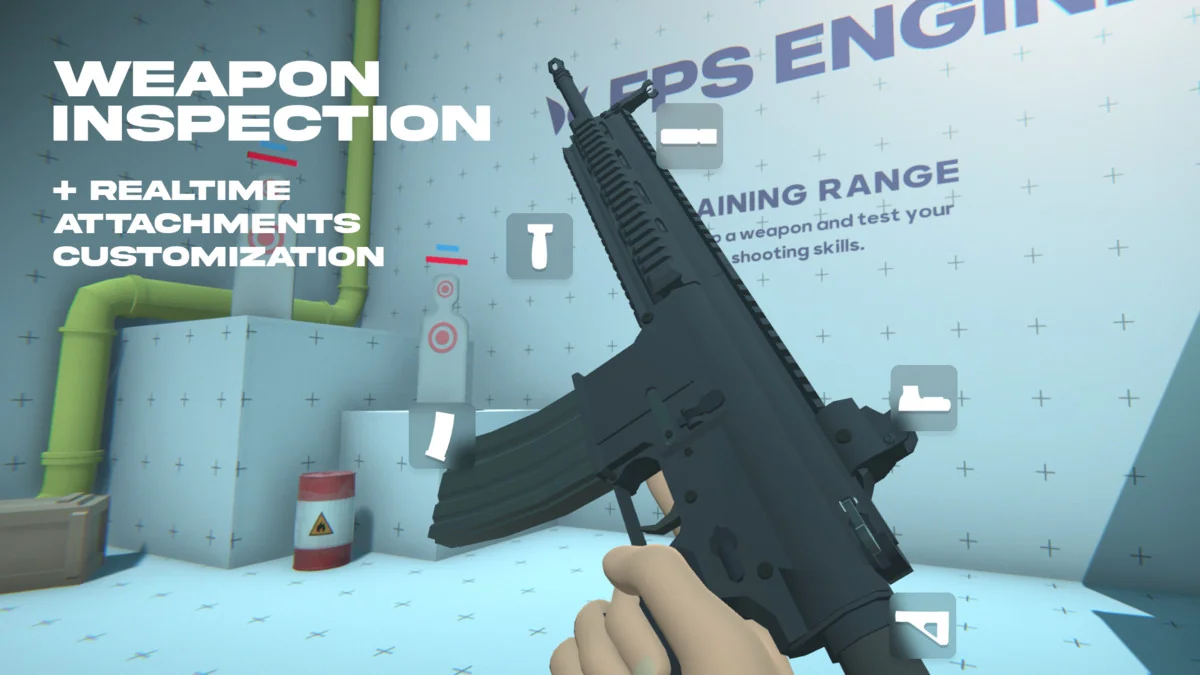
The inventory system manages how these weapons are carried and used, including functionality for picking up and dropping items in the world. Developers can set initial starting weapons for players and utilize a weapon inspection feature to showcase the visual assets. An aim assist system is also available to refine the shooting experience across different input methods, ensuring the combat remains accessible while maintaining the depth of the core weapon stats and attachment configurations.
Visual Breakdown

Protected download
Access this resource
All resources are 100% manually reviewed to eliminate all risks.