"a19e0535960bd083"{"id":"1002088","slug":"elite-landscapes-alien-part-ii","title":"Elite Landscapes: Alien Part II","category":"Sci-Fi","engine":"4.20+,5.0+","assetVersion":"","engineVersion":"Engine Version: 4.20+,5.0+","tag":"Sci-Fi","accent":"blue","visual":"city","summary":"Explore Elite Landscapes: Alien Part II, featuring four 8k alien terrains, original heatmaps, custom sky spheres, and preconfigured lighting setups.","platform":"Unreal Engine","publishedAt":"2026-10-26T15:57:54.322Z","updatedAt":"2026-10-26T15:57:54.322Z","sourceNotes":[],"fileContents":[],"compatibility":["Unreal Engine","Engine Version: 4.20+,5.0+"],"featuredImage":{"alt":"Elite Landscapes: Alien Part II","src":"/wp-content/uploads/published/2026/10/71f7b4d7ef09-a0c7a5d6-6dfa-4b5d-89e6-3ec8e6ddb713-e2d0321333.webp"},"hasDownloadLink":true,"downloads":0,"terms":[{"taxonomy":"category","slug":"sci-fi","name":"Sci-Fi"}],"galleryImages":[{"src":"/wp-content/uploads/published/2026/10/53c8db73c56d-2d0dfbbe-2646-476d-b20e-46737a12747d-173bed917f.webp","alt":"Elite Landscapes: Alien Part II"},{"src":"/wp-content/uploads/published/2026/10/68ff09c941cb-d6fc64c2-7ffd-4789-bafa-d0d4f5b7f77f-9da61eda54.webp","alt":"Elite Landscapes: Alien Part II"},{"src":"/wp-content/uploads/published/2026/10/4ec5a277d0c5-5a232d42-2369-4c94-ba3c-e0920ba164ac-501b2d4d17.webp","alt":"Elite Landscapes: Alien Part II"},{"src":"/wp-content/uploads/published/2026/10/bdeadb2d06ad-26524c0e-cb63-4776-85d9-5504041bc5e0-2da7af9cae.webp","alt":"Elite Landscapes: Alien Part II"},{"src":"/wp-content/uploads/published/2026/10/0e9ea88d11a3-1c775047-1a2c-49c8-8e48-452a3a55a3da-475dfbf5fb.webp","alt":"Elite Landscapes: Alien Part II"},{"src":"/wp-content/uploads/published/2026/10/1e73afb9a288-14ffab1b-2af3-41f8-9249-ab70f685c85d-7684ef8c19.webp","alt":"Elite Landscapes: Alien Part II"},{"src":"/wp-content/uploads/published/2026/10/a22fb8bb5121-3b45ee1a-4e28-4496-acf0-957e7de5cfbb-ff1e5d8357.webp","alt":"Elite Landscapes: Alien Part II"},{"src":"/wp-content/uploads/published/2026/10/a6ae8e6ef6a3-e65d87d6-fcff-48c2-bdb7-1ca34884ecf8-11edbc7a31.webp","alt":"Elite Landscapes: Alien Part II"},{"src":"/wp-content/uploads/published/2026/10/0be8e3199cb7-649a875b-5c1d-4de1-9cce-76c1501d11d9-d660c21a6d.webp","alt":"Elite Landscapes: Alien Part II"}],"accessPanel":{"kind":"resource","title":"Download this resource","eyebrow":"Free Download","message":"Log in or create a free account to start your download.","fileName":"Content.7z","safetyNote":"Resources are manually reviewed before listing to improve quality and reduce obvious risks.","actionLabel":"Download Free","resourceType":"Resource archive"},"contentHtml":"\u003ch2\u003eEstablishing Extraterrestrial Worlds at Scale\u003c/h2\u003e\u003cp\u003eBuilding believable off-world geography demands vast terrain boundaries, expressive natural erosion, and atmospheric lighting that feels distinctly detached from terrestrial norms. In planetary exploration scenes, sci-fi cinematics, and open-ended fantasy environments, artists frequently encounter the challenge of establishing sheer physical scale without losing structural terrain detail when the camera shifts from a high-altitude orbital drop to ground-level exploration. Elite Landscapes: Alien Part II tackles these environmental needs by providing four expansive alien landscapes sculpted at 8k resolution, backed by atmospheric skyboxes and ready-to-run stage configurations.\u003c/p\u003e\u003cp\u003eRather than presenting a monolithic, single-use setting, this collection focuses on atmospheric expanse. It spans diverse geographical forms, ranging from sweeping alien plains and desert wastes to sharp mountain valleys and rolling ridges. Because each environment incorporates full lighting and scene configurations, scenes can be evaluated directly or dismantled into custom world-building pipelines.\u003c/p\u003e\u003ch2\u003eFour 8k Terrains for Alien Deserts, Plains, and Valleys\u003c/h2\u003e\u003cp\u003eResolution dictates how well an expansive landscape holds up under intense visual scrutiny. Each of the four terrains in this package is based on an 8k height map resolution, allowing dramatic cliff faces, sweeping sediment lines, and dry basins to remain sharp across miles of virtual space. For productions staging low-angle vehicle traversals, expansive flyby sequences, or high-altitude establishing shots, this resolution preserves the fidelity of natural landforms without requiring immediate secondary geometry patching.\u003c/p\u003e\u003cp\u003eThe physical contours across the package cover distinct environmental silhouettes suited for alien, fantasy, and desert scenarios:\u003c/p\u003e\u003cul\u003e\u003cli\u003e\u003cstrong\u003eVast Alien Plains:\u003c/strong\u003e Flat, windswept horizons suitable for isolated base camps, modular outposts, or long-range planetary trek sequences.\u003c/li\u003e\u003cli\u003e\u003cstrong\u003eRugged Desert Horizons:\u003c/strong\u003e Arid ground formations marked by harsh surface changes, sediment shifts, and sun-baked expanses.\u003c/li\u003e\u003cli\u003e\u003cstrong\u003eCanyon Valleys and Gulches:\u003c/strong\u003e Deep natural corridors carved between towering formations, useful for directing navigation routes or framing dramatic vehicle chases.\u003c/li\u003e\u003cli\u003e\u003cstrong\u003ePlanetary Hills and Ridges:\u003c/strong\u003e Undulating geological formations that break sightlines, offer commanding vantage points, and support defensive outpost placement.\u003c/li\u003e\u003c/ul\u003e\u003cp\u003eBecause the terrain foundations are cleanly delineated, artists can repurpose them across diverse genre spaces, transitioning a level from a distant exoplanet colony to an ancient, barren fantasy waste purely through environmental dressing.\u003c/p\u003e\u003ch2\u003eUsing Original Heatmaps for Custom Material Pipelines\u003c/h2\u003e\u003cp\u003eOut of the box, the package provides a functional landscape material that allows teams to inspect terrain shapes, plan camera layouts, and test lighting immediately. Many technical artists and environment teams, however, rely on proprietary, multi-layered shader networks featuring procedural foliage scattering, distance-blended tessellation, or project-specific macro normal blending. Elite Landscapes: Alien Part II facilitates this flexibility by supplying the original terrain heatmaps alongside the base assets.\u003c/p\u003e\u003cp\u003eTerrain heatmaps store crucial topological data derived during the terrain generation process. These masks distinguish steep vertical cliffs, natural drainage lines, slope transitions, flat sediment basins, and exposed rock ridges. By exposing these original heatmaps, the package eliminates the guesswork typically involved in re-extracting slope and cavity masks from raw heightmaps.\u003c/p\u003e\u003cp\u003eArtists can feed these heatmaps directly into custom layer blend nodes, third-party material packages, or complex runtime landscape master shaders. This allows teams to replace base ground surfaces with crystallized sulfur, frozen methane fields, alien fungal carpets, or red volcanic gravel while keeping every natural geological groove, erosion run, and sediment pocket completely intact. The visual fidelity of the underlying 8k sculpt remains sharp, even when plugged into completely custom visual standards.\u003c/p\u003e\u003ch2\u003eSky Sphere Architecture and Matte Painting Panoramas\u003c/h2\u003e\u003cp\u003eTerrestrial sky configurations often fall short when staging deep-space expeditions or exotic atmospheric phenomena. This asset integrates a sky panorama constructed to matte painting standards, delivering the visual complexity, subtle cloud banding, and color fidelity typically found in pre-rendered production backdrops.\u003c/p\u003e\u003cp\u003eThe sky system mirrors the projection method established in Epic's standard demonstration projects. It utilizes a single, distorted 360-degree panoramic image remapped specifically for the UV coordinates of an inverted sphere mesh. This setup ensures that the horizon meets the 8k landscape boundary naturally, avoiding seam misalignments, pole pinching, or distorted angular stretching overhead.\u003c/p\u003e\u003cp\u003eFor projects requiring alternate skies, the assets maintain compatibility with the Matte Painting Skybox Pack: Chaotic Skies, allowing artists to swap backdrops to match changing weather conditions, volatile chemical atmospheres, or turbulent orbital skies without having to rewire their primary environment shaders or camera constraints.\u003c/p\u003e\u003ch2\u003ePreconfigured Levels, Light Setups, and Production Staging\u003c/h2\u003e\u003cp\u003eTranslating an environmental asset into an active scene often requires balancing directional sun intensities, skylight bounce levels, atmospheric fog falloff, and exposure controls. To accelerate this stage, the package includes the fully assembled levels and lighting setups demonstrated in the flyby material and presentation scenes.\u003c/p\u003e\u003cp\u003eHaving preconfigured levels allows game designers and cinematic artists to drop straight into an established visual baseline. Level designers can measure spatial pacing, test movement mechanics against realistic 8k slopes, and study camera sightlines under balanced illumination before committing to deep world-building passes. Cinematic directors can use these ready-built levels as virtual scouting locations, capturing immediate flybys or establishing shots without spending hours calibrating atmospheric haze and sun positions.\u003c/p\u003e\u003ch2\u003eProject Suitability Across Space and Fantasy Productions\u003c/h2\u003e\u003cp\u003eElite Landscapes: Alien Part II fits teams building large-scale outdoor environments that demand high surface resolution and broad physical expanses. Concept artists and cinematic layout teams gain immediate, production-ready locations for sci-fi staging, while technical artists retain full control over surface texturing through the included heatmap data. Whether used to stage an unmapped exoplanet, a desolate fantasy valley, or a barren desert outpost, the asset delivers the geographic scale and technical flexibility needed for grounded, expansive level creation.\u003c/p\u003e\n\n\u003ch2\u003eRelated Resources Worth Checking\u003c/h2\u003e\n\u003cul\u003e\n\u003cli\u003e\u003ca href=\"https://3dcghub.com/elite-landscapes-fractal-glacier/\" title=\"Elite Landscapes: Fractal Glacier\"\u003eElite Landscapes: Fractal Glacier\u003c/a\u003e\u003c/li\u003e\n\u003cli\u003e\u003ca href=\"https://3dcghub.com/elite-landscapes-alien-part-i/\" title=\"Elite Landscapes: Alien Part I\"\u003eElite Landscapes: Alien Part I\u003c/a\u003e\u003c/li\u003e\n\u003cli\u003e\u003ca href=\"https://3dcghub.com/elite-landscapes-desert-ii/\" title=\"Elite Landscapes: Desert II\"\u003eElite Landscapes: Desert II\u003c/a\u003e\u003c/li\u003e\n\u003cli\u003e\u003ca href=\"https://3dcghub.com/elite-landscapes-alien-skybox-bundle/\" title=\"Elite Landscapes: Alien Skybox Bundle\"\u003eElite Landscapes: Alien Skybox Bundle\u003c/a\u003e\u003c/li\u003e\n\u003cli\u003e\u003ca href=\"https://3dcghub.com/modular-sci-fi-interior/\" title=\"Modular Sci-Fi Interior\"\u003eModular Sci-Fi Interior\u003c/a\u003e\u003c/li\u003e\n\u003c/ul\u003e","contentTextLength":6994,"navigation":{"current":3,"total":4026,"previous":{"id":"1002089","slug":"foliage-vol-5-euonymus-bushes-nanite-and-low-poly","title":"Foliage VOL.5 - Euonymus Bushes (Nanite and Low Poly)","category":"Trees","platform":"Unreal Engine","updatedAt":"2026-10-26T15:59:24.284Z"},"next":{"id":"1002087","slug":"dragon-s-lair-dragon-cave-dragon-dragon-cave-stylized-cave-dragons","title":"Dragon's Lair - Dragon Cave (Dragon, Dragon Cave, Stylized Cave, Dragons)","category":"Dungeon","platform":"Unreal Engine","updatedAt":"2026-10-26T15:56:42.683Z"}},"relatedResources":[{"id":"9503","slug":"elite-landscapes-alien-part-i","title":"Elite Landscapes: Alien Part I","category":"Sci-Fi","engine":"4.26+,5.0+","assetVersion":"Engine version: 4.26+,5.0+","engineVersion":"4.20","tag":"Sci-Fi","accent":"blue","visual":"city","summary":"Enhance your project with Elite Landscapes: Alien Part I, featuring four 8K resolution terrains and professional sky panoramas. This pack includes heatmaps and lighting setups to jumpstart your environment design.","platform":"Unreal Engine","publishedAt":"2026-03-01T17:04:44.000Z","updatedAt":"2026-04-19T15:51:08.000Z","sourceNotes":[],"fileContents":[],"compatibility":["Unreal Engine","Engine version: 4.26+,5.0+"],"featuredImage":{"alt":"Elite Landscapes: Alien Part I","src":"https://3dcghub.com/wp-content/uploads/2026/03/1c92411d-0e73-4cf0-bda5-615373e8749e.webp"},"hasDownloadLink":true,"downloads":0},{"id":"9512","slug":"elite-landscapes-fractal-glacier","title":"Elite Landscapes: Fractal Glacier","category":"Sci-Fi","engine":"4.26+,5.0+","assetVersion":"Engine version: 4.26+,5.0+","engineVersion":"4.20","tag":"Sci-Fi","accent":"blue","visual":"city","summary":"Enhance your digital environments with Elite Landscapes: Fractal Glacier. This pack features four high-resolution 8K landscapes, unique fractal models, and professional sky panoramas for immersive world-building.","platform":"Unreal Engine","publishedAt":"2026-03-01T17:06:01.000Z","updatedAt":"2026-04-19T15:51:08.000Z","sourceNotes":[],"fileContents":[],"compatibility":["Unreal Engine","Engine version: 4.26+,5.0+"],"featuredImage":{"alt":"Elite Landscapes: Fractal Glacier","src":"https://3dcghub.com/wp-content/uploads/2026/03/8748b192-7f30-43de-9719-feb7a2d8ebab.webp"},"hasDownloadLink":true,"downloads":0},{"id":"7711","slug":"elite-landscapes-desert-ii","title":"Elite Landscapes: Desert II","category":"Desert","engine":"4.26+,5.0+","assetVersion":"Engine version: 4.26+,5.0+","engineVersion":"4.20","tag":"Desert","accent":"blue","visual":"city","summary":"Discover how Elite Landscapes: Desert II can transform your project with 8K resolution terrains, cinematic sky panoramas, and professional lighting setups.","platform":"Unreal Engine","publishedAt":"2026-02-21T17:30:24.000Z","updatedAt":"2026-04-19T15:55:56.000Z","sourceNotes":[],"fileContents":[],"compatibility":["Unreal Engine","Engine version: 4.26+,5.0+"],"featuredImage":{"alt":"Elite Landscapes: Desert II","src":"https://3dcghub.com/wp-content/uploads/2026/02/5e2cb600-01f6-4b5c-9c2c-832bd72a043b.webp"},"hasDownloadLink":true,"downloads":0}]}
Sci-Fi
Elite Landscapes: Alien Part II
Explore Elite Landscapes: Alien Part II, featuring four 8k alien terrains, original heatmaps, custom sky spheres, and preconfigured lighting setups.
Category:Unreal Engine,Sci-FiPlatform: Unreal EngineEngine Version: 4.20+,5.0+Published: Oct 26, 2026
Sci-Fi
Resource overview
Establishing Extraterrestrial Worlds at Scale
Building believable off-world geography demands vast terrain boundaries, expressive natural erosion, and atmospheric lighting that feels distinctly detached from terrestrial norms. In planetary exploration scenes, sci-fi cinematics, and open-ended fantasy environments, artists frequently encounter the challenge of establishing sheer physical scale without losing structural terrain detail when the camera shifts from a high-altitude orbital drop to ground-level exploration. Elite Landscapes: Alien Part II tackles these environmental needs by providing four expansive alien landscapes sculpted at 8k resolution, backed by atmospheric skyboxes and ready-to-run stage configurations.
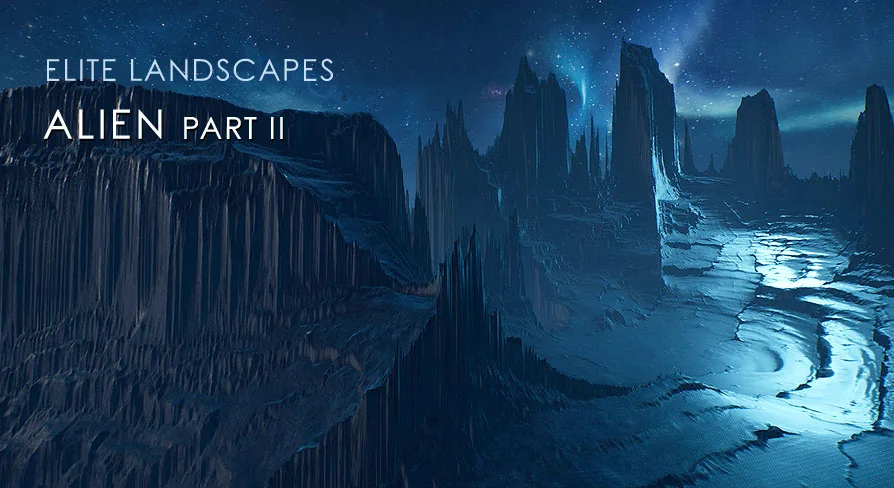
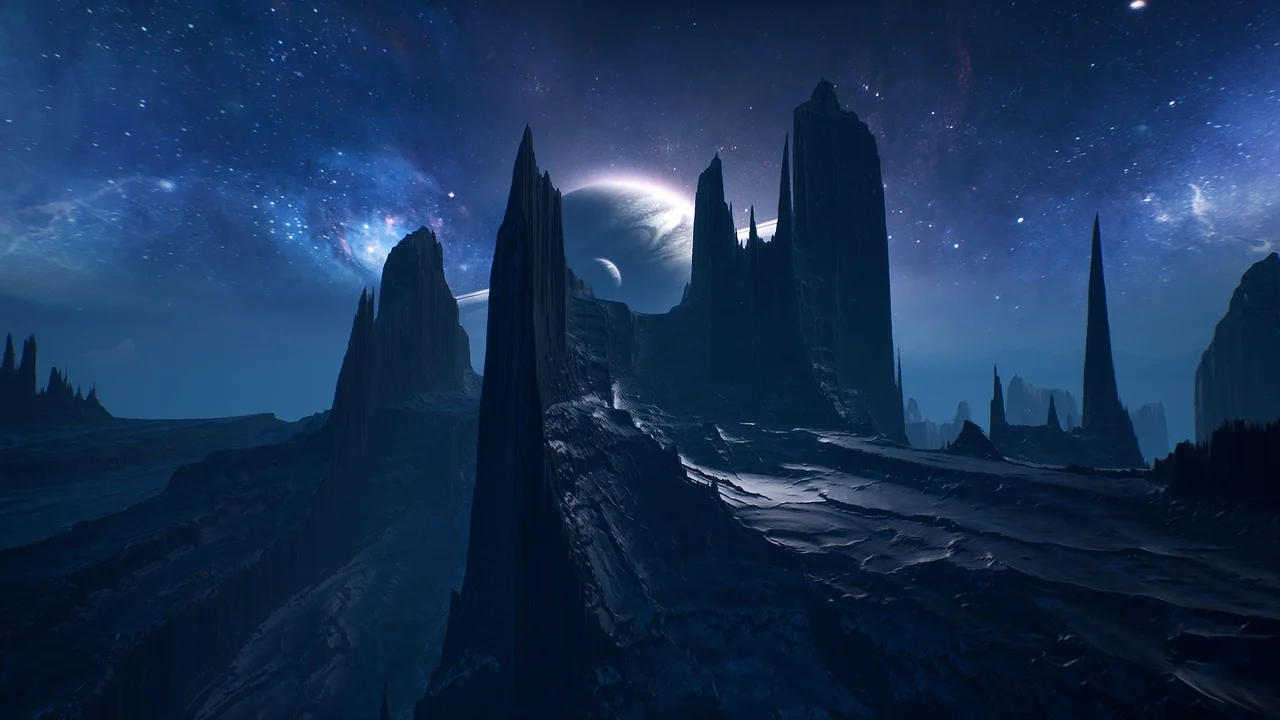
Rather than presenting a monolithic, single-use setting, this collection focuses on atmospheric expanse. It spans diverse geographical forms, ranging from sweeping alien plains and desert wastes to sharp mountain valleys and rolling ridges. Because each environment incorporates full lighting and scene configurations, scenes can be evaluated directly or dismantled into custom world-building pipelines.
Four 8k Terrains for Alien Deserts, Plains, and Valleys
Resolution dictates how well an expansive landscape holds up under intense visual scrutiny. Each of the four terrains in this package is based on an 8k height map resolution, allowing dramatic cliff faces, sweeping sediment lines, and dry basins to remain sharp across miles of virtual space. For productions staging low-angle vehicle traversals, expansive flyby sequences, or high-altitude establishing shots, this resolution preserves the fidelity of natural landforms without requiring immediate secondary geometry patching.
The physical contours across the package cover distinct environmental silhouettes suited for alien, fantasy, and desert scenarios:
Vast Alien Plains: Flat, windswept horizons suitable for isolated base camps, modular outposts, or long-range planetary trek sequences.
Rugged Desert Horizons: Arid ground formations marked by harsh surface changes, sediment shifts, and sun-baked expanses.
Canyon Valleys and Gulches: Deep natural corridors carved between towering formations, useful for directing navigation routes or framing dramatic vehicle chases.
Planetary Hills and Ridges: Undulating geological formations that break sightlines, offer commanding vantage points, and support defensive outpost placement.
Because the terrain foundations are cleanly delineated, artists can repurpose them across diverse genre spaces, transitioning a level from a distant exoplanet colony to an ancient, barren fantasy waste purely through environmental dressing.
Using Original Heatmaps for Custom Material Pipelines
Out of the box, the package provides a functional landscape material that allows teams to inspect terrain shapes, plan camera layouts, and test lighting immediately. Many technical artists and environment teams, however, rely on proprietary, multi-layered shader networks featuring procedural foliage scattering, distance-blended tessellation, or project-specific macro normal blending. Elite Landscapes: Alien Part II facilitates this flexibility by supplying the original terrain heatmaps alongside the base assets.
Terrain heatmaps store crucial topological data derived during the terrain generation process. These masks distinguish steep vertical cliffs, natural drainage lines, slope transitions, flat sediment basins, and exposed rock ridges. By exposing these original heatmaps, the package eliminates the guesswork typically involved in re-extracting slope and cavity masks from raw heightmaps.
Artists can feed these heatmaps directly into custom layer blend nodes, third-party material packages, or complex runtime landscape master shaders. This allows teams to replace base ground surfaces with crystallized sulfur, frozen methane fields, alien fungal carpets, or red volcanic gravel while keeping every natural geological groove, erosion run, and sediment pocket completely intact. The visual fidelity of the underlying 8k sculpt remains sharp, even when plugged into completely custom visual standards.
Sky Sphere Architecture and Matte Painting Panoramas
Terrestrial sky configurations often fall short when staging deep-space expeditions or exotic atmospheric phenomena. This asset integrates a sky panorama constructed to matte painting standards, delivering the visual complexity, subtle cloud banding, and color fidelity typically found in pre-rendered production backdrops.
The sky system mirrors the projection method established in Epic's standard demonstration projects. It utilizes a single, distorted 360-degree panoramic image remapped specifically for the UV coordinates of an inverted sphere mesh. This setup ensures that the horizon meets the 8k landscape boundary naturally, avoiding seam misalignments, pole pinching, or distorted angular stretching overhead.
For projects requiring alternate skies, the assets maintain compatibility with the Matte Painting Skybox Pack: Chaotic Skies, allowing artists to swap backdrops to match changing weather conditions, volatile chemical atmospheres, or turbulent orbital skies without having to rewire their primary environment shaders or camera constraints.
Preconfigured Levels, Light Setups, and Production Staging
Translating an environmental asset into an active scene often requires balancing directional sun intensities, skylight bounce levels, atmospheric fog falloff, and exposure controls. To accelerate this stage, the package includes the fully assembled levels and lighting setups demonstrated in the flyby material and presentation scenes.
Having preconfigured levels allows game designers and cinematic artists to drop straight into an established visual baseline. Level designers can measure spatial pacing, test movement mechanics against realistic 8k slopes, and study camera sightlines under balanced illumination before committing to deep world-building passes. Cinematic directors can use these ready-built levels as virtual scouting locations, capturing immediate flybys or establishing shots without spending hours calibrating atmospheric haze and sun positions.
Project Suitability Across Space and Fantasy Productions
Elite Landscapes: Alien Part II fits teams building large-scale outdoor environments that demand high surface resolution and broad physical expanses. Concept artists and cinematic layout teams gain immediate, production-ready locations for sci-fi staging, while technical artists retain full control over surface texturing through the included heatmap data. Whether used to stage an unmapped exoplanet, a desolate fantasy valley, or a barren desert outpost, the asset delivers the geographic scale and technical flexibility needed for grounded, expansive level creation.
 Sci-Fi
 Sci-Fi
 Sci-Fi
 Desert