"c68a05d5e51405b3"{"id":"1001877","slug":"edge-stylized-weapons","title":"EDGE - Stylized Weapons","category":"Weapons \u0026 Combat","engine":"4.19+,5.0+","assetVersion":"","engineVersion":"Engine Version: 4.19+,5.0+","tag":"Weapons \u0026 Combat","accent":"blue","visual":"mech","summary":"Explore EDGE - Stylized Weapons, featuring 20 low-poly weapon models optimized with baked normal maps for PC, Mac, and mobile platforms.","platform":"Unreal Engine","publishedAt":"2026-10-22T11:19:04.697Z","updatedAt":"2026-10-22T11:19:04.697Z","sourceNotes":[],"fileContents":[],"compatibility":["Unreal Engine","Engine Version: 4.19+,5.0+"],"featuredImage":{"alt":"EDGE - Stylized Weapons","src":"/wp-content/uploads/published/2026/10/0794cdf78269-ab25f4e2-5922-4b35-b06f-6bb5791bb444-d77cd68b45.webp"},"hasDownloadLink":true,"downloads":0,"terms":[{"taxonomy":"category","slug":"weapons-and-combat","name":"Weapons \u0026 Combat"}],"galleryImages":[{"src":"/wp-content/uploads/published/2026/10/6ac1d154eb1b-fc20e6f1-b64e-4bc1-916e-d207ca650344-9300c354a0.webp","alt":"EDGE - Stylized Weapons"},{"src":"/wp-content/uploads/published/2026/10/e0eaed0c7891-46d5cafc-1b1c-4496-9c4d-d4e476b544aa-068953430b.webp","alt":"EDGE - Stylized Weapons"},{"src":"/wp-content/uploads/published/2026/10/999712ca7a52-d85490e2-a2d0-4cb6-a429-fe929d9ebd87-2a486c0fe5.webp","alt":"EDGE - Stylized Weapons"},{"src":"/wp-content/uploads/published/2026/10/37677badccc8-ce003f42-9466-4b73-8206-98dc942ef908-24e865143c.webp","alt":"EDGE - Stylized Weapons"},{"src":"/wp-content/uploads/published/2026/10/c2d27be00734-2f1cfa93-d428-4cd7-b65e-cff7bd86a901-275f0e8d0f.webp","alt":"EDGE - Stylized Weapons"},{"src":"/wp-content/uploads/published/2026/10/6b15e7456340-a7ec0f48-e9a2-446d-aa22-bd4d730ba91d-5f79d1c3d4.webp","alt":"EDGE - Stylized Weapons"},{"src":"/wp-content/uploads/published/2026/10/869902dbc28f-e728f70a-410f-45e5-bbb3-7752b8426a9e-40e158f77b.webp","alt":"EDGE - Stylized Weapons"},{"src":"/wp-content/uploads/published/2026/10/c85326264eb5-82a48553-aafa-4174-b2df-7465eba03752-bd0bbb89c4.webp","alt":"EDGE - Stylized Weapons"},{"src":"/wp-content/uploads/published/2026/10/cd7f0c6d54fb-8577b8a6-1605-46f3-9ce2-10a460f8a9bd-24cd1ba9d9.webp","alt":"EDGE - Stylized Weapons"},{"src":"/wp-content/uploads/published/2026/10/9353b21b67f6-ca008833-ecb6-4eee-b6ae-4cef39b93d16-5a21914b67.webp","alt":"EDGE - Stylized Weapons"}],"accessPanel":{"kind":"resource","title":"Download this resource","eyebrow":"Free Download","message":"Log in or create a free account to start your download.","fileName":"Content.7z","safetyNote":"Resources are manually reviewed before listing to improve quality and reduce obvious risks.","actionLabel":"Download Free","resourceType":"Resource archive"},"contentHtml":"\u003ch2\u003eSilhouette Readability and Combat Interactions in EDGE - Stylized Weapons\u003c/h2\u003e\n\u003cp\u003eEquipping characters with readable combat gear requires shapes that remain clear whether viewed through close-up third-person cameras or distant top-down perspectives. EDGE - Stylized Weapons organizes combat gear around clean, expressive silhouettes. The collection avoids visual noise, relying on deliberate edge contours and distinct forms that define each weapon type immediately on screen.\u003c/p\u003e\n\u003cp\u003eEach model operates inside real-time viewports without placing heavy demands on memory buffers or geometry pipelines. Fast-paced combat setups require items to swap rapidly between character sockets, inventory arrays, and in-world pickup points. Because the geometry stays light, rendering dozens of active weapon instances on screen during intense multiplayer matches or dense wave-defense scenarios creates virtually no geometry bottlenecks.\u003c/p\u003e \u003ch2\u003eThe Twenty-Model Arsenal Across Combat Categories\u003c/h2\u003e\n\u003cp\u003eThe collection supplies twenty distinct models, encompassing an eclectic mix of historical, contemporary, explosive, and fantasy archetypes. Rather than confining itself to a single historical period, the asset selection provides functional variety for diverse game mechanics.\u003c/p\u003e\n\u003cp\u003eClose-quarters hand-to-hand combat is supported by four distinct striking and slashing implements:\u003c/p\u003e\n\u003cul\u003e \u003cli\u003e\u003cstrong\u003eSword:\u003c/strong\u003e A classic bladed weapon built with stylized proportions for standard melee swings and slashes.\u003c/li\u003e \u003cli\u003e\u003cstrong\u003eAxe:\u003c/strong\u003e A heavier bladed tool balanced for chopping motions and aggressive impact animations.\u003c/li\u003e \u003cli\u003e\u003cstrong\u003eMeat Knife:\u003c/strong\u003e A short, utilitarian blade suitable for stealth attacks, close-range brawls, or secondary utility tasks.\u003c/li\u003e \u003cli\u003e\u003cstrong\u003eBaseball Bat:\u003c/strong\u003e A blunt, modern melee weapon useful for improvised street fighting or sports-themed melee action.\u003c/li\u003e\n\u003c/ul\u003e\n\u003cp\u003eDefensive and ranged traditional combat mechanics incorporate medieval and practice elements:\u003c/p\u003e\n\u003cul\u003e \u003cli\u003e\u003cstrong\u003eShield:\u003c/strong\u003e A dedicated defensive mesh designed to pair alongside the one-handed swords or axes to absorb incoming strikes.\u003c/li\u003e \u003cli\u003e\u003cstrong\u003eBow and Arrow:\u003c/strong\u003e A two-part archery set configured for mechanical draw-and-release ballistic systems.\u003c/li\u003e \u003cli\u003e\u003cstrong\u003eBow Target:\u003c/strong\u003e A standalone practice prop useful for marksmanship tutorials, archery ranges, or environmental mini-games.\u003c/li\u003e\n\u003c/ul\u003e\n\u003cp\u003eProjectiles and modern ballistics cover multiple engagement distances:\u003c/p\u003e\n\u003cul\u003e \u003cli\u003e\u003cstrong\u003eGun1:\u003c/strong\u003e A primary stylized sidearm or compact pistol mesh for basic run-and-gun shooting mechanics.\u003c/li\u003e \u003cli\u003e\u003cstrong\u003eShotgun:\u003c/strong\u003e A heavy, spread-fire long gun shaped for high-impact point-blank encounters.\u003c/li\u003e \u003cli\u003e\u003cstrong\u003eSniper:\u003c/strong\u003e An elongated rifle frame intended for precision long-range combat and scoped targeting scenarios.\u003c/li\u003e \u003cli\u003e\u003cstrong\u003eBazooka and Rocket for Bazooka:\u003c/strong\u003e A dedicated heavy ordnance launcher paired with its separate projectile mesh, enabling independent animation, loading states, and inflight physics trajectories.\u003c/li\u003e\n\u003c/ul\u003e\n\u003cp\u003eArea-of-effect warfare is reinforced through a dedicated roster of explosive hazards:\u003c/p\u003e\n\u003cul\u003e \u003cli\u003e\u003cstrong\u003eGrenade:\u003c/strong\u003e A handheld throwable explosive suited for short-fuse tactical clearing.\u003c/li\u003e \u003cli\u003e\u003cstrong\u003eTNT:\u003c/strong\u003e A classic bundle explosive fitted for environmental demolition, traps, or objective sabotage.\u003c/li\u003e \u003cli\u003e\u003cstrong\u003eBomb:\u003c/strong\u003e A rounded, stylized explosive element suited for cartoon hazards, aerial drops, or catapults.\u003c/li\u003e \u003cli\u003e\u003cstrong\u003eMine:\u003c/strong\u003e A ground-placed proximity or pressure hazard intended for defensive area denial.\u003c/li\u003e\n\u003c/ul\u003e\n\u003cp\u003eHeavy artillery and fantastical archetypes complete the twenty-item selection:\u003c/p\u003e\n\u003cul\u003e \u003cli\u003e\u003cstrong\u003eCannon and Core:\u003c/strong\u003e A heavy field artillery piece accompanied by its designated spherical core projectile, allowing developers to set up siege emplacements or pirate ship broadsides.\u003c/li\u003e \u003cli\u003e\u003cstrong\u003eMagic Rod:\u003c/strong\u003e A specialized arcane wand or staff mesh that extends the pack into spellcasting, role-playing, and fantasy abilities.\u003c/li\u003e\n\u003c/ul\u003e \u003ch2\u003eBaked Normal Maps Across 99 to 1000 Polygon Budgets\u003c/h2\u003e\n\u003cp\u003eEvery asset in the collection is modeled with strict geometric discipline, maintaining a footprint that ranges between 99 and 1000 polygons per model. This ultra-lean profile ensures that baseline vertex counts remain negligible, even when items are scattered across a game scene as loot drops or dynamic physics debris.\u003c/p\u003e\n\u003cp\u003eLow vertex density can sometimes lead to faceted surfaces or flat lighting, but the pack counterbalances its tight polygon count by incorporating baked normal maps derived directly from high-poly source models. These normal maps transfer bevels, curved surfaces, panel seams, and edge softness onto the lightweight game meshes. Light catches across the curved barrel of the shotgun, the rounded profile of the bomb, and the beveled head of the axe as if they possessed complex subdivisions, while the hardware only processes hundreds of triangles.\u003c/p\u003e \u003ch2\u003eTechnical Deployment on PC, Mac, and Mobile Platforms\u003c/h2\u003e\n\u003cp\u003eBecause the models sit strictly between 99 and 1000 polygons, the entire library is inherently cross-platform. It targets PC, Mac, and mobile environments without requiring specialized level-of-detail decimation or polygon reduction passes before shipping to handheld hardware.\u003c/p\u003e\n\u003cp\u003eMobile graphics chips benefit directly from this setup. Tile-based mobile renderers struggle when overwhelmed by heavy vertex passes and overdraw. With these assets, draw calls remain light and vertex processing times stay minimal. On desktop hardware running PC and Mac operating systems, the low resource footprint allows creators to populate scenes with hundreds of active characters, vehicles, or weapon props simultaneously while retaining full frame-rate budgets for dynamic lighting, physics, and post-processing stacks.\u003c/p\u003e \u003ch2\u003eIntegrating WW2 Explosives and Stylized Thematics\u003c/h2\u003e\n\u003cp\u003eThe collection draws aesthetic tags from low-poly, stylized, and WW2 themes, giving developers room to craft hybrid gaming experiences. The inclusion of vintage military gear like the bazooka, heavy artillery cannon, TNT, mines, and grenades allows for stylized World War-era action games that lean toward colorful, arcade-inspired gameplay rather than strict military simulation.\u003c/p\u003e\n\u003cp\u003eTeams building top-down arena brawlers, survival roguelikes, battle royales, or arcade shooters gain an instantly usable armory. Because fantasy items like the magic rod exist alongside modern shotguns and siege cannons, developers can build progression trees that span multiple eras or create eccentric sandbox environments where varied combat classes battle using distinct combat tools.\u003c/p\u003e\n\n\u003ch2\u003eMore From The Same Workflow\u003c/h2\u003e\n\u003cul\u003e\n\u003cli\u003e\u003ca href=\"https://3dcghub.com/10-fantasy-stylish-weapon/\" title=\"10 Fantasy Stylish Weapon\"\u003e10 Fantasy Stylish Weapon\u003c/a\u003e\u003c/li\u003e\n\u003cli\u003e\u003ca href=\"https://3dcghub.com/stylized-staves-rpg-weapons/\" title=\"Stylized Staves - RPG Weapons\"\u003eStylized Staves - RPG Weapons\u003c/a\u003e\u003c/li\u003e\n\u003cli\u003e\u003ca href=\"https://3dcghub.com/stylized-shields-rpg-weapons/\" title=\"Stylized Shields - RPG Weapons\"\u003eStylized Shields - RPG Weapons\u003c/a\u003e\u003c/li\u003e\n\u003cli\u003e\u003ca href=\"https://3dcghub.com/tactical-grenades/\" title=\"Tactical Grenades\"\u003eTactical Grenades\u003c/a\u003e\u003c/li\u003e\n\u003cli\u003e\u003ca href=\"https://3dcghub.com/fps-world-war-pack/\" title=\"FPS World War Pack\"\u003eFPS World War Pack\u003c/a\u003e\u003c/li\u003e\n\u003c/ul\u003e","contentTextLength":6341,"navigation":{"current":48,"total":3860,"previous":{"id":"1001878","slug":"enveloping-ambient","title":"Enveloping Ambient","category":"Music","platform":"Unreal Engine","updatedAt":"2026-10-22T11:19:21.643Z"},"next":{"id":"1001876","slug":"destruction-system","title":"Destruction System","category":"Weapons \u0026 Combat","platform":"Unreal Engine","updatedAt":"2026-10-22T11:18:28.834Z"}},"relatedResources":[{"id":"5340","slug":"10-fantasy-stylish-weapon","title":"10 Fantasy Stylish Weapon","category":"Weapons \u0026 Combat","engine":"4.26+,5.0+","assetVersion":"Engine version: 4.26+,5.0+","engineVersion":"4.12","tag":"Weapons \u0026 Combat","accent":"blue","visual":"character","summary":"Boost your game's visuals with 10 stylized fantasy melee weapons. Low-poly and mobile-ready assets featuring PBR and Unlit materials for maximum performance.","platform":"Unreal Engine","publishedAt":"2026-02-15T14:21:16.000Z","updatedAt":"2026-04-19T15:56:58.000Z","sourceNotes":[],"fileContents":[],"compatibility":["Unreal Engine","Engine version: 4.26+,5.0+"],"featuredImage":{"alt":"10 Fantasy Stylish Weapon","src":"https://3dcghub.com/wp-content/uploads/2026/02/339235d3-6a76-470d-91df-0acbb4df5e2a.webp"},"hasDownloadLink":true,"downloads":0},{"id":"5455","slug":"stylized-shields-rpg-weapons","title":"Stylized Shields - RPG Weapons","category":"Weapons \u0026 Combat","engine":"4.26+,5.0+","assetVersion":"Engine version: 4.26+,5.0+","engineVersion":"4.24","tag":"Weapons \u0026 Combat","accent":"blue","visual":"character","summary":"Enhance your game with this stylized shield pack featuring evolving tiers, modular handles, and high-quality textures. Perfect for any fantasy RPG project.","platform":"Unreal Engine","publishedAt":"2026-02-15T15:24:22.000Z","updatedAt":"2026-04-19T15:56:56.000Z","sourceNotes":[],"fileContents":[],"compatibility":["Unreal Engine","Engine version: 4.26+,5.0+"],"featuredImage":{"alt":"Stylized Shields - RPG Weapons","src":"https://3dcghub.com/wp-content/uploads/2026/02/5ca03541-bdac-4532-9a85-32bc1fd830b3.webp"},"hasDownloadLink":true,"downloads":0},{"id":"5472","slug":"stylized-staves-rpg-weapons","title":"Stylized Staves - RPG Weapons","category":"Weapons \u0026 Combat","engine":"4.27,5.0+","assetVersion":"Engine version: 4.27,5.0+","engineVersion":"4.24","tag":"Weapons \u0026 Combat","accent":"blue","visual":"animation","summary":"Enhance your fantasy RPG with 15 evolving stylized magic staves. Features emission textures, color variations, and optimized meshes for game developers.","platform":"Unreal Engine","publishedAt":"2026-02-15T15:28:40.000Z","updatedAt":"2026-04-19T15:56:56.000Z","sourceNotes":[],"fileContents":[],"compatibility":["Unreal Engine","Engine version: 4.27,5.0+"],"featuredImage":{"alt":"Stylized Staves - RPG Weapons","src":"https://3dcghub.com/wp-content/uploads/2026/02/c4013617-08a5-47f7-b686-eed05740dfea.webp"},"hasDownloadLink":true,"downloads":0}]}
Weapons & Combat
EDGE - Stylized Weapons
Explore EDGE - Stylized Weapons, featuring 20 low-poly weapon models optimized with baked normal maps for PC, Mac, and mobile platforms.
Silhouette Readability and Combat Interactions in EDGE - Stylized Weapons
Equipping characters with readable combat gear requires shapes that remain clear whether viewed through close-up third-person cameras or distant top-down perspectives. EDGE - Stylized Weapons organizes combat gear around clean, expressive silhouettes. The collection avoids visual noise, relying on deliberate edge contours and distinct forms that define each weapon type immediately on screen.
Each model operates inside real-time viewports without placing heavy demands on memory buffers or geometry pipelines. Fast-paced combat setups require items to swap rapidly between character sockets, inventory arrays, and in-world pickup points. Because the geometry stays light, rendering dozens of active weapon instances on screen during intense multiplayer matches or dense wave-defense scenarios creates virtually no geometry bottlenecks.
The Twenty-Model Arsenal Across Combat Categories
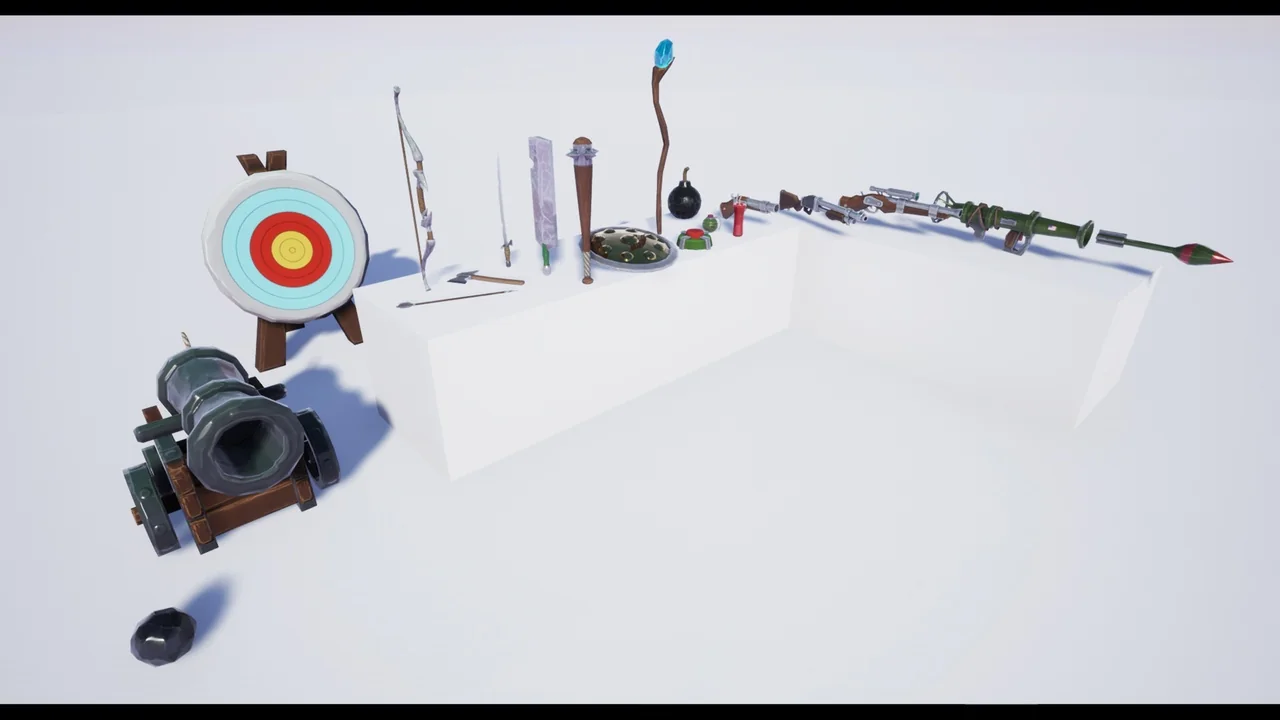
The collection supplies twenty distinct models, encompassing an eclectic mix of historical, contemporary, explosive, and fantasy archetypes. Rather than confining itself to a single historical period, the asset selection provides functional variety for diverse game mechanics.
Close-quarters hand-to-hand combat is supported by four distinct striking and slashing implements:
Sword: A classic bladed weapon built with stylized proportions for standard melee swings and slashes.
Axe: A heavier bladed tool balanced for chopping motions and aggressive impact animations.
Meat Knife: A short, utilitarian blade suitable for stealth attacks, close-range brawls, or secondary utility tasks.
Baseball Bat: A blunt, modern melee weapon useful for improvised street fighting or sports-themed melee action.
Defensive and ranged traditional combat mechanics incorporate medieval and practice elements:
Shield: A dedicated defensive mesh designed to pair alongside the one-handed swords or axes to absorb incoming strikes.
Bow and Arrow: A two-part archery set configured for mechanical draw-and-release ballistic systems.
Bow Target: A standalone practice prop useful for marksmanship tutorials, archery ranges, or environmental mini-games.
Projectiles and modern ballistics cover multiple engagement distances:
Gun1: A primary stylized sidearm or compact pistol mesh for basic run-and-gun shooting mechanics.
Shotgun: A heavy, spread-fire long gun shaped for high-impact point-blank encounters.
Sniper: An elongated rifle frame intended for precision long-range combat and scoped targeting scenarios.
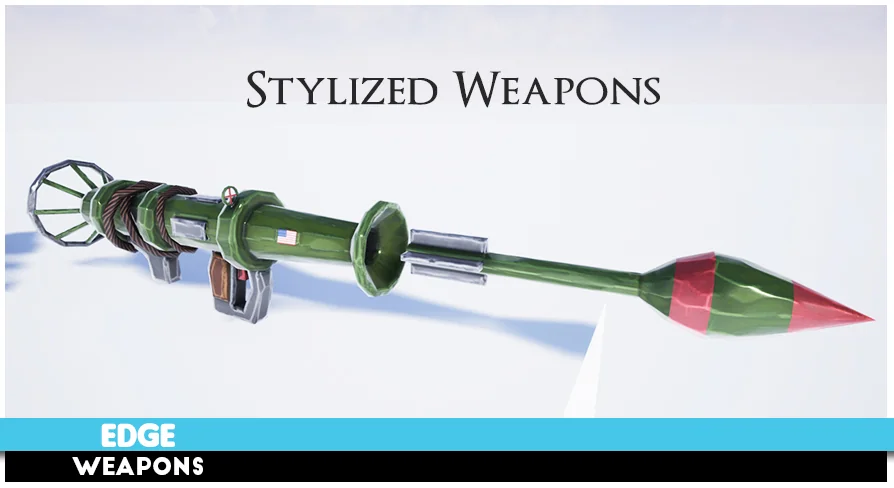
Bazooka and Rocket for Bazooka: A dedicated heavy ordnance launcher paired with its separate projectile mesh, enabling independent animation, loading states, and inflight physics trajectories.
Area-of-effect warfare is reinforced through a dedicated roster of explosive hazards:
Grenade: A handheld throwable explosive suited for short-fuse tactical clearing.
TNT: A classic bundle explosive fitted for environmental demolition, traps, or objective sabotage.
Bomb: A rounded, stylized explosive element suited for cartoon hazards, aerial drops, or catapults.
Mine: A ground-placed proximity or pressure hazard intended for defensive area denial.
Heavy artillery and fantastical archetypes complete the twenty-item selection:
Cannon and Core: A heavy field artillery piece accompanied by its designated spherical core projectile, allowing developers to set up siege emplacements or pirate ship broadsides.
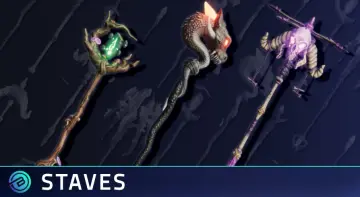
Magic Rod: A specialized arcane wand or staff mesh that extends the pack into spellcasting, role-playing, and fantasy abilities.
Baked Normal Maps Across 99 to 1000 Polygon Budgets
Every asset in the collection is modeled with strict geometric discipline, maintaining a footprint that ranges between 99 and 1000 polygons per model. This ultra-lean profile ensures that baseline vertex counts remain negligible, even when items are scattered across a game scene as loot drops or dynamic physics debris.
Low vertex density can sometimes lead to faceted surfaces or flat lighting, but the pack counterbalances its tight polygon count by incorporating baked normal maps derived directly from high-poly source models. These normal maps transfer bevels, curved surfaces, panel seams, and edge softness onto the lightweight game meshes. Light catches across the curved barrel of the shotgun, the rounded profile of the bomb, and the beveled head of the axe as if they possessed complex subdivisions, while the hardware only processes hundreds of triangles.
Technical Deployment on PC, Mac, and Mobile Platforms
Because the models sit strictly between 99 and 1000 polygons, the entire library is inherently cross-platform. It targets PC, Mac, and mobile environments without requiring specialized level-of-detail decimation or polygon reduction passes before shipping to handheld hardware.
Mobile graphics chips benefit directly from this setup. Tile-based mobile renderers struggle when overwhelmed by heavy vertex passes and overdraw. With these assets, draw calls remain light and vertex processing times stay minimal. On desktop hardware running PC and Mac operating systems, the low resource footprint allows creators to populate scenes with hundreds of active characters, vehicles, or weapon props simultaneously while retaining full frame-rate budgets for dynamic lighting, physics, and post-processing stacks.
Integrating WW2 Explosives and Stylized Thematics
The collection draws aesthetic tags from low-poly, stylized, and WW2 themes, giving developers room to craft hybrid gaming experiences. The inclusion of vintage military gear like the bazooka, heavy artillery cannon, TNT, mines, and grenades allows for stylized World War-era action games that lean toward colorful, arcade-inspired gameplay rather than strict military simulation.
Teams building top-down arena brawlers, survival roguelikes, battle royales, or arcade shooters gain an instantly usable armory. Because fantasy items like the magic rod exist alongside modern shotguns and siege cannons, developers can build progression trees that span multiple eras or create eccentric sandbox environments where varied combat classes battle using distinct combat tools.
 Weapons & Combat
 Weapons & Combat
 Weapons & Combat
 Weapons & Combat