"6c6413bef81af556"{"id":"1001179","slug":"drunk-man-animations","title":"Drunk Man Animations","category":"Variety","engine":"5.0+","assetVersion":"","engineVersion":"Engine Version: 5.0+","tag":"Variety","accent":"blue","visual":"animation","summary":"Deploy Drunk Man Animations across NPC systems. Review how 56 animations for creatures integrate into bar environments, lowpoly scenes, and simulations.","platform":"Unreal Engine","publishedAt":"2026-09-17T03:57:26.848Z","updatedAt":"2026-09-17T03:57:26.848Z","sourceNotes":[],"fileContents":[],"compatibility":["Unreal Engine","Engine Version: 5.0+"],"featuredImage":{"alt":"Drunk Man Animations","src":"/wp-content/uploads/published/2026/09/45e644da773a-989e0f5d-247c-4ecb-8af5-4543c10a0142-d79039e3a8.webp"},"hasDownloadLink":true,"downloads":0,"terms":[{"taxonomy":"category","slug":"variety-animations","name":"Variety"}],"galleryImages":[{"src":"/wp-content/uploads/published/2026/09/ad921b6f3f47-28147c86-9e2e-4954-b9f7-71bb733c5670-6c96fb9760.webp","alt":"Drunk Man Animations"}],"accessPanel":{"kind":"resource","title":"Download this resource","eyebrow":"Free Download","message":"Log in or create a free account to start your download.","fileName":"Content.7z","safetyNote":"Resources are manually reviewed before listing to improve quality and reduce obvious risks.","actionLabel":"Download Free","resourceType":"Resource archive"},"contentHtml":"\u003ch2\u003eIntegrating Drunk Man Animations into NPC Workflows\u003c/h2\u003e\n\u003cp\u003eImplementing non-player characters in shared communal locations demands animation sets that move beyond standard idle loops, patrols, and upright conversations. Populating an establishment such as a tavern or a club requires physical behaviors that communicate altered motor skills, slurred posture, loss of equilibrium, and unsteadiness. Drunk Man Animations supplies movement assets intended to sit alongside standard NPC setups, allowing level designers and technical animators to stage patrons directly inside a bar setting without relying on upright, generic civilian states.\u003c/p\u003e\n\u003cp\u003eDeploying these assets into an active scene begins by mapping the animation state tree for ambient background characters. Instead of routing all background actors into predictable idle breathing cycles or uniform walking paths, characters assigned to social zones can branch into dedicated inebriated states. Integrating movement clips of this nature alongside primary NPC controllers provides immediate environmental storytelling. Characters can stagger, lean, sway, or recover balance while remaining integrated into the broader crowd architecture of the venue.\u003c/p\u003e \u003ch2\u003eManaging 56 Animations for Creatures in Social Spaces\u003c/h2\u003e\n\u003cp\u003eWith 56 animations for creatures included, the collection provides a sizable bank of variations that prevents crowd scenes from appearing cloned or synchronized. Background density in social environments depends on visual diversity; if multiple actors in the same room run identical motion loops, the illusion of an active space collapses quickly. Having dozens of motion options allows animators to distribute different stages and intensities of physical impairment across different models across the room.\u003c/p\u003e\n\u003cp\u003eOrganizing 56 distinct motions across creature rigs involves categorizing clips by posture, transition potential, and spatial footprint. Some movements may feature wide swaying bounds that require broader collision boundaries, while others feature contained seated or standing shifts suited for high-density counter areas. Because these clips cater to creature structures, rigging pipelines can adapt the motion data across different anatomical models that use creature-compatible skeletal frameworks, broadening their utility past strictly standard human shapes.\u003c/p\u003e \u003ch2\u003eStaging the Bar Environment with Drunk Man Animations\u003c/h2\u003e\n\u003cp\u003eThe primary contextual application for this animation library is the bar environment. Placing characters within a bar requires an interplay between static set dressing—such as stools, counters, tables, and railings—and the dynamic movement of the patrons occupying the room. A character executing Drunk Man Animations must inhabit this environment naturally, whether that means leaning against surfaces to stay upright, negotiating narrow paths between seats, or lingering near dispensing areas.\u003c/p\u003e\n\u003cp\u003eWhen choreographing a crowded venue, blending these motion files with proximity triggers or localized zones helps ground the scene. Designers can establish zones within the bar layout where specific drunkenness intensity levels take effect. An entry path might feature minor balance checks, while counter areas and secluded booths host heavier, slumped states. Because the animations function in addition to existing NPC mechanics, they can serve as environmental states that an actor switches into upon entering the premises, running ambient routines until the player or an event triggers a change in behavior.\u003c/p\u003e \u003ch2\u003eStylistic Versatility Across Lowpoly, Fantasy, Industrial, and Simulation Contexts\u003c/h2\u003e\n\u003cp\u003ePhysical inebriation is not bound to a single historical era or art direction. The animation collection carries tags across lowpoly, fantasy, industrial, and simulation categories, reflecting broad flexibility in scene composition. In a lowpoly visual style, expressive physical movement is critical because simplified geometry and minimal facial details cannot rely on micro-expressions. Exaggerated balance shifts, heavy steps, and slumped postures communicate character state instantly to the player, even from a long camera distance or with low-detail meshes.\u003c/p\u003e\n\u003cp\u003eThematic range shifts naturally across project genres. Within a fantasy tavern, these motions populate gathering spaces for adventurers, travelers, and townspeople seeking shelter and drink. In an industrial context, the same motion profiles map effectively onto fatigued workers, off-shift laborers, or urban night scenes set in gritty facilities or back alleys. When applied within pure simulation environments, the movements provide realistic or systemic crowd variation, illustrating unpredictable pedestrian behavior, disrupted pathfinding routes, or patrons navigating leisure zones without breaking immersion.\u003c/p\u003e \u003ch2\u003eProduction Readiness for Crowd Population\u003c/h2\u003e\n\u003cp\u003eSustaining character variety across ambient populations often strains production timelines if animators are forced to hand-craft specialized stagger cycles from scratch. Utilizing a dedicated package of 56 animations for creatures targets a very specific staging need: rendering patrons believable within recreational or social hubs. By dropping these motion clips into existing NPC controllers, teams can rapidly scale up bar populations, distribute unique balance states among patrons, and maintain atmospheric depth across fantasy taverns, industrial dive bars, or lowpoly social simulations.\u003c/p\u003e\n\n\u003ch2\u003eRelated Resources Worth Checking\u003c/h2\u003e\n\u003cul\u003e\n\u003cli\u003e\u003ca href=\"https://3dcghub.com/drunk-npcs/\" title=\"Drunk NPC\u0026#039;s\"\u003eDrunk NPC\u0026#039;s\u003c/a\u003e\u003c/li\u003e\n\u003cli\u003e\u003ca href=\"https://3dcghub.com/old-man-animset/\" title=\"Old Man Animset\"\u003eOld Man Animset\u003c/a\u003e\u003c/li\u003e\n\u003cli\u003e\u003ca href=\"https://3dcghub.com/man-military-outfit-5-modular-rigged-animated/\" title=\"Man - Military Outfit 5 - Modular - Rigged - Animated\"\u003eMan - Military Outfit 5 - Modular - Rigged - Animated\u003c/a\u003e\u003c/li\u003e\n\u003cli\u003e\u003ca href=\"https://3dcghub.com/41-animations-for-monsters/\" title=\"41 Animations For Monsters\"\u003e41 Animations For Monsters\u003c/a\u003e\u003c/li\u003e\n\u003cli\u003e\u003ca href=\"https://3dcghub.com/56-animations-for-creatures/\" title=\"56 Animations For Creatures\"\u003e56 Animations For Creatures\u003c/a\u003e\u003c/li\u003e\n\u003c/ul\u003e","contentTextLength":5561,"navigation":{"current":18,"total":3140,"previous":{"id":"1001180","slug":"punch-pro-mocap-pack","title":"Punch Pro - MoCap Pack","category":"Combat","platform":"Unreal Engine","updatedAt":"2026-09-17T05:14:25.637Z"},"next":{"id":"1001178","slug":"bicycle-with-animations","title":"Bicycle With Animations","category":"Variety","platform":"Unreal Engine","updatedAt":"2026-09-17T03:55:41.692Z"}},"relatedResources":[{"id":"6283","slug":"drunk-npcs","title":"Drunk NPC's","category":"Variety","engine":"4.26+,5.0+","assetVersion":"Engine version: 4.26+,5.0+","engineVersion":"4.22","tag":"Variety","accent":"blue","visual":"animation","summary":"Enhance your game with autonomous drunk NPCs. This pack features motion-captured animations and blueprints for realistic, unpredictable character behaviors.","platform":"Unreal Engine","publishedAt":"2026-02-19T14:31:10.000Z","updatedAt":"2026-04-19T15:56:27.000Z","sourceNotes":[],"fileContents":[],"compatibility":["Unreal Engine","Engine version: 4.26+,5.0+"],"featuredImage":{"alt":"Drunk NPC's","src":"https://3dcghub.com/wp-content/uploads/2026/02/c5f1cdaa-3d38-4041-81ef-d02ec2eafd85.webp"},"hasDownloadLink":true,"downloads":0},{"id":"1000127","slug":"old-man-animset","title":"Old Man Animset","category":"Variety","engine":"4.26+,5.0+","assetVersion":"","engineVersion":"Engine Version: 4.26+,5.0+","tag":"Variety","accent":"blue","visual":"mech","summary":"A realistic elderly male animset featuring a walking stick for balance, suited to projects and game worlds that need believable older male presence.","platform":"Unreal Engine","publishedAt":"2026-06-11T10:12:14.396Z","updatedAt":"2026-06-11T10:12:14.396Z","sourceNotes":[],"fileContents":[],"compatibility":["Unreal Engine","Engine Version: 4.26+,5.0+"],"featuredImage":{"alt":"Old Man Animset","src":"/wp-content/uploads/published/2026/06/c0db5a0f5b13-6f5f689e-d68b-4c73-99df-63b936cbecfe-f4e498c32a.webp"},"hasDownloadLink":true,"downloads":0},{"id":"2944","slug":"man-military-outfit-5-modular-rigged-animated","title":"Man - Military Outfit 5 - Modular - Rigged - Animated","category":"Characters \u0026 Creatures","engine":"5.0+","assetVersion":"Engine version: 5.0+","engineVersion":"5.0","tag":"Characters","accent":"blue","visual":"character","summary":"Enhance your tactical games with this modular military outfit. Rigged for UE5 Manny and MetaHuman, featuring 8K PBR textures and full animation support.","platform":"Unreal Engine","publishedAt":"2026-02-07T16:08:57.000Z","updatedAt":"2026-04-19T15:57:44.000Z","sourceNotes":[],"fileContents":[],"compatibility":["Unreal Engine","Engine version: 5.0+"],"featuredImage":{"alt":"Man - Military Outfit 5 - Modular - Rigged - Animated","src":"https://3dcghub.com/wp-content/uploads/2026/02/ef76c021-a719-4bca-9c4c-023cd14c2c1d.webp"},"hasDownloadLink":true,"downloads":2}]}
Variety
Drunk Man Animations
Deploy Drunk Man Animations across NPC systems. Review how 56 animations for creatures integrate into bar environments, lowpoly scenes, and simulations.
Integrating Drunk Man Animations into NPC Workflows
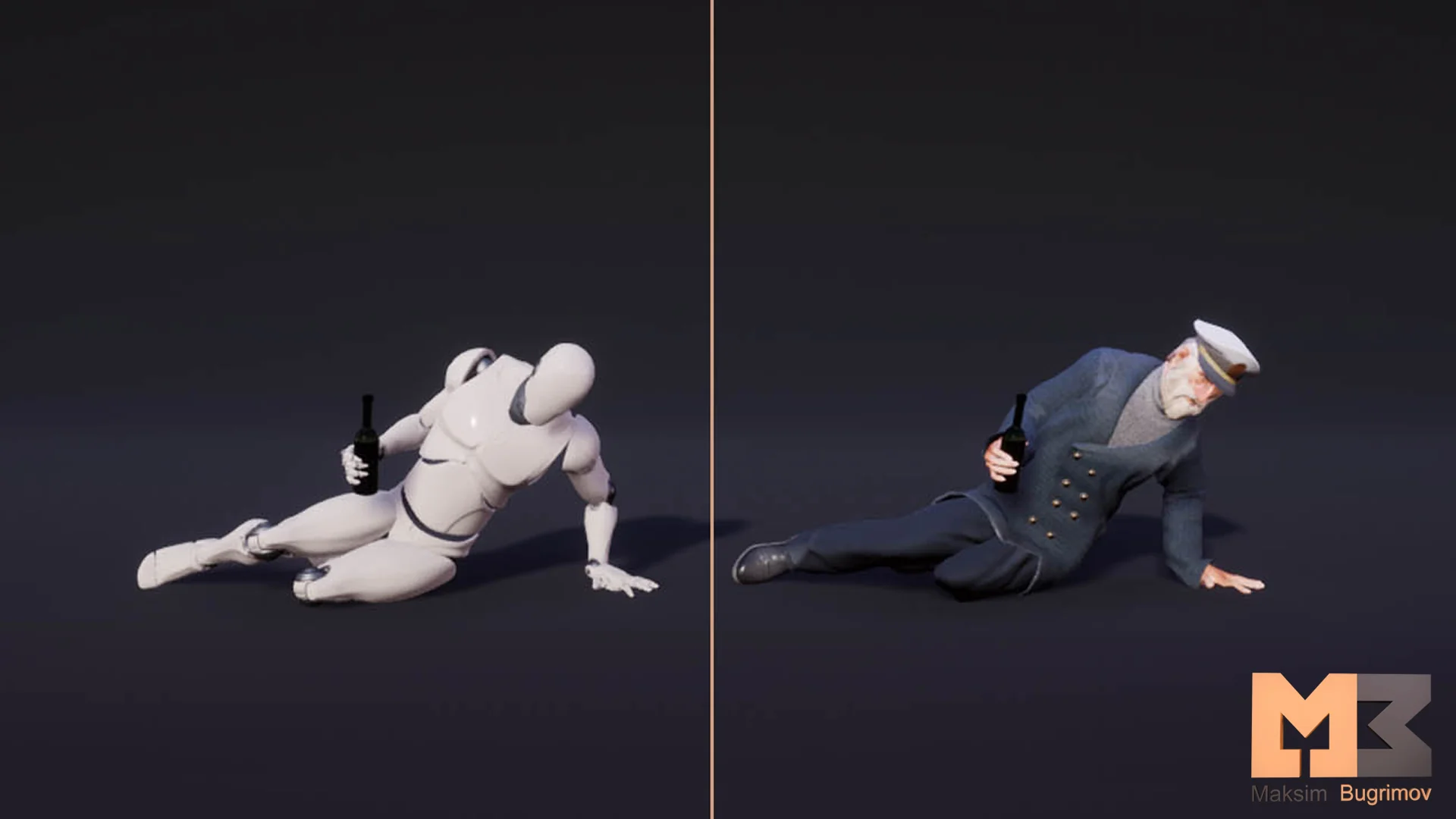
Implementing non-player characters in shared communal locations demands animation sets that move beyond standard idle loops, patrols, and upright conversations. Populating an establishment such as a tavern or a club requires physical behaviors that communicate altered motor skills, slurred posture, loss of equilibrium, and unsteadiness. Drunk Man Animations supplies movement assets intended to sit alongside standard NPC setups, allowing level designers and technical animators to stage patrons directly inside a bar setting without relying on upright, generic civilian states.
Deploying these assets into an active scene begins by mapping the animation state tree for ambient background characters. Instead of routing all background actors into predictable idle breathing cycles or uniform walking paths, characters assigned to social zones can branch into dedicated inebriated states. Integrating movement clips of this nature alongside primary NPC controllers provides immediate environmental storytelling. Characters can stagger, lean, sway, or recover balance while remaining integrated into the broader crowd architecture of the venue.
Managing 56 Animations for Creatures in Social Spaces
With 56 animations for creatures included, the collection provides a sizable bank of variations that prevents crowd scenes from appearing cloned or synchronized. Background density in social environments depends on visual diversity; if multiple actors in the same room run identical motion loops, the illusion of an active space collapses quickly. Having dozens of motion options allows animators to distribute different stages and intensities of physical impairment across different models across the room.
Organizing 56 distinct motions across creature rigs involves categorizing clips by posture, transition potential, and spatial footprint. Some movements may feature wide swaying bounds that require broader collision boundaries, while others feature contained seated or standing shifts suited for high-density counter areas. Because these clips cater to creature structures, rigging pipelines can adapt the motion data across different anatomical models that use creature-compatible skeletal frameworks, broadening their utility past strictly standard human shapes.
Staging the Bar Environment with Drunk Man Animations
The primary contextual application for this animation library is the bar environment. Placing characters within a bar requires an interplay between static set dressing—such as stools, counters, tables, and railings—and the dynamic movement of the patrons occupying the room. A character executing Drunk Man Animations must inhabit this environment naturally, whether that means leaning against surfaces to stay upright, negotiating narrow paths between seats, or lingering near dispensing areas.
When choreographing a crowded venue, blending these motion files with proximity triggers or localized zones helps ground the scene. Designers can establish zones within the bar layout where specific drunkenness intensity levels take effect. An entry path might feature minor balance checks, while counter areas and secluded booths host heavier, slumped states. Because the animations function in addition to existing NPC mechanics, they can serve as environmental states that an actor switches into upon entering the premises, running ambient routines until the player or an event triggers a change in behavior.
Stylistic Versatility Across Lowpoly, Fantasy, Industrial, and Simulation Contexts
Physical inebriation is not bound to a single historical era or art direction. The animation collection carries tags across lowpoly, fantasy, industrial, and simulation categories, reflecting broad flexibility in scene composition. In a lowpoly visual style, expressive physical movement is critical because simplified geometry and minimal facial details cannot rely on micro-expressions. Exaggerated balance shifts, heavy steps, and slumped postures communicate character state instantly to the player, even from a long camera distance or with low-detail meshes.
Thematic range shifts naturally across project genres. Within a fantasy tavern, these motions populate gathering spaces for adventurers, travelers, and townspeople seeking shelter and drink. In an industrial context, the same motion profiles map effectively onto fatigued workers, off-shift laborers, or urban night scenes set in gritty facilities or back alleys. When applied within pure simulation environments, the movements provide realistic or systemic crowd variation, illustrating unpredictable pedestrian behavior, disrupted pathfinding routes, or patrons navigating leisure zones without breaking immersion.
Production Readiness for Crowd Population
Sustaining character variety across ambient populations often strains production timelines if animators are forced to hand-craft specialized stagger cycles from scratch. Utilizing a dedicated package of 56 animations for creatures targets a very specific staging need: rendering patrons believable within recreational or social hubs. By dropping these motion clips into existing NPC controllers, teams can rapidly scale up bar populations, distribute unique balance states among patrons, and maintain atmospheric depth across fantasy taverns, industrial dive bars, or lowpoly social simulations.
 Variety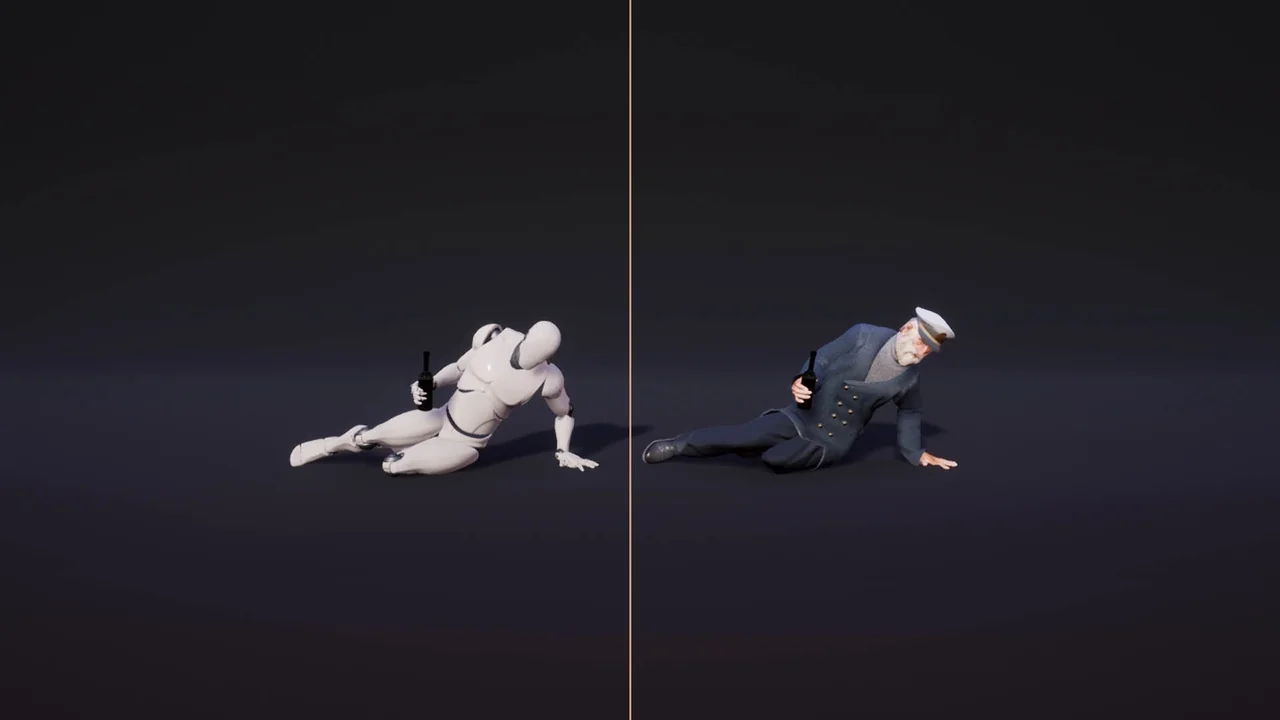
 Variety
 Variety
 Characters