"7977b3847c3127c7"{"id":"1000049","slug":"cyberpunk-port-city-environment-cyberpunk-port-city-cyber-cyperpunk-port-3d","title":"Cyberpunk Port City Environment ( Cyberpunk Port City Cyber Cyperpunk Port 3D )","category":"Cyberpunk","engine":"5.0+","assetVersion":"","engineVersion":"5.0+","tag":"Cyberpunk","accent":"blue","visual":"city","summary":"A cyberpunk port environment with 223 unique meshes, a preassembled scene, Unreal Engine 5 Lumen and Nanite support, and ULAT compatibility.","platform":"Unreal Engine","publishedAt":"2026-05-22T11:25:19.066Z","updatedAt":"2026-05-22T11:25:19.066Z","sourceNotes":[],"fileContents":[],"compatibility":["Unreal Engine","Engine version: 5.0+"],"featuredImage":{"alt":"Cyberpunk Port City Environment ( Cyberpunk Port City Cyber Cyperpunk Port 3D )","src":"/wp-content/uploads/published/2026/05/d393ecd1b05c-e8b7b059-5c0f-4346-a812-0e08c081591f-a9258e793e.webp"},"hasDownloadLink":true,"downloads":0,"terms":[{"taxonomy":"category","slug":"cyberpunk","name":"Cyberpunk"}],"galleryImages":[{"src":"/wp-content/uploads/published/2026/05/663a4c8286e4-9206000e-550b-48aa-949c-a3984a1eeca4-e30233d363.webp","alt":"Cyberpunk Port City Environment ( Cyberpunk Port City Cyber Cyperpunk Port 3D )"},{"src":"/wp-content/uploads/published/2026/05/487bbac6ad57-ace0ae14-e38d-452c-b982-01d6708e4fd8-2ff0cd2bfe.webp","alt":"Cyberpunk Port City Environment ( Cyberpunk Port City Cyber Cyperpunk Port 3D )"},{"src":"/wp-content/uploads/published/2026/05/8b81bd77f04e-7719fd84-2a89-4984-9bf6-676b1a148200-21fa025cb7.webp","alt":"Cyberpunk Port City Environment ( Cyberpunk Port City Cyber Cyperpunk Port 3D )"},{"src":"/wp-content/uploads/published/2026/05/aaf0a63a6b0c-9395fcc4-ac4a-4923-b8ba-6ba9023428bf-292979f8b7.webp","alt":"Cyberpunk Port City Environment ( Cyberpunk Port City Cyber Cyperpunk Port 3D )"},{"src":"/wp-content/uploads/published/2026/05/b9e3b3fd1168-3777d844-ab8e-498b-a00c-bcbf3048bae5-e8e2690a66.webp","alt":"Cyberpunk Port City Environment ( Cyberpunk Port City Cyber Cyperpunk Port 3D )"},{"src":"/wp-content/uploads/published/2026/05/e93c408f4178-d350bc7c-9f69-4d03-af8b-d2888fc4b627-970377244c.webp","alt":"Cyberpunk Port City Environment ( Cyberpunk Port City Cyber Cyperpunk Port 3D )"},{"src":"/wp-content/uploads/published/2026/05/964f19b84d93-a56036e1-c197-424b-a35f-ec4c4af934e4-4d637493a8.webp","alt":"Cyberpunk Port City Environment ( Cyberpunk Port City Cyber Cyperpunk Port 3D )"},{"src":"/wp-content/uploads/published/2026/05/6d399c410dc9-850fa6bb-4431-4932-b881-55ad3b3c65a7-c9d53ac6f0.webp","alt":"Cyberpunk Port City Environment ( Cyberpunk Port City Cyber Cyperpunk Port 3D )"},{"src":"/wp-content/uploads/published/2026/05/d48a8f80437b-8ef18e1d-ee14-4ff9-9adf-41d3c7a1b1cf-cd92cae362.webp","alt":"Cyberpunk Port City Environment ( Cyberpunk Port City Cyber Cyperpunk Port 3D )"},{"src":"/wp-content/uploads/published/2026/05/8888e1d3599e-0b77975d-533d-4993-80be-a167a36e4816-b9b7a54529.webp","alt":"Cyberpunk Port City Environment ( Cyberpunk Port City Cyber Cyperpunk Port 3D )"}],"accessPanel":{"kind":"resource","title":"Access this resource","eyebrow":"Free Download","message":"Log in or create a free account to start your download.","fileName":"Content.7z","safetyNote":"Resources are manually reviewed before listing to improve quality and reduce obvious risks.","actionLabel":"Download Free","resourceType":"Resource archive"},"contentHtml":"\u003cp\u003eFor teams building a futuristic harbor, a dense dockside district, or a virtual production backdrop with industrial scale, \u003cstrong\u003eCyberpunk Port City Environment\u003c/strong\u003e Is aimed at that exact kind of scene. The pack centers on a port city setting shaped by warehouses, containers, shipping yard elements, heavy machinery, steel structures, neon lighting, and dystopian urban details, with the stated goal of helping users populate game environments or virtual production levels with high-quality visuals and well-optimized assets.\u003c/p\u003e \u003cp\u003eThe package contains \u003cstrong\u003e223 unique meshes\u003c/strong\u003e And includes all showcased assets. It also comes with a \u003cstrong\u003eShowcased preassembled scene\u003c/strong\u003e, which gives the environment an immediate starting point rather than leaving everything as loose parts alone. Characters are \u003cstrong\u003eNot included\u003c/strong\u003e, so the focus stays entirely on the environment itself: the built space, the mood, and the modular city-port setting.\u003c/p\u003e \u003ch2\u003eWhere a Cyberpunk Port City fits best\u003c/h2\u003e\n\u003cp\u003eThis environment is most clearly suited to projects that need a mix of industrial infrastructure and stylized urban decay. The tag set points toward scenes such as shipping terminals, warehouse zones, cyberpunk alleyways, underground markets, tech districts, dockside work areas, and larger megacity harbor spaces. The visual language is rooted in containers, cargo operations, cranes, security checkpoints, rusty metal, shipping crates, steel beams, and illuminated industrial architecture.\u003c/p\u003e \u003cp\u003eThat combination gives it a useful range inside a single theme. A developer could stage a night cargo operation with neon reflections and machinery-heavy spaces, then shift into narrower cyber slum passages or marketplace-style corners without breaking the overall setting. The same environment language also supports darker dystopian scenes, including AI-controlled areas, corporate industrial zones, hidden trading spaces, and seedy underworld pockets suggested by the tags.\u003c/p\u003e \u003cp\u003eVirtual production work is another direct fit because the package is explicitly positioned for that use alongside game environments. A preassembled scene matters here: it can help when the immediate need is a complete backdrop with a defined visual identity instead of a long assembly phase from scratch. In this case, the intended identity is unmistakable—futuristic port infrastructure merged with cyberpunk city density.\u003c/p\u003e \u003ch2\u003e223 unique meshes and the preassembled scene\u003c/h2\u003e\n\u003cp\u003eThe most concrete part of the package is the mesh count. With \u003cstrong\u003e223 unique meshes\u003c/strong\u003e, the environment is presented as a substantial scene-building set rather than a small prop drop. The included assets are described as high quality, with a good level of detail, and optimized for game-ready projects. Those three ideas work together: the pack is not just trying to look dense in still images, but to function as a practical environment resource for production use.\u003c/p\u003e \u003cp\u003eThe included \u003cstrong\u003ePreassembled scene\u003c/strong\u003e Is equally important because it defines how the pack can be approached. Some users will want to study how the parts were arranged in the showcased setup, then pull that scene apart into modular chunks. Others may want to keep most of the established layout and make selective changes. In both cases, the presence of a ready-made scene reduces the distance between asset import and a usable level.\u003c/p\u003e \u003cp\u003eBecause all showcased assets are included, the environment is framed less as a concept sample and more as a complete scene package. The tags suggest a broad selection of visual motifs within that package: containers, warehouses, cranes, shipping yards, floating cargo, cargo ships, AI-operated factories, holographic advertisements, neon tunnels, and cyberpunk marketplace spaces. That does not mean every tag translates into a separate standalone system, but it does clarify the kinds of spaces and props the environment is trying to represent.\u003c/p\u003e \u003ch2\u003eLumen, Nanite, and Unreal Engine 5.0+\u003c/h2\u003e\n\u003cp\u003eSupport for \u003cstrong\u003eLumen\u003c/strong\u003e And \u003cstrong\u003eNanite\u003c/strong\u003e In \u003cstrong\u003eUnreal Engine 5.0+\u003c/strong\u003e Is one of the clearest technical anchors in the package. For a cyberpunk setting, that matters in obvious ways. Lumen support aligns well with scenes structured through neon lights, neon shadows, holographic advertisements, illuminated cranes, and reflective industrial surfaces. A port city at night depends heavily on lighting mood, and the environment is explicitly prepared for that rendering context.\u003c/p\u003e \u003cp\u003eNanite support also matches the stated emphasis on a good level of detail. The pack is presented as both detailed and optimized for game-ready work, and Nanite support places it squarely in an Unreal Engine 5 workflow where dense environmental detail can be part of the intended look. The industrial and urban subject matter reinforces this: steel beams, overgrown structures, heavy machinery, containers, and layered dockside architecture all benefit from geometry-rich presentation.\u003c/p\u003e \u003cp\u003eThese technical notes do not turn the environment into a generic engine showcase. They tie directly back to the type of place being built. Cyberpunk ports rely on contrast—hard industrial shapes, cluttered infrastructure, and dramatic artificial lighting. Lumen and Nanite support help position the pack within that exact visual territory.\u003c/p\u003e \u003ch2\u003eULAT and modular building in the port district\u003c/h2\u003e\n\u003cp\u003eThis package includes \u003cstrong\u003eULAT\u003c/strong\u003e, short for \u003cstrong\u003eUltimate Level Art Tool\u003c/strong\u003e, and the environment is also stated to be compatible with that tool. ULAT is described as a way to create \u003cstrong\u003eFast, custom modular buildings\u003c/strong\u003e And to populate scenes in a natural way. That makes it more than an add-on note. It changes how the environment can be extended once the included content is in place.\u003c/p\u003e \u003cp\u003eFor a setting like a cyberpunk port city, modular building tools are especially relevant. Port districts and industrial city edges often depend on repeatable structures with variations: stacked forms, connected warehouse lines, service corridors, fenced compounds, checkpoint areas, and improvised urban add-ons. A tool that speeds up custom modular building fits that kind of layout well, because the environment theme thrives on repetition with controlled variation rather than on a handful of hero objects alone.\u003c/p\u003e \u003cp\u003eThe scene population angle matters too. The package is pitched for users who want to populate game environments or virtual production levels, and ULAT is specifically tied to populating scenes naturally. For production work, that places the environment somewhere between a ready-made set and a more expandable kit. The included preassembled scene can act as the immediate visual baseline, while ULAT supports the task of pushing the district outward into larger streets, additional structures, or more custom industrial blocks.\u003c/p\u003e \u003ch2\u003eFrom warehouses and containers to neon tunnels and dock workers\u003c/h2\u003e\n\u003cp\u003eThe tags sketch out the environment's strongest visual use cases with unusual clarity. On one side, there is the hard industrial base: \u003cstrong\u003eWarehouse\u003c/strong\u003e, \u003cstrong\u003eContainer\u003c/strong\u003e, \u003cstrong\u003eShipping yard\u003c/strong\u003e, \u003cstrong\u003eShipping crates\u003c/strong\u003e, \u003cstrong\u003eCargo ships\u003c/strong\u003e, \u003cstrong\u003eIlluminated cranes\u003c/strong\u003e, \u003cstrong\u003eShipping terminal\u003c/strong\u003e, \u003cstrong\u003eDock workers\u003c/strong\u003e, and \u003cstrong\u003eUrban shipping yard\u003c/strong\u003e. On the other side, there is the cyberpunk overlay: \u003cstrong\u003eNeon lights\u003c/strong\u003e, \u003cstrong\u003eNeon reflections\u003c/strong\u003e, \u003cstrong\u003eCyber slums\u003c/strong\u003e, \u003cstrong\u003eAI surveillance\u003c/strong\u003e, \u003cstrong\u003eHolographic advertisements\u003c/strong\u003e, \u003cstrong\u003eAugmented reality\u003c/strong\u003e, \u003cstrong\u003eFlying drones\u003c/strong\u003e, \u003cstrong\u003eHacker outpost\u003c/strong\u003e, and \u003cstrong\u003eUnderground market\u003c/strong\u003e.\u003c/p\u003e \u003cp\u003eThat dual identity is what gives the pack its practical range. It can support a straightforward industrial port, but it is not limited to utilitarian logistics spaces. The same setting can be framed as a dystopian trade hub, a corporate checkpoint district, a black-market zone, or a neon-soaked slum wrapped around shipping infrastructure. The tags also hint at a world with layered social and technological tension: corporate dystopia, AI-controlled areas, underground economy, and secret hideouts all sit next to heavy machinery and cargo operations.\u003c/p\u003e \u003cp\u003eEven without characters included, those environmental cues do a lot of narrative work. A scene filled with containers, security barriers, holographic ads, and reflective night lighting already implies movement, control, trade, and surveillance. For developers or level artists who want a setting that reads quickly on screen, that is one of the strongest practical advantages here.\u003c/p\u003e \u003ch2\u003eWho gets the most from Cyberpunk Port City Environment\u003c/h2\u003e\n\u003cp\u003eThis pack is best suited to developers, level artists, and virtual production users who need a \u003cstrong\u003eCyberpunk industrial harbor setting\u003c/strong\u003e With enough content to form a convincing scene immediately, while still leaving room for expansion. The 223 unique meshes, included showcased scene, Unreal Engine 5.0+ support for Lumen and Nanite, and ULAT compatibility all point in the same direction: a resource for constructing or extending a futuristic port district rather than a small decorative add-on.\u003c/p\u003e \u003cp\u003eIf the target scene involves warehouses, containers, shipping yards, neon-lit alleyways, dystopian dockside spaces, or a larger megacity harbor atmosphere, this environment is the clearest fit. It serves users who want the port itself to carry the visual story.\u003c/p\u003e\n\n\u003ch2\u003eMore From The Same Workflow\u003c/h2\u003e\n\u003cul\u003e\n\u003cli\u003e\u003ca href=\"https://3dcghub.com/cyberpunk-night-street-cyberpunk-town-cyberpunk-props-night-city/\" title=\"Cyberpunk Night Street ( Cyberpunk Town, Cyberpunk Props , Night City )\"\u003eCyberpunk Night Street ( Cyberpunk Town, Cyberpunk Props , Night City )\u003c/a\u003e\u003c/li\u003e\n\u003cli\u003e\u003ca href=\"https://3dcghub.com/cyberpunk-city-cyberpunk-cyberpunk-city-sci-fi-city/\" title=\"Cyberpunk City (Cyberpunk, Cyberpunk City, Sci-Fi City)\"\u003eCyberpunk City (Cyberpunk, Cyberpunk City, Sci-Fi City)\u003c/a\u003e\u003c/li\u003e\n\u003cli\u003e\u003ca href=\"https://3dcghub.com/cyberpunk-kyiv-street-environment-cyberpunk-kyiv-street-street-ukraine-slav/\" title=\"Cyberpunk Kyiv Street Environment ( Cyberpunk Kyiv Street Street Ukraine Slav )\"\u003eCyberpunk Kyiv Street Environment ( Cyberpunk Kyiv Street Street Ukraine Slav )\u003c/a\u003e\u003c/li\u003e\n\u003cli\u003e\u003ca href=\"https://3dcghub.com/cyber-night-city/\" title=\"Cyber Night City\"\u003eCyber Night City\u003c/a\u003e\u003c/li\u003e\n\u003cli\u003e\u003ca href=\"https://3dcghub.com/cyberpunk-high-city/\" title=\"Cyberpunk - High City\"\u003eCyberpunk - High City\u003c/a\u003e\u003c/li\u003e\n\u003c/ul\u003e","contentTextLength":9185,"navigation":{"current":1606,"total":3510,"previous":{"id":"1000050","slug":"desert-and-snow-vdb-collection","title":"Desert \u0026 Snow VDB Collection","category":"Weather","platform":"Unreal Engine","updatedAt":"2026-05-22T12:42:59.843Z"},"next":{"id":"1000048","slug":"customizable-bodycam-component","title":"Customizable Bodycam Component","category":"Gameplay Features","platform":"Unreal Engine","updatedAt":"2026-05-22T11:03:34.875Z"}},"relatedResources":[{"id":"1001405","slug":"cyberpunk-gigapack-modular-cyberpunk-environment-cyberpunk-characters","title":"Cyberpunk Gigapack ( Modular Cyberpunk Environment / Cyberpunk Characters )","category":"Cyberpunk","engine":"5.1+","assetVersion":"","engineVersion":"Engine Version: 5.1+","tag":"Cyberpunk","accent":"blue","visual":"character","summary":"Explore the Cyberpunk Gigapack featuring over 2,000 unique meshes, modular buildings, customizable cyborg characters, and vehicles for Techtopia city builds.","platform":"Unreal Engine","publishedAt":"2026-10-05T06:02:33.224Z","updatedAt":"2026-10-05T06:02:33.224Z","sourceNotes":[],"fileContents":[],"compatibility":["Unreal Engine","Engine Version: 5.1+"],"featuredImage":{"alt":"Cyberpunk Gigapack ( Modular Cyberpunk Environment / Cyberpunk Characters )","src":"/wp-content/uploads/published/2026/10/b214e6418502-00638d15-f61c-49f3-9753-41b28aeb0f94-bdb4ad59d9.webp"},"hasDownloadLink":true,"downloads":0},{"id":"1000687","slug":"stylized-china-town-stylized-stylised-chinese-china-china-city-lowpoly-asian","title":"Stylized China Town ( Stylized Stylised Chinese China China City Lowpoly Asian )","category":"Cyberpunk","engine":"5.0+","assetVersion":"","engineVersion":"Engine Version: 5.0+","tag":"Cyberpunk","accent":"blue","visual":"city","summary":"Cyberpunk slums environment pack with 125 unique stylized meshes, Lumen-enabled lighting, and optimized assets for Unreal Engine game-ready projects.","platform":"Unreal Engine","publishedAt":"2026-07-23T07:36:25.170Z","updatedAt":"2026-07-23T07:36:25.170Z","sourceNotes":[],"fileContents":[],"compatibility":["Unreal Engine","Engine Version: 5.0+"],"featuredImage":{"alt":"Stylized China Town ( Stylized Stylised Chinese China China City Lowpoly Asian )","src":"/wp-content/uploads/published/2026/07/01bcf6b21b08-eea68c86-bc87-4aae-9074-080b7e3eb8ca-54b73df586.webp"},"hasDownloadLink":true,"downloads":0},{"id":"1000502","slug":"cyber-town-pack","title":"Cyber-Town Pack","category":"Cyberpunk","engine":"5.0+","assetVersion":"","engineVersion":"Engine Version: 5.0+","tag":"Cyberpunk","accent":"blue","visual":"mech","summary":"Unreal Engine 5.4 asset pack for building cyberpunk cityscapes with procedural Building Generator, spline tools, customizable billboards, and collision-ready me","platform":"Unreal Engine","publishedAt":"2026-07-13T12:01:34.207Z","updatedAt":"2026-07-13T12:01:34.207Z","sourceNotes":[],"fileContents":[],"compatibility":["Unreal Engine","Engine Version: 5.0+"],"featuredImage":{"alt":"Cyber-Town Pack","src":"/wp-content/uploads/published/2026/07/f8d57dd3ab23-1c845ae9-51d2-461b-a4f1-aa7b2e9cfc92-b8d7dfb8c6.webp"},"hasDownloadLink":true,"downloads":0}]}
Cyberpunk
Cyberpunk Port City Environment ( Cyberpunk Port City Cyber Cyperpunk Port 3D )
A cyberpunk port environment with 223 unique meshes, a preassembled scene, Unreal Engine 5 Lumen and Nanite support, and ULAT compatibility.
Category:Unreal Engine,CyberpunkPlatform: Unreal EngineEngine version: 5.0+Published: May 22, 2026
Cyberpunk
Resource overview
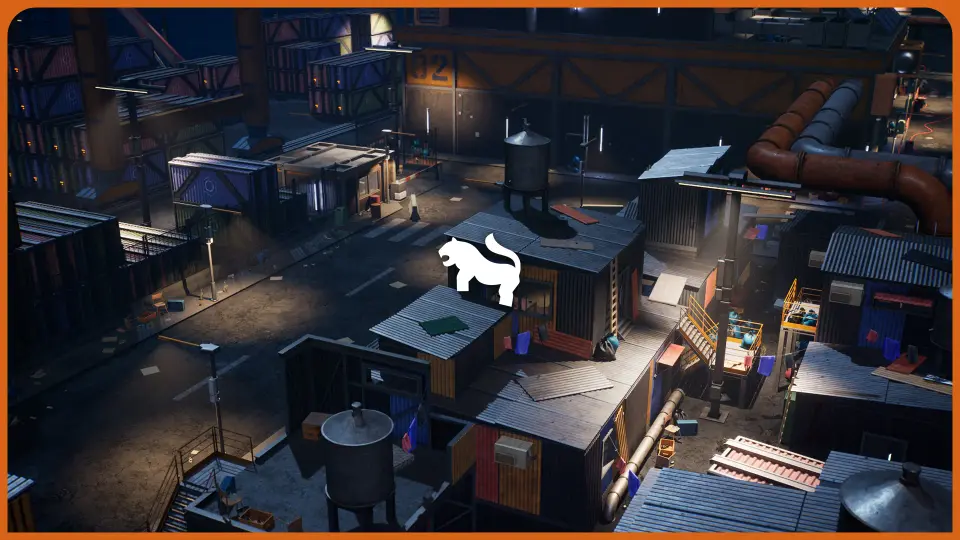
For teams building a futuristic harbor, a dense dockside district, or a virtual production backdrop with industrial scale, Cyberpunk Port City Environment Is aimed at that exact kind of scene. The pack centers on a port city setting shaped by warehouses, containers, shipping yard elements, heavy machinery, steel structures, neon lighting, and dystopian urban details, with the stated goal of helping users populate game environments or virtual production levels with high-quality visuals and well-optimized assets.
The package contains 223 unique meshes And includes all showcased assets. It also comes with a Showcased preassembled scene, which gives the environment an immediate starting point rather than leaving everything as loose parts alone. Characters are Not included, so the focus stays entirely on the environment itself: the built space, the mood, and the modular city-port setting.
Where a Cyberpunk Port City fits best
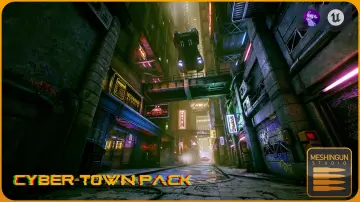
This environment is most clearly suited to projects that need a mix of industrial infrastructure and stylized urban decay. The tag set points toward scenes such as shipping terminals, warehouse zones, cyberpunk alleyways, underground markets, tech districts, dockside work areas, and larger megacity harbor spaces. The visual language is rooted in containers, cargo operations, cranes, security checkpoints, rusty metal, shipping crates, steel beams, and illuminated industrial architecture.
That combination gives it a useful range inside a single theme. A developer could stage a night cargo operation with neon reflections and machinery-heavy spaces, then shift into narrower cyber slum passages or marketplace-style corners without breaking the overall setting. The same environment language also supports darker dystopian scenes, including AI-controlled areas, corporate industrial zones, hidden trading spaces, and seedy underworld pockets suggested by the tags.
Virtual production work is another direct fit because the package is explicitly positioned for that use alongside game environments. A preassembled scene matters here: it can help when the immediate need is a complete backdrop with a defined visual identity instead of a long assembly phase from scratch. In this case, the intended identity is unmistakable—futuristic port infrastructure merged with cyberpunk city density.
223 unique meshes and the preassembled scene
The most concrete part of the package is the mesh count. With 223 unique meshes, the environment is presented as a substantial scene-building set rather than a small prop drop. The included assets are described as high quality, with a good level of detail, and optimized for game-ready projects. Those three ideas work together: the pack is not just trying to look dense in still images, but to function as a practical environment resource for production use.
The included Preassembled scene Is equally important because it defines how the pack can be approached. Some users will want to study how the parts were arranged in the showcased setup, then pull that scene apart into modular chunks. Others may want to keep most of the established layout and make selective changes. In both cases, the presence of a ready-made scene reduces the distance between asset import and a usable level.
Because all showcased assets are included, the environment is framed less as a concept sample and more as a complete scene package. The tags suggest a broad selection of visual motifs within that package: containers, warehouses, cranes, shipping yards, floating cargo, cargo ships, AI-operated factories, holographic advertisements, neon tunnels, and cyberpunk marketplace spaces. That does not mean every tag translates into a separate standalone system, but it does clarify the kinds of spaces and props the environment is trying to represent.
Lumen, Nanite, and Unreal Engine 5.0+
Support for Lumen And Nanite In Unreal Engine 5.0+ Is one of the clearest technical anchors in the package. For a cyberpunk setting, that matters in obvious ways. Lumen support aligns well with scenes structured through neon lights, neon shadows, holographic advertisements, illuminated cranes, and reflective industrial surfaces. A port city at night depends heavily on lighting mood, and the environment is explicitly prepared for that rendering context.
Nanite support also matches the stated emphasis on a good level of detail. The pack is presented as both detailed and optimized for game-ready work, and Nanite support places it squarely in an Unreal Engine 5 workflow where dense environmental detail can be part of the intended look. The industrial and urban subject matter reinforces this: steel beams, overgrown structures, heavy machinery, containers, and layered dockside architecture all benefit from geometry-rich presentation.
These technical notes do not turn the environment into a generic engine showcase. They tie directly back to the type of place being built. Cyberpunk ports rely on contrast—hard industrial shapes, cluttered infrastructure, and dramatic artificial lighting. Lumen and Nanite support help position the pack within that exact visual territory.
ULAT and modular building in the port district
This package includes ULAT, short for Ultimate Level Art Tool, and the environment is also stated to be compatible with that tool. ULAT is described as a way to create Fast, custom modular buildings And to populate scenes in a natural way. That makes it more than an add-on note. It changes how the environment can be extended once the included content is in place.
For a setting like a cyberpunk port city, modular building tools are especially relevant. Port districts and industrial city edges often depend on repeatable structures with variations: stacked forms, connected warehouse lines, service corridors, fenced compounds, checkpoint areas, and improvised urban add-ons. A tool that speeds up custom modular building fits that kind of layout well, because the environment theme thrives on repetition with controlled variation rather than on a handful of hero objects alone.
The scene population angle matters too. The package is pitched for users who want to populate game environments or virtual production levels, and ULAT is specifically tied to populating scenes naturally. For production work, that places the environment somewhere between a ready-made set and a more expandable kit. The included preassembled scene can act as the immediate visual baseline, while ULAT supports the task of pushing the district outward into larger streets, additional structures, or more custom industrial blocks.
From warehouses and containers to neon tunnels and dock workers
The tags sketch out the environment's strongest visual use cases with unusual clarity. On one side, there is the hard industrial base: Warehouse, Container, Shipping yard, Shipping crates, Cargo ships, Illuminated cranes, Shipping terminal, Dock workers, and Urban shipping yard. On the other side, there is the cyberpunk overlay: Neon lights, Neon reflections, Cyber slums, AI surveillance, Holographic advertisements, Augmented reality, Flying drones, Hacker outpost, and Underground market.
That dual identity is what gives the pack its practical range. It can support a straightforward industrial port, but it is not limited to utilitarian logistics spaces. The same setting can be framed as a dystopian trade hub, a corporate checkpoint district, a black-market zone, or a neon-soaked slum wrapped around shipping infrastructure. The tags also hint at a world with layered social and technological tension: corporate dystopia, AI-controlled areas, underground economy, and secret hideouts all sit next to heavy machinery and cargo operations.
Even without characters included, those environmental cues do a lot of narrative work. A scene filled with containers, security barriers, holographic ads, and reflective night lighting already implies movement, control, trade, and surveillance. For developers or level artists who want a setting that reads quickly on screen, that is one of the strongest practical advantages here.
Who gets the most from Cyberpunk Port City Environment
This pack is best suited to developers, level artists, and virtual production users who need a Cyberpunk industrial harbor setting With enough content to form a convincing scene immediately, while still leaving room for expansion. The 223 unique meshes, included showcased scene, Unreal Engine 5.0+ support for Lumen and Nanite, and ULAT compatibility all point in the same direction: a resource for constructing or extending a futuristic port district rather than a small decorative add-on.
If the target scene involves warehouses, containers, shipping yards, neon-lit alleyways, dystopian dockside spaces, or a larger megacity harbor atmosphere, this environment is the clearest fit. It serves users who want the port itself to carry the visual story.
 Cyberpunk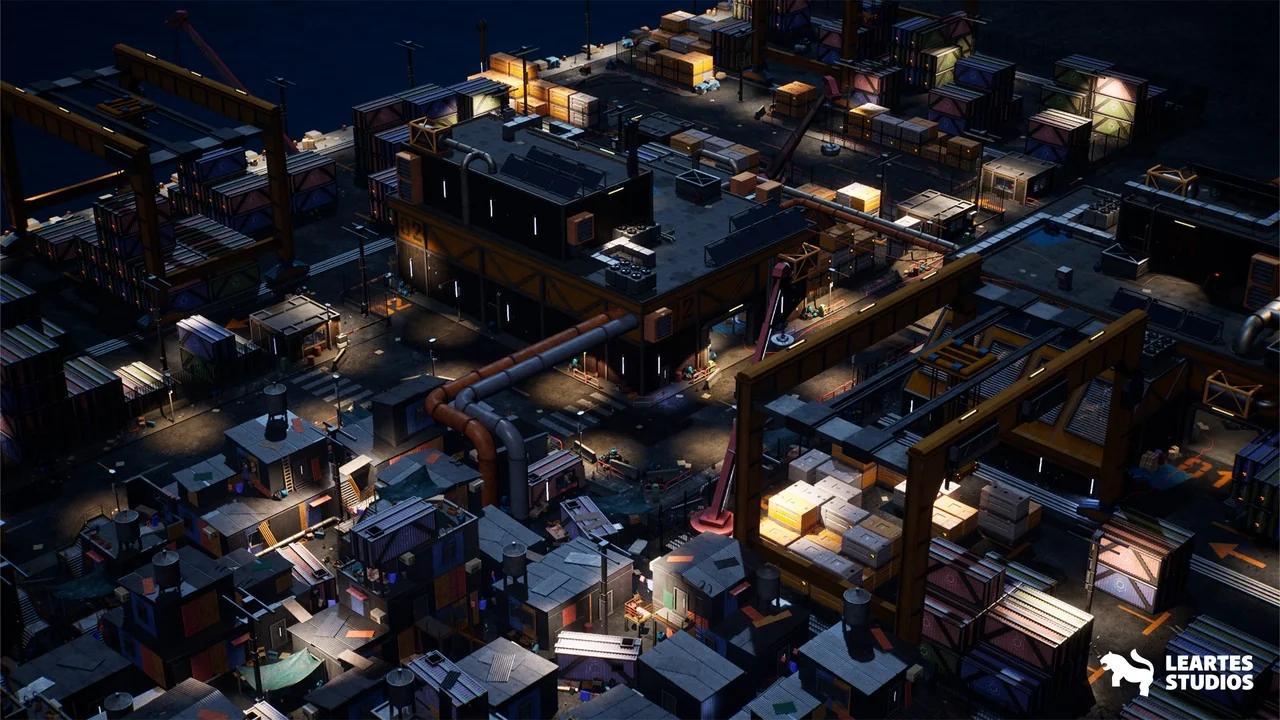
 Cyberpunk
 Cyberpunk
 Cyberpunk