"a338a1d501976271"{"id":"1001340","slug":"cruel-sword-finisher-set","title":"Cruel Sword Finisher Set","category":"Combat","engine":"4.18+,5.0+","assetVersion":"","engineVersion":"Engine Version: 4.18+,5.0+","tag":"Combat","accent":"blue","visual":"mech","summary":"A breakdown of the Cruel Sword Finisher Set animation library, covering 34+ animations, attacker and victim setmotions, and Paladin idle alignment.","platform":"Unreal Engine","publishedAt":"2026-10-04T10:04:57.815Z","updatedAt":"2026-10-04T10:04:57.815Z","sourceNotes":[],"fileContents":[],"compatibility":["Unreal Engine","Engine Version: 4.18+,5.0+"],"featuredImage":{"alt":"Cruel Sword Finisher Set","src":"/wp-content/uploads/published/2026/10/0a25b4543121-a8ec9821-aa6c-4bde-9e4f-074d21cececf-c6b930f243.webp"},"hasDownloadLink":true,"downloads":0,"terms":[{"taxonomy":"category","slug":"combat","name":"Combat"}],"galleryImages":[{"src":"/wp-content/uploads/published/2026/10/3994feefc6ff-23ceca4c-9fc4-4c56-b75b-246e44252719-b40b3a258b.webp","alt":"Cruel Sword Finisher Set"},{"src":"/wp-content/uploads/published/2026/10/cf8afffc8c1f-16b3cfc8-1ce7-4194-86e4-845c8f58ae65-2387e91523.webp","alt":"Cruel Sword Finisher Set"},{"src":"/wp-content/uploads/published/2026/10/8c7a0fcde49d-d6b8154c-294f-4650-8efe-40ce240a3154-23d24aa2f3.webp","alt":"Cruel Sword Finisher Set"},{"src":"/wp-content/uploads/published/2026/10/6eff827189f4-aff39d70-0877-4c22-b501-916c34cefda2-5ac74134ff.webp","alt":"Cruel Sword Finisher Set"},{"src":"/wp-content/uploads/published/2026/10/6d3c5199bb12-c7ab1fe1-6ed2-4150-93c5-715303aa9bb8-03c231a3b8.webp","alt":"Cruel Sword Finisher Set"},{"src":"/wp-content/uploads/published/2026/10/9fd09ccb2a18-c68455d3-dd74-4c1a-a0d4-9ed24de5bb50-d4a955cb83.webp","alt":"Cruel Sword Finisher Set"},{"src":"/wp-content/uploads/published/2026/10/bd01dda8a640-2bd653b8-fde0-454a-9a59-1bdc2d6e44c4-20933bcdf7.webp","alt":"Cruel Sword Finisher Set"},{"src":"/wp-content/uploads/published/2026/10/d10eaaffe1c8-aa92f1d3-533f-4828-9028-21373e3400e8-2189f82626.webp","alt":"Cruel Sword Finisher Set"},{"src":"/wp-content/uploads/published/2026/10/2bde4d55753d-e81656cc-65c8-40a6-b8a6-441a47ed0c8f-54dad563bf.webp","alt":"Cruel Sword Finisher Set"},{"src":"/wp-content/uploads/published/2026/10/3941f7bd9ad2-4c0a60f5-b20c-43b3-96ce-032b4cd9c3e9-909f7b3e3f.webp","alt":"Cruel Sword Finisher Set"}],"accessPanel":{"kind":"resource","title":"Download this resource","eyebrow":"Free Download","message":"Log in or create a free account to start your download.","fileName":"Content.7z","safetyNote":"Resources are manually reviewed before listing to improve quality and reduce obvious risks.","actionLabel":"Download Free","resourceType":"Resource archive"},"contentHtml":"\u003ch2\u003eAttacker and Victim Mechanics in the Cruel Sword Finisher Set\u003c/h2\u003e\u003cp\u003ePaired combat systems require exact spatial synchronization between two characters to sell physical impact. Cruel Sword Finisher Set addresses this requirement by structuring its core animation sequences into dedicated attacker and victim components. Rather than relying on generic hit-reaction physics or decoupled ragdoll triggers, the pack deploys synchronized motions where both participants follow matching temporal cues. One participant carries out the execution as the primary aggressor, while the opposing participant undergoes the specific trauma, displacement, and collapse dictated by the exchange.\u003c/p\u003e\u003cp\u003eIntegrating synchronized takedowns involves matching root positions at the exact moment a finisher triggers. When a player or enemy enters the execution window, the game engine aligns the coordinate space of both skeletal meshes. The attacker plays their specific side of the setmotion, driving the sword through deliberate arcs, thrusts, and leverage points. Simultaneously, the victim plays the matching secondary sequence, reacting to every point of contact with coordinated stumbles, resistance, and falls. Because these animations are authored as interlocking pairs, the blade consistently contacts the target geometry without floating or clipping through critical strike zones.\u003c/p\u003e\u003ch2\u003eComposition of the 34+ Motion Animation Library\u003c/h2\u003e\u003cp\u003eThe total library spans more than 34 individual animations partitioned across neutral, direct offensive, and paired interactive states. These clips break down into distinct functional categories tailored to different stages of combat flow:\u003c/p\u003e\u003cul\u003e\u003cli\u003e\u003cstrong\u003eIdle (1 clip):\u003c/strong\u003e Establishes the neutral combat posture for the sword wielder between active strikes and finisher triggers.\u003c/li\u003e\u003cli\u003e\u003cstrong\u003eAttack (9 clips):\u003c/strong\u003e Standalone combat swings and strikes executed by an individual sword wielder without requiring a linked target track.\u003c/li\u003e\u003cli\u003e\u003cstrong\u003eSetmotion (24 clips total, split between 1p and 2p):\u003c/strong\u003e Paired choreography containing twelve distinct takedown sequences, divided evenly into twelve attacker (1p) files and twelve victim (2p) files.\u003c/li\u003e\u003c/ul\u003e\u003cp\u003eThe nine individual attack clips provide basic offensive coverage, allowing a character to engage in regular melee strings, poke at range, and initiate combat exchanges. These standalone strikes transition into the neutral idle during passive moments or chain directly into the execution phase when combat parameters permit. The twenty-four setmotion clips form the technical core of the package, providing twelve complete two-actor scenarios where every swing, grapple, or strike from the first participant directly prompts a choreographed collapse or struggle from the second.\u003c/p\u003e\u003ch2\u003ePaladin Set Stance and Idle Adjustments\u003c/h2\u003e\u003cp\u003eThe foundational stance in this package shares its underlying posture with the Paladin animation set, maintaining visual continuity across sword-focused archetypes while adjusting key equipment requirements. In the Paladin set, the idle posture accounts for both a main-hand sword and an off-hand defensive shield. In this configuration, the identical idle motion is retained, but the off-hand shield has been removed.\u003c/p\u003e\u003cp\u003eThis modification shifts the physical presence of the sword wielder. The empty off-hand allows characters to appear agile and unrestrained, matching an aggressive combat profile rather than a fortified defensive stance. Blending between the idle pose and the nine direct attack animations avoids unnatural snapping in the secondary arm, as the left arm balances naturally during swings instead of tracking toward an absent shield bone. For projects utilizing both libraries, this shared baseline ensures that standard movement or neutral states remain consistent when a character switches combat roles or changes loadouts.\u003c/p\u003e\u003ch2\u003eDeployment for Knights, Swordsmen, and Boss Encounters\u003c/h2\u003e\u003cp\u003eAction RPG combat architectures routinely assign finisher sequences to specific gameplay tiers, ranging from everyday encounters to pivotal duels. The movement profile in this collection fits several distinct character archetypes:\u003c/p\u003e\u003cul\u003e\u003cli\u003e\u003cstrong\u003eMain Player Characters:\u003c/strong\u003e Provides high-impact interactive kills that trigger upon depleting an enemy posture or guard gauge.\u003c/li\u003e\u003cli\u003e\u003cstrong\u003eBoss Characters:\u003c/strong\u003e Supplies aggressive, cinematic grab-and-execute motions when punishing player mistakes or completing phase transitions.\u003c/li\u003e\u003cli\u003e\u003cstrong\u003eKnights and Dedicated Swordsmen:\u003c/strong\u003e Serves standard humanoid combatants requiring disciplined, sword-specific choreography for both aggressive offense and brutal dispatching.\u003c/li\u003e\u003c/ul\u003e\u003cp\u003eWhen used for a main character, the twelve paired setmotions offer sufficient visual variety to keep repeated execution mechanics from becoming monotonous. When applied to boss entities, the same paired files allow large or formidable opponents to physically seize the player character, lock them into a cinematic sequence, and deliver devastating blows before casting them aside. The fantasy and action styling keeps the violence dramatic, emphasizing authoritative blade work suitable for heroic protagonists or lethal adversaries.\u003c/p\u003e\u003ch2\u003eSystem Coordination and Combat Alignment\u003c/h2\u003e\u003cp\u003eSetting up paired interactive combat requires a state machine capable of monitoring positional offsets, target tags, and transition blend times. When an execution command fires, the character controller must verify line of sight and ground alignment before locking player control and snapping the victim mesh to the intended target transform. Once aligned, playing the 1p attacker file and 2p victim file at identical playback rates preserves the spatial relationship throughout the sequence.\u003c/p\u003e\u003cp\u003eThe package also supports broader multi-creature workflows, including compatibility considerations with sets like the Werewolf AnimSet. Coordinating humanoid sword finishers against standard targets or specialized combatants lets developers build consistent takedown logic across diverse enemy rosters. By standardizing the blend inputs, monitoring root motion trajectories, and tying hit-frame notifies directly to sound effects or camera shakes, the Cruel Sword Finisher Set delivers a comprehensive, interactive melee framework for fantasy combat design.\u003c/p\u003e\n\n\u003ch2\u003eMore From The Same Workflow\u003c/h2\u003e\n\u003cul\u003e\n\u003cli\u003e\u003ca href=\"https://3dcghub.com/paladin-anim-set/\" title=\"Paladin Anim Set\"\u003ePaladin Anim Set\u003c/a\u003e\u003c/li\u003e\n\u003cli\u003e\u003ca href=\"https://3dcghub.com/hand-to-hand-finishers-volume-2/\" title=\"Hand to hand finishers Volume 2\"\u003eHand to hand finishers Volume 2\u003c/a\u003e\u003c/li\u003e\n\u003cli\u003e\u003ca href=\"https://3dcghub.com/great-dualblade-animset/\" title=\"Great DualBlade AnimSet\"\u003eGreat DualBlade AnimSet\u003c/a\u003e\u003c/li\u003e\n\u003cli\u003e\u003ca href=\"https://3dcghub.com/ghostsamurai_katana/\" title=\"GhostSamurai_Katana\"\u003eGhostSamurai_Katana\u003c/a\u003e\u003c/li\u003e\n\u003cli\u003e\u003ca href=\"https://3dcghub.com/one-hand-sword-attacks-and-finishers/\" title=\"One Hand Sword Attacks And Finishers\"\u003eOne Hand Sword Attacks And Finishers\u003c/a\u003e\u003c/li\u003e\n\u003c/ul\u003e","contentTextLength":6262,"navigation":{"current":62,"total":3338,"previous":{"id":"1001341","slug":"cyberpunk-street-assets","title":"Cyberpunk street assets","category":"Sci-Fi","platform":"Unreal Engine","updatedAt":"2026-10-04T10:06:00.352Z"},"next":{"id":"1001339","slug":"crazy-insane-door-pack","title":"Crazy Insane Door Pack","category":"Buildings \u0026 Architecture","platform":"Unreal Engine","updatedAt":"2026-10-04T10:03:59.144Z"}},"relatedResources":[{"id":"1000923","slug":"paladin-anim-set","title":"Paladin Anim Set","category":"Combat","engine":"4.26+,5.0+","assetVersion":"","engineVersion":"Engine Version: 4.26+,5.0+","tag":"Combat","accent":"blue","visual":"mech","summary":"188+ sword-and-shield animations with 9 poses for action RPG paladins. Includes attack, combo, movement, hit reactions, down/death states, and utility clips.","platform":"Unreal Engine","publishedAt":"2026-08-08T05:09:47.001Z","updatedAt":"2026-08-08T05:09:47.001Z","sourceNotes":[],"fileContents":[],"compatibility":["Unreal Engine","Engine Version: 4.26+,5.0+"],"featuredImage":{"alt":"Paladin Anim Set","src":"/wp-content/uploads/published/2026/08/a9e0d45d3200-bdd345ab-c299-4c62-b369-bccc07e8dd70-a644b7225c.webp"},"hasDownloadLink":true,"downloads":4},{"id":"1000520","slug":"hand-to-hand-finishers-volume-2","title":"Hand to hand finishers Volume 2","category":"Combat","engine":"4.26+,5.0+","assetVersion":"","engineVersion":"Engine Version: 4.26+,5.0+","tag":"Combat","accent":"blue","visual":"mech","summary":"A set of 26 paired hand-to-hand finisher animations built on the Unreal Mannequin skeleton, covering attacker and victim choreography for combat games.","platform":"Unreal Engine","publishedAt":"2026-07-14T13:05:15.439Z","updatedAt":"2026-07-14T13:05:15.439Z","sourceNotes":[],"fileContents":[],"compatibility":["Unreal Engine","Engine Version: 4.26+,5.0+"],"featuredImage":{"alt":"Hand to hand finishers Volume 2","src":"/wp-content/uploads/published/2026/07/1d183fef9d28-cac528bb-6b9c-4a3d-971d-37d7237e6fd7-a2bc220a51.webp"},"hasDownloadLink":true,"downloads":4},{"id":"5672","slug":"ghostsamurai_katana","title":"GhostSamurai_Katana","category":"Combat","engine":"4.26+,5.0+","assetVersion":"Engine version: 4.26+,5.0+","engineVersion":"5.3","tag":"Combat","accent":"blue","visual":"animation","summary":"Master samurai combat with the GhostSamurai Katana animation set. Features 300+ high-quality animations, FX skills, and full compatibility with UE5 characters.","platform":"Unreal Engine","publishedAt":"2026-02-17T16:28:18.000Z","updatedAt":"2026-04-19T15:56:42.000Z","sourceNotes":[],"fileContents":[],"compatibility":["Unreal Engine","Engine version: 4.26+,5.0+"],"featuredImage":{"alt":"GhostSamurai_Katana","src":"https://3dcghub.com/wp-content/uploads/2026/02/1ad7d3b7-2e22-4a93-839d-faff94b0e48f.webp"},"hasDownloadLink":true,"downloads":9}]}
Combat
Cruel Sword Finisher Set
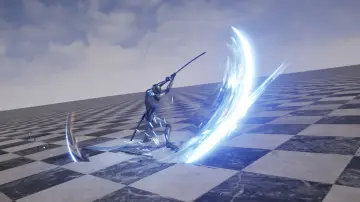
A breakdown of the Cruel Sword Finisher Set animation library, covering 34+ animations, attacker and victim setmotions, and Paladin idle alignment.
Category:Unreal Engine,CombatPlatform: Unreal EngineEngine Version: 4.18+,5.0+Published: Oct 4, 2026
Combat
Resource overview
Attacker and Victim Mechanics in the Cruel Sword Finisher Set
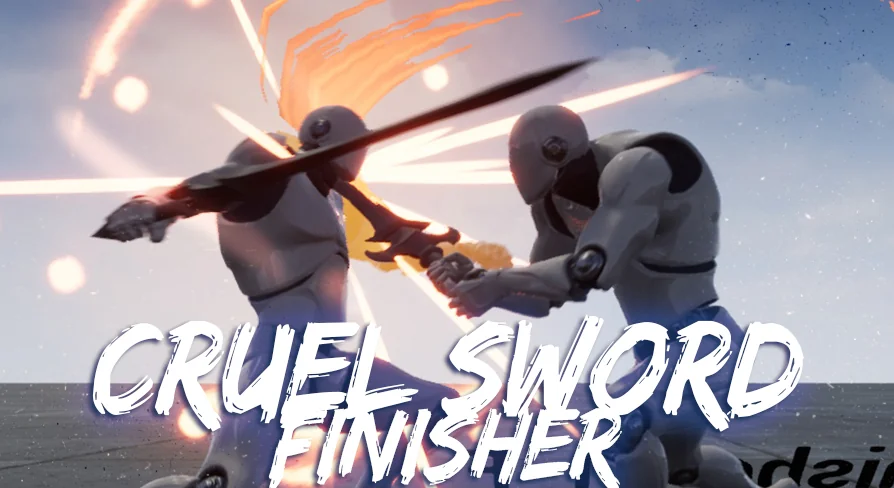
Paired combat systems require exact spatial synchronization between two characters to sell physical impact. Cruel Sword Finisher Set addresses this requirement by structuring its core animation sequences into dedicated attacker and victim components. Rather than relying on generic hit-reaction physics or decoupled ragdoll triggers, the pack deploys synchronized motions where both participants follow matching temporal cues. One participant carries out the execution as the primary aggressor, while the opposing participant undergoes the specific trauma, displacement, and collapse dictated by the exchange.
Integrating synchronized takedowns involves matching root positions at the exact moment a finisher triggers. When a player or enemy enters the execution window, the game engine aligns the coordinate space of both skeletal meshes. The attacker plays their specific side of the setmotion, driving the sword through deliberate arcs, thrusts, and leverage points. Simultaneously, the victim plays the matching secondary sequence, reacting to every point of contact with coordinated stumbles, resistance, and falls. Because these animations are authored as interlocking pairs, the blade consistently contacts the target geometry without floating or clipping through critical strike zones.
Composition of the 34+ Motion Animation Library
The total library spans more than 34 individual animations partitioned across neutral, direct offensive, and paired interactive states. These clips break down into distinct functional categories tailored to different stages of combat flow:
Idle (1 clip): Establishes the neutral combat posture for the sword wielder between active strikes and finisher triggers.
Attack (9 clips): Standalone combat swings and strikes executed by an individual sword wielder without requiring a linked target track.
Setmotion (24 clips total, split between 1p and 2p): Paired choreography containing twelve distinct takedown sequences, divided evenly into twelve attacker (1p) files and twelve victim (2p) files.
The nine individual attack clips provide basic offensive coverage, allowing a character to engage in regular melee strings, poke at range, and initiate combat exchanges. These standalone strikes transition into the neutral idle during passive moments or chain directly into the execution phase when combat parameters permit. The twenty-four setmotion clips form the technical core of the package, providing twelve complete two-actor scenarios where every swing, grapple, or strike from the first participant directly prompts a choreographed collapse or struggle from the second.
Paladin Set Stance and Idle Adjustments
The foundational stance in this package shares its underlying posture with the Paladin animation set, maintaining visual continuity across sword-focused archetypes while adjusting key equipment requirements. In the Paladin set, the idle posture accounts for both a main-hand sword and an off-hand defensive shield. In this configuration, the identical idle motion is retained, but the off-hand shield has been removed.
This modification shifts the physical presence of the sword wielder. The empty off-hand allows characters to appear agile and unrestrained, matching an aggressive combat profile rather than a fortified defensive stance. Blending between the idle pose and the nine direct attack animations avoids unnatural snapping in the secondary arm, as the left arm balances naturally during swings instead of tracking toward an absent shield bone. For projects utilizing both libraries, this shared baseline ensures that standard movement or neutral states remain consistent when a character switches combat roles or changes loadouts.
Deployment for Knights, Swordsmen, and Boss Encounters
Action RPG combat architectures routinely assign finisher sequences to specific gameplay tiers, ranging from everyday encounters to pivotal duels. The movement profile in this collection fits several distinct character archetypes:
Main Player Characters: Provides high-impact interactive kills that trigger upon depleting an enemy posture or guard gauge.
Boss Characters: Supplies aggressive, cinematic grab-and-execute motions when punishing player mistakes or completing phase transitions.
Knights and Dedicated Swordsmen: Serves standard humanoid combatants requiring disciplined, sword-specific choreography for both aggressive offense and brutal dispatching.
When used for a main character, the twelve paired setmotions offer sufficient visual variety to keep repeated execution mechanics from becoming monotonous. When applied to boss entities, the same paired files allow large or formidable opponents to physically seize the player character, lock them into a cinematic sequence, and deliver devastating blows before casting them aside. The fantasy and action styling keeps the violence dramatic, emphasizing authoritative blade work suitable for heroic protagonists or lethal adversaries.
System Coordination and Combat Alignment
Setting up paired interactive combat requires a state machine capable of monitoring positional offsets, target tags, and transition blend times. When an execution command fires, the character controller must verify line of sight and ground alignment before locking player control and snapping the victim mesh to the intended target transform. Once aligned, playing the 1p attacker file and 2p victim file at identical playback rates preserves the spatial relationship throughout the sequence.
The package also supports broader multi-creature workflows, including compatibility considerations with sets like the Werewolf AnimSet. Coordinating humanoid sword finishers against standard targets or specialized combatants lets developers build consistent takedown logic across diverse enemy rosters. By standardizing the blend inputs, monitoring root motion trajectories, and tying hit-frame notifies directly to sound effects or camera shakes, the Cruel Sword Finisher Set delivers a comprehensive, interactive melee framework for fantasy combat design.
 Combat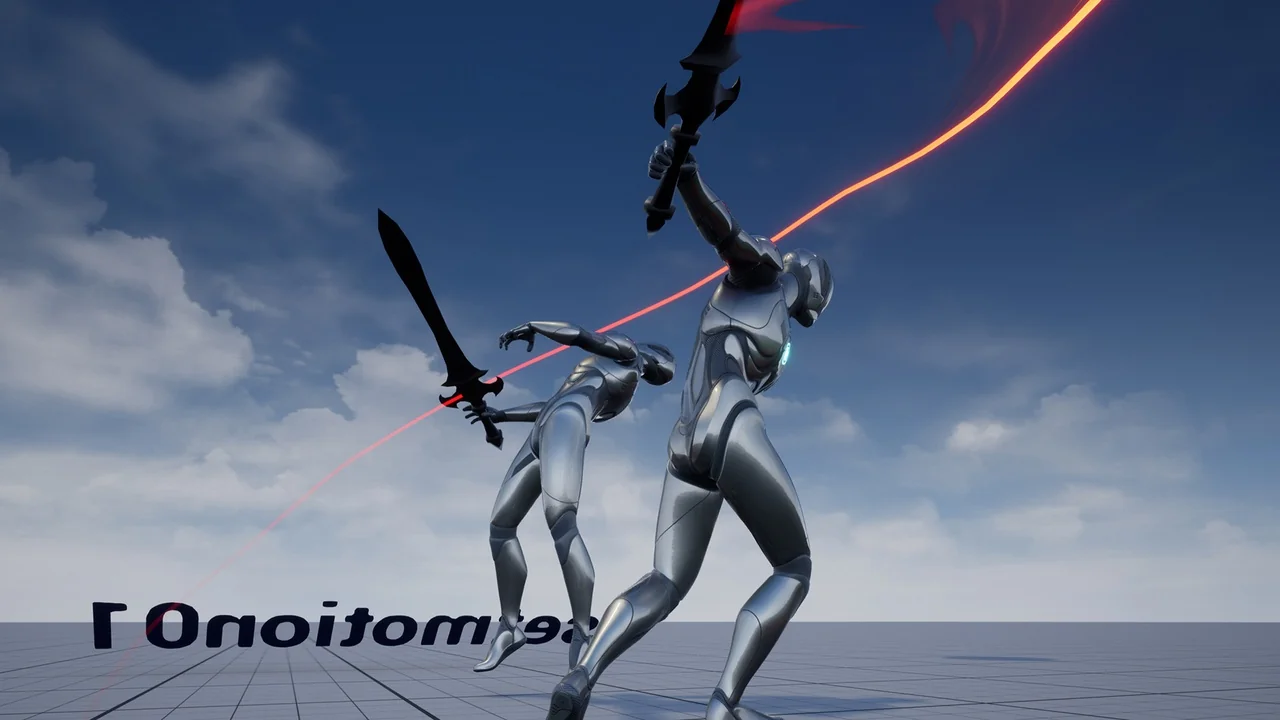
 Combat
 Combat
 Combat