"fa182e0cd0a6ea73"{"id":"1001791","slug":"asian-abandoned-temple","title":"Asian Abandoned Temple","category":"Abandoned","engine":"5.5+","assetVersion":"","engineVersion":"Engine Version: 5.5+","tag":"Abandoned","accent":"blue","visual":"mech","summary":"Examine the technical layout, modular architecture, Nanite assets, and Lumen lighting systems inside the Asian Abandoned Temple environment pack.","platform":"Unreal Engine","publishedAt":"2026-10-21T07:43:49.272Z","updatedAt":"2026-10-21T07:43:49.272Z","sourceNotes":[],"fileContents":[],"compatibility":["Unreal Engine","Engine Version: 5.5+"],"featuredImage":{"alt":"Asian Abandoned Temple","src":"/wp-content/uploads/published/2026/10/f4942f236e3a-36d5fe2e-afc9-40c5-a03c-897e2978b96c-bc2cf66534.webp"},"hasDownloadLink":true,"downloads":0,"terms":[{"taxonomy":"category","slug":"abandoned","name":"Abandoned"}],"galleryImages":[{"src":"/wp-content/uploads/published/2026/10/1b4e84005a6c-ea214ea6-f700-49d3-b1cd-5bcd896e4f92-ca9fa55291.webp","alt":"Asian Abandoned Temple"},{"src":"/wp-content/uploads/published/2026/10/bdcdaffa0978-7b28b700-b670-4f8d-97c9-4b6e42a62ca7-b9a011dbf6.webp","alt":"Asian Abandoned Temple"},{"src":"/wp-content/uploads/published/2026/10/b10701493de4-223f94cb-2065-495b-85b1-5e38adadb71d-14edc162b7.webp","alt":"Asian Abandoned Temple"},{"src":"/wp-content/uploads/published/2026/10/a929f78bbbc8-f6a33950-7143-4f41-b6e2-1c089d25f4a1-a5006ff19d.webp","alt":"Asian Abandoned Temple"},{"src":"/wp-content/uploads/published/2026/10/19f03e35b0b9-79c2e4a5-d89b-4e4f-921c-72a7a42f80d4-90e857bb91.webp","alt":"Asian Abandoned Temple"},{"src":"/wp-content/uploads/published/2026/10/54b3df666f2b-16355444-fd56-442b-b554-378e9a893b95-82cc4e49f7.webp","alt":"Asian Abandoned Temple"},{"src":"/wp-content/uploads/published/2026/10/0ba11aba3bb3-d7097f2f-997f-4aed-951c-6b94faa3ae9a-09155cdede.webp","alt":"Asian Abandoned Temple"},{"src":"/wp-content/uploads/published/2026/10/812dcbe1c7e1-79790958-1c67-4a05-aa03-2ea2958f515d-e4746c8358.webp","alt":"Asian Abandoned Temple"},{"src":"/wp-content/uploads/published/2026/10/0b417fd6d54d-8e48ace5-705d-4ec3-9fd6-318f937f0352-0b48b411cf.webp","alt":"Asian Abandoned Temple"},{"src":"/wp-content/uploads/published/2026/10/8e0ce2e2538d-e78e00c6-ca9a-43ae-a8d0-3f2ff74f6436-1e1b35dd25.webp","alt":"Asian Abandoned Temple"}],"accessPanel":{"kind":"resource","title":"Download this resource","eyebrow":"Free Download","message":"Log in or create a free account to start your download.","fileName":"Asian Abandoned Temple.7z","safetyNote":"Resources are manually reviewed before listing to improve quality and reduce obvious risks.","actionLabel":"Download Free","resourceType":"Resource archive"},"contentHtml":"\u003ch2\u003eDeploying the Pre-Assembled Showcase Environment and Lighting Configurations\u003c/h2\u003e\u003cp\u003eIntegrating the Asian Abandoned Temple environment begins with loading its pre-assembled showcase level. This master level connects both outdoor terrain and complex indoor sanctuaries into a single contiguous space. Level designers can immediately inspect how large-scale cliffs, ruined passages, and towering temple structures interconnect before dismantling the scene into individual modular elements. The pre-built level provides a functional reference for scale, pathway flow, and sightline distribution across ancient sacred grounds.\u003c/p\u003e\u003cp\u003eA major technical advantage during early staging is the inclusion of both day and night lighting setups. The daytime setup emphasizes direct sun penetration through collapsed ceilings, highlighting ancient carvings and deep rock crevices. Switching to the night setup rebalances the scene around low-key illumination, relying on subtle ambient bounce and focused light points across damp surfaces and stone passages. Both lighting variations rely on an enabled HDRIBackdrop configuration, establishing clear horizon bounds and unified ambient light values for the exterior environment.\u003c/p\u003e\u003cp\u003eBecause the environment is suited to direct exploration, navigating the space through a playable configuration demonstrates collision bounds, camera clearance, and transitions between wide outdoor cliffside paths and enclosed, water-filled halls. Reviewing the master level layout helps artists understand the intended verticality of the architecture, where stone towers and exterior platforms look down over flooded interior chambers and overgrown foliage beds.\u003c/p\u003e\u003ch2\u003eAssembling Layouts with Modular Temple Architecture and 120 Unique Meshes\u003c/h2\u003e\u003cp\u003eAt the center of the package is a structural library consisting of 120 unique meshes. The modular architecture is shaped by Asian and Hindu artistic influences, displaying heavily ornamented surfaces, detailed friezes, and worn architectural carvings. Rather than offering static, single-piece structures, the kit splits the temple walls, structural columns, foundation stones, and ornamental crests into separate modular pieces that snap together along standard spatial increments.\u003c/p\u003e\u003cp\u003eThe modular kit supports several distinct architectural configurations:\u003c/p\u003e\u003cul\u003e\u003cli\u003eTowering exterior temple structures, tiered roofs, and elevated shrine platforms.\u003c/li\u003e\u003cli\u003eIntricate interior chambers with structural support pillars and carved altars.\u003c/li\u003e\u003cli\u003eRuined structural passages marked by fractured masonry and broken entryways.\u003c/li\u003e\u003cli\u003eWater-filled stone halls that support sunken flooring and partially submerged foundations.\u003c/li\u003e\u003c/ul\u003e\u003cp\u003eArchitectural pieces carry high-resolution textures that reveal stone decay, fine chiseling, and surface weathering caused by centuries of abandonment. Designers can place pristine carved columns alongside broken wall sections, establishing an organic sense of historical degradation. The modularity extends to decorative trim and relief panels, allowing artists to break up tiling stone textures on expansive facades by layering distinctive cultural ornaments across plain structural boundaries.\u003c/p\u003e\u003ch2\u003eLayering Environmental Foliage, Rock Formations, and Water-Filled Halls\u003c/h2\u003e\u003cp\u003eConstructing an authentic abandoned ruin requires continuous interaction between artificial architecture and natural landscape elements. The asset collection includes a variety of environmental props, natural rock formations, and dense foliage designed to embed masonry deep into rugged terrain. Large cliff assets form backdrop vistas, sheer vertical drops, and natural barricades that guide player movement through the temple complex.\u003c/p\u003e\u003cp\u003eSmaller rock meshes bridge the gap between sheer cliff faces and stone masonry. Placing natural rocks along collapsed temple walls creates believable rockfalls, showing where the mountain has begun reclaiming structural corridors. These stone assets are accompanied by scattered environmental debris, stone fragments, and dressing props that fill out dead spaces in ruined hallways.\u003c/p\u003e\u003cp\u003eFoliage meshes provide the overgrowth necessary to complete the sense of an abandoned civilization. Vines, ground shrubs, and wild greenery can be distributed across broken flagstones, crevices in stone monuments, and along the margins of standing water. Within the water-filled halls, the interaction of rock barriers, aquatic surfaces, and damp architectural foundations creates an atmospheric transition between dry interior shrines and subterranean drainage caverns.\u003c/p\u003e\u003ch2\u003eNanite Mesh Rendering and Lumen Global Illumination Integration\u003c/h2\u003e\u003cp\u003eThe package is configured to take full advantage of modern Unreal Engine rendering pipelines, relying on native Nanite mesh virtualization alongside dynamic Lumen lighting. The 120 meshes feature Nanite support right out of the box. This allows the intricate stone ornaments, relief carvings, and jagged rock formations to maintain cinematic geometric fidelity without requiring aggressive manual level-of-detail (LOD) authoring. High-poly structural elements retain crisp silhouette edges and microscopic surface detail at extreme close-up angles while automatically simplifying across distant vistas.\u003c/p\u003e\u003cp\u003eLumen integration controls the interaction of direct and indirect light throughout the complex. Because the temple structures feature heavy occlusions, sunken floors, and broken ceiling tiles, Lumen calculates accurate multi-bounce indirect lighting inside deep sanctums. Light entering through fractures in exterior dome roofs scatters across damp stone floors and reflects softly into adjoining dark corridors.\u003c/p\u003e\u003cp\u003eTexture authoring supports this workflow through high-resolution material setups that interact correctly with Lumen's surface cache. Roughness, normal maps, and albedo values are calibrated to handle both high-contrast daytime exterior sunlight and dim, ambient night scenes. Dynamic reflections across flooded chambers and damp masonry function cleanly without requiring static light baking or manual reflection probe arrays.\u003c/p\u003e\u003ch2\u003eProduction Readiness for Sacred Ruin Environments\u003c/h2\u003e\u003cp\u003eAll included models are optimized and structured as game-ready assets, balancing heavy visual fidelity with predictable runtime performance. The assets serve multiple production contexts, including action-adventure level layouts, narrative exploration scenes, and cinematic staging spaces that require ornate, historical settings. Environment artists can use the collection as a self-contained kit to craft vast mountain sanctuaries or integrate individual props and carved pillars into existing fantasy and historical worlds.\u003c/p\u003e\u003cp\u003eThe combination of structural modularity, complete interior and exterior asset sets, and native engine rendering configurations minimizes initial setup time. Artists can deploy the pre-assembled showcase environment as a turnkey map or use the 120 unique meshes to build custom temple complexes from the ground up.\u003c/p\u003e\n\n\u003ch2\u003eRelated Resources Worth Checking\u003c/h2\u003e\n\u003cul\u003e\n\u003cli\u003e\u003ca href=\"https://3dcghub.com/abandoned-industrial-tunnel/\" title=\"Abandoned Industrial Tunnel\"\u003eAbandoned Industrial Tunnel\u003c/a\u003e\u003c/li\u003e\n\u003cli\u003e\u003ca href=\"https://3dcghub.com/the-carnival-environment-post-apocalyptic-circus-amusement-parks-carnival/\" title=\"The Carnival Environment ( Post Apocalyptic Circus Amusement Parks Carnival )\"\u003eThe Carnival Environment ( Post Apocalyptic Circus Amusement Parks Carnival )\u003c/a\u003e\u003c/li\u003e\n\u003cli\u003e\u003ca href=\"https://3dcghub.com/abandoned-shed/\" title=\"Abandoned shed\"\u003eAbandoned shed\u003c/a\u003e\u003c/li\u003e\n\u003cli\u003e\u003ca href=\"https://3dcghub.com/asian-temple-pack/\" title=\"Asian Temple Pack\"\u003eAsian Temple Pack\u003c/a\u003e\u003c/li\u003e\n\u003cli\u003e\u003ca href=\"https://3dcghub.com/wind-temple/\" title=\"Wind Temple\"\u003eWind Temple\u003c/a\u003e\u003c/li\u003e\n\u003c/ul\u003e","contentTextLength":7065,"navigation":{"current":65,"total":3789,"previous":{"id":"1001792","slug":"baker-character-npc-baker-character-worker-npc-sculpt-3d-model-man-art-old","title":"Baker Character / NPC ( Baker Character Worker NPC Sculpt 3D Model Man Art Old )","category":"Characters \u0026 Creatures","platform":"Unreal Engine","updatedAt":"2026-10-21T07:44:46.854Z"},"next":{"id":"1001790","slug":"apocalyptic-office-props-vol1","title":"Apocalyptic Office Props Vol1","category":"Buildings \u0026 Architecture","platform":"Unreal Engine","updatedAt":"2026-10-21T07:42:48.211Z"}},"relatedResources":[{"id":"1000277","slug":"abandoned-industrial-tunnel","title":"Abandoned Industrial Tunnel","category":"Abandoned","engine":"5.5+","assetVersion":"","engineVersion":"Engine Version: 5.5+","tag":"Abandoned","accent":"blue","visual":"mech","summary":"Create a dark, damp, and claustrophobic atmosphere with the Abandoned Industrial Tunnel, featuring weathered brick architecture, rusted props, and PBR materials","platform":"Unreal Engine","publishedAt":"2026-07-02T18:13:30.323Z","updatedAt":"2026-07-02T18:13:30.323Z","sourceNotes":[],"fileContents":[],"compatibility":["Unreal Engine","Engine Version: 5.5+"],"featuredImage":{"alt":"Abandoned Industrial Tunnel","src":"/wp-content/uploads/published/2026/07/f72e8c99d970-ae1a092c-b417-4e26-a8bd-88a190e800b8-1fea9fb82a.webp"},"hasDownloadLink":true,"downloads":0},{"id":"6776","slug":"the-carnival-environment-post-apocalyptic-circus-amusement-parks-carnival","title":"The Carnival Environment ( Post Apocalyptic Circus Amusement Parks Carnival )","category":"Abandoned","engine":"5.2+","assetVersion":"Engine version: 5.2+","engineVersion":"5.2","tag":"Abandoned","accent":"blue","visual":"city","summary":"Transform your project with a hauntingly detailed post-apocalyptic carnival. This pack includes 67 unique meshes, Lumen support, and advanced level design tools for professional results.","platform":"Unreal Engine","publishedAt":"2026-02-20T15:23:14.000Z","updatedAt":"2026-04-19T15:56:07.000Z","sourceNotes":[],"fileContents":[],"compatibility":["Unreal Engine","Engine version: 5.2+"],"featuredImage":{"alt":"The Carnival Environment ( Post Apocalyptic Circus Amusement Parks Carnival )","src":"https://3dcghub.com/wp-content/uploads/2026/02/62335bbe-c6fd-4b9a-bc8e-55587f0a8dde.webp"},"hasDownloadLink":true,"downloads":1},{"id":"6715","slug":"abandoned-shed","title":"Abandoned shed","category":"Abandoned","engine":"5.5+","assetVersion":"Engine version: 5.5+","engineVersion":"5.1","tag":"Abandoned","accent":"blue","visual":"city","summary":"Build a haunting atmosphere with this abandoned shed environment for UE5. Featuring over 70 meshes and versatile materials, it is perfect for horror and survival games.","platform":"Unreal Engine","publishedAt":"2026-02-20T11:40:55.000Z","updatedAt":"2026-04-19T15:56:08.000Z","sourceNotes":[],"fileContents":[],"compatibility":["Unreal Engine","Engine version: 5.5+"],"featuredImage":{"alt":"Abandoned shed","src":"https://3dcghub.com/wp-content/uploads/2026/02/f1c62213-bd51-4907-bff1-7fba82d40ee5.webp"},"hasDownloadLink":true,"downloads":0}]}
Abandoned
Asian Abandoned Temple
Examine the technical layout, modular architecture, Nanite assets, and Lumen lighting systems inside the Asian Abandoned Temple environment pack.
Category:Unreal Engine,AbandonedPlatform: Unreal EngineEngine Version: 5.5+Published: Oct 21, 2026
Abandoned
Resource overview
Deploying the Pre-Assembled Showcase Environment and Lighting Configurations
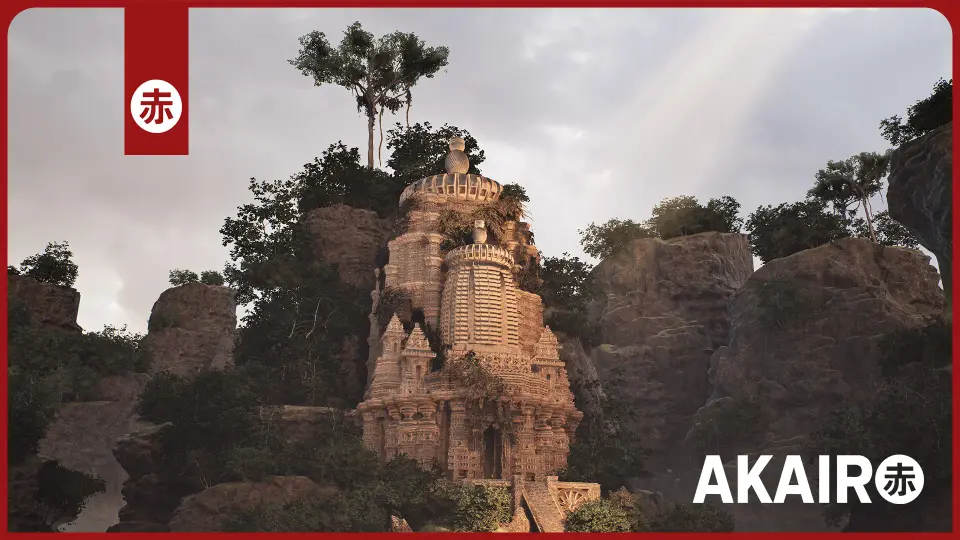
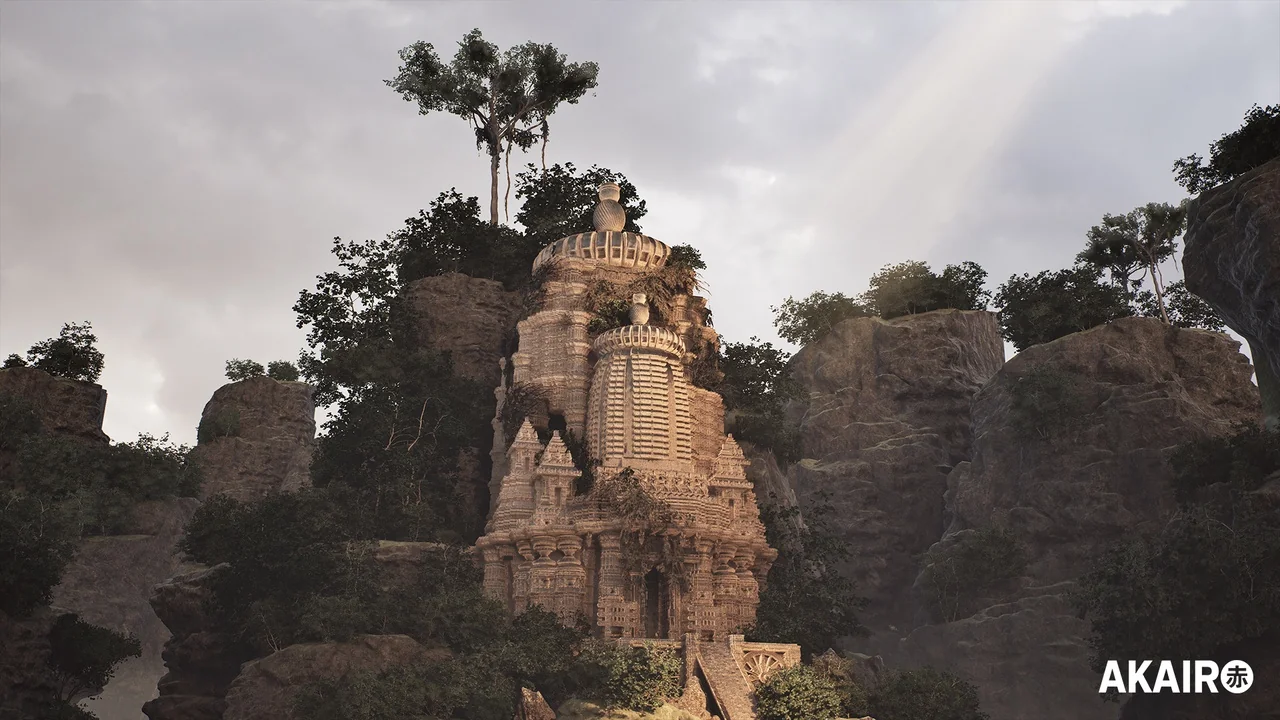
Integrating the Asian Abandoned Temple environment begins with loading its pre-assembled showcase level. This master level connects both outdoor terrain and complex indoor sanctuaries into a single contiguous space. Level designers can immediately inspect how large-scale cliffs, ruined passages, and towering temple structures interconnect before dismantling the scene into individual modular elements. The pre-built level provides a functional reference for scale, pathway flow, and sightline distribution across ancient sacred grounds.
A major technical advantage during early staging is the inclusion of both day and night lighting setups. The daytime setup emphasizes direct sun penetration through collapsed ceilings, highlighting ancient carvings and deep rock crevices. Switching to the night setup rebalances the scene around low-key illumination, relying on subtle ambient bounce and focused light points across damp surfaces and stone passages. Both lighting variations rely on an enabled HDRIBackdrop configuration, establishing clear horizon bounds and unified ambient light values for the exterior environment.
Because the environment is suited to direct exploration, navigating the space through a playable configuration demonstrates collision bounds, camera clearance, and transitions between wide outdoor cliffside paths and enclosed, water-filled halls. Reviewing the master level layout helps artists understand the intended verticality of the architecture, where stone towers and exterior platforms look down over flooded interior chambers and overgrown foliage beds.
Assembling Layouts with Modular Temple Architecture and 120 Unique Meshes
At the center of the package is a structural library consisting of 120 unique meshes. The modular architecture is shaped by Asian and Hindu artistic influences, displaying heavily ornamented surfaces, detailed friezes, and worn architectural carvings. Rather than offering static, single-piece structures, the kit splits the temple walls, structural columns, foundation stones, and ornamental crests into separate modular pieces that snap together along standard spatial increments.
The modular kit supports several distinct architectural configurations:
Towering exterior temple structures, tiered roofs, and elevated shrine platforms.
Intricate interior chambers with structural support pillars and carved altars.
Ruined structural passages marked by fractured masonry and broken entryways.
Water-filled stone halls that support sunken flooring and partially submerged foundations.
Architectural pieces carry high-resolution textures that reveal stone decay, fine chiseling, and surface weathering caused by centuries of abandonment. Designers can place pristine carved columns alongside broken wall sections, establishing an organic sense of historical degradation. The modularity extends to decorative trim and relief panels, allowing artists to break up tiling stone textures on expansive facades by layering distinctive cultural ornaments across plain structural boundaries.
Layering Environmental Foliage, Rock Formations, and Water-Filled Halls
Constructing an authentic abandoned ruin requires continuous interaction between artificial architecture and natural landscape elements. The asset collection includes a variety of environmental props, natural rock formations, and dense foliage designed to embed masonry deep into rugged terrain. Large cliff assets form backdrop vistas, sheer vertical drops, and natural barricades that guide player movement through the temple complex.
Smaller rock meshes bridge the gap between sheer cliff faces and stone masonry. Placing natural rocks along collapsed temple walls creates believable rockfalls, showing where the mountain has begun reclaiming structural corridors. These stone assets are accompanied by scattered environmental debris, stone fragments, and dressing props that fill out dead spaces in ruined hallways.
Foliage meshes provide the overgrowth necessary to complete the sense of an abandoned civilization. Vines, ground shrubs, and wild greenery can be distributed across broken flagstones, crevices in stone monuments, and along the margins of standing water. Within the water-filled halls, the interaction of rock barriers, aquatic surfaces, and damp architectural foundations creates an atmospheric transition between dry interior shrines and subterranean drainage caverns.
Nanite Mesh Rendering and Lumen Global Illumination Integration
The package is configured to take full advantage of modern Unreal Engine rendering pipelines, relying on native Nanite mesh virtualization alongside dynamic Lumen lighting. The 120 meshes feature Nanite support right out of the box. This allows the intricate stone ornaments, relief carvings, and jagged rock formations to maintain cinematic geometric fidelity without requiring aggressive manual level-of-detail (LOD) authoring. High-poly structural elements retain crisp silhouette edges and microscopic surface detail at extreme close-up angles while automatically simplifying across distant vistas.
Lumen integration controls the interaction of direct and indirect light throughout the complex. Because the temple structures feature heavy occlusions, sunken floors, and broken ceiling tiles, Lumen calculates accurate multi-bounce indirect lighting inside deep sanctums. Light entering through fractures in exterior dome roofs scatters across damp stone floors and reflects softly into adjoining dark corridors.
Texture authoring supports this workflow through high-resolution material setups that interact correctly with Lumen's surface cache. Roughness, normal maps, and albedo values are calibrated to handle both high-contrast daytime exterior sunlight and dim, ambient night scenes. Dynamic reflections across flooded chambers and damp masonry function cleanly without requiring static light baking or manual reflection probe arrays.
Production Readiness for Sacred Ruin Environments
All included models are optimized and structured as game-ready assets, balancing heavy visual fidelity with predictable runtime performance. The assets serve multiple production contexts, including action-adventure level layouts, narrative exploration scenes, and cinematic staging spaces that require ornate, historical settings. Environment artists can use the collection as a self-contained kit to craft vast mountain sanctuaries or integrate individual props and carved pillars into existing fantasy and historical worlds.
The combination of structural modularity, complete interior and exterior asset sets, and native engine rendering configurations minimizes initial setup time. Artists can deploy the pre-assembled showcase environment as a turnkey map or use the 120 unique meshes to build custom temple complexes from the ground up.
 Abandoned
 Abandoned
 Abandoned
 Abandoned