Efficient Traffic System Management
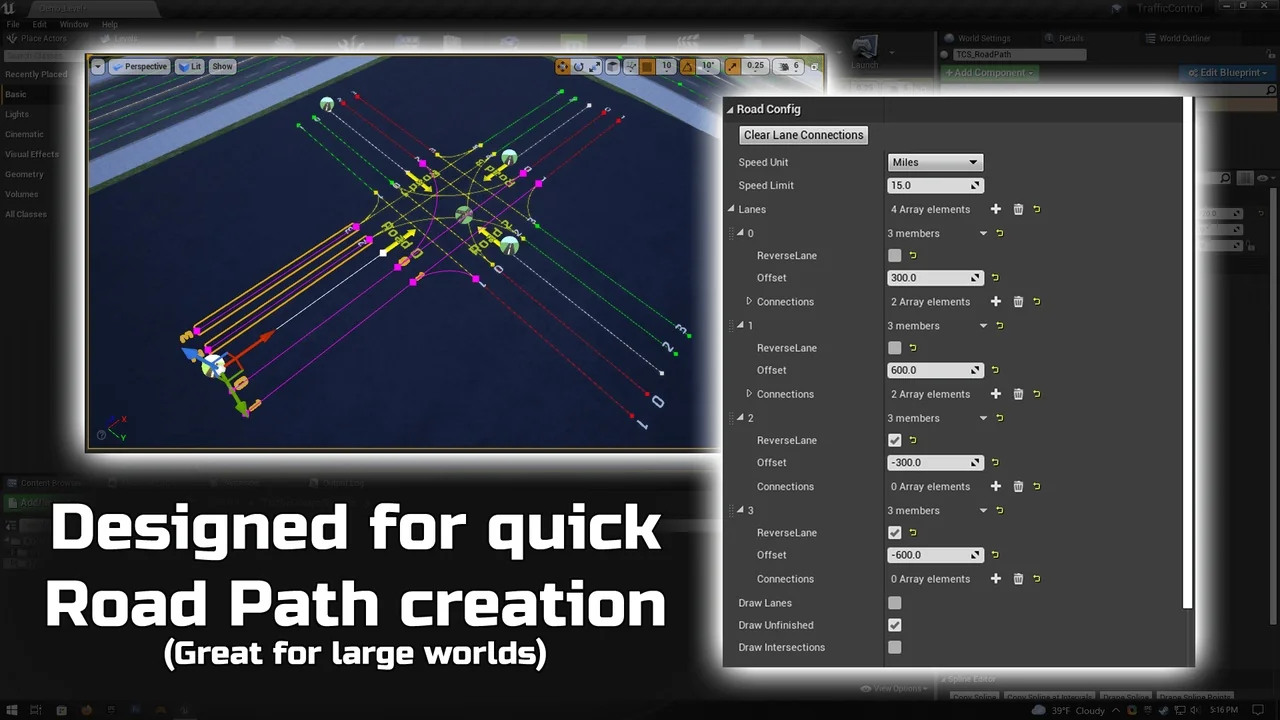
The Traffic Control System is a powerful solution designed for developers who need to create and iterate on large-scale traffic networks quickly. This toolkit focuses on efficiency by ensuring every tool requires as few clicks as possible. Consequently, users can achieve their desired results without complex manual setups. The developer prioritized a workflow that supports rapid development cycles.
Streamlined Generation Tools
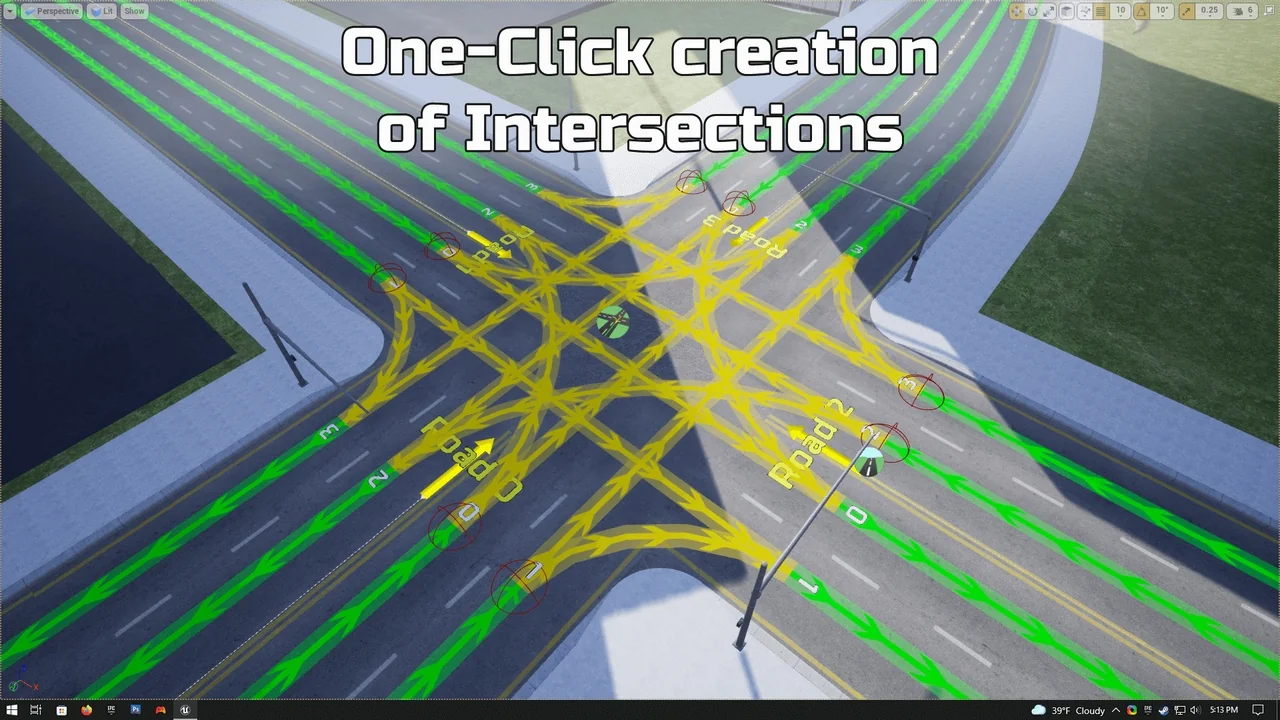
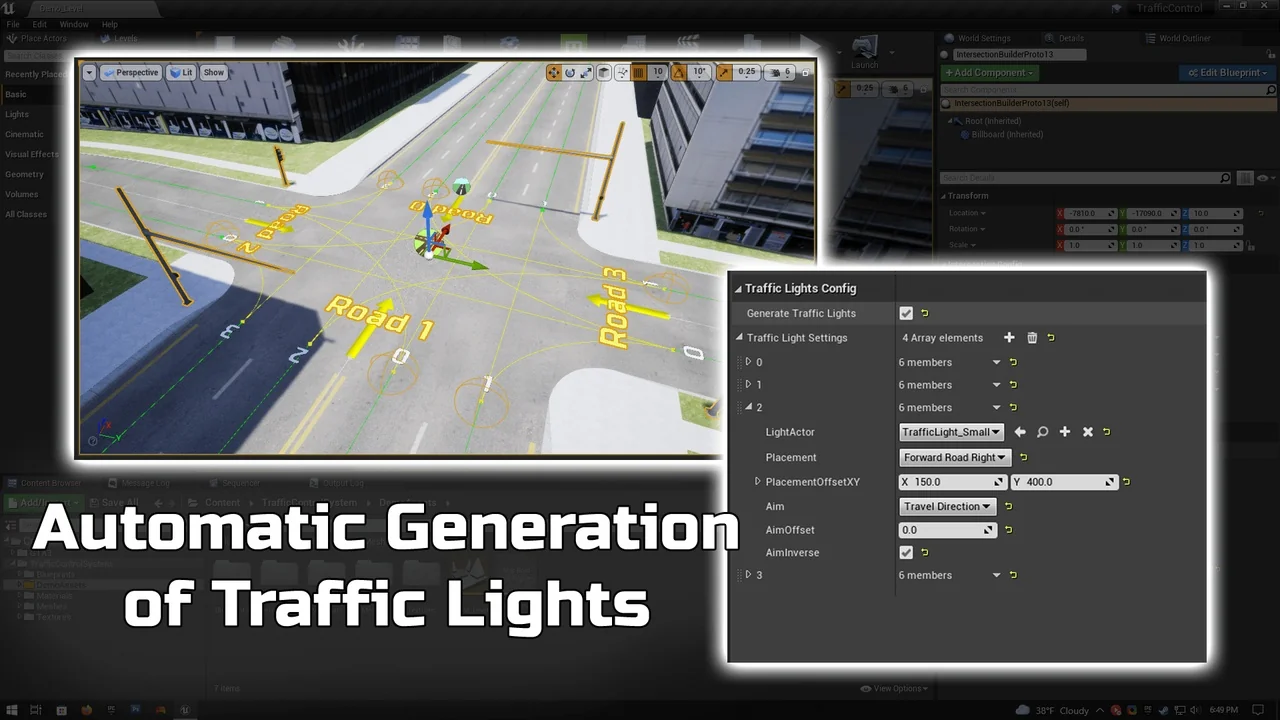
Creating complex road networks can be time-consuming. However, this system simplifies the process by allowing intersections and traffic lights to be generated at the click of a button. If the initial results are not exactly what you need, they can be easily modified. Therefore, the creator provides a flexible environment for rapid prototyping and world-building.
Key features of the generation toolkit include:
- One-click intersection and traffic light generation.
- Easy modification of generated components.
- Minimal click requirements for all major tools.
- Fast iteration for large-scale environments.
Smart Spawning and Player Interaction
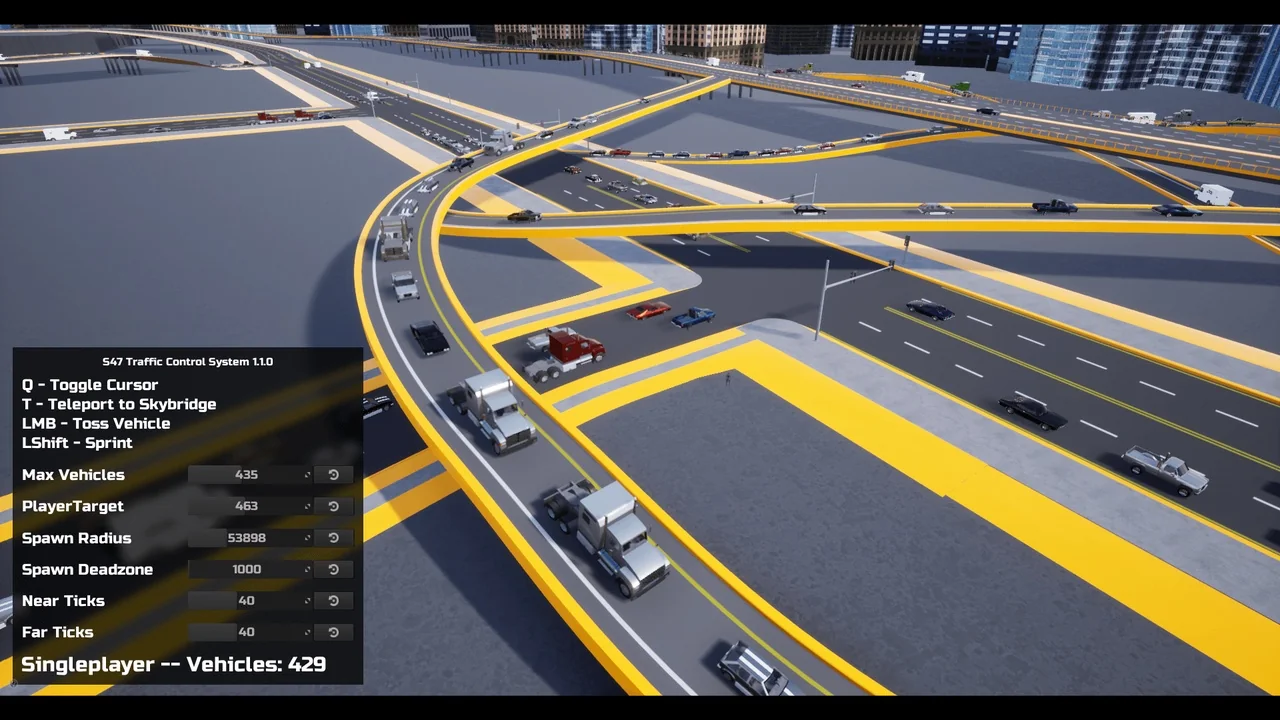
The Traffic Control System manages traffic density through an intelligent spawning mechanism. Traffic vehicles spawn and despawn automatically within a designated radius around players. This ensures that the environment feels populated without wasting resources on distant areas. Moreover, the system is designed to handle multiple players effectively.
Vehicles are counted for every player radius they fall within. As a result, vehicle counts will not “double up” when players are standing near each other. This logic maintains consistent traffic density in multiplayer scenarios. It also prevents unnecessary performance hits during cooperative play.
Advanced Network Optimization
Performance is a critical factor in large simulations. To address this, the Traffic Control System saves network resources by switching distant vehicles to a non-physics mode. In this state, only a single float variable needs to be occasionally replicated. This optimization is essential for maintaining high frame rates.
This approach drastically reduces network overhead when many vehicles are present in a scene. By minimizing data transmission, the developer ensures that the simulation remains smooth even with high vehicle counts. Furthermore, the transition between physics modes helps balance realism with technical performance.
Conclusion
In summary, this modular toolkit offers a realistic approach to traffic management. It combines ease of use with robust optimization features. Whether you are building a small town or a massive city, this simulation manager provides the essential tools for a functional and efficient traffic system. The focus on performance and rapid iteration makes it a valuable asset for any project requiring AI vehicle movement.
Screenshots & Gallery