"0148f1904a9b0d16"{"id":"1002597","slug":"sci-fi-dog","title":"Sci-Fi Dog","category":"Characters \u0026 Creatures","engine":"5.0+","assetVersion":"","engineVersion":"Engine Version: 5.0+","tag":"Characters","accent":"blue","visual":"character","summary":"Explore the Sci-Fi Dog asset, featuring 26 animations, custom skeleton, 4 distinct skins with material color blending, and optimized robotic geometry.","platform":"Unreal Engine","indexPolicy":"index","publishedAt":"2026-11-14T05:44:22.456Z","updatedAt":"2026-11-14T05:44:22.456Z","sourceNotes":[],"fileContents":[],"compatibility":["Unreal Engine","Engine Version: 5.0+"],"featuredImage":{"alt":"Sci-Fi Dog","src":"/wp-content/uploads/published/2026/11/3446f7a6743e-dd04e9bc-6fd0-47e6-928e-7c4135108d6f-7ff7786ce9.webp"},"hasDownloadLink":true,"downloads":0,"terms":[{"taxonomy":"category","slug":"characters-and-creatures","name":"Characters \u0026 Creatures"}],"galleryImages":[{"src":"/wp-content/uploads/published/2026/11/26fb502382eb-affce76f-4ede-4b11-a95d-ac262ce0f50c-4404afe64f.webp","alt":"Sci-Fi Dog"},{"src":"/wp-content/uploads/published/2026/11/6d1a4640848c-e8a623dc-8ca5-471e-9201-f7c7c742c108-9da9744d5d.webp","alt":"Sci-Fi Dog"},{"src":"/wp-content/uploads/published/2026/11/711268a770c6-3a882131-55e3-430a-8d4e-71bc9719cafc-67a09967a4.webp","alt":"Sci-Fi Dog"},{"src":"/wp-content/uploads/published/2026/11/d402c56e97f2-950f4547-e7c6-4e57-81e5-71a1a95a2438-aa9d8a6430.webp","alt":"Sci-Fi Dog"},{"src":"/wp-content/uploads/published/2026/11/7c021d3b61ee-f0f21d84-c8b2-4cc1-9190-91b62ad72996-e0266ff7e7.webp","alt":"Sci-Fi Dog"},{"src":"/wp-content/uploads/published/2026/11/7772c7aa560e-68506264-13a6-4b2f-8660-5b084a2e0347-f22922c2ca.webp","alt":"Sci-Fi Dog"},{"src":"/wp-content/uploads/published/2026/11/92dbe9c97005-86505569-1186-4a9c-bf5d-08c1ed01e9ad-2a4e565f6e.webp","alt":"Sci-Fi Dog"},{"src":"/wp-content/uploads/published/2026/11/762cd2c6f4ca-7435f766-5030-4dcd-88b6-0116ce3b5285-757ed985a0.webp","alt":"Sci-Fi Dog"},{"src":"/wp-content/uploads/published/2026/11/335051031859-04d4e858-2186-4f91-8226-216d99deb493-e924ab776f.webp","alt":"Sci-Fi Dog"},{"src":"/wp-content/uploads/published/2026/11/534a955bb95c-5c7ba63e-09e9-496c-ba81-9f2796d40cfa-c0db2bcc12.webp","alt":"Sci-Fi Dog"}],"accessPanel":{"kind":"resource","title":"Get this resource","eyebrow":"Free resource","message":"Download this resource in your browser.","fileName":"Content.7z","safetyNote":"Resources are manually reviewed before listing to improve quality and reduce obvious risks.","actionLabel":"Get this resource","resourceType":"Resource archive","versions":[]},"contentHtml":"\u003ch2\u003eVisual Identity and Role of the Sci-Fi Dog\u003c/h2\u003e\u003cp\u003eA mechanical quadruped steps onto the screen with the clean, functional lines of an industrial prototype. Sci-Fi Dog is the second entry in a five-part series titled Sci-Fi robots of the Future. Rather than adopting excessive battle damage or overly complex cybernetic clutter, the unit mirrors the streamlined visual language and styling found in the classic Unreal Engine Mannequin. This aesthetic baseline allows the character to serve equally well as an automated security patrol in a gleaming research lab, a scavenger unit in an apocalyptic wasteland, or an autonomous companion following a player across hostile terrain.\u003c/p\u003e\u003cp\u003eBecause background maps are not included, the asset relies entirely on its own silhouette and motion to establish presence within whatever level geometry it occupies. The robotic beast silhouette bridges the gap between mechanical automaton and predatory animal. Game systems can deploy the character across multiple roles, from a standard roaming enemy that stalks corridors to a script-driven NPC or loyal pet that reacts to player commands. The neutral surface finish and clean styling prevent it from clashing with diverse sci-fi or tech-fantasy art directions.\u003c/p\u003e\u003ch2\u003eLocomotion Mechanics and Movement States\u003c/h2\u003e\u003cp\u003eMovement for a four-legged robotic construct demands fluidity across varied navigational inputs. The model includes an animation set configured to manage basic transitions, dynamic pacing, and sudden tactical shifts. Ground traversal relies on directional walking clips covering forward motion as well as explicit left and right strafing movements. Having dedicated left and right walking cycles allows developers to construct directional blend spaces in an Animation Blueprint, ensuring the unit can track targets or circle a player while maintaining physical orientation.\u003c/p\u003e\u003cp\u003eHigh-speed movement is handled by a dedicated running clip, allowing the mechanical hound to sprint into melee range or flee from explosive hazards. When a change in pathing requires immediate redirection, an integrated 180-degree turn animation eliminates the unnatural snapping that often plagues automated pathfinding. Instead of sliding unnaturally on its pivot, the character completes an intentional physical turnaround. Aerial transitions are covered by three distinct jump animations, facilitating vertical navigation across broken terrain, platforms, or obstacles without breaking locomotion flow.\u003c/p\u003e\u003ch2\u003eHit Reactions and Combat States in Sci-Fi Dog Encounters\u003c/h2\u003e\u003cp\u003eCombat engagement relies heavily on how an enemy registers player impact. While many quadruped packs include only one or two generic flinches, Sci-Fi Dog features eight separate hit reaction animations. This extensive variety of response clips gives combat programmers the assets needed to reflect directional damage, alternating stagger thresholds, or variable weapon impacts. Whether hit from the flanks, struck head-on, or disrupted by heavy ordnance, the unit can trigger visually appropriate recovery motions that convey weight and physical vulnerability.\u003c/p\u003e\u003cp\u003eOffensive actions are driven by three distinct attack animations. These variations allow combat designers to chain together multiple strike patterns, alternating between quick strikes, pounces, or lunges to keep encounters unpredictable. Complementing the attack set is a dedicated barking animation, which provides a natural precursor to aggression. Designers can trigger the barking motion as an acoustic alert state, an intimidation display during target acquisition, or an alarm signal that alerts nearby robot patrols.\u003c/p\u003e\u003cp\u003eWhen defeated, the character transitions into one of two death animations. Offering dual death behaviors prevents groups of mechanical dogs from collapsing in identical positions across a battlefield, maintaining visual believability during large-scale skirmishes where multiple robotic units are neutralized simultaneously.\u003c/p\u003e\u003ch2\u003eIdle Variety and Custom Skeleton Architecture\u003c/h2\u003e\u003cp\u003eTo keep the character lifelike when stationary, four separate idle animations are included. Cycles can alternate between passive observation, alert surveillance postures, and mechanical self-checks. Shuffling through these states prevents the robotic hound from freezing into a static loop while waiting in patrol zones, guarding checkpoints, or idling near companion characters.\u003c/p\u003e\u003cp\u003eDriving these motions is a custom skeleton structure accompanied by an image preview of the skeletal hierarchy. Building on a custom rig tailored specifically to quadruped mechanics ensures that spine articulation, leg joints, and paws bend with correct mechanical leverage. The rig integrates with character control scripts and animation blueprints, giving developers a direct path to map state machines, aim offsets, and inverse kinematics for paw placement across uneven ground.\u003c/p\u003e\u003ch2\u003eMaterial Customization and Surface Shading\u003c/h2\u003e\u003cp\u003eVisual diversity is handled through four pre-configured skins, paired with material instance color blending. The underlying shading workflow uses PBR standards, reacting naturally to both direct and ambient scene lighting across metal and composite surfaces. Material instance color blending gives technical artists the flexibility to alter palette schemes directly inside the editor without altering base texture maps.\u003c/p\u003e\u003cp\u003eThis material setup makes it straightforward to designate team colors, indicate corrupted or hostile states, or separate squad variants through tint adjustments. An allied companion can sport bright identifier markings, while hostile patrol packs can run darker, warning-tinted finishes. Because these material adjustments operate through instances, multiple color variations can exist simultaneously in memory without multiplying draw overhead.\u003c/p\u003e\u003ch2\u003eGeometric Density and Scene Integration\u003c/h2\u003e\u003cp\u003eFrom a polygon management perspective, Sci-Fi Dog balances structural definition against rendering cost. The character model totals 39,590 triangles and 24,709 vertices. This polygon budget ensures that mechanical joints, leg pistons, armor plates, and facial sensors maintain rounded silhouettes even when viewed from close third-person or first-person camera perspectives.\u003c/p\u003e\u003cp\u003eThe vertex distribution preserves clean edge loops around bending joints, mitigating mesh stretching during extreme poses within the attack, jump, and hit reaction clips. For production teams assembling robotic rosters for futuristic or post-apocalyptic projects, the asset delivers an integrated combination of targeted geometry, high-variety hit reactions, directional locomotion, and modular material color controls.\u003c/p\u003e\n\n\u003ch2\u003eContinue Browsing Similar Packs\u003c/h2\u003e\n\u003cul\u003e\n\u003cli\u003e\u003ca href=\"https://3dcghub.com/sci-fi-megaspikan/\" rel=\"noopener noreferrer\"\u003eSCI FI: MEGASPIKAN\u003c/a\u003e\u003c/li\u003e\n\u003cli\u003e\u003ca href=\"https://3dcghub.com/streamer-girl-sci-fi-stylized-toon-webcam-performer/\" rel=\"noopener noreferrer\"\u003eStreamer girl. Sci-fi stylized toon webcam performer\u003c/a\u003e\u003c/li\u003e\n\u003cli\u003e\u003ca href=\"https://3dcghub.com/a-c-s-u-mantis/\" rel=\"noopener noreferrer\"\u003eA.C.S.U. \u0026quot;MANTIS\u0026quot;\u003c/a\u003e\u003c/li\u003e\n\u003cli\u003e\u003ca href=\"https://3dcghub.com/sci-fi-character-04-witch/\" rel=\"noopener noreferrer\"\u003eSci-Fi Character 04 (Witch)\u003c/a\u003e\u003c/li\u003e\n\u003cli\u003e\u003ca href=\"https://3dcghub.com/sci-fi-survey-drones/\" rel=\"noopener noreferrer\"\u003eSci-fi Survey Drones\u003c/a\u003e\u003c/li\u003e\n\u003c/ul\u003e","contentTextLength":6758,"navigation":{"current":52,"total":4543,"previous":{"id":"1002598","slug":"sci-fi-mech","title":"Sci-fi Mech","category":"Characters \u0026 Creatures","platform":"Unreal Engine","updatedAt":"2026-11-14T05:48:29.213Z"},"next":{"id":"1002596","slug":"sci-fi-megaspikan","title":"SCI FI: MEGASPIKAN","category":"Characters \u0026 Creatures","platform":"Unreal Engine","updatedAt":"2026-11-14T05:42:51.540Z"}},"relatedResources":[{"id":"1002600","slug":"sci-fi-troopers-collection","title":"Sci-FI Troopers Collection","category":"Characters \u0026 Creatures","engine":"5.0+","assetVersion":"","engineVersion":"Engine Version: 5.0+","tag":"Characters","accent":"blue","visual":"character","summary":"Examine the low-poly Sci-FI Troopers Collection, featuring rigged soldier meshes, material instance color masks, and cross-genre deployment.","platform":"Unreal Engine","indexPolicy":"index","publishedAt":"2026-11-14T05:50:39.758Z","updatedAt":"2026-11-14T05:50:39.758Z","sourceNotes":[],"fileContents":[],"compatibility":["Unreal Engine","Engine Version: 5.0+"],"featuredImage":{"alt":"Sci-FI Troopers Collection","src":"/wp-content/uploads/published/2026/11/5b072afd4ba5-d1674ecf-e692-47e4-b763-8b5d23d39934-8fc10cda16.webp"},"hasDownloadLink":true,"downloads":0},{"id":"1002598","slug":"sci-fi-mech","title":"Sci-fi Mech","category":"Characters \u0026 Creatures","engine":"5.2+","assetVersion":"","engineVersion":"Engine Version: 5.2+","tag":"Characters","accent":"blue","visual":"character","summary":"A deep dive into the Sci-fi Mech character asset, featuring four arms, built-in Control Rig, IK retargeting, and customizable parametric PBR materials.","platform":"Unreal Engine","indexPolicy":"index","publishedAt":"2026-11-14T05:48:29.213Z","updatedAt":"2026-11-14T05:48:29.213Z","sourceNotes":[],"fileContents":[],"compatibility":["Unreal Engine","Engine Version: 5.2+"],"featuredImage":{"alt":"Sci-fi Mech","src":"/wp-content/uploads/published/2026/11/54c16aa8d728-552e5e62-3007-42c9-9754-97b914fb9b0c-ee7679f308.webp"},"hasDownloadLink":true,"downloads":0},{"id":"1002596","slug":"sci-fi-megaspikan","title":"SCI FI: MEGASPIKAN","category":"Characters \u0026 Creatures","engine":"5.0+","assetVersion":"","engineVersion":"Engine Version: 5.0+","tag":"Characters","accent":"blue","visual":"character","summary":"Explore the technical setup, rigging, PBR materials, and animation pipelines for the 50-meter adult Megaspikan behemoth and aggressive larvae characters.","platform":"Unreal Engine","indexPolicy":"index","publishedAt":"2026-11-14T05:42:51.540Z","updatedAt":"2026-11-14T05:42:51.540Z","sourceNotes":[],"fileContents":[],"compatibility":["Unreal Engine","Engine Version: 5.0+"],"featuredImage":{"alt":"SCI FI: MEGASPIKAN","src":"/wp-content/uploads/published/2026/11/0cb2afbfdcbf-b9135887-ce1f-49e6-8e0a-4ae945cdb751-cc32fd4c27.webp"},"hasDownloadLink":true,"downloads":0}]}
Characters
Sci-Fi Dog
Explore the Sci-Fi Dog asset, featuring 26 animations, custom skeleton, 4 distinct skins with material color blending, and optimized robotic geometry.
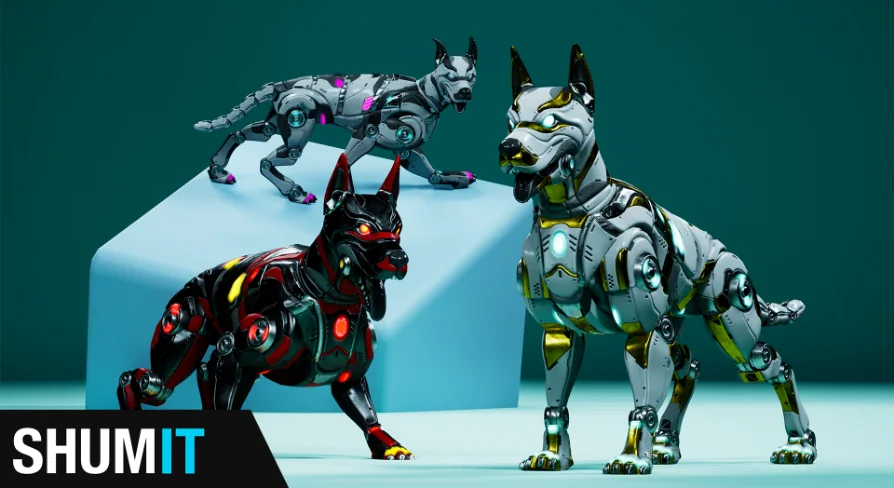
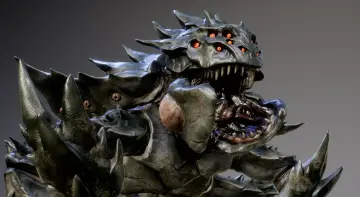
A mechanical quadruped steps onto the screen with the clean, functional lines of an industrial prototype. Sci-Fi Dog is the second entry in a five-part series titled Sci-Fi robots of the Future. Rather than adopting excessive battle damage or overly complex cybernetic clutter, the unit mirrors the streamlined visual language and styling found in the classic Unreal Engine Mannequin. This aesthetic baseline allows the character to serve equally well as an automated security patrol in a gleaming research lab, a scavenger unit in an apocalyptic wasteland, or an autonomous companion following a player across hostile terrain.
Because background maps are not included, the asset relies entirely on its own silhouette and motion to establish presence within whatever level geometry it occupies. The robotic beast silhouette bridges the gap between mechanical automaton and predatory animal. Game systems can deploy the character across multiple roles, from a standard roaming enemy that stalks corridors to a script-driven NPC or loyal pet that reacts to player commands. The neutral surface finish and clean styling prevent it from clashing with diverse sci-fi or tech-fantasy art directions.
Locomotion Mechanics and Movement States
Movement for a four-legged robotic construct demands fluidity across varied navigational inputs. The model includes an animation set configured to manage basic transitions, dynamic pacing, and sudden tactical shifts. Ground traversal relies on directional walking clips covering forward motion as well as explicit left and right strafing movements. Having dedicated left and right walking cycles allows developers to construct directional blend spaces in an Animation Blueprint, ensuring the unit can track targets or circle a player while maintaining physical orientation.
High-speed movement is handled by a dedicated running clip, allowing the mechanical hound to sprint into melee range or flee from explosive hazards. When a change in pathing requires immediate redirection, an integrated 180-degree turn animation eliminates the unnatural snapping that often plagues automated pathfinding. Instead of sliding unnaturally on its pivot, the character completes an intentional physical turnaround. Aerial transitions are covered by three distinct jump animations, facilitating vertical navigation across broken terrain, platforms, or obstacles without breaking locomotion flow.
Hit Reactions and Combat States in Sci-Fi Dog Encounters
Combat engagement relies heavily on how an enemy registers player impact. While many quadruped packs include only one or two generic flinches, Sci-Fi Dog features eight separate hit reaction animations. This extensive variety of response clips gives combat programmers the assets needed to reflect directional damage, alternating stagger thresholds, or variable weapon impacts. Whether hit from the flanks, struck head-on, or disrupted by heavy ordnance, the unit can trigger visually appropriate recovery motions that convey weight and physical vulnerability.
Offensive actions are driven by three distinct attack animations. These variations allow combat designers to chain together multiple strike patterns, alternating between quick strikes, pounces, or lunges to keep encounters unpredictable. Complementing the attack set is a dedicated barking animation, which provides a natural precursor to aggression. Designers can trigger the barking motion as an acoustic alert state, an intimidation display during target acquisition, or an alarm signal that alerts nearby robot patrols.
When defeated, the character transitions into one of two death animations. Offering dual death behaviors prevents groups of mechanical dogs from collapsing in identical positions across a battlefield, maintaining visual believability during large-scale skirmishes where multiple robotic units are neutralized simultaneously.
Idle Variety and Custom Skeleton Architecture
To keep the character lifelike when stationary, four separate idle animations are included. Cycles can alternate between passive observation, alert surveillance postures, and mechanical self-checks. Shuffling through these states prevents the robotic hound from freezing into a static loop while waiting in patrol zones, guarding checkpoints, or idling near companion characters.
Driving these motions is a custom skeleton structure accompanied by an image preview of the skeletal hierarchy. Building on a custom rig tailored specifically to quadruped mechanics ensures that spine articulation, leg joints, and paws bend with correct mechanical leverage. The rig integrates with character control scripts and animation blueprints, giving developers a direct path to map state machines, aim offsets, and inverse kinematics for paw placement across uneven ground.
Material Customization and Surface Shading
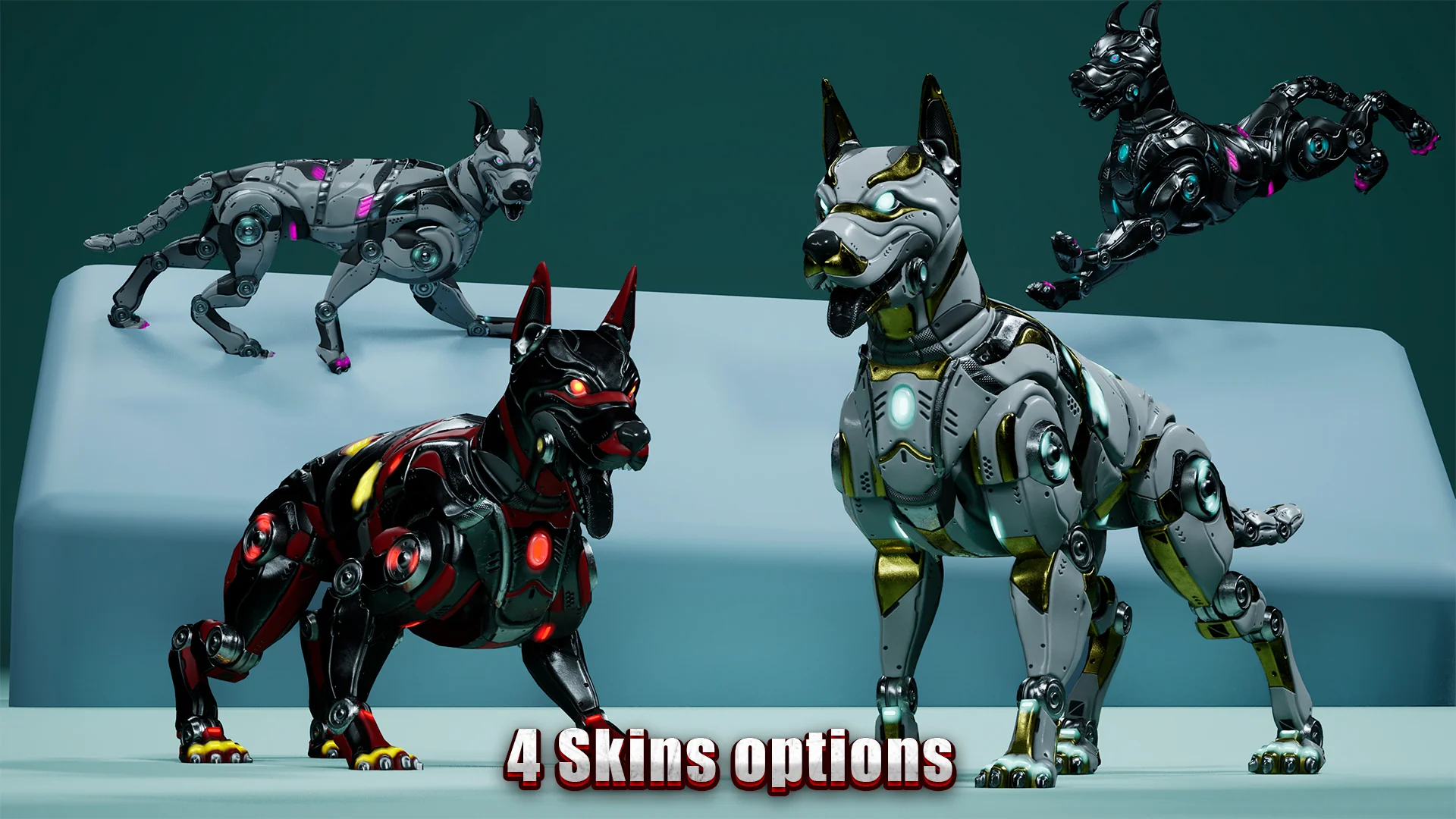
Visual diversity is handled through four pre-configured skins, paired with material instance color blending. The underlying shading workflow uses PBR standards, reacting naturally to both direct and ambient scene lighting across metal and composite surfaces. Material instance color blending gives technical artists the flexibility to alter palette schemes directly inside the editor without altering base texture maps.
This material setup makes it straightforward to designate team colors, indicate corrupted or hostile states, or separate squad variants through tint adjustments. An allied companion can sport bright identifier markings, while hostile patrol packs can run darker, warning-tinted finishes. Because these material adjustments operate through instances, multiple color variations can exist simultaneously in memory without multiplying draw overhead.
Geometric Density and Scene Integration
From a polygon management perspective, Sci-Fi Dog balances structural definition against rendering cost. The character model totals 39,590 triangles and 24,709 vertices. This polygon budget ensures that mechanical joints, leg pistons, armor plates, and facial sensors maintain rounded silhouettes even when viewed from close third-person or first-person camera perspectives.
The vertex distribution preserves clean edge loops around bending joints, mitigating mesh stretching during extreme poses within the attack, jump, and hit reaction clips. For production teams assembling robotic rosters for futuristic or post-apocalyptic projects, the asset delivers an integrated combination of targeted geometry, high-variety hit reactions, directional locomotion, and modular material color controls.
 Characters
 Characters
 Characters
 Characters