Modular Construction and Town Design
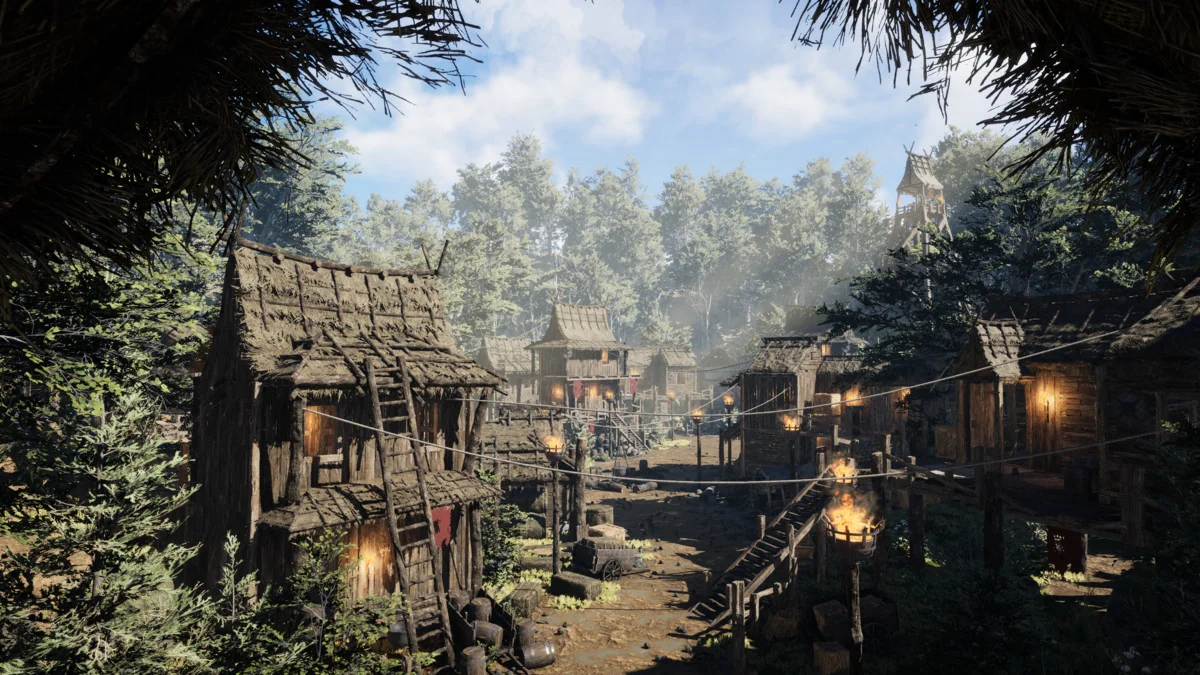
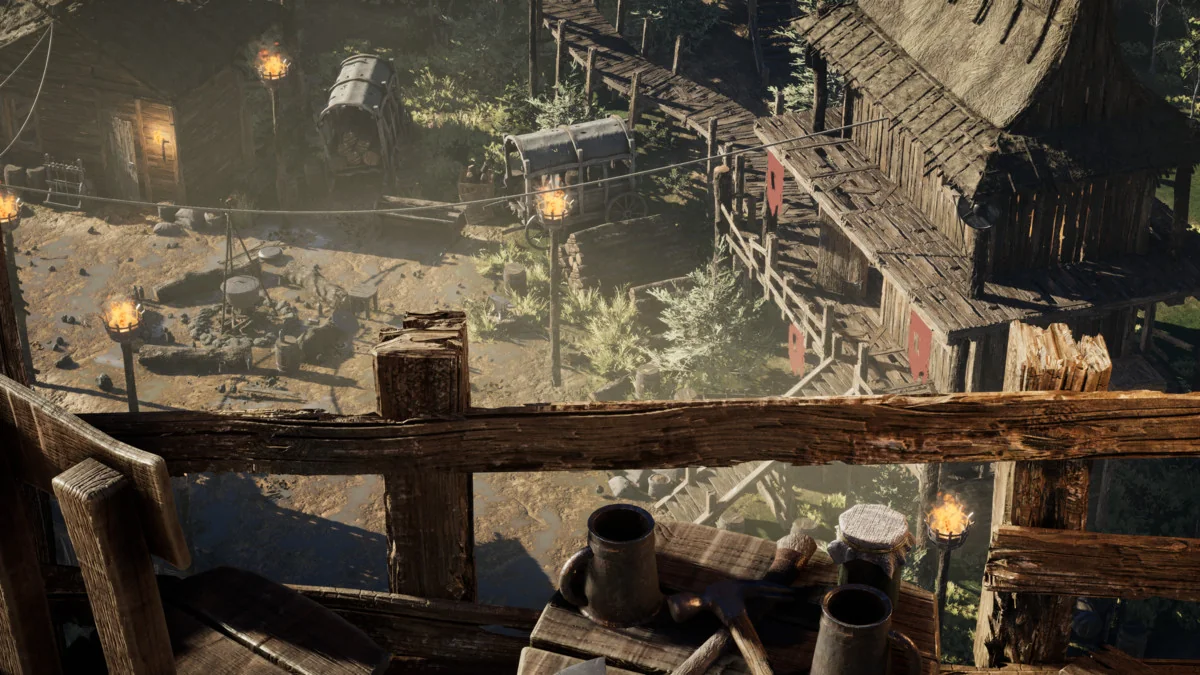
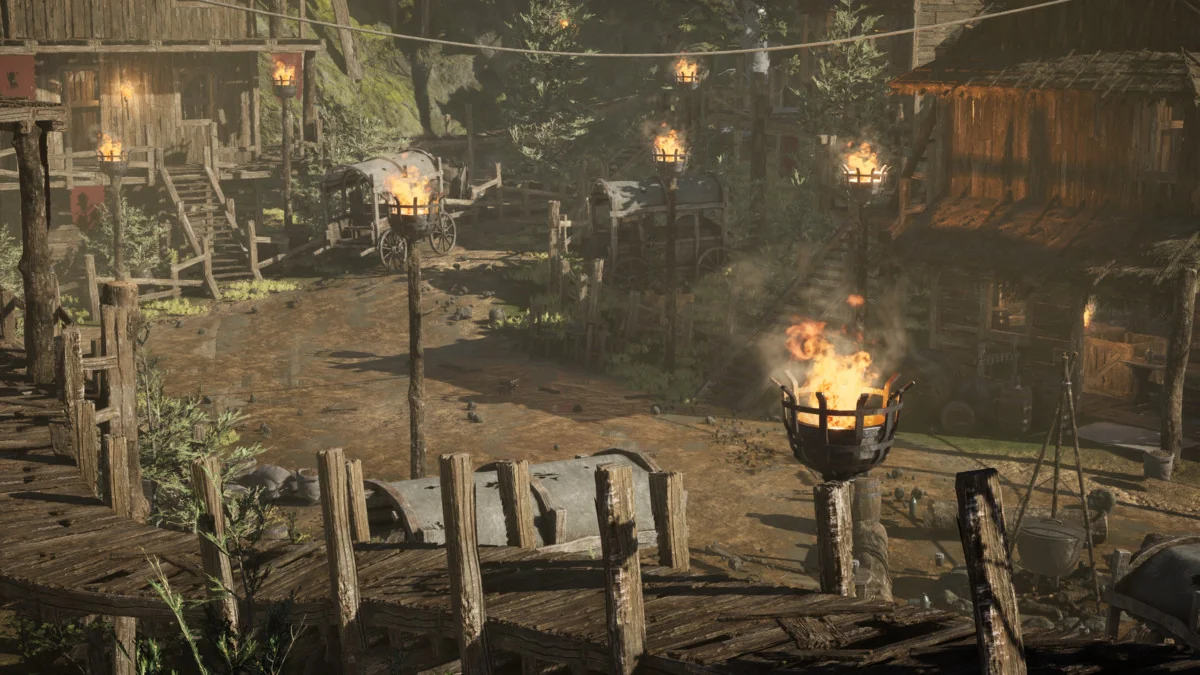
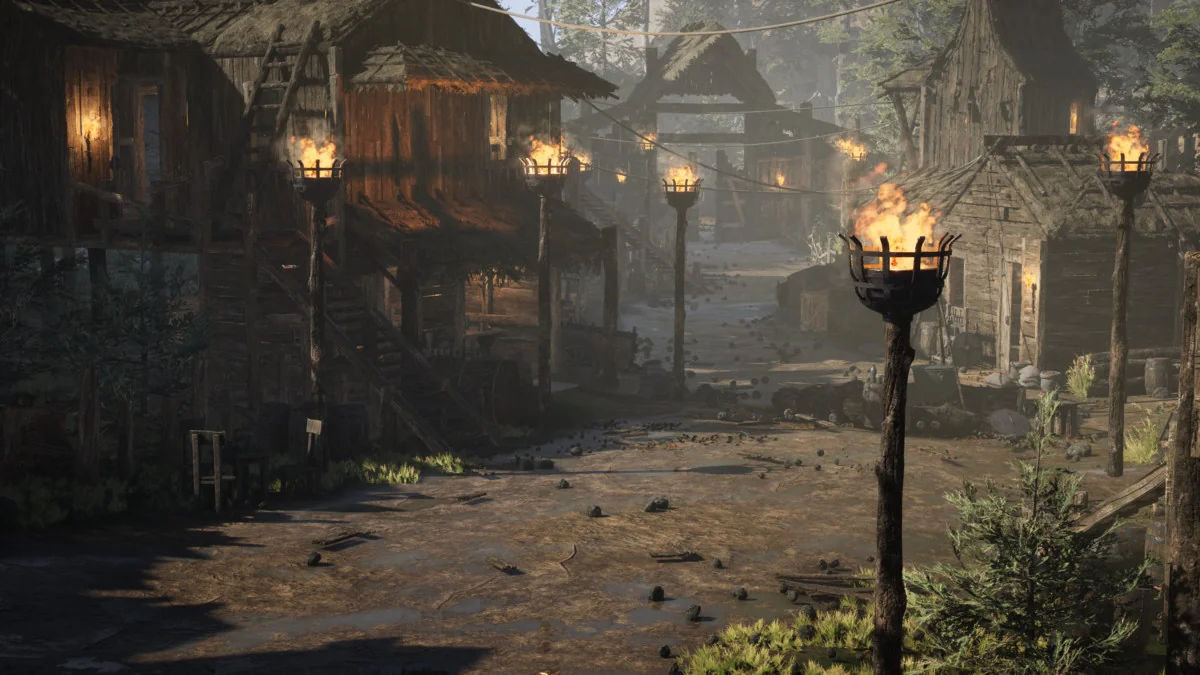
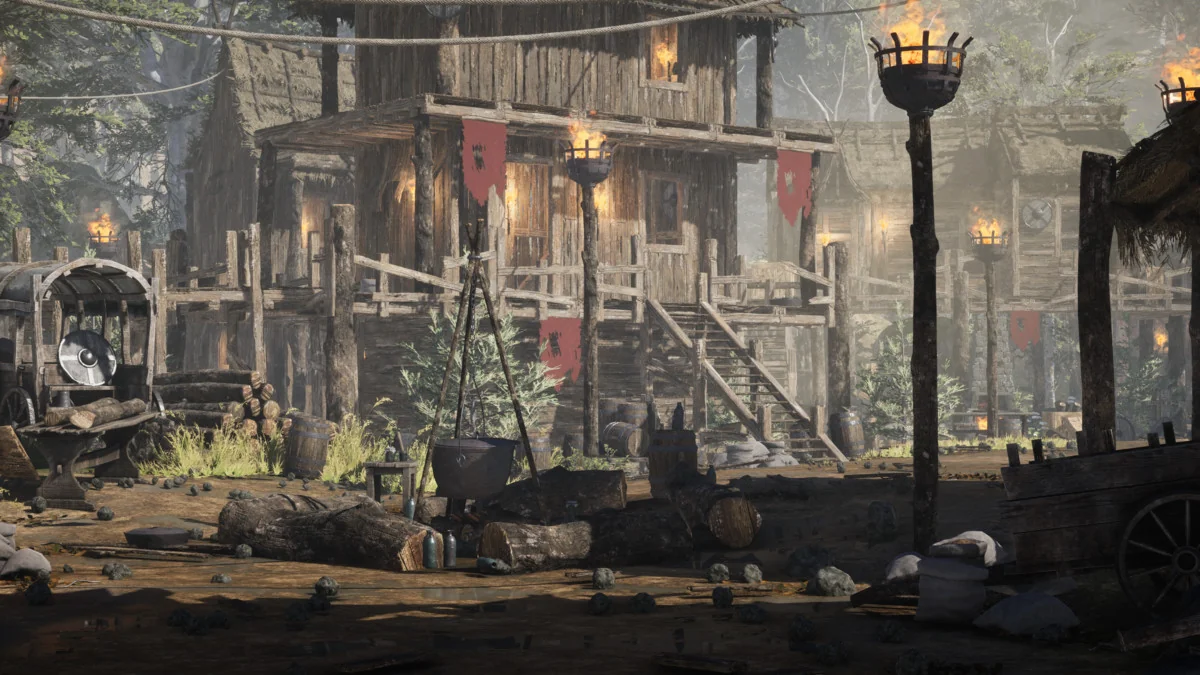
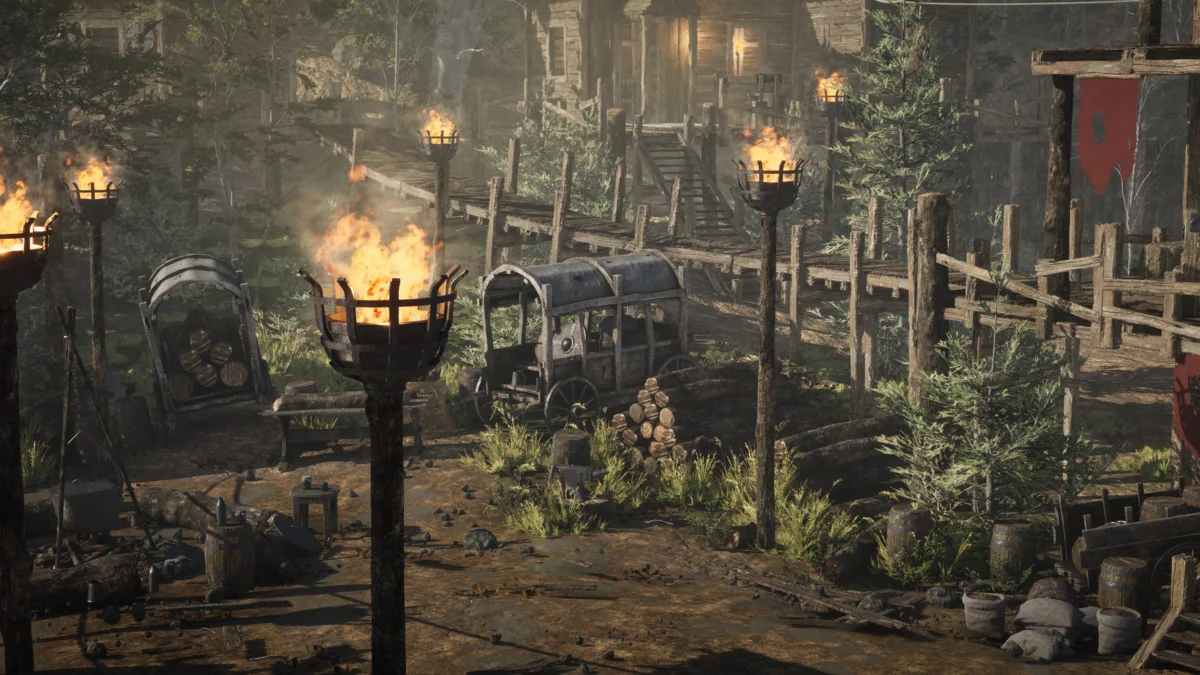
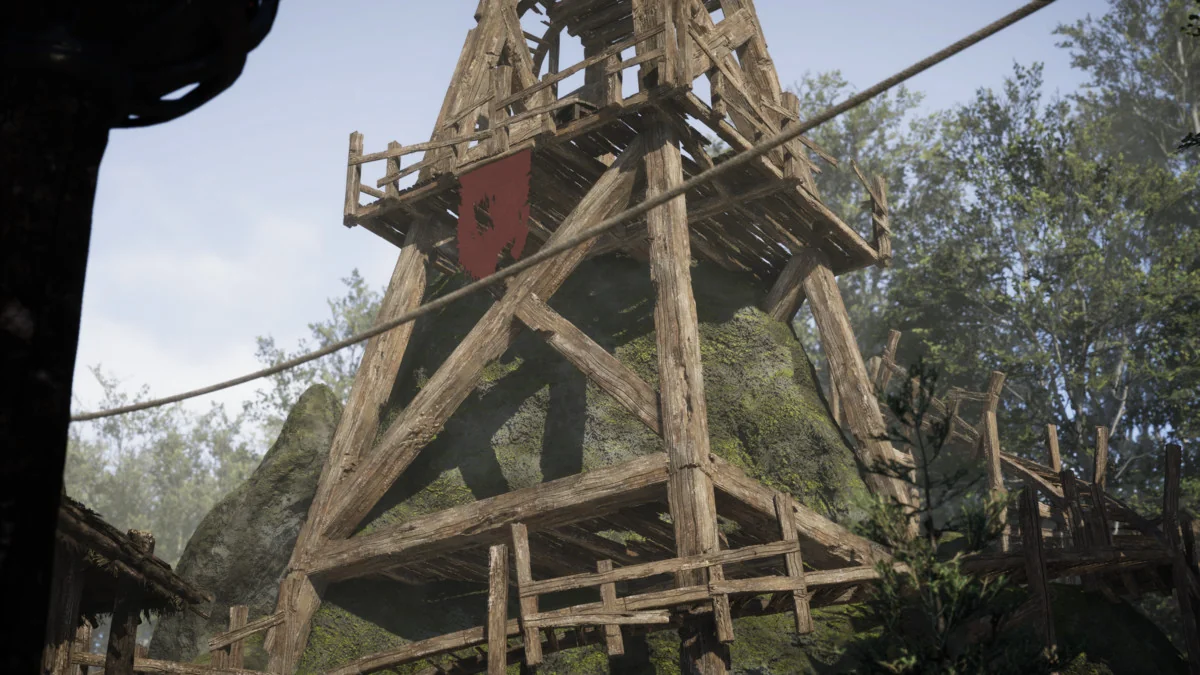
The Modular Medieval Bandit Village provides a toolkit for developers to build varied environments ranging from small outposts to sprawling medieval cities. With a library of 226 meshes, the set is designed around a modular system that allows for the assembly of unique structures. The flexibility of the kit ensures that creators are not limited to pre-built layouts but can instead customize the footprint and height of their buildings to suit specific level design requirements.
The asset supports diverse architectural themes, including bustling docks and hidden bandit camps. This variety allows for the creation of distinct districts within a single project, using the same underlying modular logic to maintain visual consistency across the scene. Whether assembling a harbor alive with the scent of saltwater or a secluded forest hideout, the structural components provide the necessary foundations for high-density fantasy settings.
Fully Enterable and Furnished Interiors
A central feature of this asset kit is the inclusion of fully enterable buildings. Every structure created with these modules can be explored internally, which is a critical requirement for games focusing on exploration or interior-based gameplay. To streamline the world-building process, these interiors come fully furnished. This removes the need for developers to manually populate every room with individual props, though the modular nature of the pack allows for customization if specific layouts are needed.
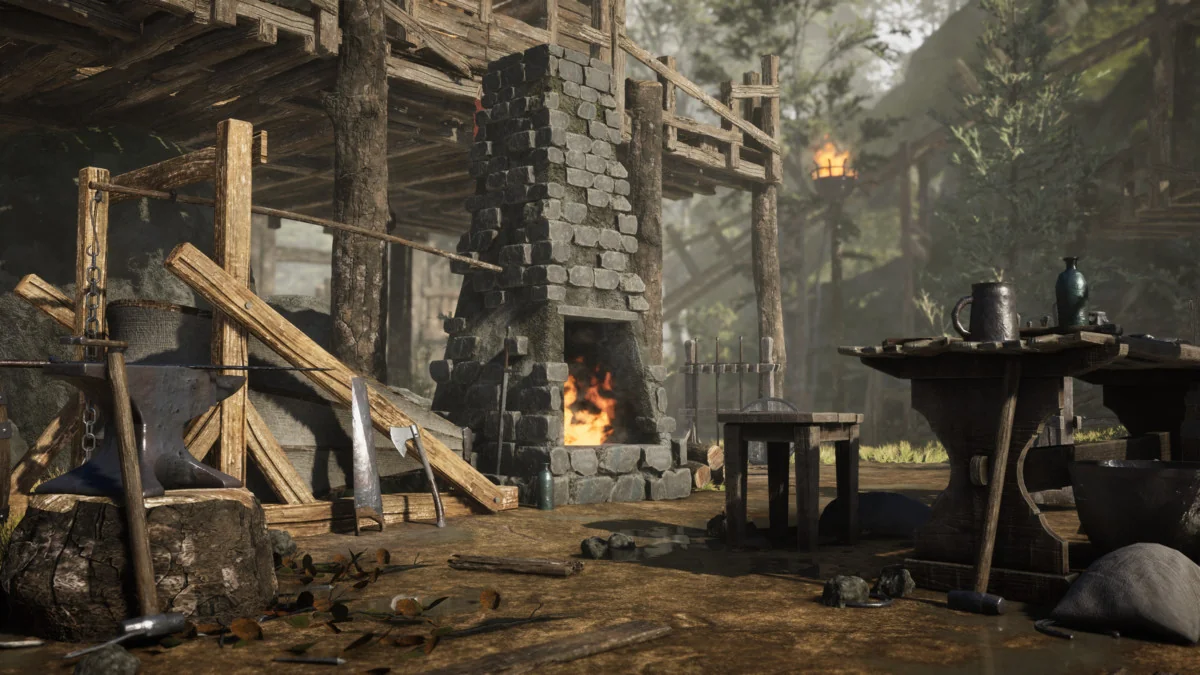
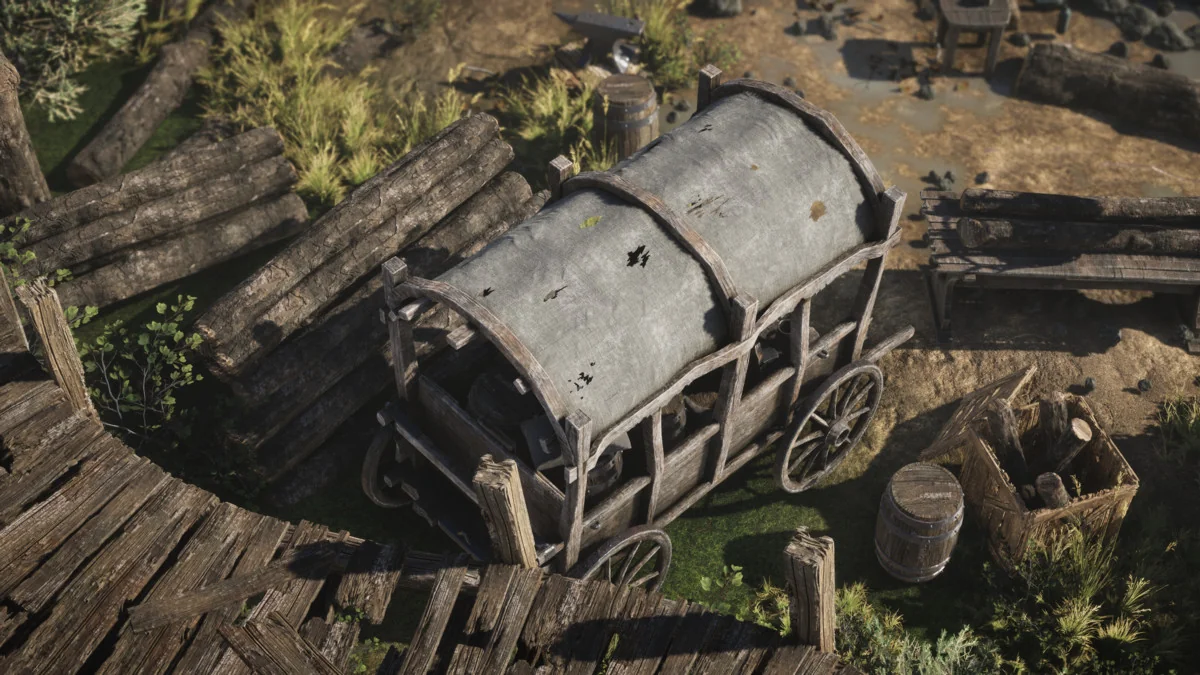
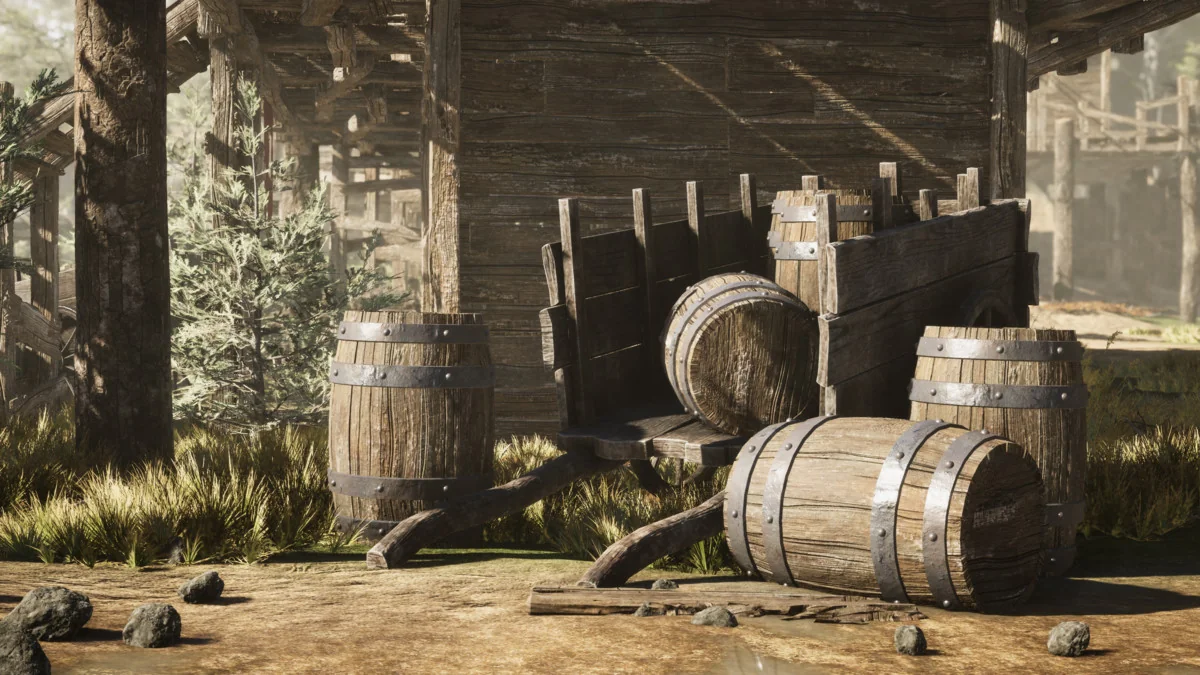
The interior environments are supported by a wide array of props that contribute to the medieval aesthetic. The mesh list includes functional and decorative items such as barrels, crates, logs, and planks. More specific tools and barricades, such as axes, gates, and fences, allow for the creation of lived-in spaces. These props use the same material standards as the architecture, ensuring that the transition from a building’s exterior to its interior remains seamless and visually coherent.
Technical Pipeline and Performance Settings
The Modular Medieval Bandit Village is built primarily for the High Definition Render Pipeline (HDRP) in Unity, utilizing High Fidelity settings for maximum visual quality. However, the package also includes a Universal Render Pipeline (URP) file, making it adaptable to different project requirements. Developers can switch between render pipelines by importing the included URP files as needed.
To balance visual fidelity with hardware performance, the developer has included several optimization features. The assets support up to five levels of Detail (LODs), allowing the engine to reduce the complexity of meshes as they move further from the camera. Vertex counts for the meshes range from as low as 30 for simple objects to 300,000 for more complex structures. Additionally, the project includes performance presets; while High Fidelity is the default for recording and rendering, developers can switch to Balanced or Performance settings to achieve higher frame rates in real-time applications.
Material Logic and Texture Management
The visual quality of the village is driven by a PBR-based material system. There are 44 materials included in the pack, each utilizing a standard set of texture maps to define surface properties. By default, every material contains a Base Texture and a Normal Texture. Depending on the specific material’s needs, additional maps for Smoothness, Ambient Occlusion, Metallic, and Opacity are provided to ensure realistic light interaction across wood, stone, and metal surfaces.
Texture resolution is handled with scalability in mind. The package contains 106 textures in total. Due to upload constraints, the primary textures provided in the initial package are reduced from 4K to 1K resolution. However, the developer provides access to the full 4K textures within a linked package for projects requiring maximum detail. These resolutions—ranging from 2048×2048 to 4096×4096—ensure that surfaces remain sharp even when viewed at close proximity, which is particularly important for the enterable interiors and detailed prop work.
Implementation and Compatibility
Designed for Unity version 2021.3.30 and higher, the asset is compatible with both Windows and Mac development platforms. The collision data is primarily generated within Unity using Box and Mesh Colliders, ensuring that the modular pieces interact correctly with physics systems and character controllers right out of the box.
The kit is delivered as a 5.1 GB unitypackage, encompassing a total asset count of 709 individual files including the meshes, materials, and textures. This comprehensive collection provides all the necessary components to move from a blank scene to a populated medieval town with functional, furnished interiors and optimized rendering setups across both major Unity pipelines.
Project Screenshots