"0283a5a6392d9fd6"{"id":"1000000","slug":"fgear-vehicle-physics","title":"FGear Vehicle Physics","category":"Engine Tools","engine":"5.1, 5.3 - 5.6","assetVersion":"1.6.1 - 1.8.3","engineVersion":"5.1, 5.3 - 5.6","tag":"Engine Tools","accent":"blue","visual":"mech","summary":"FGear Vehicle Physics is a custom vehicle physics solution for arcade and semi-arcade racing games, balancing realism, control, demos, docs, and example use.","platform":"Unreal Engine","publishedAt":"2026-05-19T08:25:16.034Z","updatedAt":"2026-05-19T14:42:25.560Z","sourceNotes":[],"fileContents":[],"compatibility":["Unreal Engine","Asset Version: 1.6.1 - 1.8.3","Engine version: 5.1, 5.3 - 5.6"],"featuredImage":{"alt":"FGear Vehicle Physics","src":"/wp-content/uploads/published/2026/05/5158990cfbe4-d351fdd6-e983-4b6d-b3d9-50ebc7959814-61b2dd7e26.webp"},"hasDownloadLink":true,"downloads":1,"terms":[{"taxonomy":"category","slug":"engine-tools-tools-and-plugins","name":"Engine Tools"}],"galleryImages":[{"src":"/wp-content/uploads/published/2026/05/a202a873403b-f5ec3d62-9c50-4ccc-a41b-4d958bd3e052-d0bf77b345.webp","alt":"FGear Vehicle Physics"},{"src":"/wp-content/uploads/published/2026/05/9762c21b28ef-50c7d9f1-6910-4815-b4cf-5da667ec406d-96a78cd3d7.webp","alt":"FGear Vehicle Physics"},{"src":"/wp-content/uploads/published/2026/05/a3e4f9b194d3-a1387e38-a598-4dce-9b5b-7017b443a27c-36eb60b9a2.webp","alt":"FGear Vehicle Physics"},{"src":"/wp-content/uploads/published/2026/05/469d6b30cb16-579a091e-d831-4382-b78d-9f55dc1cf0fa-a58c8ca386.webp","alt":"FGear Vehicle Physics"},{"src":"/wp-content/uploads/published/2026/05/62b35c5c3630-689f91ba-ff10-4d77-a577-d3b7ca1a5645-570e84ecac.webp","alt":"FGear Vehicle Physics"},{"src":"/wp-content/uploads/published/2026/05/bb660b32d195-4c16e326-75d7-4124-ae06-2e5f4be265c9-3f9df3d224.webp","alt":"FGear Vehicle Physics"},{"src":"/wp-content/uploads/published/2026/05/2ddd726ca016-952bf583-d8e7-4ba8-a207-30ed1624c2c0-d3d2d1706c.webp","alt":"FGear Vehicle Physics"}],"accessPanel":{"kind":"resource","title":"Access this resource","eyebrow":"Free Download","message":"Log in or create a free account to start your download.","fileName":"FGear Vehicle Physics.7z","safetyNote":"Resources are manually reviewed before listing to improve quality and reduce obvious risks.","actionLabel":"Download Free","resourceType":"Resource archive"},"contentHtml":"\u003cp\u003eCars in an arcade racer need to react quickly, stay readable to the player, and still feel grounded enough that steering, acceleration, and movement make sense on screen. FGear Vehicle Physics sits in that space. It is a custom vehicle physics solution intended to help build arcade or semi-arcade style racing games, with a stated balance between realism and ease of control.\u003c/p\u003e\n\u003cp\u003eThat balance is the clearest way to understand what this resource is trying to do. It is not framed as a pure simulation system. It is also not presented as a completely weightless driving model. The stated goal is a middle ground where vehicles can feel believable while still remaining manageable in a game context that depends on responsive handling.\u003c/p\u003e \u003ch2\u003eFGear Vehicle Physics and the driving feel it targets\u003c/h2\u003e\n\u003cp\u003eThe most important detail is its intended driving style. FGear Vehicle Physics is aimed at arcade or semi-arcade racing games. That immediately places it in a practical production category: projects where player control, accessible handling, and readable motion matter as much as physical credibility.\u003c/p\u003e\n\u003cp\u003eThe phrase about balancing realism and ease of control gives the resource its identity. In production terms, that suggests a workflow anchored in tuning a driving experience that feels stable and approachable without losing the visual and mechanical cues players expect from a car. For teams prototyping racers, vehicle sandboxes, or driving-focused interactions, that is a very different target from building a strict simulation model. The emphasis here is on creating vehicles that behave in a way players can quickly understand and use.\u003c/p\u003e\n\u003cp\u003eThat also shapes creative usage. A system meant for arcade and semi-arcade handling can support projects that need speed, clarity, and immediate response. It fits concepts where the vehicle is part of a game loop first, rather than an engineering study. The tags attached to it reinforce that direction: vehicle, car, automotive, industrial, custom, and simulation. Together they place the resource inside a car-focused development workflow while keeping the emphasis on a custom physics setup rather than a generic art asset.\u003c/p\u003e \u003ch2\u003eSetup and implementation through demos, documentation, and the example project\u003c/h2\u003e\n\u003cp\u003eFGear Vehicle Physics is presented with several kinds of supporting material, and those details matter because they sketch out the implementation path around the system. Demo links are available through a forum, there is a sandbox demo video, there are examples of projects using it, there is documentation in PDF form, and there is an example project.\u003c/p\u003e\n\u003cp\u003eEven without expanding beyond those stated items, this creates a practical structure for evaluation and setup. The demos provide a way to inspect how the driving model behaves in action. A sandbox demo video points toward an environment where the system can be observed in a more direct and isolated way, which is often where teams judge whether steering response, motion, and general handling match the tone of their game.\u003c/p\u003e\n\u003cp\u003eThe documentation is another concrete part of the workflow. A PDF manual suggests that the resource is not limited to visual examples alone. For implementation, this is relevant because vehicle physics systems usually need both demonstration and explanation. One shows behavior; the other helps a team understand how to work with the system in an actual project. The mention of a YouTube channel alongside the documentation adds another support layer anchored in walkthroughs or visual guidance.\u003c/p\u003e\n\u003cp\u003eThe example project is the strongest setup-oriented detail in the available information. An example project gives developers a direct reference point for how the system is put together in practice. For a custom vehicle physics solution, that can be as important as the raw feature set, because implementation quality often comes down to seeing a working arrangement rather than reading isolated notes. The example project suggests that teams are not left with only abstract descriptions of the handling model.\u003c/p\u003e \u003ch2\u003eSandbox demo video, forum demos, and projects using FGear\u003c/h2\u003e\n\u003cp\u003eThe support material is not limited to a single showcase. FGear Vehicle Physics is accompanied by demo links, a sandbox video, and examples of projects using it. Those three pieces serve different purposes when evaluating a vehicle system.\u003c/p\u003e\n\u003cp\u003eForum-based demos imply an ongoing place to review examples and test how the system has been presented in more than one context. That can help when the goal is not just to see whether a car moves, but to understand the range of behavior the system can support within the arcade and semi-arcade space.\u003c/p\u003e\n\u003cp\u003eThe sandbox demo video has a more focused role. A sandbox view usually strips a system down to its behavior in a contained environment. For vehicle physics, that is often the clearest way to judge the basics: whether the car’s motion reads cleanly, whether control feels manageable, and whether the overall presentation supports that stated midpoint between realism and accessibility.\u003c/p\u003e\n\u003cp\u003eThe mention of projects using FGear adds another angle. A physics solution can seem convincing in a controlled demo but still feel unproven in actual game work. By pointing to projects that use it, the resource gives developers a way to look at how the system carries over into finished or ongoing production contexts. That does not add new technical claims, but it does place the tool in a broader creative workflow beyond a single test scene.\u003c/p\u003e \u003ch2\u003eThe red sports car model is not part of the package\u003c/h2\u003e\n\u003cp\u003eOne of the most concrete production details is also one of the easiest to overlook: the red sports car model seen in the sandbox video is not included in the package or in the example project.\u003c/p\u003e\n\u003cp\u003eThis matters during evaluation because presentation can strongly influence expectations. A striking car model in a video can shape how a viewer reads the entire system, especially in vehicle-focused tools where visual design and motion are tightly linked. The explicit disclaimer separates the physics solution from that specific showcase model. Inside a project, teams should evaluate the driving system itself and not assume that the exact red sports car from the video is part of the included content.\u003c/p\u003e\n\u003cp\u003eThat distinction also helps keep implementation planning realistic. If a team is reviewing the sandbox material, the included physics workflow, documentation, and example project are the relevant parts to assess. The visual identity of the red sports car is not one of the deliverables. For anyone mapping out a production pipeline, that is a useful boundary between what demonstrates the system and what actually belongs to the working package.\u003c/p\u003e \u003ch2\u003eCustom vehicle physics for automotive and simulation-oriented game work\u003c/h2\u003e\n\u003cp\u003eThe attached tags give a concise but meaningful picture of where FGear Vehicle Physics sits. Vehicle, car, automotive, industrial, custom, and simulation all point back to a specific type of development need. This is not presented as an environment tool, a character system, or a visual effects pack. Its focus is squarely on car behavior within interactive projects.\u003c/p\u003e\n\u003cp\u003eThe word custom is especially important here. It identifies FGear as its own vehicle physics solution rather than a simple preset or a single sample scene. In the context of setup and implementation, that suggests a resource meant to become part of a game’s underlying driving logic. The simulation tag should also be read alongside the description of arcade and semi-arcade racing, because the system is positioned between strict realism and player-friendly control rather than at either extreme.\u003c/p\u003e\n\u003cp\u003eFor creative usage, that combination opens a clear lane. Projects that need automotive movement with responsiveness at the forefront are the natural fit. The industrial and automotive tags reinforce that the resource is vehicle-centered in both subject matter and function, while the core description keeps the focus on how that behavior should feel in action.\u003c/p\u003e \u003ch2\u003eWhat teams can verify before adopting FGear Vehicle Physics\u003c/h2\u003e\n\u003cp\u003eFGear Vehicle Physics presents a straightforward evaluation path. It is a custom vehicle physics solution for arcade or semi-arcade style racing games. Its defining claim is a balance between realism and ease of control. It is supported by demos, a sandbox demo video, documentation in PDF form, a YouTube channel, examples of projects using it, and an example project.\u003c/p\u003e\n\u003cp\u003eThe clearest practical takeaway is just as direct: review the behavior through the demos, study the documentation and example project for implementation, and do not expect the red sports car from the sandbox video to be included in the package or the example project.\u003c/p\u003e\n\n\u003ch2\u003eRelated Resources Worth Checking\u003c/h2\u003e\n\u003cul\u003e\n\u003cli\u003e\u003ca href=\"https://3dcghub.com/r-tune-vehicle-physics-2-0-vehicle-system-for-games-animation/\" title=\"R-Tune Vehicle Physics 2.0 - Vehicle System for Games \u0026amp; Animation\"\u003eR-Tune Vehicle Physics 2.0 - Vehicle System for Games \u0026amp; Animation\u003c/a\u003e\u003c/li\u003e\n\u003cli\u003e\u003ca href=\"https://3dcghub.com/advanced-fuel-system-multiplayer-vehicle-addon/\" title=\"Advanced Fuel System: Multiplayer Vehicle Addon\"\u003eAdvanced Fuel System: Multiplayer Vehicle Addon\u003c/a\u003e\u003c/li\u003e\n\u003cli\u003e\u003ca href=\"https://3dcghub.com/vehicles-gravity-template-vgt/\" title=\"Vehicles Gravity Template - VGT\"\u003eVehicles Gravity Template - VGT\u003c/a\u003e\u003c/li\u003e\n\u003cli\u003e\u003ca href=\"https://3dcghub.com/drivable-retro-car-farton/\" title=\"Drivable retro car \u0026quot;Farton\u0026quot;\"\u003eDrivable retro car \u0026quot;Farton\u0026quot;\u003c/a\u003e\u003c/li\u003e\n\u003cli\u003e\u003ca href=\"https://3dcghub.com/drift-car-mamba-drivable-and-customizable/\" title=\"Drift Car Mamba - Drivable and customizable\"\u003eDrift Car Mamba - Drivable and customizable\u003c/a\u003e\u003c/li\u003e\n\u003c/ul\u003e","contentTextLength":8902,"navigation":{"current":1487,"total":3354,"previous":{"id":"1000001","slug":"first-aid-set","title":"First Aid Set","category":"Tools, Objects \u0026 Decor","platform":"Unreal Engine","updatedAt":"2026-05-19T14:42:25.560Z"},"next":{"id":"28621","slug":"dystopia-airship","title":"Dystopia Airship","category":"Vehicles \u0026 Transportation","platform":"Unreal Engine","updatedAt":"2026-05-17T15:03:33.000Z"}},"relatedResources":[{"id":"14404","slug":"r-tune-vehicle-physics-2-0-vehicle-system-for-games-animation","title":"R-Tune Vehicle Physics 2.0 - Vehicle System for Games \u0026 Animation","category":"Engine Tools","engine":"5.5 - 5.6","assetVersion":"Engine version: 5.5 - 5.6","engineVersion":"Asset Version:1.3.2 - 2.0","tag":"Engine Tools","accent":"blue","visual":"animation","summary":"Discover R-Tune Vehicle Physics 2.0, a powerful and flexible vehicle system built from scratch in C++ for Unreal Engine 5. This system simplifies vehicle creation using static meshes and offers frame-rate independent physics for professional game development.","platform":"Unreal Engine","publishedAt":"2026-03-11T17:55:23.000Z","updatedAt":"2026-04-19T15:45:47.000Z","sourceNotes":[],"fileContents":[],"compatibility":["Unreal Engine","Engine version: 5.5 - 5.6","Asset Version: 1.3.2 - 2.0"],"featuredImage":{"alt":"R-Tune Vehicle Physics 2.0 - Vehicle System for Games \u0026 Animation","src":"https://3dcghub.com/wp-content/uploads/2026/03/402ca51c-6e8f-4369-b575-12014c2be5a0.webp"},"hasDownloadLink":true,"downloads":0},{"id":"1000781","slug":"advanced-vehicle-system-replicated-modular-vehicle-physics","title":"Advanced Vehicle System - [Replicated Modular Vehicle Physics]","category":"Engine Tools","engine":"4.26 - 5.7","assetVersion":"Asset Version: 1.2.7 - 1.4.5","engineVersion":"Engine Version: 4.26 - 5.7","tag":"Engine Tools","accent":"blue","visual":"mech","summary":"AVS Vehicle Physics bundles modular replicated driving, suspension, engine audio, tire smoke, skid marks, and trailer support into a single drop-in package.","platform":"Unreal Engine","publishedAt":"2026-07-30T10:29:04.441Z","updatedAt":"2026-07-30T10:29:04.441Z","sourceNotes":[],"fileContents":[],"compatibility":["Unreal Engine","Asset Version: 1.2.7 - 1.4.5","Engine Version: 4.26 - 5.7"],"featuredImage":{"alt":"Advanced Vehicle System - [Replicated Modular Vehicle Physics]","src":"/wp-content/uploads/published/2026/07/4b8b08c58b35-110cea5f-1d83-40f0-a17f-c6525039a95d-05124decc3.webp"},"hasDownloadLink":true,"downloads":1},{"id":"5090","slug":"drivable-retro-car-farton","title":"Drivable retro car \"Farton\"","category":"Vehicles \u0026 Transportation","engine":"5.0+","assetVersion":"Engine version: 5.0+","engineVersion":"5.0","tag":"Vehicles","accent":"blue","visual":"character","summary":"Enhance your Unreal Engine projects with the Farton retro car. This drivable vehicle features realistic Chaos physics, modular design, and vintage aesthetics.","platform":"Unreal Engine","publishedAt":"2026-02-14T17:39:17.000Z","updatedAt":"2026-04-19T15:57:01.000Z","sourceNotes":[],"fileContents":[],"compatibility":["Unreal Engine","Engine version: 5.0+"],"featuredImage":{"alt":"Drivable retro car \"Farton\"","src":"https://3dcghub.com/wp-content/uploads/2026/02/ee4dbe6d-e321-41b7-be25-32c344d48762.webp"},"hasDownloadLink":true,"downloads":1}]}
Engine Tools
FGear Vehicle Physics
FGear Vehicle Physics is a custom vehicle physics solution for arcade and semi-arcade racing games, balancing realism, control, demos, docs, and example use.
Cars in an arcade racer need to react quickly, stay readable to the player, and still feel grounded enough that steering, acceleration, and movement make sense on screen. FGear Vehicle Physics sits in that space. It is a custom vehicle physics solution intended to help build arcade or semi-arcade style racing games, with a stated balance between realism and ease of control.
That balance is the clearest way to understand what this resource is trying to do. It is not framed as a pure simulation system. It is also not presented as a completely weightless driving model. The stated goal is a middle ground where vehicles can feel believable while still remaining manageable in a game context that depends on responsive handling.
FGear Vehicle Physics and the driving feel it targets
The most important detail is its intended driving style. FGear Vehicle Physics is aimed at arcade or semi-arcade racing games. That immediately places it in a practical production category: projects where player control, accessible handling, and readable motion matter as much as physical credibility.
The phrase about balancing realism and ease of control gives the resource its identity. In production terms, that suggests a workflow anchored in tuning a driving experience that feels stable and approachable without losing the visual and mechanical cues players expect from a car. For teams prototyping racers, vehicle sandboxes, or driving-focused interactions, that is a very different target from building a strict simulation model. The emphasis here is on creating vehicles that behave in a way players can quickly understand and use.
That also shapes creative usage. A system meant for arcade and semi-arcade handling can support projects that need speed, clarity, and immediate response. It fits concepts where the vehicle is part of a game loop first, rather than an engineering study. The tags attached to it reinforce that direction: vehicle, car, automotive, industrial, custom, and simulation. Together they place the resource inside a car-focused development workflow while keeping the emphasis on a custom physics setup rather than a generic art asset.
Setup and implementation through demos, documentation, and the example project
FGear Vehicle Physics is presented with several kinds of supporting material, and those details matter because they sketch out the implementation path around the system. Demo links are available through a forum, there is a sandbox demo video, there are examples of projects using it, there is documentation in PDF form, and there is an example project.
Even without expanding beyond those stated items, this creates a practical structure for evaluation and setup. The demos provide a way to inspect how the driving model behaves in action. A sandbox demo video points toward an environment where the system can be observed in a more direct and isolated way, which is often where teams judge whether steering response, motion, and general handling match the tone of their game.
The documentation is another concrete part of the workflow. A PDF manual suggests that the resource is not limited to visual examples alone. For implementation, this is relevant because vehicle physics systems usually need both demonstration and explanation. One shows behavior; the other helps a team understand how to work with the system in an actual project. The mention of a YouTube channel alongside the documentation adds another support layer anchored in walkthroughs or visual guidance.
The example project is the strongest setup-oriented detail in the available information. An example project gives developers a direct reference point for how the system is put together in practice. For a custom vehicle physics solution, that can be as important as the raw feature set, because implementation quality often comes down to seeing a working arrangement rather than reading isolated notes. The example project suggests that teams are not left with only abstract descriptions of the handling model.
Sandbox demo video, forum demos, and projects using FGear
The support material is not limited to a single showcase. FGear Vehicle Physics is accompanied by demo links, a sandbox video, and examples of projects using it. Those three pieces serve different purposes when evaluating a vehicle system.
Forum-based demos imply an ongoing place to review examples and test how the system has been presented in more than one context. That can help when the goal is not just to see whether a car moves, but to understand the range of behavior the system can support within the arcade and semi-arcade space.
The sandbox demo video has a more focused role. A sandbox view usually strips a system down to its behavior in a contained environment. For vehicle physics, that is often the clearest way to judge the basics: whether the car’s motion reads cleanly, whether control feels manageable, and whether the overall presentation supports that stated midpoint between realism and accessibility.
The mention of projects using FGear adds another angle. A physics solution can seem convincing in a controlled demo but still feel unproven in actual game work. By pointing to projects that use it, the resource gives developers a way to look at how the system carries over into finished or ongoing production contexts. That does not add new technical claims, but it does place the tool in a broader creative workflow beyond a single test scene.
The red sports car model is not part of the package
One of the most concrete production details is also one of the easiest to overlook: the red sports car model seen in the sandbox video is not included in the package or in the example project.
This matters during evaluation because presentation can strongly influence expectations. A striking car model in a video can shape how a viewer reads the entire system, especially in vehicle-focused tools where visual design and motion are tightly linked. The explicit disclaimer separates the physics solution from that specific showcase model. Inside a project, teams should evaluate the driving system itself and not assume that the exact red sports car from the video is part of the included content.
That distinction also helps keep implementation planning realistic. If a team is reviewing the sandbox material, the included physics workflow, documentation, and example project are the relevant parts to assess. The visual identity of the red sports car is not one of the deliverables. For anyone mapping out a production pipeline, that is a useful boundary between what demonstrates the system and what actually belongs to the working package.
Custom vehicle physics for automotive and simulation-oriented game work
The attached tags give a concise but meaningful picture of where FGear Vehicle Physics sits. Vehicle, car, automotive, industrial, custom, and simulation all point back to a specific type of development need. This is not presented as an environment tool, a character system, or a visual effects pack. Its focus is squarely on car behavior within interactive projects.
The word custom is especially important here. It identifies FGear as its own vehicle physics solution rather than a simple preset or a single sample scene. In the context of setup and implementation, that suggests a resource meant to become part of a game’s underlying driving logic. The simulation tag should also be read alongside the description of arcade and semi-arcade racing, because the system is positioned between strict realism and player-friendly control rather than at either extreme.
For creative usage, that combination opens a clear lane. Projects that need automotive movement with responsiveness at the forefront are the natural fit. The industrial and automotive tags reinforce that the resource is vehicle-centered in both subject matter and function, while the core description keeps the focus on how that behavior should feel in action.
What teams can verify before adopting FGear Vehicle Physics
FGear Vehicle Physics presents a straightforward evaluation path. It is a custom vehicle physics solution for arcade or semi-arcade style racing games. Its defining claim is a balance between realism and ease of control. It is supported by demos, a sandbox demo video, documentation in PDF form, a YouTube channel, examples of projects using it, and an example project.
The clearest practical takeaway is just as direct: review the behavior through the demos, study the documentation and example project for implementation, and do not expect the red sports car from the sandbox video to be included in the package or the example project.
 Engine Tools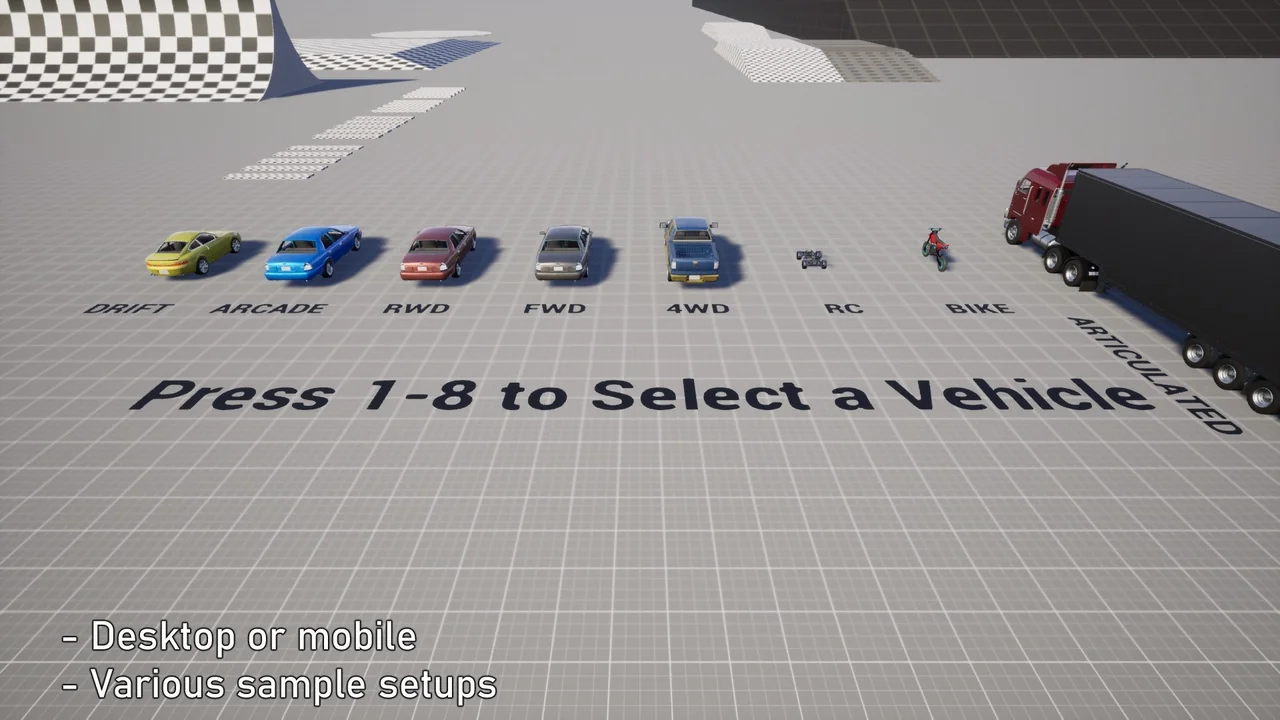
 Engine Tools
![Advanced Vehicle System - [Replicated Modular Vehicle Physics]](/_img/360/wp-content/uploads/published/2026/07/4b8b08c58b35-110cea5f-1d83-40f0-a17f-c6525039a95d-05124decc3.webp) Engine Tools
Engine Tools Vehicles