Enhance Your Combat with the Cinematic Duel System
The Cinematic Duel System is designed to help developers create high-impact, in-game duel encounters with ease. By focusing on cinematic presentation, this resource allows for dramatic shifts in gameplay pace. Consequently, users can deliver a more professional feel to their combat sequences without extensive manual coding.
One of the primary goals of this system is to simplify the development process. Many combat systems require complex setups; however, this tool prioritizes accessibility. Therefore, creators can spend less time on technical configuration and more time on the visual flow of their project.
Core Features and Mechanics
The Cinematic Duel System centers around a specific set of features that define its utility. These features are built to be intuitive for both the developer and the end-user. Below are the primary highlights of the system:
- Time-Freezing Combat: The system allows the player to fight enemies by freezing time. This creates a distinct cinematic effect during duels.
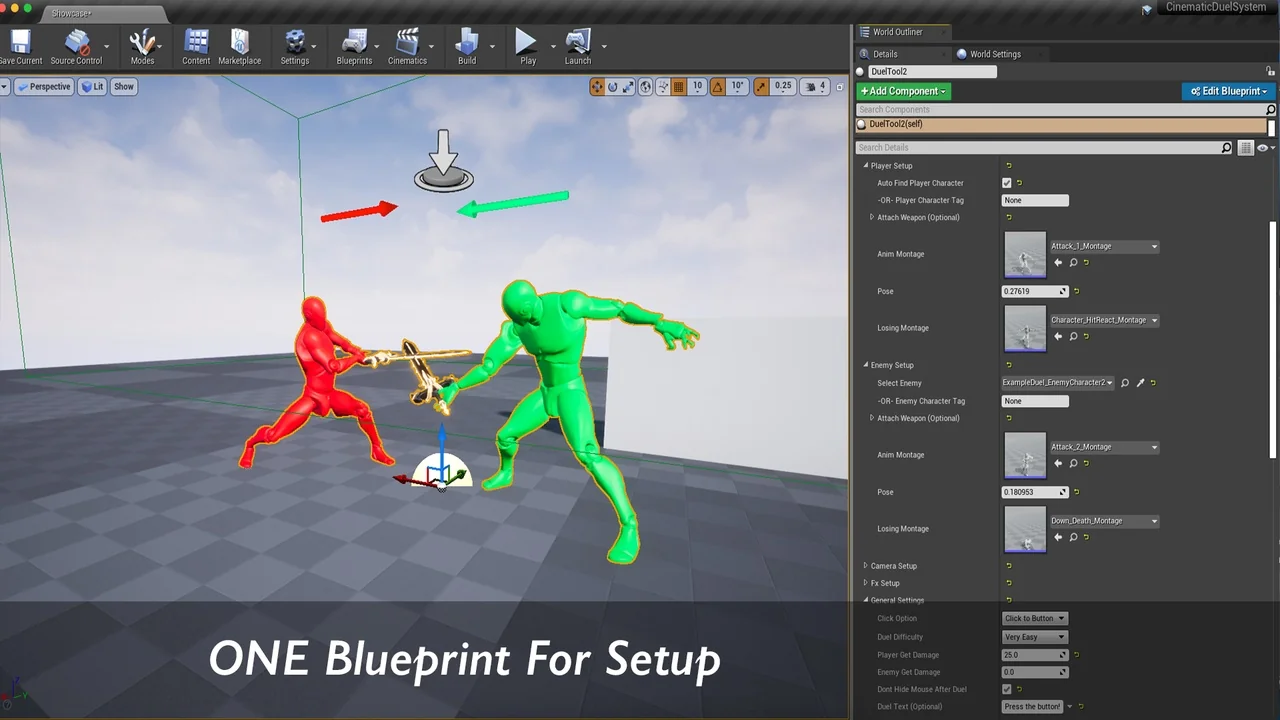
- Simplified Integration: You only need to add one blueprint to your level to get the system running.
- Visual Documentation: The creator provides documentation and video trailers to assist with the setup process.
- Integration Support: There are specific tutorials available for integrating this tool with other marketplace content.
Dynamic Time Manipulation
The Cinematic Duel System utilizes a time-freeze mechanic as its core gameplay hook. When a duel begins, the system manages the transition to ensure the combat feels impactful. Moreover, this feature allows players to engage with enemies in a controlled, cinematic environment. Because the time-freeze is handled through the system’s logic, the developer does not need to build these complex interactions from scratch.
Efficient Workflow and Setup
Efficiency is a major benefit of the Cinematic Duel System. The developer has streamlined the installation process significantly. Specifically, the entire system is activated by adding a single blueprint to the level. This “plug-and-play” approach is ideal for rapid prototyping or for developers who want to maintain a clean project hierarchy.
Furthermore, the system is designed to work alongside existing assets. The integration tutorials provide a clear path for combining this duel mechanic with other marketplace tools. Consequently, this ensures that your combat system remains cohesive even when using multiple third-party resources.
Conclusion
In summary, the Cinematic Duel System offers a straightforward solution for adding dramatic, time-frozen combat to any project. By utilizing a single-blueprint setup, it removes the technical barriers often associated with cinematic gameplay. Whether you are building a dedicated fighting game or a narrative-driven adventure, this system provides the tools necessary for professional-grade duels. Additionally, the included documentation ensures that developers can implement these features quickly and effectively.
Screenshots & Gallery