Modular Character Architecture and Customization
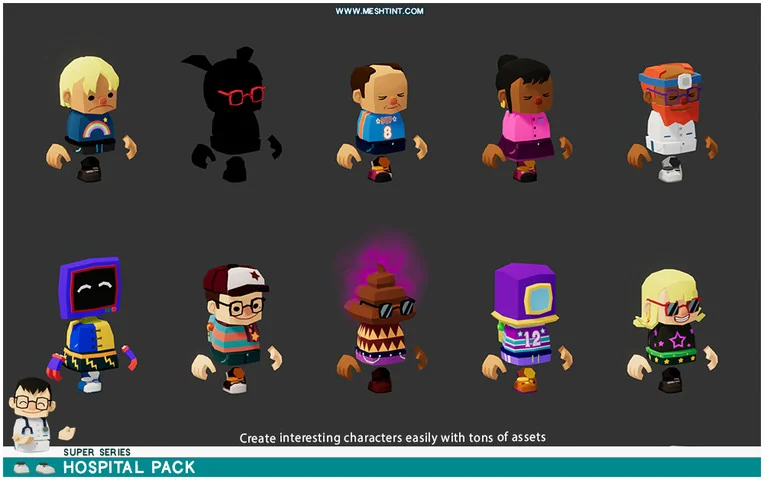
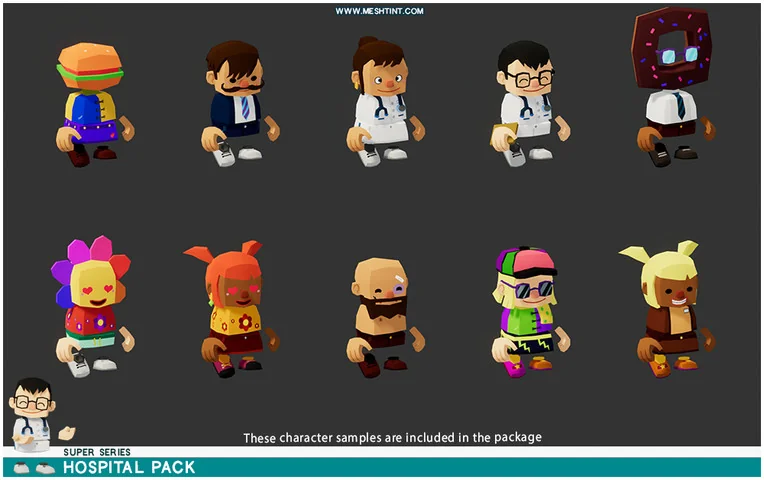
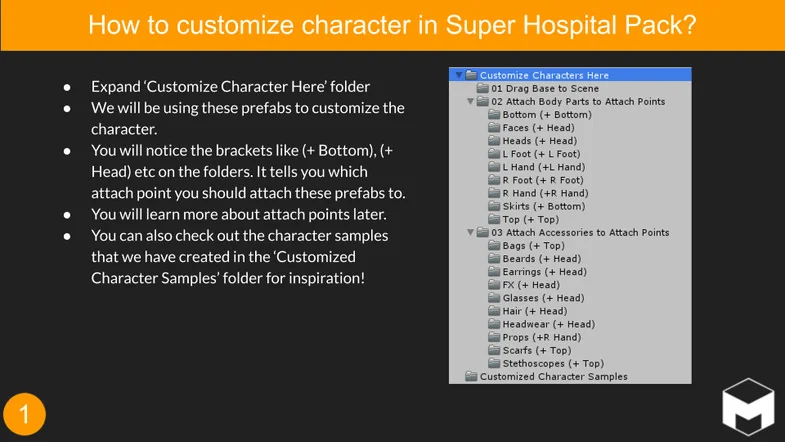
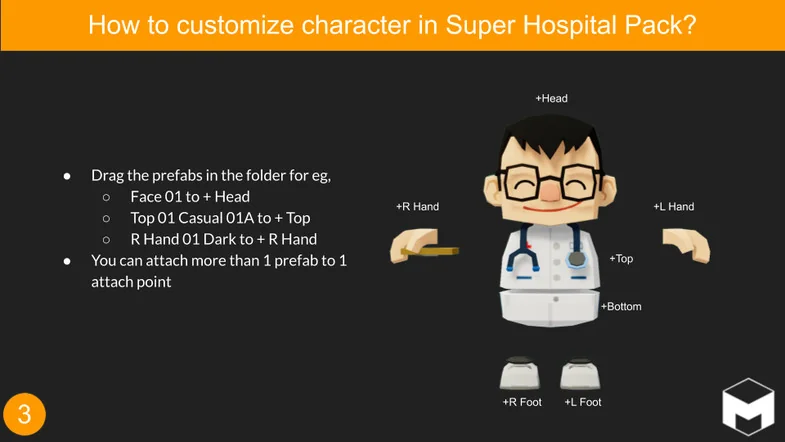
The Super Hospital Pack is designed around a modular philosophy that prioritizes ease of use for character creation. The package includes over 200 body part prefabs, which serve as the foundation for building unique medical staff or patient characters. These components are categorized into specific body segments including heads, faces, tops, bottoms, and skirts. The system also accounts for extremity details with separate prefabs for left and right hands as well as left and right feet.
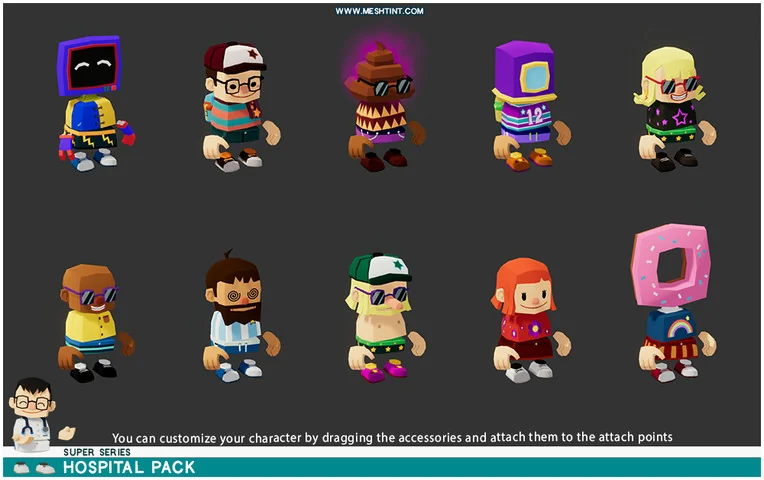
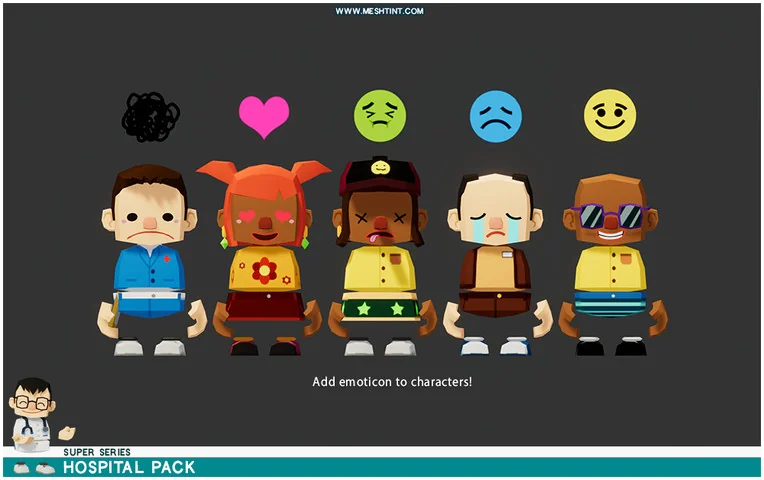
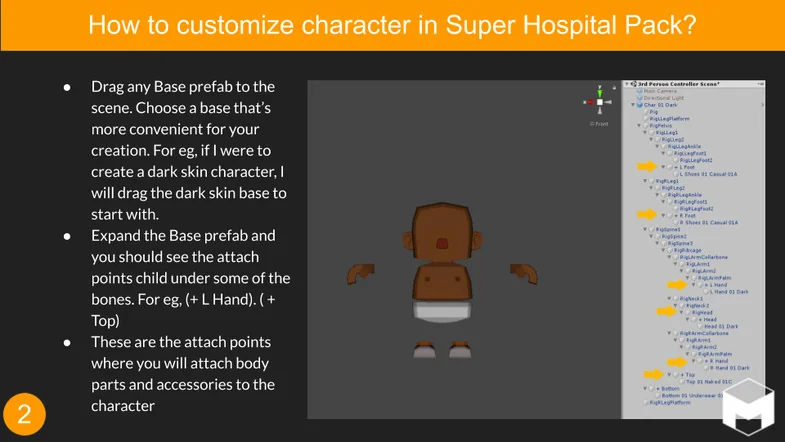
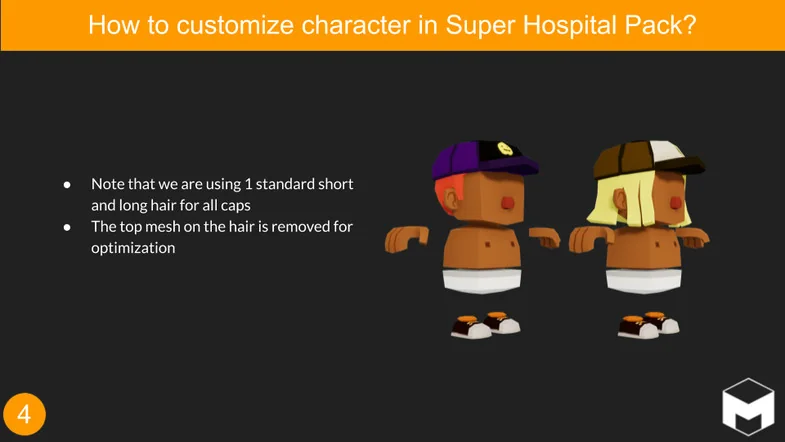
Customization is handled through a prefab-based attachment system. Users can drag specific parts onto designated attach points to modify the appearance of a character. This modularity is particularly useful for developers who wish to implement a character customization system through code, as the underlying structure supports the dynamic swapping of parts. Beyond basic body segments, the pack provides more than 200 accessory prefabs to further distinguish characters. These items include essential medical tools like stethoscopes and note folders, as well as general character accessories such as bags, beards, earrings, glasses, hair styles, headwear, and scarfs. The inclusion of special FX and utility items like a broom allows for a variety of roles to be filled within a hospital-themed scene.
Technical Mesh and Texture Specifications
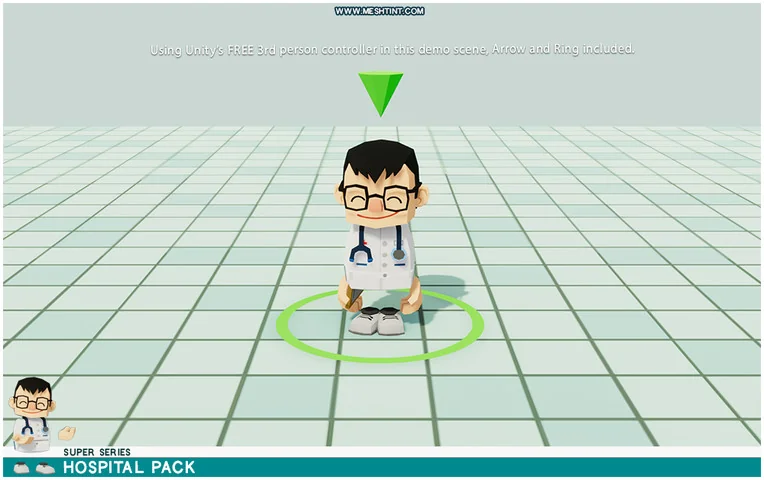
From a performance standpoint, the assets are optimized for real-time applications. A typical customized character in this collection consists of approximately 1,100 triangles, maintaining a low-poly count that favors performance in scenes with multiple active entities. The visual style is characterized as cartoony and cute, fitting within the broader aesthetic of the creator’s Super series assets.
The texturing workflow offers flexibility for different hardware targets. Within Unity, textures are pre-configured to 512 x 512 pixels or lower to ensure a small memory footprint. However, the source PSD texture files are provided at 1024 x 1024 resolution. This allows developers the option to upres the textures if higher visual fidelity is required for close-up shots or higher-end platforms. Most accessories and character components utilize different materials but share the ‘Standard’ shader, simplifying the rendering pipeline and ensuring consistency across the various modular parts.
Rigging and Animation Workflow
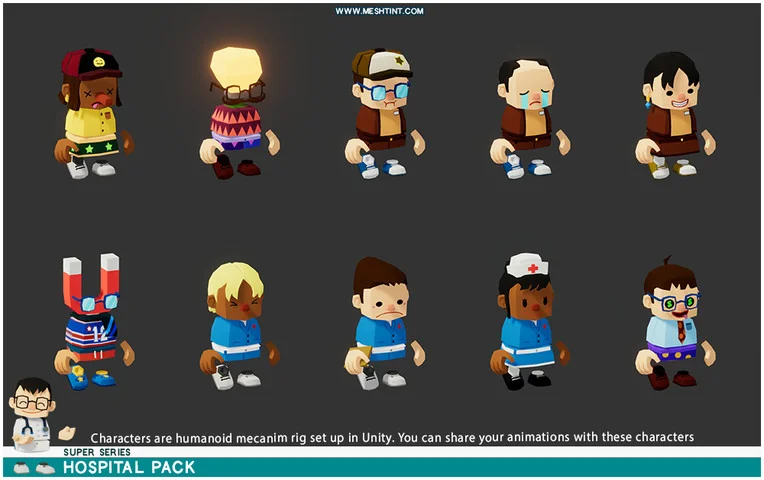
Characters in the Super Hospital Pack are set up using the Humanoid Mecanim rig in Unity. This standardized rigging choice ensures that the models are compatible with a wide range of animation sources. While the pack includes a specific set of animations intended for demonstration and basic interaction, the humanoid setup allows for the seamless integration of external animations from the Unity Asset Store or free libraries like Mixamo.
The included animation set covers several common hospital and social scenarios, provided in both ‘in place’ and ‘root’ motion formats where applicable. The available clips include:
- Standing States: Stand Idle, Stand Talk (two distinct poses), and a Stand Welcome pose.
- Seated Interactions: Sit Idle, Sit Idle Relaxed, Sit Idle looking left, and a Sit Idle working pose.
- Movement: Walk forward and Run forward, with both root motion and in-place versions provided for each.
- Medical Scenarios: Two variations of ‘Lay down flat’ poses, useful for patients on beds or gurneys.
Environment Construction and Scene Layout
The environment props included in the collection follow the same modular logic as the character system. These props are designed to be snapped together to create interior hospital layouts. To facilitate precise placement within the Unity editor, the developer suggests utilizing tools like Progrids to snap and align the modular environment pieces effectively. This approach allows for the rapid prototyping of hospital wings, wards, and corridors by reusing standardized environmental assets.
The Super Hospital Pack is part of a larger ecosystem of assets. Because it shares the same stylistic DNA as other entries in the Super series—such as the Super Ward Pack, Super Building Pack, and Super Halloween Pack—assets from these collections can be mixed and matched. This interoperability allows developers to expand their scenes beyond the hospital walls while maintaining a unified visual language across different environments and character types.
Practical Implementation Notes
When integrating these assets into a production pipeline, the modularity of the body parts and accessories remains the primary advantage. The ability to drag and drop prefabs onto attach points means that even without complex scripts, a diverse cast of NPCs or playable characters can be assembled quickly. For those with coding experience, the structured naming and attachment points provide a clear path for building automated character generators or player-facing customization menus. The combination of low-poly geometry and scalable textures makes the pack suitable for projects where maintaining a high frame rate is critical across a variety of hardware configurations.
Preview Images