Character Architecture and Component Breakdown
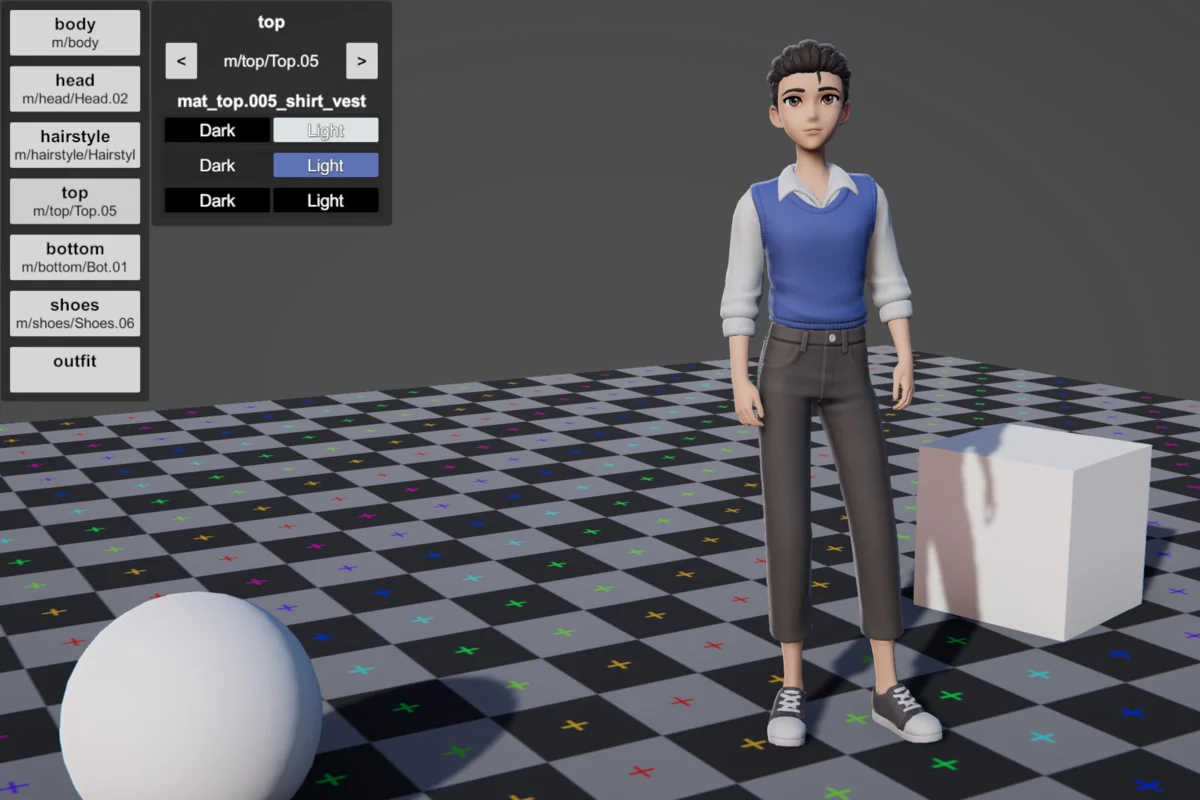
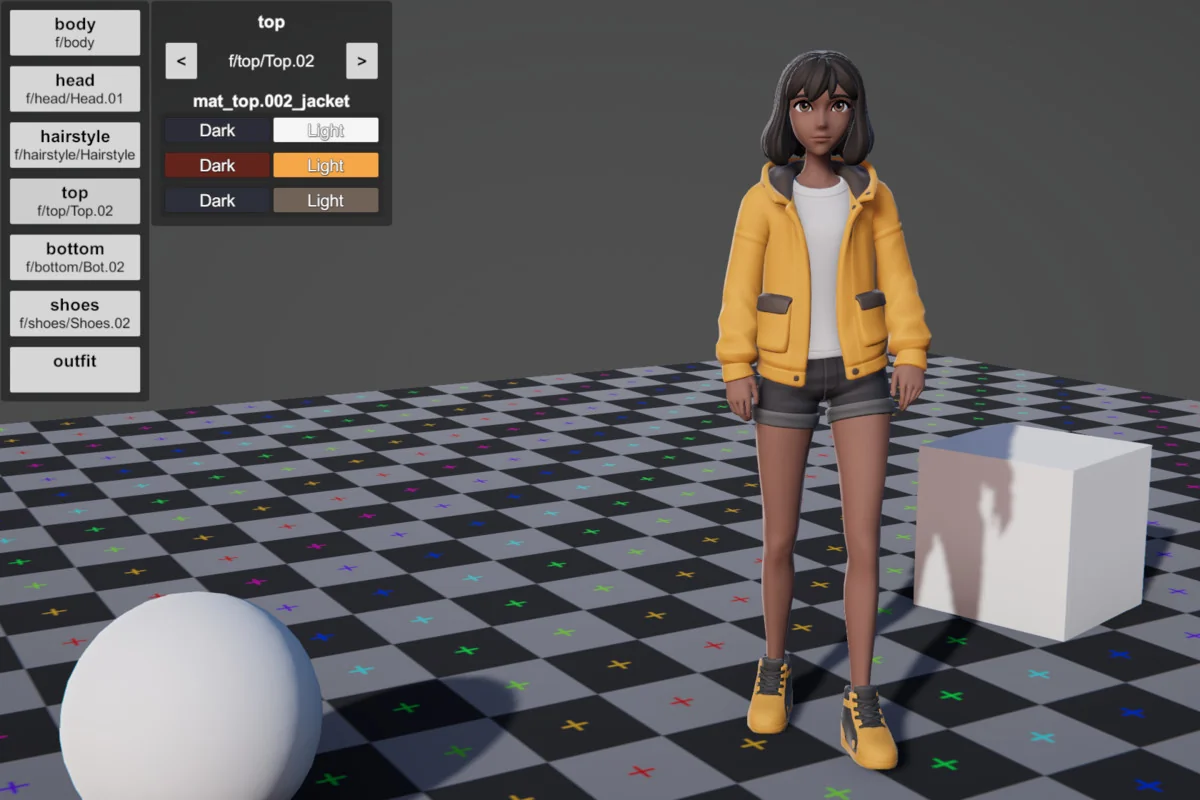
The Modular Stylized Character 1 provides a framework for creating diverse humanoid avatars through a system of interchangeable parts and body types. At its core, the package includes both male and female body types and rigs, serving as the foundation for a wide array of customization options. The asset includes 583 total assets, categorized into specific wardrobe and physical attributes to facilitate unique character combinations.
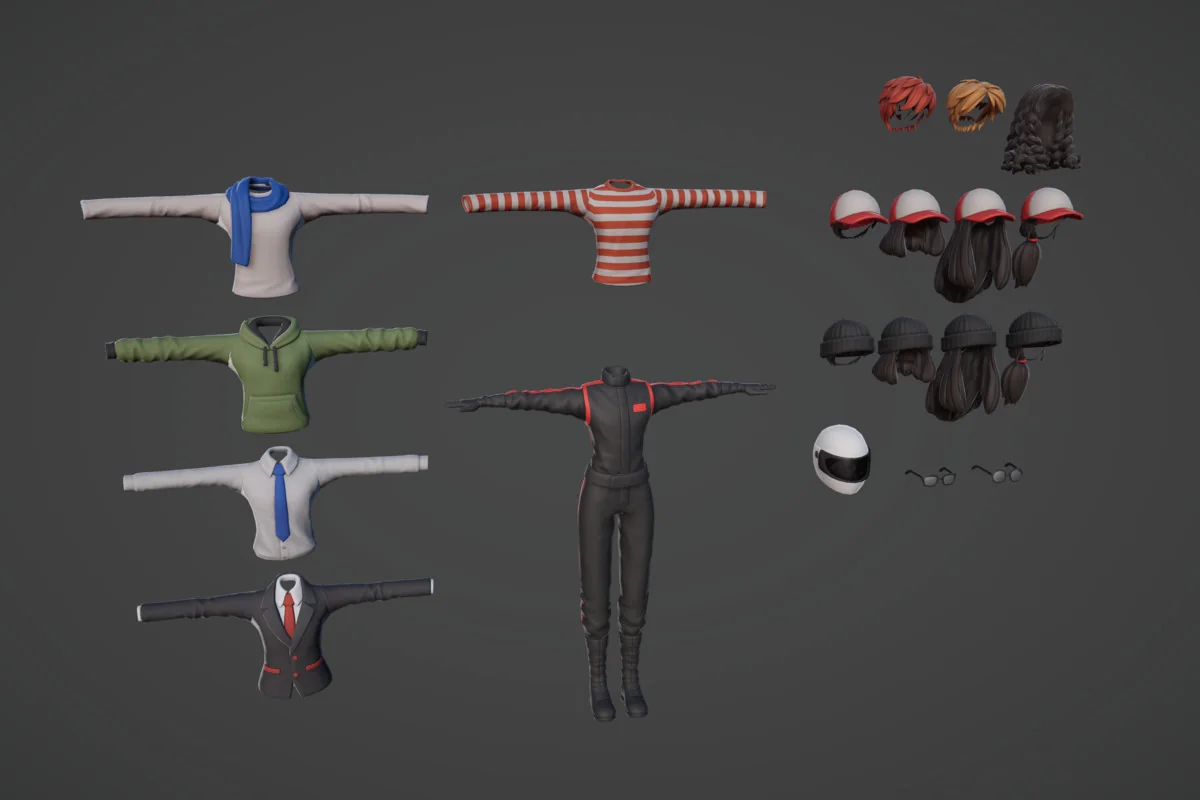
The visual variety is driven by 17 distinct hairstyles and 4 unique eye shapes. The wardrobe is divided into several layers, allowing for granular control over the final look. This includes 4 full-body outfits, 11 tops such as shirts and jackets, and 6 bottoms including pants, shorts, and skirts. For finishing details, the system provides 7 footwear options, 3 headwear pieces, and 2 types of eyeglasses. This modularity allows developers to mix and match individual components to avoid repetitive character designs in a project.
Rigging and Animation Framework
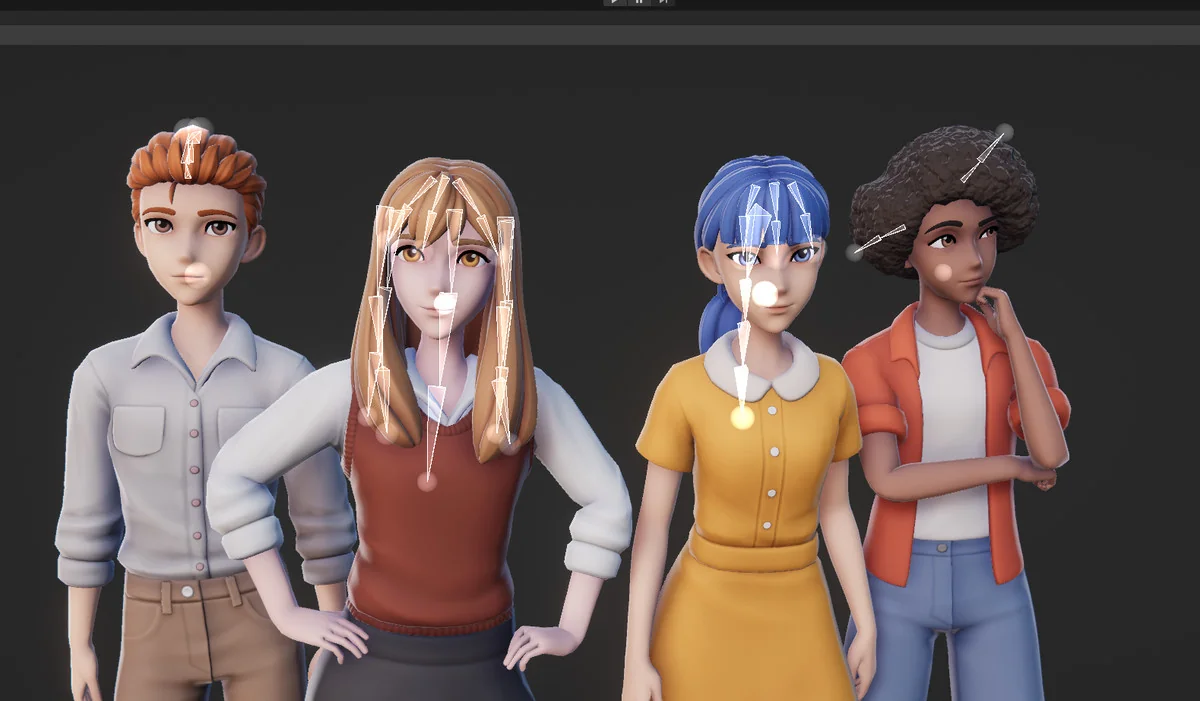
Implementation relies on a standard Humanoid rig, ensuring compatibility with external animation libraries like Mixamo. While the package does not include pre-made animations, the technical setup is designed to accept standard humanoid animation data immediately upon import. Beyond the primary body rig, the developer has included specialized rigs for hair objects. These dedicated rigs allow for dynamic hair movement or secondary animation, adding a layer of physical reactivity to the stylized models.
For facial animation, the character meshes are equipped with blendshapes for basic expressions. Furthermore, the inclusion of 10 specific phoneme blendshapes enables the implementation of lip-sync animations. This makes the characters suitable for dialogue-heavy scenes or cinematic sequences where synchronized mouth movement is required. In recent updates, the developer refined the female avatar’s skeletal structure, specifically fixing a previous issue where the neck twist bone was incorrectly assigned as the head bone.
Technical Shader Implementation
The visual identity of the characters is managed through a custom shader built with Unity’s Shader Graph. This shader requires the Shader Graph package to function and is compatible with the Built-in, HDRP, and URP pipelines. The system relies on a mask-based approach for color customization. Each piece of the outfit can have up to three distinct colors assigned to it, with each color mapped to a specific channel within a mask texture.
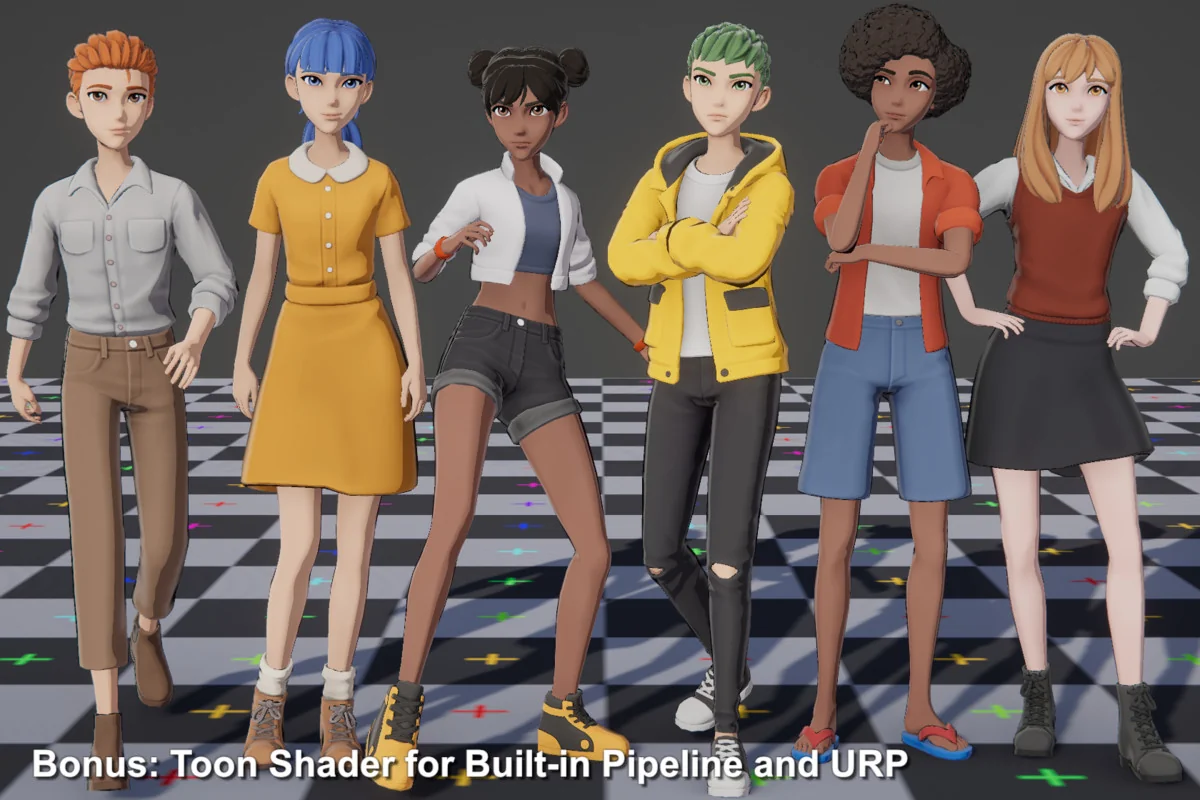
The material setup uses two primary textures per customizable part: a Normal texture and a Mask texture. The mask defines which areas of the mesh correspond to the three color channels in the shader. For users working within the Built-in or Universal Render Pipeline (URP), a toon variation of the shader is also available to achieve a specific non-photorealistic aesthetic. All customization scenes provided in the sample data utilize Unity’s Post-processing Stack v2 for final visual grading.
Mesh Optimization and Texture Specifications
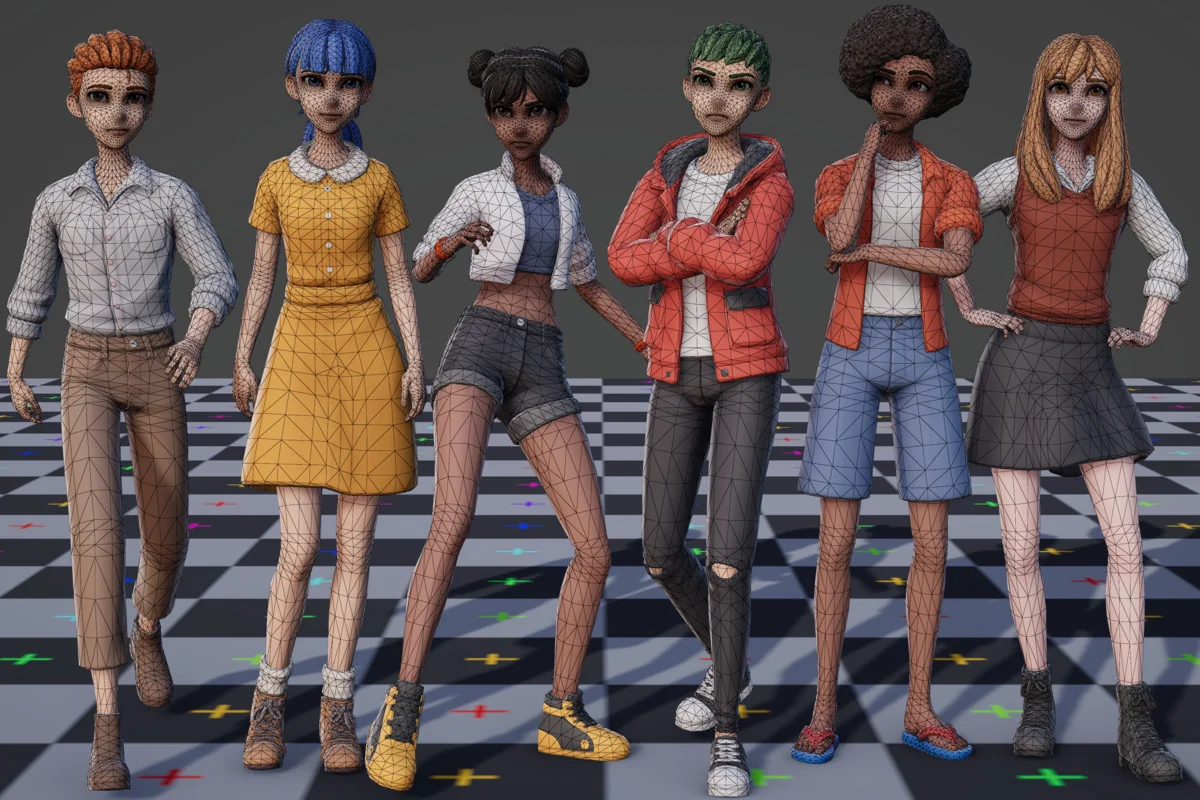
Performance is managed through varied polygon counts and texture resolutions tailored to specific body parts. The total polycount for a character ranges from 11,000 to 22,000 triangles, depending on the complexity of the chosen outfit and accessory combination. This range balances visual fidelity for stylized projects with the performance requirements of real-time rendering.
Texture resolutions are distributed based on the visual importance and surface area of the components:
- Body and Outfits: 1024×1024 to 2048×2048 textures.
- Hairstyles: 1024×1024 textures.
- Footwear: 512×512 textures.
- Eyes, Eyebrows, and Mouth: 256×256 textures.
In version 2.0.3, the mesh structure underwent significant reorganization. The head mesh was separated from the lower neck, and the body material was removed from the head mesh to allow for cleaner material assignments. This update also included a complete rebake of the body and head textures alongside reorganized UVs to improve visual quality and compatibility.
Cross-Package Compatibility and Maintenance
The Modular Stylized Character 1 is designed to integrate with subsequent releases from the developer. Recent mesh adjustments to the head and body ensure that parts from this package can be combined with those from the “Modular Stylized Character 2” collection. This interoperability extends the lifespan of the assets as a project scales in scope.
Recent technical fixes have addressed stability issues within the customization demo. For instance, an issue was resolved where meshes would disappear prematurely before leaving the camera’s bounds; this was caused by an incorrect initialization of the Skinned Mesh Renderer’s bounds. Additionally, distortions in eye-related blendshapes for specific head types (Head 02) have been corrected to ensure consistent facial deformation during animation. These refinements ensure that the character system remains functional within the Unity 2021.3.38 environment and across its supported render pipelines.
Asset Gallery