Stylized Botanical Diversity in Low Poly Environments
The Low Poly Plant Collections provides a comprehensive library of over 50 stylized, hand-painted plant assets designed specifically for use within the Unity engine. These assets are constructed to support a range of ecological scenes, from manicured gardens to wild, overgrown fields. The collection is categorized into several distinct groups, including flowering plants, shrubs, ground scattering details, and larger leafy vegetation. By utilizing a hand-painted aesthetic, the collection offers a cohesive visual style that avoids the clinical look of photorealistic scans, favoring instead a vibrant, artistic representation of nature.
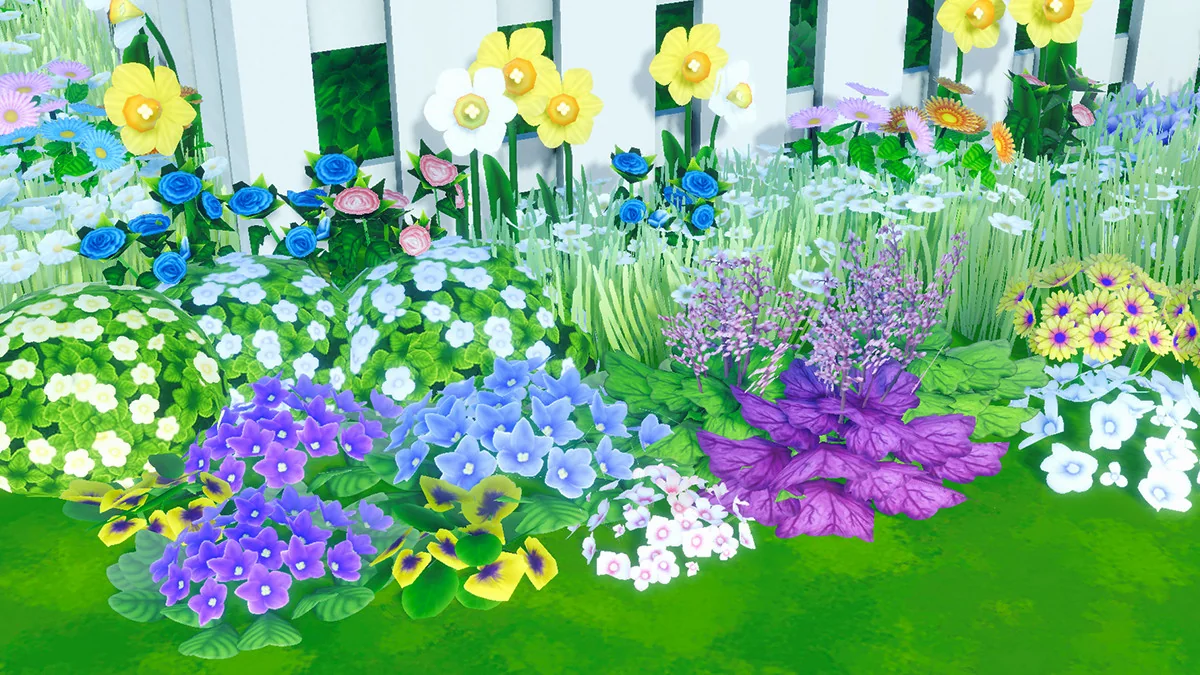
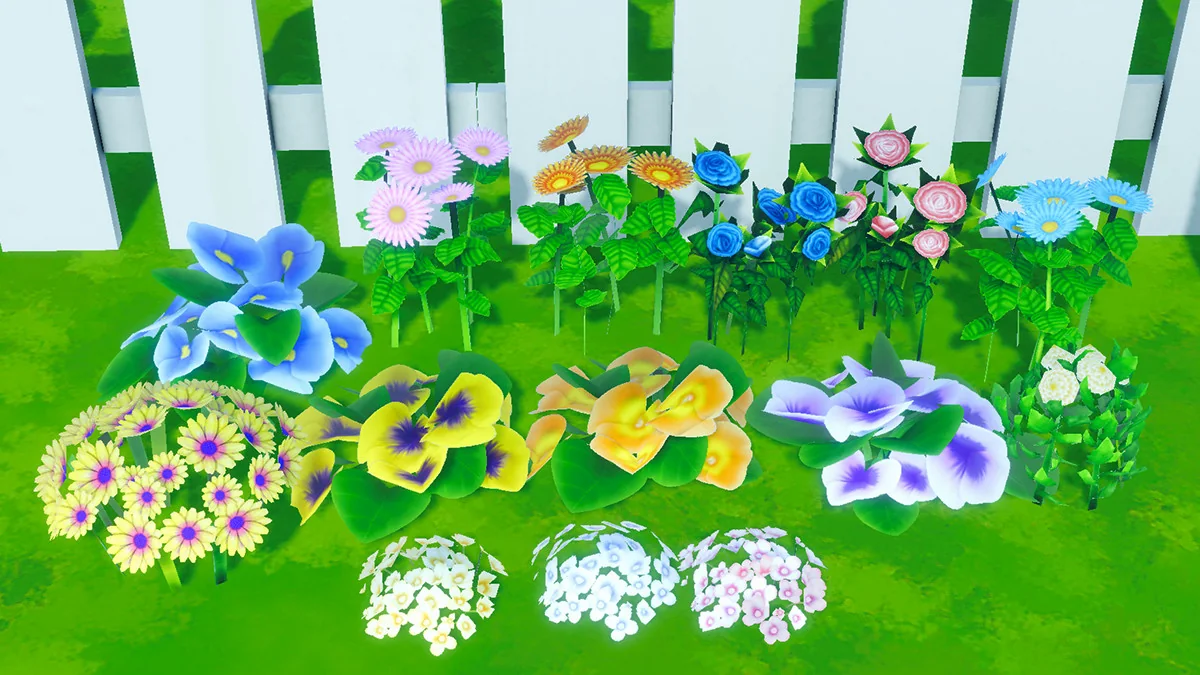
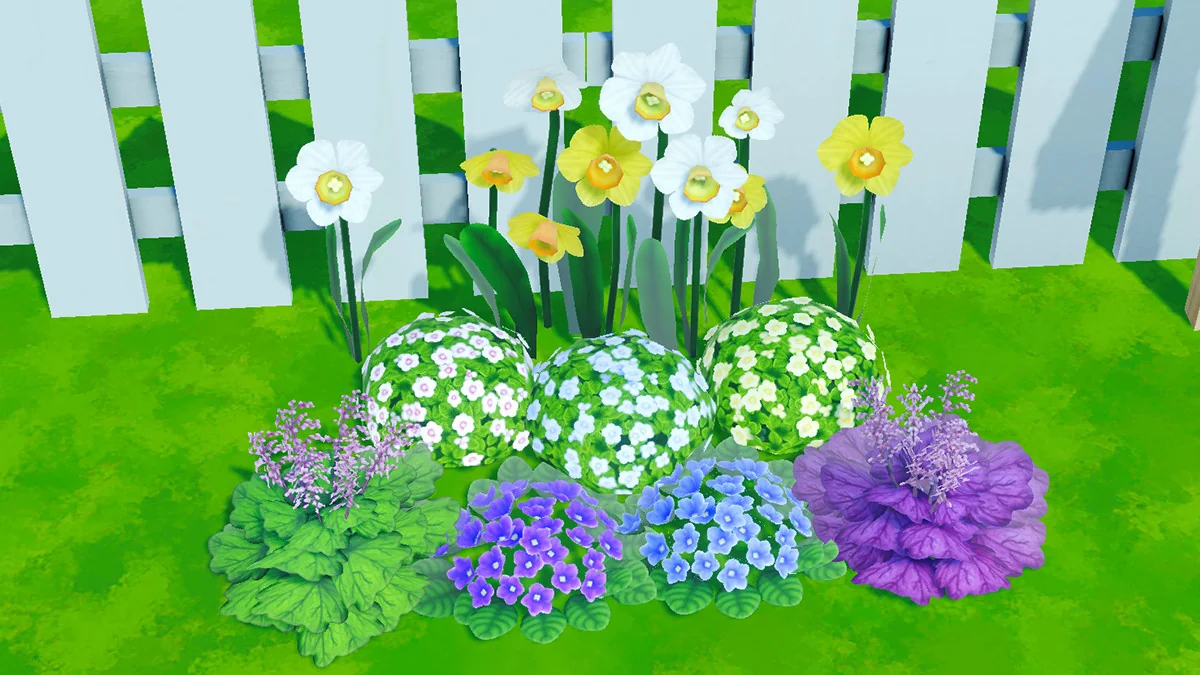
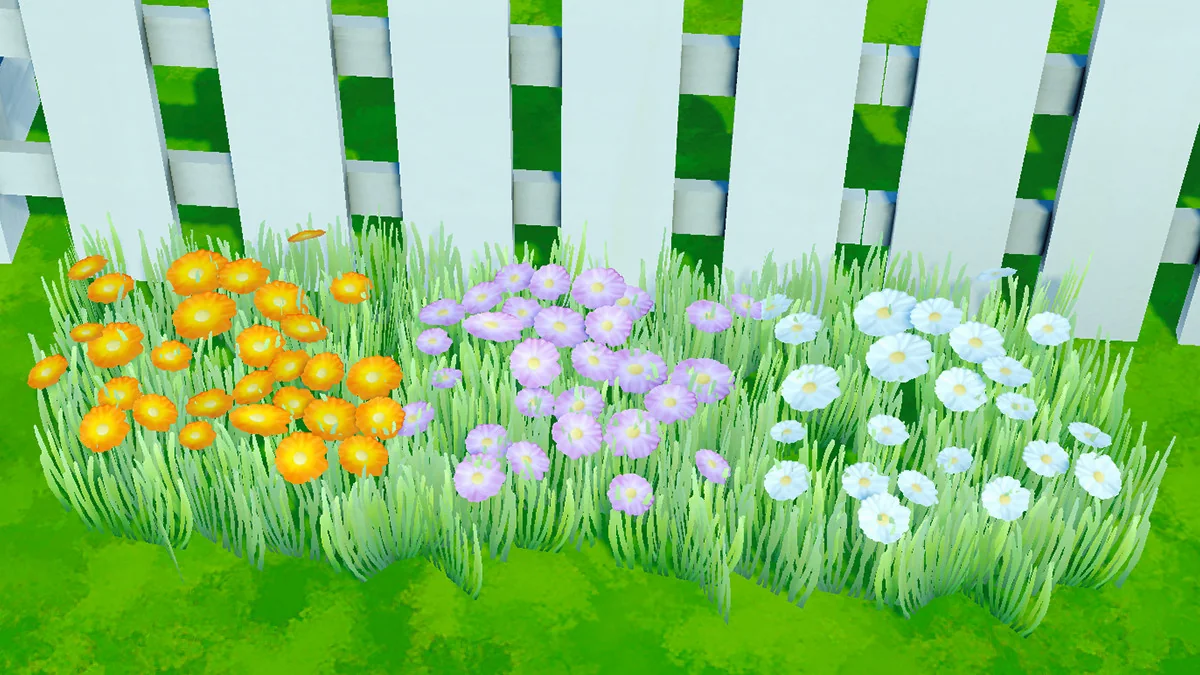
The variety within the flower categories is extensive. The first volume of flowers includes a wide spectrum of colors and species such as Yellow Daisies, Red Roses, Blue Roses, and several variations of Violets including Tangerine, Sun, Indigo, and Purple. This volume also introduces specific species like the Yellow Dahlia, Yellow African Daisy, and the Purple Aster. These models allow developers to populate scenes with distinct floral accents that maintain a consistent art style. The second flower volume expands this further by adding Busy Lizzie, Coral Bells, African Violet, and Daffodils, providing more specialized shapes and silhouettes for foreground or garden-focused layouts.
Technical Efficiency and LOD Implementation
Performance optimization is a central focus of these collections, as evidenced by the integration of Level of Detail (LOD) systems for the plants. The geometric complexity of the models is kept within a specific range to ensure high frame rates even when rendering large quantities of vegetation. For instance, the first flower volume features quad counts ranging from as low as 27 quads to a maximum of 730 quads, depending on the complexity of the bloom and foliage. The second volume follows a similar logic, with quad counts between 104 and 693.
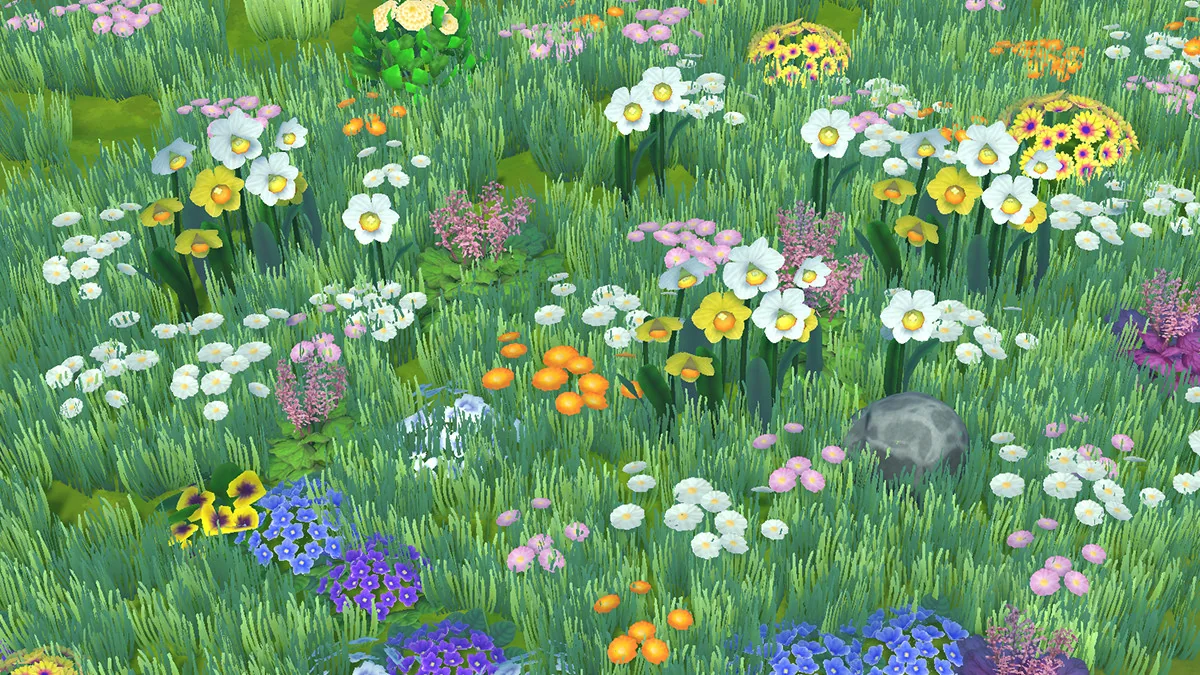
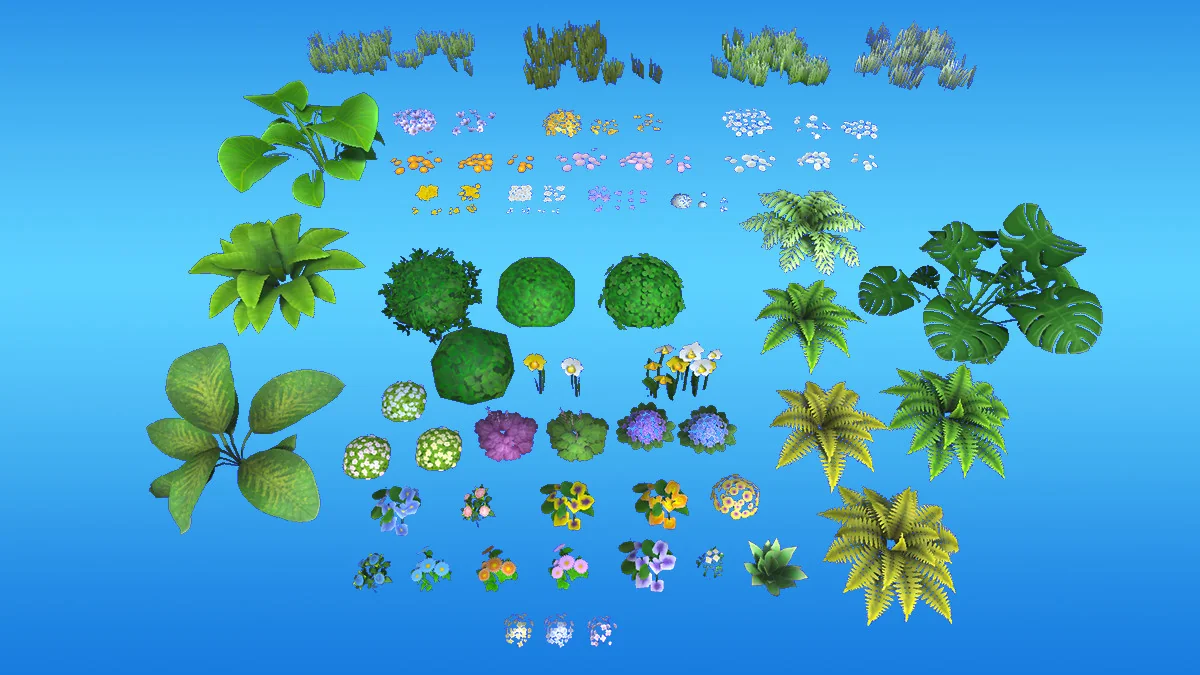
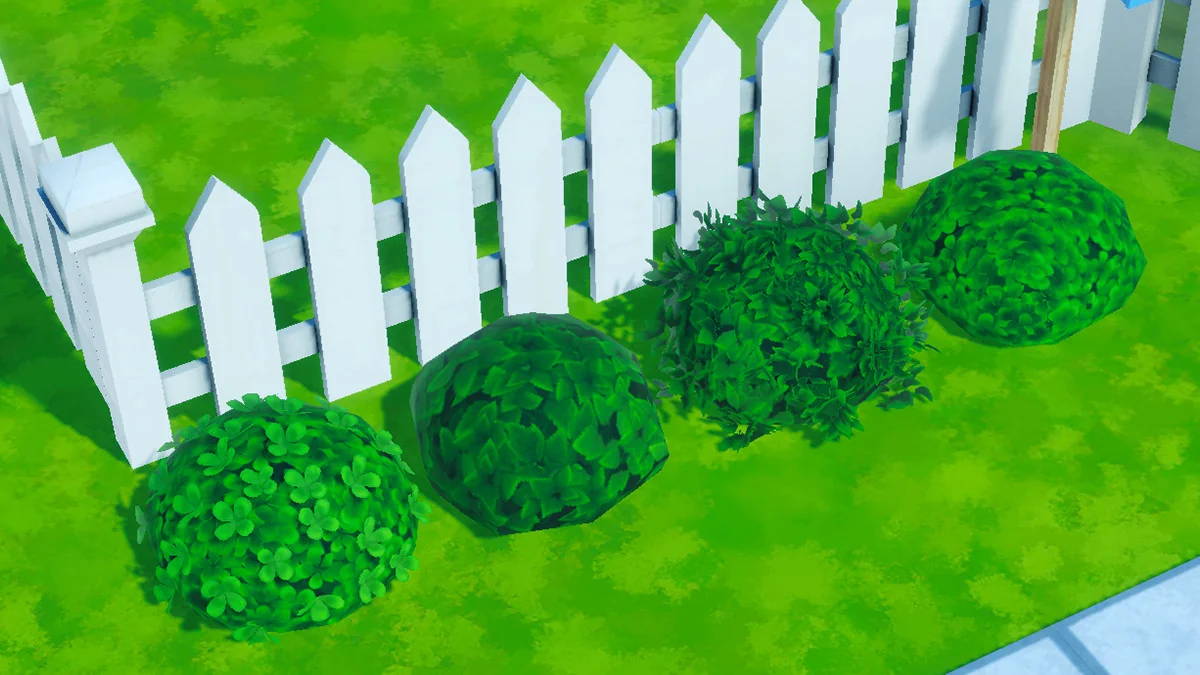
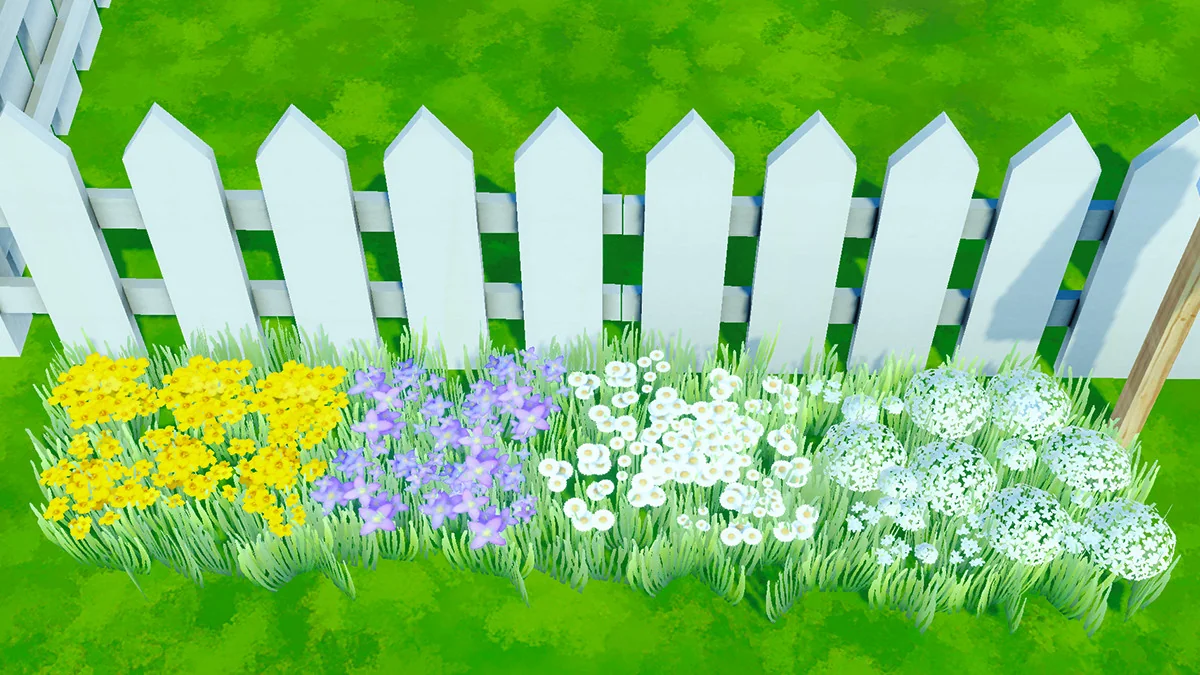
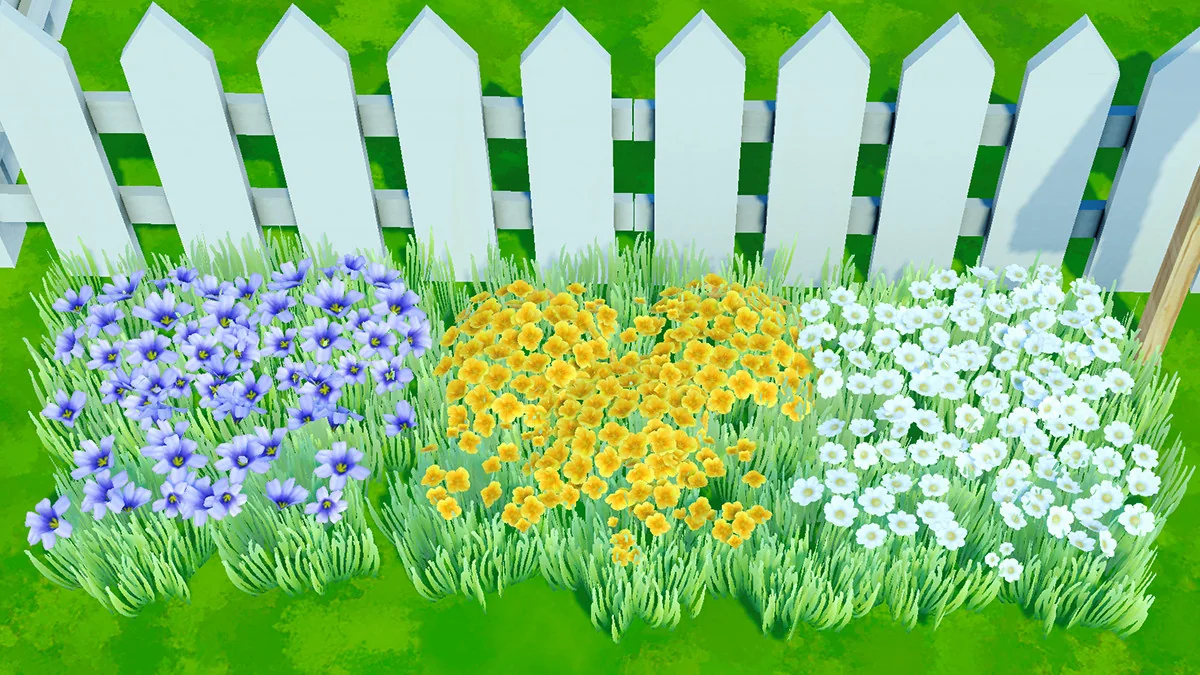
For broader scene coverage, the collection includes bushes and scattering details. The bushes—which include generic types, versions with specific leaf details, and clover-based variants—maintain a footprint of 96 to 244 quads. The scattering assets are divided into two types: detail scattering and general scattering. Detail scattering includes Blue eye grass, California Poppies, Cupcake whites, and stalks, ranging from 5 to 432 quads. General scattering assets, which are highly efficient for filling large areas, range from a single quad to 64 quads, encompassing species like Basket of Gold, Oxeye Daisy, Bluets, Queen Anne’s Lace Wildflower, and Wild Cosmos.
Large Foliage and Recent Additions
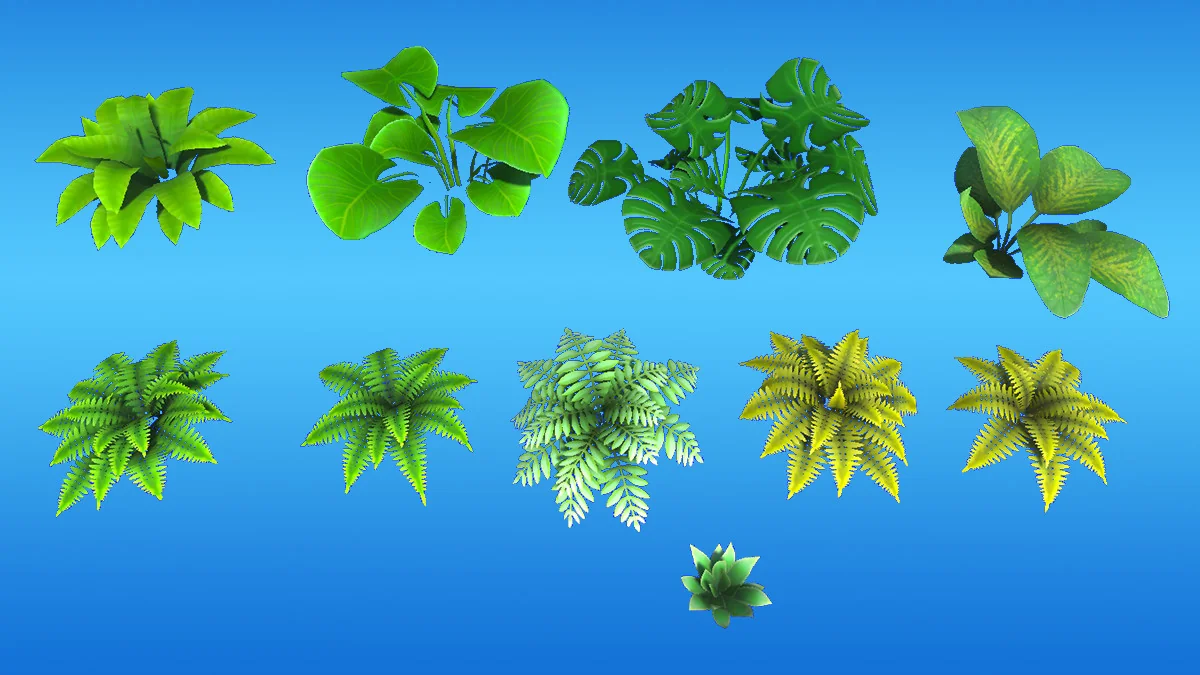
The collection has recently been expanded to include larger, more structural plants that serve as focal points in a scene or as mid-ground fillers. The big leaf plant category includes recognizable species such as Aloe Vera, Monstera, and various Ferns, including Green and Yellow Green variants. These models range from 78 to 252 quads, making them surprisingly lightweight for their visual size. Variations such as the Big Leaf Generic and the Big Leaf Generic Spotted provide generic but aesthetically consistent options for filling out tropical or temperate environments without drawing focus away from primary gameplay elements.
Material and Pipeline Compatibility
Integration into different technical workflows is facilitated by the use of standard materials across the entire collection. This ensures that the plants can be easily brought into a project without requiring specialized shaders or complex setup procedures. The texturing approach relies heavily on texture atlasing to reduce draw calls. Almost all plants in the collection, with the exception of the bushes, utilize a 2048 px by 2048 px texture atlas. The bushes use textures that range in size from 512 px to 2048 px, allowing for flexibility in how memory is allocated for specific environmental assets.
From a pipeline perspective, the collection is built to be compatible with Unity’s primary rendering solutions. This includes the Built-in Render Pipeline, the High Definition Render Pipeline (HDRP), and the Universal Render Pipeline (URP). It also supports Custom Scriptable Render Pipelines (SRP). The assets were originally developed in Unity version 2020.3.30f1, ensuring stability for projects operating on that version or later. The total package size is approximately 26.0 MB, containing 233 individual assets, which makes it a compact addition to a project’s resource library.
Practical Application and Scene Layout
When placing these assets, developers can utilize the different scattering types to create realistic ground cover. By mixing the low-quad count general scattering flowers with the slightly more complex detail scattering plants, it is possible to create the illusion of a dense, wildflower-filled meadow while keeping the vertex count manageable. The inclusion of various colors for the same species, such as the multiple rose and violet variants, allows for naturalistic variation in garden beds or forest floors. The big leaf plants, like the Monstera and Aloe Vera, are particularly suited for indoor environments or transition zones between different biomes. Because the creator has indicated that more plants will be added to these collections in future updates, the library serves as a growing resource for stylized environmental design.
Visual Breakdown