Dynamic Movement Through Bone Animations
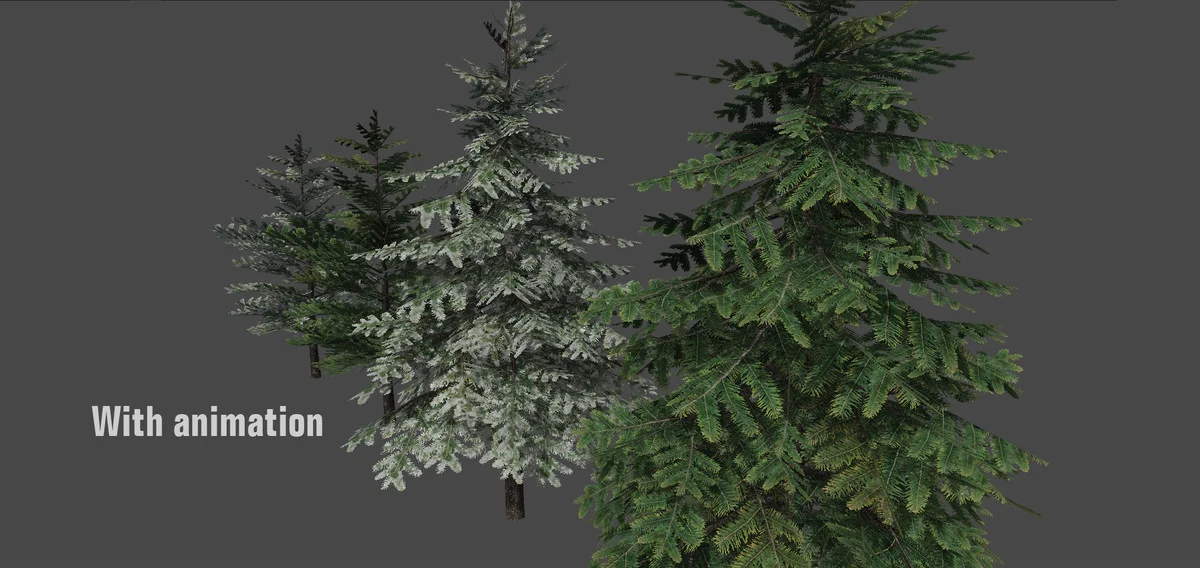
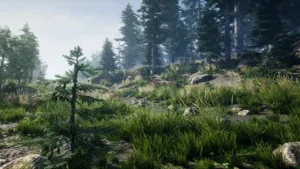
The core identity of the Detailed Pine Trees package lies in its approach to environmental movement. Unlike static vegetation, these trees utilize bone animations to create a more vivid and responsive atmosphere within a scene. By using a skeletal structure for the trees, the developer allows for movement that feels more integrated into the model’s geometry compared to simple procedural shaders. For developers or artists who require a more performance-optimized or stationary environment, the package specifically includes versions of the models without these bone structures. This dual-model approach ensures that the assets can be used in scenes where high-fidelity movement is necessary, such as foreground focal points, or in areas where static meshes are preferred to conserve processing overhead.
Prefab Composition and Environmental Variety
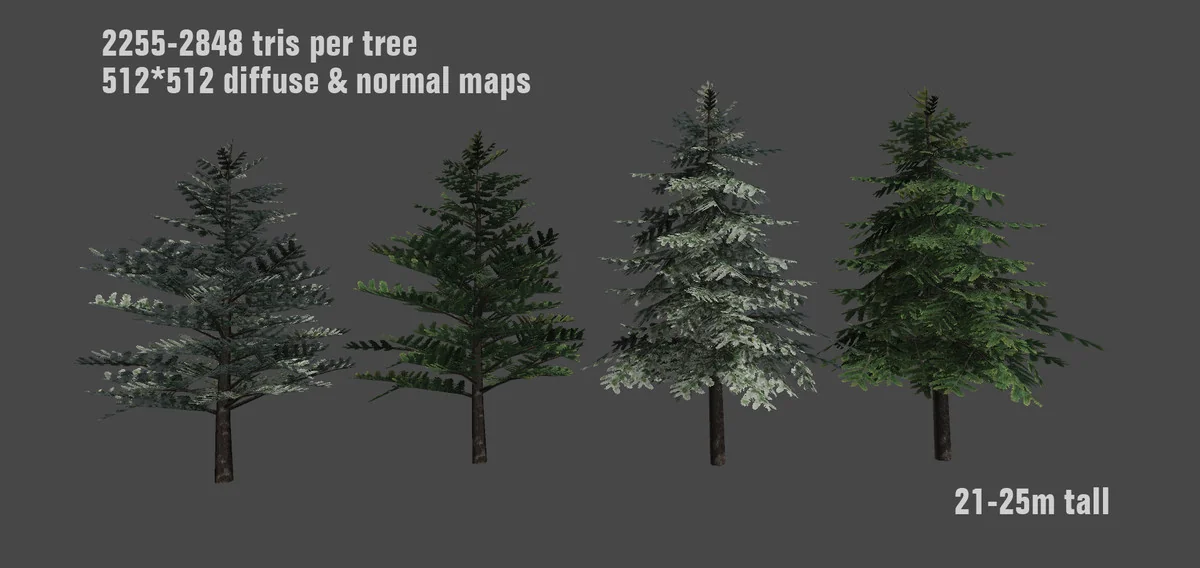
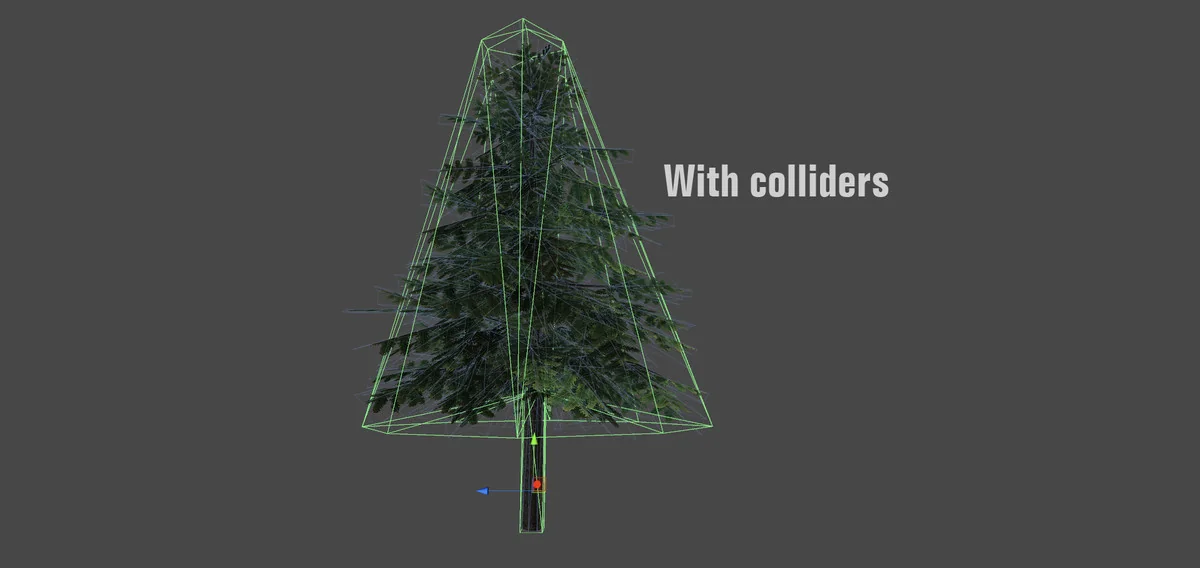
The package is organized into eight distinct prefabs that cover a range of environmental needs. These are split logically between standard pine trees and specialized variants. The developer includes two standard trees and two versions specifically textured with snow, allowing for quick transitions between temperate and winterized landscapes. Beyond the full tree models, the set includes two standalone trunk prefabs. These are particularly useful for creating forest floor clutter, fallen timber, or more complex woodland compositions where full foliage isn’t required. Every prefab in the collection comes pre-equipped with colliders, ensuring that the assets are ready for immediate use in interactive environments where player or object collision is a necessity.
Technical Geometry and Mapping
From a technical standpoint, the assets are designed with a specific balance between visual fidelity and performance. The triangle counts for the trees range from 2255 to 2848, placing them in a category that provides enough geometric detail for close-up viewing while remaining manageable for real-time rendering. This geometry is supported by a texture pipeline consisting of 512×512 diffuse and normal maps. The inclusion of normal maps alongside the diffuse textures allows the models to catch light and show surface depth without requiring excessive polygon density. The total asset count within the package reaches 23, providing the underlying components necessary to support the eight primary prefabs.
Pipeline Integration and Compatibility
The Detailed Pine Trees package is delivered as a unitypackage file, originally developed for Unity version 4.2.1. With a total file size of 6.0 MB, it represents a lightweight addition to a project’s resource library. The inclusion of both animated and non-animated versions of the trees provides a clear path for integration into various types of game-dev pipelines. Developers can choose the animated versions for scenes requiring high levels of immersion or the static versions for background elements or mobile-focused projects where skeletal animations might be too taxing. The presence of colliders across all eight prefabs further simplifies the workflow, as it removes the need for manual collision mesh assignment after the assets are placed in a scene.
Asset Utility and Scene Context
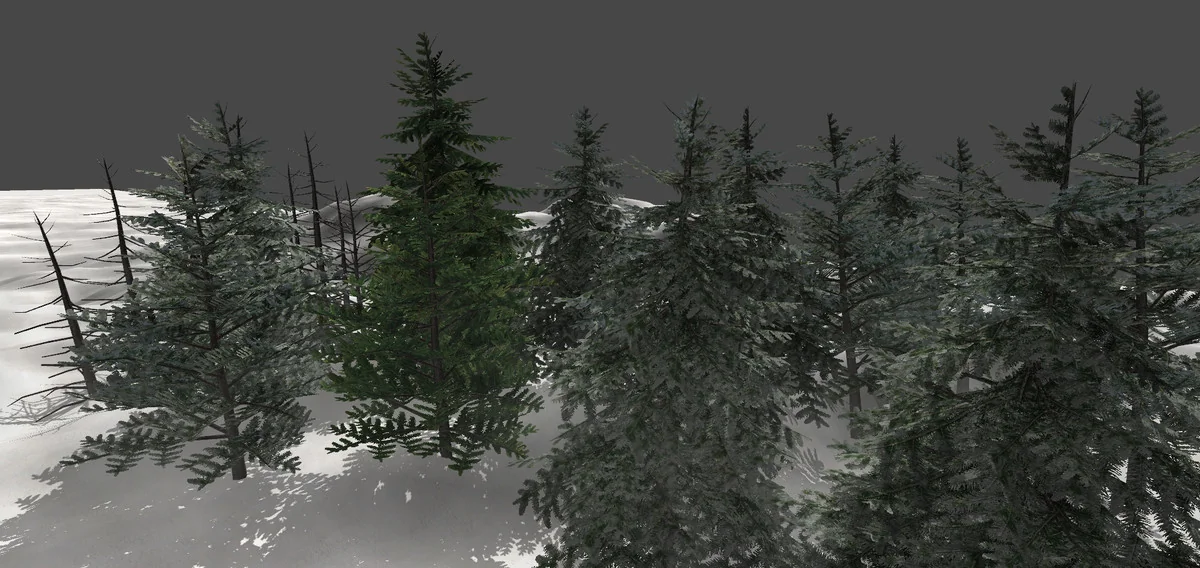
The variety offered by the snowy variants and the separate trunk models allows for a high degree of creative flexibility. When building out a forest, the different configurations—standard, snowy, and trunks—can be mixed to avoid visual repetition. The bone animations add a layer of environmental storytelling, suggesting wind or other physical forces acting upon the world. Because the package contains two distinct versions of each tree type, artists can create a sense of natural variation even within a limited asset set. The focus on fine details and vivid movement makes these pine trees a practical choice for developers looking to populate outdoor environments with ready-to-use, interactive vegetation.
Preview Images